Archives for category: Mindfulness

I was walking in my neighborhood last week and I passed two men. One of them had a newborn strapped to his chest in one of those little baby carriers. His baby looked blissfully asleep and his father looked like he was enjoying his time with his son.

This is not an uncommon sight where I live. It was a rather uncommon sight when I was a girl. When I was young, a man changing his own child’s diaper was considered a rarity. Men played with their babies. They were not as involved with the day-to-day caretaking as they are now. Caretaking was considered “woman’s work” and therefore “beneath” a man. It still is, to a certain extent,  but there really has been a significant overall increase in men’s level of involvement in their children’s lives not to mention an increased appreciation for “women’s work”. I have been providing mental health services to families for since 1991. When I started out this meant working with mothers and their children. Father participation was not common. It is far more common now and it is rare that I never meet with a child’s father.

When I saw the man with his infant, I smiled in recognition of what our culture has gained from the women’s movement. There is still sexism. “Feminist” is still a “bad word”. But it is difficult to deny if I REALLY think about it that men’s lives have been improved by feminism. To know your children better and to be a nurturing force in a vulnerable being’s life are gifts. With the loosening of gender roles, I also think it is easier for gay men to be parents together.

Civil rights and social movements are often met with resistance, the resistance that to give up a privilege is an absolute loss. That there is nothing to be gained through change. There is a lack of acceptance.

Loss, perceived or actual, is often a sticking point. It is a place where we hesitate, trip, or in some cases, fall into a deep pit, for which climbing out is virtually impossible.

Honestly, sometimes we want to stay in the pit even if climbing out is a possibility. We struggle. We suffer. We want to be heard, seen, and felt. At other times, we deny that we are in a pit. “What, this isn’t a pit? Everything is fine.” This is another kind of nonacceptance, and it too causes suffering. Denying and suppressing loss and the grief that comes with it, is a short term solution with painful consequences. In the world of cancer and other griefs, I see this acutely.

In the world of cancer and other griefs, I see this acutely. It can be so difficult to find balance. It is so difficult to find the time and space we need to grieve our own losses and come to some kind of peaceful place with them. On top of that, there is no final destination. Grief is an iterative process, one that we must come back to over and over. This is why we can get on with life and yet not ever “be over” a significant loss in our lives.

This weekend, I have been feeling anxious. I had awful nightmares last night. I feel justifiably underappreciated by my family. However, the way my impatience has played out in my behavior is a way that increases my suffering as well as that of my family.

I came back to my well-spring. I did a sitting meditation and I am sitting her with my own thoughts and feelings, writing this post. I can feel myself letting go of hurt and anxiety. I am not quite solidly balanced, but I am getting there. I am nurturing myself and it is radiating within. When I leave this office and rejoin my family, I am hoping to radiate compassion toward them, as well.
I have been focusing on a particular kind of mindfulness meditation lately, the body scan. It is a form of “simple awareness” in that the focus of the meditation is on basic bodily sensations such as warmth, itch, pressure, and pain. Although I practice formal meditations, I also adapt them at times, as a form of experimentation. Last week, I decided to see what it would be like to meditate on bodily sensation while I was in my hot tub.

It was the end of a long day. I was tired and it was near my bed time. My husband did not want to join me.  At the end of the day, I need a little momentum to do things. On top of this, it was rainy, dark, and cool outside. Despite this, I went out there, perhaps in part because I had set the intention earlier in the day to do so.

The tub water was warm but the rain was cold. My initial response was disappointment followed by a sense of vulnerability to the elements. Then I closed my eyes and started my meditation. My attention drifted, as it often does, between simple awareness and drifting off into thought. When I became aware of the drifting, I redirected my attention to the awareness. Mindfulness is not keeping your mind blank and it doesn’t only occur when our minds are laser-focused on the exercise. It is a process.

I carry a good deal of tension in my neck, shoulders, and upper back, which are exacerbated by my work on the pottery wheel. I observed the pain in this area of my body. As frequently occurs with the body scan, when I observe a sensation such as pain or itch, the quality of the sensation changes and often subsides. I sat in the tub, allowing myself to move to the different areas of it, as I wanted, and with intention. I spent most of the time sitting in the middle of the tub, sitting up with my legs crossed.

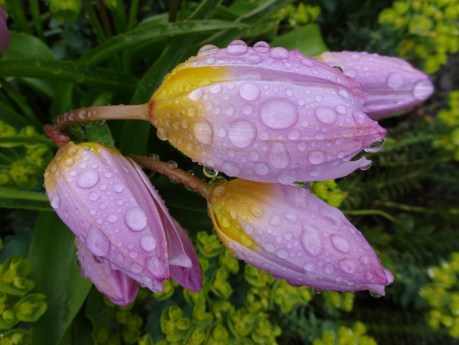
I felt the rain. I observed the rain. It was cool. It was refreshing. I was safe and warm. It rains frequently where I live. Rain is associated with spoiled plans, canceled baseball games, indoor recess, uncomfortable hikes in the mountains, and yes, being cold and afraid. It is true that weather can be dangerous. Weather can kill.

As my body and mind were drifting, I thought of all of this, about how scary the world can be, but also how much scarier I make it when I worry about the safety of myself and my loved ones when we are actually all safe.

I am learning to reduce the burdens of my own making. More importantly, I am learning that this is a practice rather than an endpoint. Mindfulness is iterative. It is repetitive. But it also changes. It is like saying, “I love you” to my husband each day. It is always true but the shades of meaning each day can differ.

DSC04400

As I mentioned in my last post, I let my home office turn into black-hole during my cancer treatment, and it stayed that way until I cleaned it a couple of weeks ago. I found that is was a bit of an archeological site. Everything my former cat, Ollie, had knocked off of the desk onto the floor and then batted way underneath, were still there. Ollie died shortly after I began cancer treatment, coincidentally from metastatic cancer. I thought of the fact that he’d touched the pen caps, binder clips, Post-it notes, and push pins. I thought fondly of him, but I didn’t have trouble getting rid of the pieces that were garbage and putting the rest of it away.

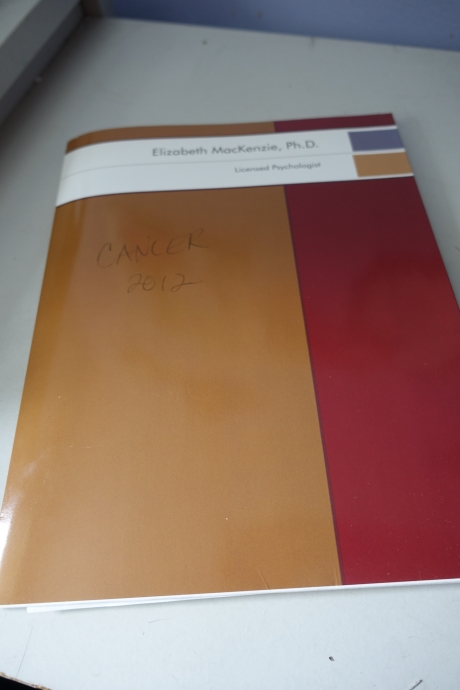
At the bottom of a pile on my desk, I found the folder in which I kept my cancer paperwork, labelled, “Cancer 2012”.

DSC04621


I opened the cover and saw a set of post-surgical instructions. I also saw Explanation of Benefits forms from my insurance. A year ago I many have put it back on the top of my desk thinking I might “need” it some day. That day, however, I threw it into the recycle bin and made a plan to write about it, as I am doing right now.

Another thing I found was the tote bag I was given by the Swedish Cancer Institute with their name and logo on the side. For the first several months of treatment, I carried a binder, also provided by Swedish, containing all of my pathology and blood work reports separated with tab folders, “Initial diagnosis”, “Lumpectomy #1”, “Lumpectomy #2”, “Mastectomy”, “Oncology reports”, etc. I called it, “my big bag of cancer.”  Eventually, I stopped using the bag but continued to use the binder, which was extremely helpful in keeping my treatment organized and making some kind of sense. It was actually a very handy reference guide to take with me to my appointments.

I looked at the bag and considered getting rid of it. I have a ridiculous number of tote bags due my past as an academic researcher. I did a lot of conference travel and typically, the conference catalog and registration materials are put in a tote bag. Some of them are very nice, very sturdy, and have, as a result, never worn out. Clearly, I did not need my cancer bag in order to lug stuff around. Honestly, I don’t need most of them. They just sit around, “just in case” I need them in the future.

However, one of the first thoughts to come to mind when I saw it was a visual memory of my wonderful breast surgeon, Dr. Beatty, carrying a tote bag just like mine, holding the things he needed for that day. He was the first of my many physicians with whom I developed a doctor-patient relationship. He and his staff were wonderful. I felt so taken care of when I went to his office.

The image of being held, not as an embrace, but as being supported and cared for came to mind. I decided that “my big bag of cancer” is a holder of good things. For now, I am keeping it. Next year, who knows?

I am amazed at the significance that objects have taken on through their association with my cancer treatment. Some of the associations are comforting. Some of them are painful. All of them are part of the truth of my experience, an experience that continues to evolve over time. Experience changes; at times, it changes a lot. But the past, the future, and the present all hold their truths and are all part of me. In my mind, this is the string that holds my life together and gives me great comfort.


During my two years of intensive cancer treatment and reconstruction, I cut some corners in my life.  During this time, I had eight surgeries and, at least, three medical appointments per week.  I also worked in time to deal with what was happening to me. There was also the rest of my life, working, mothering, making healthy lifestyle changes, being a wife, and finding time to take a break from it all.

It is only natural that some things did not get done. In some cases, I learned that whatever I’d taken the time to do before really wasn’t that crucial to begin with. With mindfulness meditation, I found myself taking up less time worrying and not having to take extra time recuperating from worrying. If you haven’t noticed, worry is exhausting.

But there were other corners that I didn’t want to keep cutting because doing so created overwhelming consequences like an overgrown flower garden full of weeds. Slowly, the front and back yard have gotten back into shape. I initially got help from friends and neighbors. Later, I just ended up hiring help a couple of times a year. Recently, I found out that I could get my yards maintained for a surprisingly reasonable price from a local landscaping/gardening business. So I am doing that.

The biggest mess, however, was my home office. This is where I store my patient files. To protect patient privacy, the door is always kept shut with a finger-tip sensor lock. After 15 years of private practice, I had never gone through my files to see what ones could be legally disposed of. I had also not set up my filing system with a future in mind that included storing several hundred healthcare records. They were just all arranged alphabetically and some were just shoved into boxes because I had run out of filing space. When I mean “some” I mean about three years’ worth of files were shoved into letter sized cardboard file boxes. Most of my records are kept electronically. The electronic portions of my records are organized very well. This is because electronic records do not have to be physically moved around to make space for new records. Consequently, it was easy for me to respond to requests for copies of reports or progress notes that I had written. In other words, the impact of my out of control home office was not detrimental to patient care.

However, it was detrimental to me because I knew that I could not sustain this way of doing things. It was just getting worse and worse. I stopped using my office as a work space. It was too stressful to be in there. Since I wasn’t using it as a work space, it quickly became a surplus storage place. Two weeks ago, it was difficult to walk around in that office.

I found aLast week was spring break for my daughter’s school. I decided to take the week off to take on my office. I had also seen it as a time to hit a “reset button” as the previous weeks had been particularly stressful. As it turned out, the job was bigger than I anticipated. It was also mind numbingly boring. But I now have an organized work space, files organized with the future in mind, and a whole lot less stuff that I didn’t need. I also got over my resistence to transitioning to fully electronic files. Some friends had ideas that got around some of the problems I had not discovered solutions to and having spent a whole week dealing with paper and cleaning has increased my motivation considerably.

I had a hard and boring week. Nonethless, I woke up this morning, with the full feeling of the “reset button” having been pushed.

This won’t last forever.

It won’t be the last time that I need to re-set.

Nonetheless, it feels extremely satisfying.

I have been working particularly hard lately. Hard at everything. I knew I was taking on a lot and as expected, there were consequences. I am exhausted. But since I expected these consequences and have learned over the years that rest is important, I had already planned to be out of the office next week, which coincides with my daughter’s spring break. Now, I am planning to work at home. It’s not all fun and games.

Nonetheless, this will be a good time to press the “re-set” button. My meditation and exercise practices have decreased. They had been at a level even higher than I had planned. When there is a decrease, I tend to feel disappointed in myself. But I also, typically find a way to reconnect with reality, the reality that my current practices are so much better than they used to be. This counts and it matters.

I also know my competitive side. I love to see myself grow. I love to meet and exceed my goals.

What to do?

I have decided to aim lower. I am lowering my goals so that they are easier to meet. If I want to increase them later, that is fine.

It’s not cheating if it works.

Sometimes we need to give ourselves a break to move forward.

I’ve been trying to do a lovingkindness meditation each day of March. I have done one most days. I did one of them while I was taking one of my neighborhood walks. It is true that the meditation is designed as a sitting meditation but I was curious and decided to play the 30 minute-long meditation during a walk. It was actually quite a nice experience. The birds seemed to be singing more loudly and sweetly. The air had the scent of flowers.

As is typical of all mindfulness meditations, I was instructed to examine my current experience. It was suggested that I might be feeling physical or emotional pain. The instruction was to pay attention to the uncomfortable aspects of my life but also, “to see if there is something else.”

“Something else.” There is always something else. The suggestion in the meditation struck me as one of the most powerful aspects of mindfulness meditation, which is the consideration of the “something else” in addition to what is weighing heavily on the mind, body, or emotions.

There are those of us with a cancer experience who wince at words such as, “Cancer is a gift.” That statement omits the “something else”. The something else is life changing and painful in a way that merely writing the words, “life changing and painful” seem to discount the way that cancer changes everything.

For me, however, there is  another side. There is the side of not everything about my life as a cancer patient is awful. Not everything I made of my cancer experience was awful. Although I think about my breast cancer every day, it does not encompass my life.

My life is full of the “something else” in addition to the pain, discomfort, and loss in my life. My life is full of the “something else” in addition to the joy and emotional health I experience.

Life is full. I have long known this. It does seem that a gift of mindfulness is the opportunity to experience more of the “something else” and to get more aware of and engaged in the expansiveness of life, while not getting lost in it.

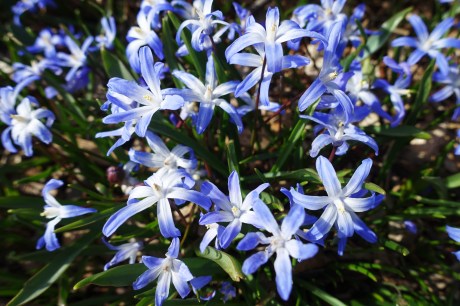
Today, the “something else” was experienced with by me with my camera. The small gems of beauty mean so much.

DSC04463

As part of the Mindfulness-Based Stress Reduction program that I’ve been completing, I’ve been doing yoga.  One of the positions is  “the chair”.  It is basically adopting a near sitting position, using the air as a seat. This requires the use of my leg muscles, particularly the muscles on the backs of my thighs. The psychologist on the video does a number of repetitions of the pose. The last pose is held for the longest amount of time. She says a number of things at this time, one them being, “sit back into that easy chair…” As soon as I hear the word, “easy”, I start feeling the burn more in the backs of my legs. The word, “easy” made it harder! Then she talks about how we might be feeling fatigued or warm. That’s part of mindfulness, noticing the sensations in one’s body, even the uncomfortable ones.

I have been doing this yoga routine for a number of weeks now. At first, I thought, “Why does she have to say that? She’s making it harder.” I soon learned that if I tuned-out her words and focused on her body language, which was relaxed, it was easier to do the pose. I soon became mindful that tuning out the words also meant tuning out my attention to the sensations in my body. I was merely distracting myself, which can be an effective coping technique at times, but it is not in keeping with my intent to do a mindful practice. I redirected my attention back to my body.

Today when I did this pose, I felt the temperature of my body rise. I felt the fatigue in my legs. But I also felt something else. I felt strong, strong enough to be my own chair. Every moment in life is different. Some of them are actually easy. Many of them are very difficult. Most of them are somewhere in between.

I don’t always have to provide my own chair. It gives me great peace, however, to know that when I need to do so, I can support myself, by myself.

The current lesson of the Mindfulness-Based Stress Reduction course that I am completing includes the mountain meditation. It is a guided meditation with visual imagery. First, the mountain is visualized as strong, beautiful and subject to constant change and harsh conditions. After this, there is the invitation to visualize oneself as the mountain, to internalize this image of an integral whole that includes both flux and stability. We are subject to changing conditions and the passage of seasons on the outside but our insides stay firm and whole.

It’s a strong image and one that also brings positive associations to me because of my love of the mountains in the area in which I live. I do know,  however, that mountains change from the inside out. I remember when Mt. St. Helen’s erupted. It was May 18th, 1980. I also remember the date of my breast cancer diagnosis. It was May 24th, 2012.

In my life, I am an astute observer. I see what is happening around me. I can anticipate many things headed my way. I protect my exterior. There is something about the discovery that there is something working to destroy one from the inside, where it cannot be seen or felt, that turns life upside down and calls into question one’s own sense of being a solid self.

Identity is something that consolidates after adolescence but it is subject to some changes over time.  We often ask ourselves questions. Am I a good person? Am I a good spouse?  Am I a good parent? Being good enough is hard to determine. There is always room to be better. It is not an absolute and goodness is multi-faceted. In respect to being good spouse or good parent, it also depends to a certain extent on another person. My parenting abilities depend somewhat on what my child needs and what she is able to provide for herself. I can’t define being “good” at a relationship solely on my own terms.

Earlier in the week, I was doing the mountain meditation. When it was suggested that I imagine myself as the mountain, I smiled. After that, the meditation changed from a guided one to a silent meditation. During the silent part, I thought of my core, the parts of me that cannot change. “Person. Mother. Wife. Friend.”

The fact that I have been a person, a friend, a mother, and a wife will always be true, just as Mt. St. Helen’s used to be a beautiful symmetrical peak.

There are things about each of us, very important things, that will always be true.

20130804_101220 (2)


One of the reasons that rain is so often used as a metaphor about the full life experience is because it is a really good metaphor. Rainy days can be an inconvenience. It is harder to see, it’s uncomfortable, it’s harder to play. In extreme amounts, rain is a destroyer. In moderate amounts, it is essential to living things.

As I’ve mentioned previously, I am completing a Mindfulness-Based Stress Reduction (MBSR) course online. The current lesson emphasizes dealing with difficult emotions and sensations. One of the meditations that is introduced during this lesson is RAIN (Recognize, Accept, Investigate, Non-Identify). There is an 11 minute long guided RAIN meditation written and spoken by Tara Brach, who is quite well known in the U.S. for her work in mindfulness.

One of the directions for this lesson was to try the RAIN meditation at least once. This is a more specific meditation than many in that instead of a daily practice, it is designed to be used when we are in particular need for self-compassion or as Tara Brach described it, “When we are at war with ourselves.” As a psychologist, I know that there is utility in practicing a skill even when it is not needed and in fact, doing so can make it easier to use the skill when it counts the most. So I did the meditation for the first time, at time when I was feeling relatively relaxed and calm. I found it to be a quite moving meditation.

Yesterday, my feelings got hurt by my husband. It was the kind of hurt that is common and part of healthy relationships. But it hurt and I was having trouble getting over the hurt. I was doing things that were making it worse, not a lot worse, but appreciably worse. I had a moment of self-awareness and told John, “I need to do some yoga or something. I need to hit a reset button.”

Then I remembered the RAIN meditation and started listening to it. Typically, I would have worn headphones, since I was sitting in the middle of the living room. For whatever reason, perhaps haste, I didn’t. Only John and I were home. I sat, closed my eyes, and listened.

The RAIN meditation, in addition to observing and investigating thoughts and bodily sensations, also includes self-statements and soothing behaviors designed to demonstrate self-compassion. For example, I was invited to place my hand to my heart, as a gesture of compassion. There were phrases that I was invited to tell myself. One of them, which Tara Brach attributed to the famous Buddhist monk and teacher, Thich Nhat Hanh, was, “My darling, I am sorry for this suffering.”

“My darling”? I’m supposed to call myself “darling”. “Suffering”? That sounds like kind of a strong word for the situation I was in, basically, my husband being mildly thoughtless. However, I found myself with my hand over my heart, saying to myself, “My darling, I am sorry for this suffering.” This is the advantage of doing these things while meditating. My snarky self is much quieter and I am open to trying things even if they sound silly.

During the last five minutes of the meditation, my cheeks were moistened by a slow but steady stream of tears. This is the very first time I have cried during a meditation. I know that mindfulness meditation goes beyond feeling calm or refreshed because it is about focusing on the here and now. When my husband hurts my feelings, I am often in conflict with myself. I love him. He is a wonderful man. But when I skip past the part of experiencing my emotions, I judge myself and I judge him. It is a short cut to suffering, even if it is a chronic, low level state.

There was a great deal of power in those tears. The power to be open, to cry, to let myself be cared for and loved by myself. Sometimes, believe it or not, I worry that by getting deeper and deeper into a mindfulness practice that I will lose my connection with others. I will say and write more and more heartfelt but sappy things. I will look odd to people in my community as I get less and less self-conscious about taking my walks in my colorful, mismatched exercise wear not to mention my rain hat with the ear flaps. “Oh look, there’s that crazy lady who takes photos, wears Spandex AT HER AGE with purple shoes and green socks.” It is easy to think this way, especially for women.

Mindfulness gives me a sense of perspective. When I take my walks or go to the pottery studio, I am on my own time. I am doing my own thing and if I look unconventional, I hurt no one. If I am genuine to the point of sappiness  and cliche at times and this makes people uncomfortable, I am pretty sure that this is not my problem.

There are times in life where it is a very good idea to be composed, to suppress emotion, and to be private. But those times are not all of the time. And if you might be embarrassed to tell someone else that you told yourself, “My darling, I am sorry for this suffering”, guess what? You can try it and not tell ANYONE other than you. Your self-compassion can be your little secret power.


DSC04219

As you may know, I have been taking pottery classes with my husband. The class meets one evening a week. The pottery is also available at other times of the week during “open studio”. Open studio doesn’t cost any extra. It is free time that is available to continue working on projects or getting additional practice. During the first quarter of the class, I didn’t use the open studio time at all. I thought about it, in passing, and then quickly told myself that I didn’t have time.

When presented with a new opportunity, I often tell myself that I don’t have time. I feel stressed and hurried. I am waiting for the other shoe to drop, something unexpected and bad to happen. I’d better keep on the look out!

I find, however, that at the times I am most mindful and aware, there is a space between the opportunity and my decision. It is a space that says, “Why not?” It says, “That sounds fun.” Or, “This is a good chance to do x, y, or z.”

These are the times I treat time in a doctor’s waiting room as time to put on my earphones and listen to a guided meditation. I don’t have to spend that time being prepared to jump up for my name to be called. I will hear my name, open my eyes, and go to my appointment.

A couple of week’s ago, I was making yogurt in my pressure cooker. I knew that it had about a half hour left before I had to tend to it. My meditations are 30 minutes. At first I thought, “But I won’t be ready when the pressure cooker beeps!” Then I laughed at myself thinking, “I’d better keep myself ready for yogurt!” So I meditated for the 30 minutes and walked to the kitchen. The pressure cooker beeped as soon as I got to it. See? No yogurt was harmed in the making of my sanity.

As I continue to make meditation a regular practice, I find my life slowing down. I find myself more productive at work because my concentration is better. My first inclination is to fill that time with more work. Aren’t we supposed to be busy and overworked? Doesn’t that make us worthy and competent? Doesn’t this keep the bad things from happening?

I find that it makes me tired, anxious, and irritable. I am happy to report that this quarter, I find myself working at the pottery wheel during open studio about once per week. I even went twice last week, once on Friday afternoon. I had actually gotten my work done for the week so I took the opportunity of extra time to do something fun. Bad things have and will continue to happen in my life but not during every moment or even most moments.

There are opportunities every day and sometimes the sense of having no time is just a feeling. Feelings are real and they have something to say. But they don’t always communicate in the most straight-forward fashion. Sometimes, they are telling you to slow down, pay attention, and enjoy the moment. And having the thought, “I have so much to do!” is actually not the same as getting something done, no matter how many times I repeat it to myself.

When I am throwing a pot, I look down at the clay on the wheel. Sometimes it reminds me of the Earth spinning day after day. My hands and fingers are engaged in every rotation. Today you might get an opportunity to try something new. Put your hands on it, feel it, see it, be in it.

Why not?


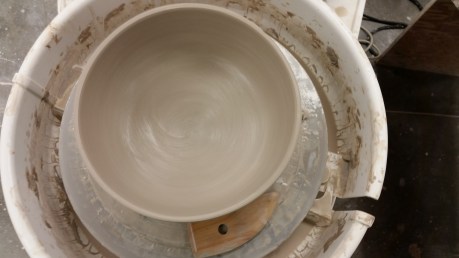
My first pot, started in September, was not what I had envisioned but then again, it was a step forward.

20160210_121401

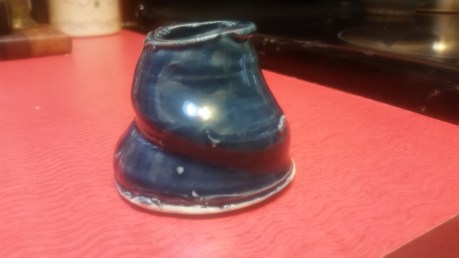
Here’s the pot I threw during last Saturday’s open studio.

20160206_142919

Lindbergh High School Reunion '82, '83, '84, '85

Join us this summer for our reunion in Renton, WA!

George Lakoff

George Lakoff has retired as Distinguished Professor of Cognitive Science and Linguistics at the University of California at Berkeley. His newest book "The Neural Mind" is now available.

KomenWatch

Keeping our eyes and ears open.....

4 Times and Counting

Confessions Of A 4 Time Breast Cancer Survivor

Nancy's Point

A blog about breast cancer, loss, and survivorship

After 20 Years

Exploring progress in cancer research from the patient perspective

My Eyes Are Up Here

My life is not just about my chest, despite rumblings to the contrary.

Dglassme's Blog

Wouldn't Wish This On My Worst Enemy

SeasonedSistah

Today is Better Than Yesterday

The Pink Underbelly

A day in the life of a sassy Texas girl dealing with breast cancer and its messy aftermath

The Asymmetry of Matter

Qui vivra verra.

Fab 4th and 5th Grade

Teaching readers, writers, and thinkers

Journeying Beyond Breast Cancer

making sense of the breast cancer experience together

Entering a World of Pink

a male breast cancer blog

Luminous Blue

a mother's and daughter's journey with transformation, cancer, death and love

Fierce is the New Pink

Run to the Bear!

The Sarcastic Boob

Determined to Manage Breast Cancer with the Same Level of Sarcasm with which I Manage Everything Else

FEC-THis

Life after a tango with death & its best friend cancer