Who, what, where, how, and why are interrogatives, nouns that signal a question.

Very soon after babies start speaking words we understand, they start asking questions, “what” and “who” questions, most commonly phrased in one baby word, “Da’at?” (That, as in “what’s that?” or “who’s that?”) They are learning nouns, the names for people, places and things.

As parents, one of the challenging stages of our children’s development happens a few years later, when we are CONSTANTLY asked, “Why?” We provide the explanation, which is followed up with another, “Why?” It can be exhausting as parents often convey to me.

However, finding out “why” is not always the function of these questions. Some children are just learning that “why” is part of having conversation. Asking “why” is a way of guiding the direction of the conversation, a powerful skill, indeed. Sometimes “why” serves the function of stalling for bed, for clean-up, or for any other distasteful parental instruction that has just been given.

When I was a psychology researcher, there were a lot of questions phrased as “why”. But were they really “why” questions? It seems to me that most scientific questions are actually answering “how” questions; they address questions related to process and sequence. In treatment research, the question is even more rudimentary, “Does it work?” Treatments manipulate many many variables and as a result, it can be difficult to explicate how they work even if they appear to do so. I mean, we have ideas and models for how we think treatments may work but it is difficult to know for sure.

“How” and “why” questions can also preface statements of distress. “How did this happen?” “Why me?” Having a plausible explanation for situations, even if they are not objectively true, can be rather comforting and reduce distress.

“Why” questions are also a concentration of philosophy and religion. “Why are we here?” “Why am I here?”

As a person drawn to complexity, you might think that I would love pondering these big questions. Sometimes I do. Sometimes, I even enjoy it. But some questions are so large and complex that trying to answer the question seems to be a great oversimplification. We have enough people boiling down big problems to utter simplicity, much to the detriment of our world. Most of the current presidential candidates come to mind.

Why are we here?
Why did I get cancer?
Why is my kid having such a challenging time with life?
Why am I here?

More and more, these questions are replaced by:
“I am here.”

Most days that is more than enough.

Yesterday was a lovely late summer day in Seattle. I was thrilled because it meant that I’d be able to have lunch for my mom’s 81st birthday out on my deck, which has become my little oasis. As if on cue, a hummingbird came right to the fountain on the deck to take a drink. My mom got a nice close-up view though she was disappointed to not have her camera at the ready.

By 4:00 or so, very light drizzle was falling. John and I were working together to put together a small storage box together for the deck so we were out there. The weather changed frequently. It was a breezy day and the clouds were moving in and out of the sky quickly.

Having had a lovely weekend, John and I got into our cozy bed. Our mattress is getting older but I put a memory foam topper on it a few years back and it really is the most comfortable bed in which I have ever slept. John quickly fell asleep. I listened to the night noises coming from the back yard as well as the gurgling of our fountain. Suddenly, a gust blew a fine mist of rain through the open windows.

My first impulse was to close the window and keep the rain out. Keep the outside, outside and the inside, inside. That’s a natural human inclination to keep a boundary between shelter and “out there”. It is a boundary that has kept us safe for a very very long time.

Noting that I felt a fine mist of water on my skin rather than a deluge, I stopped myself. The unexpected mist was actually delightful. It was unexpected, refreshing, and surprisingly comforting. After a minute or so, I closed the windows because I was sleepy and perhaps the rain would get heavier and wake me up. I am finally sleeping well again and I wanted to continue to do so.

I have been thinking some about how being more mindful of sensation, touch, taste, smell, sight, sound, and balance, so often provides me with a greater sense of comfort and calm. I also notice how my cats are the same when they are alone, interacting with one another, or when interacting with me. As I write this, Basie is purring loudly while kneading a blanket with his claws. Now he is licking his sister, Leeloo, who has her eyes closed contentedly. I also see the way they use their whiskers to gauge their physical position in space.

Humans are thinking and feeling beings but we are also sensing beings, just like my kitties. My kitties are however, not big thinkers with their small albeit adorable brains. Their capacity for feelings is based on pleasure, pain, calm, protection, and fear, just the basics needed for survival.

Sensation is important. It protects us. It creates and maintains bonds with others. It enriches our lives. It is also orienting. It is so easy for my mind and feelings to take me away from the moment to take me to places away from where I really am. Thinking and feeling can give us glimpses of reality but without being mindful of my senses, it can be like looking at reality through a window rather than experiencing it firsthand, on the inside.

My senses tell me where I am. This helps me be who I am in the reality I have, right now.

It is amazing to me how the terror of a nightmare can be quashed when it switches to a lucid dream. This doesn’t happen often but when it does, I think, “This is a dream.” That typically ends the dream pretty quickly. Sometimes, I am not fully lucid but I start thinking during the dream, “This can’t really happen. This is not a real threat.” At these times, rational thought enters the dream and it becomes much less scary. In both of these instances, it is as if I am observing the dream while also experiencing it.

It occurred to me this morning that when the most stressful and scary parts of my life seem most bearable, it is a similar experience to a lucid nightmare. I am able to observe the situation, mindfully, while still being connected with the experience. This is the main way, in my view, that mindfulness is different from coping strategies such as rationalizing, intellectualizing, or denial. There is still a connection to emotion, thought, and experience.

A most important advantage of this lucidity has been that it helps me step back from an all consuming chasm of pain and suffering to a larger view of reality, one that includes joy, happiness, and hope.

During the summer between the 7th and 8th grade, I remember spending a substantial amount of time in the front yard trying to teach myself how to do a cartwheel. My palms hit the grass time and time again but I was having trouble making myself turnover. I was an athletic teen but gymnastics was not my thing. Gymnastics was like making your body into an amusement park ride, going topsy turvy. That was just not my thing. It made me afraid. I avoided amusement park rides.

I was bound and determined that summer to learn how to do a 360 degree revolution with my body ON PURPOSE during MY free time. Why would I do this?

I did it out of fear of failure. My older brother, John had told me that I would be tested on my ability to do a cartwheel in 8th grade P.E. I was a major achiever. I had straight A’s. I took all of the advanced courses. There was no way that I was going to fail something as simple as a cartwheel!

I don’t know how long it took me but eventually, I was able to get my legs above my head and back down on the ground. It was not a proper cartwheel because I landed on both feet instead of one at a time. And no, it did not look like a round-off, a variation of the cartwheel that ends in a two footed landing. It looked like a slightly defective cartwheel. I was never able to achieve the one-at-a-time footed landing but I figured that I’d perfected a C- cartwheel and had not completely failed.

I went on to 8th grade. Ms. Boone was our teacher. It was unusual for a teacher to go by “Ms.” back then in the 70’s.  She was also the only African American teacher I would ever have in my suburban school district. Ms. Boone had played professional basketball in Italy. Ms. Boone was cool.

She had us do a disco dancing unit instead of tried and true square dancing. I learned the Hustle.

We did a softball unit. I demonstrated my slide into home. I loved doing that. I was one of the only girls who slid and the catcher, almost always a boy, looked so surprised as I plowed right into his shins, forcing him to drop the ball.

Then it happened. She had us do a gymnastics unit with a balance beam, uneven bars, a vault, and everything. Boy, I was terrible. But I tried and I even practiced what I could at home.

I have no memory of how I was graded on that unit. But what I do remember is that I was never asked to do a cartwheel. A headstand, yes.  A handstand, yes. Forward and backward rolls, yes. Cartwheels, not a one.

As I said, I was a high achiever. By the end of the 8th grade, I had received awards for science, music, writing, and yes, even P.E. I had achieved my end goals, excellent grades, evidence of my competence, and the approval of adults.

Yesterday, I was stopped at a traffic light by a city park. I saw a girl who looked 5 or 6 years old do a cartwheel in the grass with a two footed landing. It took a few seconds. But even in those few seconds, I could see the pleasant look on her face, the buoyancy of her movement, and the way she moved on from her cartwheel to another activity without a plan in place.

She was turning her body 360 degrees ON PURPOSE and for fun.

Just because she could.


Today, a “feminine hygiene product” fell out of my purse onto the passenger seat of my car. I looked at it like it was a space alien of sorts.

Why, do you ask? My last menstrual cycle was in 2012. I must be in menopause; I mean, it’s been over a year. Actually, it’s been over three years.

However, my menopause was chemically induced with Lupron injections as part of my breast cancer treatment. I had one cycle after the first injection and then no more. Lupron, incidentally, was not yet part of standard breast cancer treatment when I first started receiving my quarterly injections. It was, however, a part of standard treatment for prostate cancer. You see, Lupron disrupts the signal between the pituitary gland and whatever reproductive organ you might have. In the early days of the shots, there was always a photo of a man, “smiling Lupron man” on the box in which the Lupron syringe was contained. And yes, Lupron was also used with women to treat conditions associated with infertility but maybe the dose was different. I didn’t see women on those boxes in the early days. In time, it became more of a standard practice of treatment for hormone positive breast cancer.

Although I experienced intense and frequent hot flashes and night sweats as a result of jumping into menopause thanks to Lupron, I actually tolerated the treatment pretty well. Tolerating a treatment is pretty subjective. I experienced significant side effects, including up to 50 hot flashes a day, at one point, and disrupted, poor quality sleep. To me, it was a pain in the ass but a tolerable pain in the ass. And in time, the intensity and frequency of these side effects lessened somewhat.

I took my last Lupron shot in November of 2014. Each shot is effective for three months. And you know what? The effects of Lupron are not always permanent. I will turn 50 in November. I was experiencing peri-menopause when I was diagnosed with breast cancer at age 46. I was making my way to menopause. However, the path to menopause is quite variable. Peri-menopause can take years and years and years. During my last oncology appointment,

One of my colleagues has a book in her office called, Have You Started YetIt’s a book for girls about puberty and periods. Remember that time? Not knowing when your cycles would start and hoping that you were neither the first nor the last?

For the record, I was 12. I was relieved. My body worked. I was not going to be left behind by my peers and be left out of the club of maturity. After about a year, began the monthly decent into menstruation Hell. Cramps worse than any labor pains I experienced in childbirth. (Knowing that labor pains were supposed to be 100 times worse than menstrual cramps, I asked for an epidural early and often until I got it. It kicked butt on pain.) The bleeding was horribly heavy, going on for 7-10 days, just like my mom. However, unlike my mom, my cycles were of irregular length, anywhere from 28-42 days. And then there was the nausea and vomiting.

This all improved enormously after pregnancy and childbirth. However, that was 20 years later! So losing my periods with Lupron was far and away the best cancer treatment side effect that I could hope for. Hurray! Yay! Yes, this change was also accompanied by facial hair and it becoming EVEN harder to maintain healthy weight. It still seemed like an awfully good deal to me!

I had my final Lupron shot in November. They last three months. During my last oncology appointment in the spring, Dr. Rinn said, “It could start back any time or not at all.”

So, just like a premenstrual 11 year-old girl, I keep supplies on hand, just in case.

During one of my recent walks, I was thinking about a conversation I’d had with a friend a few months ago. The friend had broken off a relationship with someone he’d previously known through the community for almost 20 years. He was surprised by how complicated her life was beneath the surface and a number of very unhealthy choices that she’d made, those that people make who have an extraordinary amount of pain and suffering, with which they are not dealing well. I told him, “I see lots of families in my practice who I imagine appear very different to people who have known them for years. You just don’t know what is going on in people’s lives.”

I was thinking about this, about the lives we lead on the inside that don’t match our outsides. We just don’t know what people are going through. Sure, some people wear their pain on the outside because they cannot contain it; some wear it like a badge of honor. But many of us go along with our daily lives carrying heavy burdens. I thought about the interactions I have with people everyday and my own natural tendency to assume that people are similar to me. Given that I am an empathetic person and a trained mental healthcare provider, I can quickly shift this set point but there are many interactions we have in our own lives that are so short that it is difficult to do this.  And even still, sometimes we just don’t know.

In my musings, I reminded myself of how important it is to be kind and to give people the benefit of the doubt. I am also mindful that to do so is also better for my health. Maybe the driver who cut me off really is an asshole? Is it really good for me to hold onto that thought and the anger that accompanies it?

By then I had arrived at my neighborhood coffee shop, Bird on a Wire. Elton John’s, Rocket Man, was playing. Angel, who was making my latte, looked up at me and said quietly, “This song reminds me of my dad.” Angel is a young man, still in his twenties. Nonetheless, I asked, “Is your dad still living?” “No”, he responded, still quietly. I asked a couple of questions and learned that Angel’s father died 6 months ago within a week of being diagnosed with pancreatic cancer.

Angel is a kind and gentle person with a spritely sense of humor. He is one of those people who exudes kindness. He loves community and will go out of his way to not only learn the names of the customers, but to introduce them to one another. Angel has made many lattes for me in the past six months. I had no idea.

He said, “I’m sorry.” “Angel, there’s no need to be sorry. That is something I would want to know.”

“I’m sorry,” he said again.

I grabbed his hand and squeezed it.

“Angel, people care for one another. That’s a very good thing.”

Sometimes I walk into the chaos of my life and I think, “Who is in charge here?”

I look to my left and to my right. Nothing. Nobody. Silence. Just me.

But in the stillness there is clarity.

I can handle loneliness because truly, I am never alone.

I can handle responsibility because truly, I am very competent.

But confusion gives me no direction at all except to spin in a circle.

So today, I am grateful for clarity. I believe that with it, I can move mountains, or at the very least keep my feet solidly beneath me and traveling forward.


DSC03066


I am more comfortable giving than receiving emotional support. Nonetheless, I have found my self being “a friend in need” more than not recently. I have also been working a lot, trying to keep my head down, and keeping myself busy. It worked to a certain extent then it didn’t.

I had also planned a busy summer with lots of fun activities, spending time with friends, spending time with family, and spending time in nature. I was very much looking forward to spending three days with friends from out of town. I knew that it would be fun, they would have fun, and there would be some light and easy times.

And then it happened. I lost track of myself, my fatigue, and my anxiety. The beginning of the visit was marked by my anxiety and the bags under my eyes. I wasn’t fooling anyone. I was tired. I have slept solidly through the night once in the last two months and sometimes I am awake for a number of hours. Not sleeping well takes a major toll on me. I took on more than I could handle comfortably and then life gave me much much more. And I didn’t ask for enough help and when I didn’t do it in the way that solicits a whole lot of empathy.

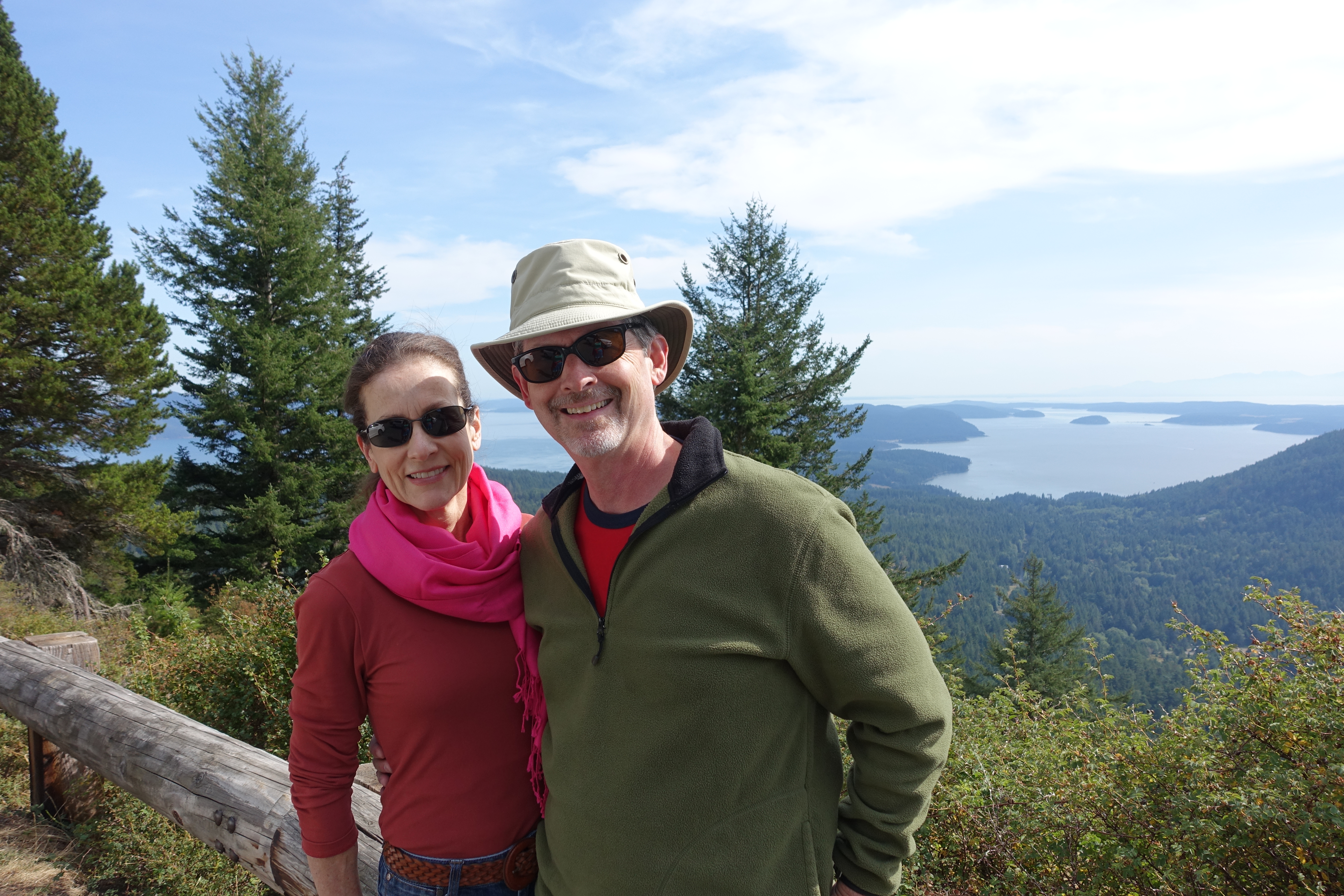
Lo and behold, after a brief but intense temper tantrum, I got my shit together and focused on having a break from my daily grind, spending time with dear friends and with my husband. I had a wonderful three days. I went to mountains and islands. We talked and laughed. The tight worry in my chest and the cotton in my brain eased. I remembered what it is like to have relaxed joy.

Then I came back to my regularly scheduled program of life. I immediately picked up on the stress and anxiety in my household. Initially, I felt disappointment that I was getting wound up again so quickly. Then I remembered that I have skills. I have things to try. I started using paced breathing, a technique to strong emotions quickly. It worked. Today, I am feeling the anxiety again. And now I am writing, another strategy that helps. My heart is slowing and I am finding myself more and more in the present moment as I type these words.

I am a friend in need and I got the support I needed from both other people and from my own internal resources.

Today, I am grateful for my family.

Today, I am grateful for my friends.

Today, I am grateful for nature.

Today, I am grateful for my tenacity.


DSC02929

DSC02944

DSC02948

DSC02962

DSC02970

DSC02983


DSC02988

DSC03006

DSC03019

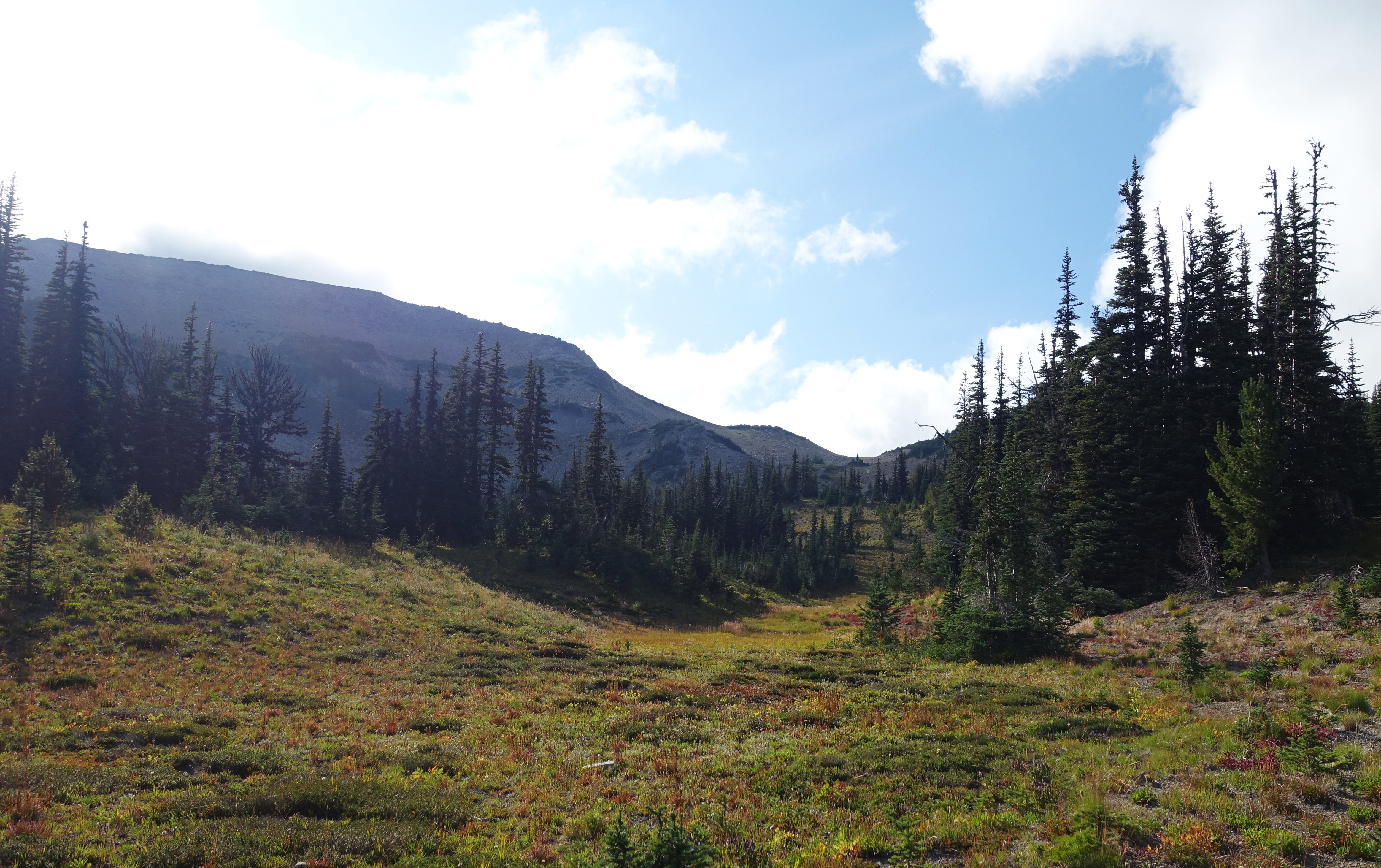
We have experienced an incredibly dry summer here in the Northwest. I have been reading with great concern about the fires in the Olympic National Park. The fires are burning in the rainforest. This is an area where fire is rare. But it hasn’t been rainy or snowy. I was in a section of the park a few days ago. The meadows were alarmingly brown and bare in many spots.

Fighting fires is a difficult job in any circumstances. Fighting forest fires can be quite dangerous. My husband read a book about a forest fire fighting tragedy in 1949, Young Men and Fire. The forest fighters parachuted into the Montana forest, loaded with their fire fighting equipment, which consisted of hand tools like shovels and axes. They had no water. Their job was to contain the fire by changing the landscape. The wind shifted suddenly. They were trapped. Mos of the men died.

One of the men was able to save himself by what must have required resisting every survival instinct he had. He knew the blaze was headed for him. He quickly doused the high grass around him with fuel and lit it on fire, to remove it, creating a circle of non-burnable material around him. He laid down in the center and held on tightly to roots on the ground as the blaze came to him. The convection currents lifted him off of the ground despite wearing full fire fighting gear. All the while he held fast to the roots as well as his breath to avoid fueling the fire. The fire passed because there was nothing to burn. By standing his ground instead of running away, he saved his life.

The most painful times in my mindfulness practice have been allowing myself to observe my most painful, heartbroken, angry, scary, helpless feelings and thoughts while minimizing judgment. It is still painful. But by doing my best to observe and withhold judgment, I am able to reduce the heat enough in order to withstand it. In doing so, I have not only found emotional survival but reduced suffering and at times, I even find myself to be in a place of peace.

In many ways, I am a careful person. I take pains to prevent fires. I don’t like crises. But I have learned to be more courageous and hold tightly to my roots, because there is no other way to stay whole.

A beautiful lion was killed in Zimbabwe by a rich American, who paid $55,000 to do so. There has been a great deal of outrage about this. There has been a great deal of compassion expressed toward a rare and beautiful animal who was killed just so that a human being could use his power to kill and dominate.

There have also been people upset by how much compassion and outrage have been spent on this one lion in contrast to relatively less so about violence and racism in our own country especially toward African Americans.

I was upset by all of these events, quite frankly. I actually saw them as being part of the same problem, the problem of using might to make right, the corrupting power of excessive power, and domination for domination sake as it happens at all levels of culture.

I understand why people are angry that violence against oppressed groups of humans is not creating similar outrage. I do wonder, however, if in giving people negative feedback for expressing righteous indignation and compassion is somehow discouraging compassionate action in general.

If I were in a crowd of people and saw a small child in front of me fall down, I would express sympathy and try to help, if needed. I would not scan the crowd to see if there were a person or situation more deserving of kindness and compassion. And I don’t think that by exercising a small act of compassion on perhaps a lesser problem, that I would somehow run out of compassion. I also wonder if these small gestures, to address small problems right in front of our eyes, right now, and with swift action, may buffer in some way against the passivity and inaction that can result with being overwhelmed by the enormity of the BIG PROBLEMS.

I find that acts compassion, offered in the moment, can add a bit of fuel to my emotional gas tank rather than depleting me. There are a lot of messages out there that treat compassion as a rare, easily depleted commodity. Even in the breast cancer community, there is a sense of having to have the worst case situation in order to exercise compassion toward oneself. Meanwhile, we invalidate ourselves and others over and over, like there is no limit.

Compassion doesn’t have to be a big game.

Lindbergh High School Reunion '82, '83, '84, '85

Join us this summer for our reunion in Renton, WA!

George Lakoff

George Lakoff has retired as Distinguished Professor of Cognitive Science and Linguistics at the University of California at Berkeley. His newest book "The Neural Mind" is now available.

KomenWatch

Keeping our eyes and ears open.....

4 Times and Counting

Confessions Of A 4 Time Breast Cancer Survivor

Nancy's Point

A blog about breast cancer, loss, and survivorship

After 20 Years

Exploring progress in cancer research from the patient perspective

My Eyes Are Up Here

My life is not just about my chest, despite rumblings to the contrary.

Dglassme's Blog

Wouldn't Wish This On My Worst Enemy

SeasonedSistah

Today is Better Than Yesterday

The Pink Underbelly

A day in the life of a sassy Texas girl dealing with breast cancer and its messy aftermath

The Asymmetry of Matter

Qui vivra verra.

Fab 4th and 5th Grade

Teaching readers, writers, and thinkers

Journeying Beyond Breast Cancer

making sense of the breast cancer experience together

Entering a World of Pink

a male breast cancer blog

Luminous Blue

a mother's and daughter's journey with transformation, cancer, death and love

Fierce is the New Pink

Run to the Bear!

The Sarcastic Boob

Determined to Manage Breast Cancer with the Same Level of Sarcasm with which I Manage Everything Else

FEC-THis

Life after a tango with death & its best friend cancer