Archives for posts with tag: Breast Cancer

I’ve been trying to do a lovingkindness meditation each day of March. I have done one most days. I did one of them while I was taking one of my neighborhood walks. It is true that the meditation is designed as a sitting meditation but I was curious and decided to play the 30 minute-long meditation during a walk. It was actually quite a nice experience. The birds seemed to be singing more loudly and sweetly. The air had the scent of flowers.

As is typical of all mindfulness meditations, I was instructed to examine my current experience. It was suggested that I might be feeling physical or emotional pain. The instruction was to pay attention to the uncomfortable aspects of my life but also, “to see if there is something else.”

“Something else.” There is always something else. The suggestion in the meditation struck me as one of the most powerful aspects of mindfulness meditation, which is the consideration of the “something else” in addition to what is weighing heavily on the mind, body, or emotions.

There are those of us with a cancer experience who wince at words such as, “Cancer is a gift.” That statement omits the “something else”. The something else is life changing and painful in a way that merely writing the words, “life changing and painful” seem to discount the way that cancer changes everything.

For me, however, there is  another side. There is the side of not everything about my life as a cancer patient is awful. Not everything I made of my cancer experience was awful. Although I think about my breast cancer every day, it does not encompass my life.

My life is full of the “something else” in addition to the pain, discomfort, and loss in my life. My life is full of the “something else” in addition to the joy and emotional health I experience.

Life is full. I have long known this. It does seem that a gift of mindfulness is the opportunity to experience more of the “something else” and to get more aware of and engaged in the expansiveness of life, while not getting lost in it.

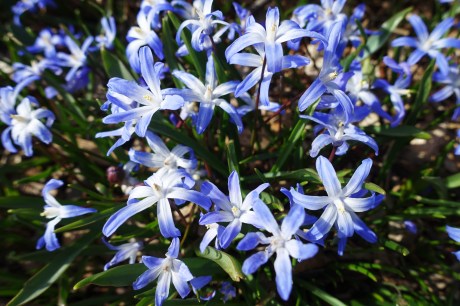
Today, the “something else” was experienced with by me with my camera. The small gems of beauty mean so much.

DSC04463

The current lesson of the Mindfulness-Based Stress Reduction course that I am completing includes the mountain meditation. It is a guided meditation with visual imagery. First, the mountain is visualized as strong, beautiful and subject to constant change and harsh conditions. After this, there is the invitation to visualize oneself as the mountain, to internalize this image of an integral whole that includes both flux and stability. We are subject to changing conditions and the passage of seasons on the outside but our insides stay firm and whole.

It’s a strong image and one that also brings positive associations to me because of my love of the mountains in the area in which I live. I do know,  however, that mountains change from the inside out. I remember when Mt. St. Helen’s erupted. It was May 18th, 1980. I also remember the date of my breast cancer diagnosis. It was May 24th, 2012.

In my life, I am an astute observer. I see what is happening around me. I can anticipate many things headed my way. I protect my exterior. There is something about the discovery that there is something working to destroy one from the inside, where it cannot be seen or felt, that turns life upside down and calls into question one’s own sense of being a solid self.

Identity is something that consolidates after adolescence but it is subject to some changes over time.  We often ask ourselves questions. Am I a good person? Am I a good spouse?  Am I a good parent? Being good enough is hard to determine. There is always room to be better. It is not an absolute and goodness is multi-faceted. In respect to being good spouse or good parent, it also depends to a certain extent on another person. My parenting abilities depend somewhat on what my child needs and what she is able to provide for herself. I can’t define being “good” at a relationship solely on my own terms.

Earlier in the week, I was doing the mountain meditation. When it was suggested that I imagine myself as the mountain, I smiled. After that, the meditation changed from a guided one to a silent meditation. During the silent part, I thought of my core, the parts of me that cannot change. “Person. Mother. Wife. Friend.”

The fact that I have been a person, a friend, a mother, and a wife will always be true, just as Mt. St. Helen’s used to be a beautiful symmetrical peak.

There are things about each of us, very important things, that will always be true.

20130804_101220 (2)


Can you imagine if people said everything on their minds? It is believed that there was a time in human history when this was the case. However, I don’t think we said a whole lot back then, either. At some point, human brains became developed to a sufficient extent that the motor cortex was able to suppress the muscles involved in speech so that we could have what we now refer to as thoughts. (Did you know that researchers have put tiny measurement devices on speech muscles and that they are able to detect movements, not discernible to the naked eye, while people are thinking? This fascinates me to no end.) Once we were capable of thought, we gained an important level of privacy and capacity for introspection.

We also gained significantly in the capacity to tell lies. Lies to avoid punishment, lies to seize power and dominate, lies to survive, lies to protect the feelings of others, lies for attention, and lies to self enhance. All of us have told lies, sometimes out of politeness but other times for very unhealthy reasons. I consider myself one of the most honest people that I know but even I have told unhealthy lies.

Right now we are surrounded by bald-faced liars on the national stage. It has become popular among a segment of our politicians to tell a lie after lie and not even pretend to be telling the truth. If the lie is repeated enough and has the “zing” factor or stirs up enough hate, it becomes truth. I find this incredibly sad, frustrating, and frankly, terrifying.

I abhor dishonesty that hurts people, including the unhealthy lies we tell ourselves. Yesterday, a story broke in my neighborhood newspaper citing “reliable sources” that a young women who lives in my community and who has been an extremely hard working fund-raiser for the Komen Foundation, has admitted (to the reliable sources) that she faked her stage 4 breast cancer.  I do not know her but I know some of her friends and she is well known in the community. I am not printing her name here because 1) the story has not been confirmed (I believe it will be national soon enough), 2) if true, she is someone with an extremely pathological need for attention, among other issues, and I will not feed that, 3) if true, a public shaming will not treat her mental illness, and 4) if false, oh, that would just be horrible for her.

If this is true, she has committed fraud and has done the unconscionable, over and over. Her alleged deeds cannot be undone by the amount of charity money that she has raised. People who fake cancer, especially those with a high profile such as hers, wear away at the trust of the very people we need to support each other. They encourage suspicion and cynicism.

Anger, outrage, hurt, sadness, grief, you name it. All of these emotions are justified. I have read some comments on the news story that have given me pause, however, most notably a suggestion that the only right thing for her to do would be to “commit suicide”. There were other comments by people who know her, people who even participated in supporting her at a very high degree. These were comments expressing shock and disbelief as well as the inconsistency between the alleged acts and their experience of this person. These comments contained a great deal of hurt but they also contained compassion.

I was more impressed by this compassion than I was with the hateful comments since comment threads are the convention sites for people to spout hatred. None of these folks were saying, “We should have compassion and she should not be held accountable.”  They also weren’t saying, “This is understandable and excusable.”

I have a lot of gratitude when I am able to function from a position of compassion. When the compassion is directed toward someone who has wronged me, it helps me operate more effectively and I am better able to maintain my own priorities, priorities of effectiveness, self-respect, and/or maintaining a relationship. The highest priority can be different for a given situation.

Compassion is active rather than passive. It is extremely powerful and I strive for more each day.

Several years ago, I observed a primary grade classroom in which one of my patients was a student. This student was exceptionally bright; however, he was not exceptionally fast with new information. It took him the whole school day to process the information. When his teacher called on him, this student would have a blank look on his face or say something off topic. By the time he got home, though, he told his parents about all of the things he had learned, with great enthusiasm.

The class this student was in was for intellectually gifted students with very high levels of academic achievement. He had tested into the program. I attended a meeting during which his teacher restated what he had previously told the parents, which is that he “did not see” this boy’s giftedness. I knew this child well and had done his testing. Based on the findings of the testing, the fact that it took him more time to consolidate information into long-term memory was expected. This boy in particular, had difficulty expressing what he had just learned. After a few hours to digest the information, he could do it and the understanding he demonstrated was extremely high. I told his teacher this. The teacher changed his tact and complained that he had “no way of measuring” this child’s giftedness.

The implication was that this child did not belong in the program. I wish that during the meeting, I had learned that this teacher only evaluated his student’s based on their performance in class. He DID NOT look at the students’ homework. If I’d known about this, I would have said, “Hey, I know how you can measure his learning. You could grade his homework!”

This teacher isn’t a bad teacher or even a dolt. I have visited his classroom a few times. He is one of the most impressive teachers I have ever seen. He has won a national teaching award. He is extremely entertaining in the classroom. He explains sophisticated concepts in a highly skilled manner. When he reads a story to the classroom, he does all of the character voices like a very good actor. He is extremely funny. He moves fast and asks the students lots of questions.

He is an amazing teacher and I have known students who have done extremely well in his class. But he didn’t look at or grade homework. He had one way of measuring student success. He had one way of teaching. He wasn’t going to budge. If your brain did not fit his instruction, you didn’t belong in the gifted program even if you qualified to be there according to the same criteria used for other students there.

I have the wonderful fortune of knowing some exemplary teachers both in my professional and personal lives. I suspect they may not be the performer that the award winning teacher in their classroom. (After all, said teacher also had professional actor and improvisational comedian in his resume.) What these teachers do have, however, is an exemplary ability to teach that also includes responding to the variety of learning needs in a classroom. This is called differentiated instruction.

In other words, teaching is not one sized fits all. Not surprisingly, Nancy Stordahl, author of Cancer Was Not a Gift and It Didn’t Make Me a Better Person, is a teacher and the daughter of a teacher. She is also the author of the breast cancer blog, Nancy’s Point. One of Nancy’s main messages conveyed in her blog is that there is no one-sized-fits-all way to be a breast cancer patient or breast cancer survivor. Dealing with cancer is no doubt a learning experience as all major life experiences are. We all learn our own way and not necessarily while decked out in pink feathered boas.

Being a breast cancer blogger myself, I soon found myself reading Nancy’s excellent blog. I have also previously read her book, Getting Past the Fear: A Guide to Help You Mentally Prepare for Chemotherapy. I didn’t have chemotherapy myself but impressed with Nancy’s practical, instructional, and well-researched blog, I bought the book for my Kindle and read it. Nancy has a way of explaining things in a very organized, straight-forward manner without a lot of flowery touches. And despite the lack of flowery touches, she also conveys a reassuring level of emotional support and empathy. Nancy has a way of being direct, concise, and practical without being cold. How does she do this?

The new book also has the tone of our no-nonsense Nancy with extra layers. This book is a memoir and in reading it, I learned more about Nancy. I have a personal relationship with Nancy as a fellow member of the blogging community. Nancy has always impressed me as being a very solid person who is very close to her family. Her breast cancer advocacy is intensely fueled by her love for her mother, who died from metastatic breast cancer just two before Nancy was diagnosed with breast cancer herself.  Nancy’s ties to her family is a major theme of her book. Her love of her parents, husband, and children are apparent in her writing, which is respectful of her own as well as her family’s privacy. Nancy also describes solid ties to place, namely the U.S. Midwest, especially in her descriptions of the natural places that give her peace and are also places associated with extended family gatherings.

Nancy’s writing is an excellent example of the dance we all try to do in our experiences of loss. We balance the need for commonality and connection with others with our need to for individuality, our need to maintain the reality that our losses do not define our entire being. Nancy is not a black and white thinker. She does not see her life as all good or all bad. Likewise, Nancy does not attribute everything good or everything bad in her life to her experience with cancer.

It is simple to say that life is gray but harder live that way. If you want to read about someone who has spent the last several years navigating the uncertainties of life, the good, the bad, and the ugly, from a point of honesty, empathy, and respect, I think you will very much appreciate Nancy’s book.

When I was still in my 20’s, I decided to give yoga a try. Maybe it was my age, but I had the idea that it was a bunch of gentle stretching and meditating. Yes, I’d seen photos of women doing challenging looking poses requiring great strength, balance, and flexibility, but surely beginning yoga would be a breeze. Plus I was young and strong. I signed up for a class at the student recreational center.

Oh, how wrong I was. Yoga, even beginning yoga, was hard! For one thing, it can be aerobic exercise! What????? I thought all of the deep breathing would be for meditation, not survival!!! It also required a great deal of strength. By the end of the hour, my arm muscles were in a spasm of fatigue. What was not surprising was my lack of balance. I am athletic but I am better at balancing while in motion than while still. I am also afraid of heights so the idea of doing a back bend freaks me out. That was true even when I was a much shorter and fearless kid.

The biggest surprise in yoga, however, was how incredible I felt at the end of class, lying in the corpse pose. Even though my body was exhausted, I felt a warm ease and comfort. I have returned to yoga a few times, but for whatever reason, I’ve had trouble making it a habit of more than 3 or 4 lessons, even though I very much enjoyed it each time.

I suspect some of my difficulty has to do with the fact that I need a class in order to get good at it and I am historically self-conscious about being “bad” at something for too long. Although I’ve flailed my way through many aerobic dance classes with my initial difficulties following choreography, especially trying to mirror a teacher whose right and left is opposite mine, I am able to get the steps eventually and by that time, I would be one of the stronger students in the class. Meanwhile, flailing is very effective at getting one’s heart rate up. Flailing will get you a good workout.

I don’t know what a yoga class would be like for me now that I’ve gone through cancer treatment. So much of it is flailing, trying to move forward, having everyone look at me in various stages of undress, and not knowing what the Hell I was doing except trying to follow directions and make some kind of sense. Everyone is different but I found having vulnerability and my body on display over and over as a person going through frequent and invasive medical treatments, I broke through some anxiety and self-consciousness. In clinical psychology, we call this exposure, meaning that I repeatedly put myself in anxiety provoking experiences, and each time with the world not coming to an end or anything, I learned to deal with it. But as I said, everyone is different and what is the appropriate level of exposure (literally or figuratively) for one person could be traumatizing to another person.

This is a personal blog and one of the things I try to convey is the fact that my life is highly fulfilling but also highly messy. My life is not an inspirational poster. I am not perfect and I am getting more and more okay with that. In fact, the more okay I get with it, the more okay I am with everyone else. So this is perhaps a very good time to give yoga another try. In fact, it is the latest practice in the Mindfulness-Based Stress Reduction (MBSR) program that I am doing.

Knowing what I know about MBSR, I did not expect the yoga to be super hard. I mean, after all, MBSR is used frequently with individuals with chronic pain problems. Also, I learned that yoga as a mindfulness practice is more focused on being mindful of breath and bodily sensations than on doing fancy poses. The video that accompanies my program is taught by a health psychologist and if you are keeping score at home, she uses Hatha yoga poses.

The poses are mostly stretching with a couple of strength and balance poses. The stretches are sublime, hitting every spot in my body that gets tight and achy. My favorite thing that the instructor says after saying that her motto is “No pain, no pain” is that we are to find “the sensation that is delicious”. That is exactly the way those wonderful stretches feel, too.

The strength and balance moves are a bit more challenging for me though not frustratingly so. A particular challenge are the poses that rely on abdominal muscle strength. Historically, I had naturally strong abdominal muscles. With my TRAM breast reconstruction two years ago, I lost one of my abdominal muscles. I haven’t done abdominal crunches since right before my TRAM surgery. I was instructed to a lot of walking and daily crunches to prepare for the surgery. I was already walking three miles a day and I got up to a pretty high number of crunches, at least for someone who does not hang out in a gym.

Imagine my surprise, when I was lying on my back with my knees bent and my feet on the floor, and I was unable to lift myself to a sitting position without putting my hands on the floor. My core is not working the same way as the yoga instructor’s core. My core got gored. By the end of the 30 minutes, I got that same delicious sense of relaxation and time well spent that I got at the end of the more rigorous classes of the past. I felt present, engaged, and exactly where I wanted to be. In spite of my flailing, my bobbling, and my imperfect strength, I felt great.

I may need to learn this lesson of strength, peace, and balance through imperfection, a million more times. And how wonderful would be? To learn this lesson a million more times is to live a long and mindful life.

My daughter was a precocious baby. She was able to hold her own head up from the moment she was born. My mother will tell you that she first rolled over at 1 or 2 weeks of age.  She sat up, crawled, walked, and ran with ease.

I don’t remember learning to sit up for the first time. I do remember relearning to sit up. It was March of 2013 and I had just had a major reconstructive surgery that involved moving a big flap of my abdominal tissue up to make a new breast.  I still have the hip to hip wide scar to prove it. The day after surgery, I was in the hospital feeling not horrible but certainly not peppy.

As many of my friends know, one does not get discharged from the hospital without being able to get up and around and using the bathroom. Also, as many of you know, the hospital is no place to rest. One of the things I learned throughout the course of the nine surgeries I had in two years is that I am a fast healer. One of my nurses, noticing this, suggested that I try sitting up. I was resting comfortably but wanting to go home so I said that I would give it a try. He needed to help me, however. I had just had major surgery and lost an abdominal muscle in the process, after all.

The nurse expertly put his arm behind my back and slowly helped me raise to a sitting position. My first surprise was how little strength I had in my core. Wow, I had been spending my life taking a lot of muscles for granted! The second surprise was the incredible wave of nausea. Sometimes sitting up makes you want to hurl. If memory serves, I informed my nurse of this and asked to rest briefly, which I did.

I didn’t want to get up but at the same time, I wanted to heal and change, even the kind of change that highlighted my weakness and was punctuated by nausea, was needed. I got up. I took my steps outside of the hospital room, along with my husband and using my rolling I.V. stand for support. I completed my mandatory loop around the hospital halls. Within short time, I had also made the mandatory bathroom stop. Noting the difficulty in getting on and off the toilet given the state of my abdominal muscles, I later opted to walk out of the hospital instead of getting in and out of a wheelchair. At that point, sitting was harder than standing or lying down.

Last week, I learned to sit up for the third time. I learned to sit up for meditation. I have a confession to make. I have a hard time with sitting meditation. I was measurably relieved when I looked at the schedule for the Mindfulness-Based Stressed Reduction (MBSR) program that I’ve been doing. It started with a body scan! Body scans are done lying down. Body scans were a wonderful way to stay in bed in the morning for an extra 30 minutes without any guilt because I am doing my mindfulness meditation.

I started the new MBSR lesson on the day after Christmas. This was also the lesson during which sitting meditation is introduced and to be practiced for 30 minutes, six times per week. I had fully intended to stay in bed for this, to keep lying down for my meditation. I didn’t want to get out of bed. My bed is beyond warm and comfy.

On the first day, I turned on the audio for the sitting meditation. The gentle voice on the recording said something like, “You may wish to sit up for this meditation, in an erect and dignified posture.”

Something unexpected happened. Upon hearing this invitation, I sat up in bed and completed the meditation as it was intended to be done. There is something quite freeing about the lack of “should’s” and commands in this program. The meditation scripts are so encouraging. I found myself open to the moment and in that moment I literally rose to the occasion.

I have known myself for 50 years. One of the things that I have learned is that at times I have trouble getting started or making a change. Over time, I have found that if I allow myself the possibility that making any change in the intended direction even if it is not “perfect” is a good move. These moves help me get unstuck from my own perfectionism and toward acceptance of where I am at a particular moment.

It really is easier to move forward  from the reality of my imperfection than a false world of perfection.

I attended a professional workshop last month on mindfulness. There were a number of exercises, one of which was a 30 minute long body scan. Afterward, we discussed our physical sensations as well as the overall experience in a small group. In a body scan, one focuses on and notices one body part at a time, moving to different locations in the body. I shared the observation that when we were instructed to focus on our torso that I found it difficult to shift my attention from the parts of my body that are numb from my mastectomy and reconstruction. One of the women in our group said to me, “I’ve been through that. I had a mastectomy 20 years ago. I thought my life would never be the same. But I don’t even think about it any more.”

I know that she was trying to be encouraging but my first thoughts were, “Wait a minute! You can’t take my cancer away from me!”

I hate that I’ve had breast cancer but I love how I changed my life in reaction to it. I don’t want my life to be the same as it was before. I want to stay mindful and appreciative of the preciousness of life. There’s only one person who could really take that away from me and that person is me.

I’ll keep doing my best to keep myself in line.


During my last two walks, I’ve been keenly aware off my gait. I have attended to my footfalls, the way some of my flesh moves a bit from the impact of each step and how I can feel the strength of my muscles in my stride. My legs are curvy, solid, and strong. They support my weight and take me places, through noisy streets and peaceful ones, through rain and wind and through the delicious sunlight that cracks through the clouds during the fall.

I have been meditating on my steps. Since I began recording my walks at the beginning of December 2012, I have walked over 2500 miles, through seemingly endless medical appointments, seemingly endless reconstructive surgeries, through work and family life, navigating an ever changing life with a map that at times seemed etched with the lightest pencil marks. One of the unexpected gifts of writing this blog is that I am able to go back and see that despite the fits and starts and lack of linear progress, I am growing and changing, in mostly positive ways. I am moving forward on strong limbs.

The last week of September was Double-Scan Week. I had a diagnostic mammogram to follow-up on the “probably not cancerous” mass that was discussed six months ago at my routine screening. Dr. Bang informed me that it was 2mm and that it had been visible on previous mammograms. On the Friday of the week, I had my annual MRI. Typically I have one scan every six months, either an MRI or a mammogram, but not both. I could have spaced them out a little but then I figured I’d just drag on the stress of waiting.

The mammogram was a breeze. One of the things I love about my cancer center is that they always provide results during my visit when  I have a diagnostic mammogram. The radiologist was pleased that the mass had not changed shape or size and that it still had the appearance of a benign cyst. I go back in 6 months for follow up, a typical course of action for monitoring. The MRI was a bit trickier. For some reason, the imaging lab that I usually go to has closed abruptly and all services had to be moved to another imaging lab, nearby. They were very nice and for extra credit, their MRI machine was shiny new. I asked them how long it would take to get results and the tech told me that my oncologist would receive results that very day.

Saturday was a very nice day and I woke up Sunday in a very good mood. My husband and I took a ride to the mountains. Then it happened, the upsurge in anxiety that seems to come out of no where. My heart started beating fast and I was having trouble concentrating. “What’s happening to me? Oh yeah. Double Scan Week.” I told my husband what was happening. Unfortunately, he was not having a good day and was not as supportive as I wanted him to be. I find more and more that there are people who are just tired of my damn cancer. I don’t know if it is self-invalidation or invalidation by others or a combination of both. But I do sense that there are people in my life who are waiting for me “to get over it”.  Personally, I don’t think it is so bad that I have a little anxiety spell for a few hours.

It’s hard to get over it when there are physicians around who keep wanting to look at what is going on in my body through scans. I waited. And waited. I was not particularly nervous. Last year, I found my own MRI results on my electronic medical record. No news, tends to be good news at my cancer center. They usually jump into action if there’s anything that’s concerning or potentially concerning. I tried not to check online too often and each time, there was nothing there.

Yesterday, my friend, Julie asked me if I had gotten results. “No, not yet. Last time it took about two weeks.” She said, “Hasn’t it been two weeks already?” It had been a week and a half. I told her that I was not too worried but would give them a call on a day I was not seeing patients. I don’t like receiving news by phone. Who knows what I will be doing when they call? Julie said, “Okay, I will be impatient for you.”

I  don’t see patients on Wednesdays so I called my oncologist’s office this morning. I expected that if I were to get a call back today that Dr. Rinn would call me in the evening, as she has in the past. And I got the call at about 8:30pm. Due to the abrupt change in labs, the new labs’ reports have not yet been integrated into the electronic medical records for the cancer center. Dr. Rinn was apologetic about the wait. She told me that no abnormalities were found inside of my breast but they saw something on my skin. She asked, “Did you have a rash or something?”  “Yes, I had eczema on and below my left breast that day. I didn’t think to say anything about it.” She told me that she was going to tell the radiologist and see if they would be satisfied. Otherwise, I will have to go back in six months and have another double-scan week. It’s not the worst thing but it was a challenging week not to mention that after 3+ years of being a cancer patient, I am getting a bit concerned about all of the zapping and injecting I get for scans.

I am relieved about my news. I am also grateful that I did not waste too much time worrying and working myself into a tizzy. But I also felt a strong wave of compassion for my friends with metastatic cancer. They have scans so frequently, treatment so frequently, and have to wait for a living. Literally.


Today, a “feminine hygiene product” fell out of my purse onto the passenger seat of my car. I looked at it like it was a space alien of sorts.

Why, do you ask? My last menstrual cycle was in 2012. I must be in menopause; I mean, it’s been over a year. Actually, it’s been over three years.

However, my menopause was chemically induced with Lupron injections as part of my breast cancer treatment. I had one cycle after the first injection and then no more. Lupron, incidentally, was not yet part of standard breast cancer treatment when I first started receiving my quarterly injections. It was, however, a part of standard treatment for prostate cancer. You see, Lupron disrupts the signal between the pituitary gland and whatever reproductive organ you might have. In the early days of the shots, there was always a photo of a man, “smiling Lupron man” on the box in which the Lupron syringe was contained. And yes, Lupron was also used with women to treat conditions associated with infertility but maybe the dose was different. I didn’t see women on those boxes in the early days. In time, it became more of a standard practice of treatment for hormone positive breast cancer.

Although I experienced intense and frequent hot flashes and night sweats as a result of jumping into menopause thanks to Lupron, I actually tolerated the treatment pretty well. Tolerating a treatment is pretty subjective. I experienced significant side effects, including up to 50 hot flashes a day, at one point, and disrupted, poor quality sleep. To me, it was a pain in the ass but a tolerable pain in the ass. And in time, the intensity and frequency of these side effects lessened somewhat.

I took my last Lupron shot in November of 2014. Each shot is effective for three months. And you know what? The effects of Lupron are not always permanent. I will turn 50 in November. I was experiencing peri-menopause when I was diagnosed with breast cancer at age 46. I was making my way to menopause. However, the path to menopause is quite variable. Peri-menopause can take years and years and years. During my last oncology appointment,

One of my colleagues has a book in her office called, Have You Started YetIt’s a book for girls about puberty and periods. Remember that time? Not knowing when your cycles would start and hoping that you were neither the first nor the last?

For the record, I was 12. I was relieved. My body worked. I was not going to be left behind by my peers and be left out of the club of maturity. After about a year, began the monthly decent into menstruation Hell. Cramps worse than any labor pains I experienced in childbirth. (Knowing that labor pains were supposed to be 100 times worse than menstrual cramps, I asked for an epidural early and often until I got it. It kicked butt on pain.) The bleeding was horribly heavy, going on for 7-10 days, just like my mom. However, unlike my mom, my cycles were of irregular length, anywhere from 28-42 days. And then there was the nausea and vomiting.

This all improved enormously after pregnancy and childbirth. However, that was 20 years later! So losing my periods with Lupron was far and away the best cancer treatment side effect that I could hope for. Hurray! Yay! Yes, this change was also accompanied by facial hair and it becoming EVEN harder to maintain healthy weight. It still seemed like an awfully good deal to me!

I had my final Lupron shot in November. They last three months. During my last oncology appointment in the spring, Dr. Rinn said, “It could start back any time or not at all.”

So, just like a premenstrual 11 year-old girl, I keep supplies on hand, just in case.

I am on vacation with my family in British Columbia, Canada. Until yesterday, we were staying in Ucluelet, an incredibly beautiful place on the sea. We’ve spent a fair bit of time on boats. There was the Washington State Ferry ride from Anacortes, WA to Sidney, BC. There was a boat tour to see humpback whales, of which we saw several including one named, “Pinkie”. I thought, “Holy crap, please don’t tell me that this whale got it’s name to promote breast cancer awareness.” No fear, friends, her name is pinkie because she has a pink underside, which I was able to see with one of her great lunges out of the water. Unbelievable!

One of the boat rides we took was to Meares Island, off the coast of Tofino. It is a tiny island with giant trees. We spent two hours hiking on short but difficult trails before going back to the shore to wait for a small boat to take us back to the Tofino. Dennis, the captain of this 4-seater, was a character and regaled us with tales from the local area, most of which I believe were actually true.

Dennis pointed out a tiny island, “This island is for sale for $850,000.”

I don’t have that much money, but still, less than a million for a whole island? Plus, there is the Canadian/U.S. exchange rate, which today would knock nearly 25% off of the price. And it was a beautiful little place, not far from the large island of Vancouver. I could see two or three houses on it. What a deal. What a find. What an idyllic place to live.

I was gazing upon this little lump of paradise on a beautiful sunny day. Then I thought of living that close to the sea. Then I thought of the winter storms that are here. I also thought of the steep rocks on the side of the island. I wondered how many houses have fallen into the water! I suspect that keeping a house in shape there would cost a fortune, not to mention require a great deal of time and effort to maintain. Then there is the fact that it is located in one of the rainiest parts of the world.

Every moment and every thought were real. This island is idyllic. It is dangerous. It is costly. It is beautiful. It is miserably wet. This has been a wonderful vacation, by and large. I have reconnected with my family, with nature, with much needed rest and adventure. But travel is also exhausting and at times quite difficult.

Yesterday, I experienced the swell of good times, like catching a good wave of meeting delightful people and traveling through incredible natural beauty. But there were also times, when I got the shit kicked out of me, pummeled over and over, in that way that at the time, I fear that I will never get my head above water.

Fortunately, this did not last the whole day and even in the midst of my misery, at one point, I was able to shift out of it enough to get some perspective and hope that the situation could change. The wave that I was being pummeled by was the difficulty of parenting.

The sea is beautiful, powerful, and always changing.

I like on that little island whether I pony up the $850,000 or not, whether I wanted to or not, whether I planned for this or not, whether it suits my lifestyle or not.

Sometimes this feels like the greatest blessing and sometimes it feels dark and scary.

I don’t know what today will bring. My family is sleeping in.

Today, I will remind myself that every feeling has a beginning and an end. Every feeling lasts only about 30 seconds as long as we don’t respond to it in a way that keeps it firing in our brain. When I think of this, I realize how powerful our brains are. Our brains can sustain a swell or break it.

This is not easy power to exercise but it is possible. This possibility creates a sense of safety and hope for me today. I will try to remind myself of this.

Today is my last full day of vacation.

I have only one more full day of sightseeing to endure or enjoy. To a significant extent, a powerful extent, I have a say in how this plays out.

In the meantime, I’m going to reconnect with some of my photos from the trip, which gives me joy and peace. Perhaps they will bring you the same.

 

DSC02421On the ferry from Anacortes, WA to Sidney, BC, looking toward Canada.


DSC02449Anemone from the Ucluelet Aquarium, a small gem, in which they catch and release animals from local waters, every season.


DSC02514Part of the Wild Pacific Trail, Ucluelet, BC.

DSC02545I was enchanted by these puppets, designed by First Nations artists. This bear, holding a salmon, was designed by a Haida artist. It contains a teaching, “Be strong. Take care of those who are less strong.” I thought it was beautiful and adorable so I bought it for my friend, Greg’s grandkids. Then I immediately sent him a photo of it so that I wouldn’t get tempted to keep it for myself. Then I bought one for myself a few days later!

DSC02596Cox Bay, Tofino, BC.

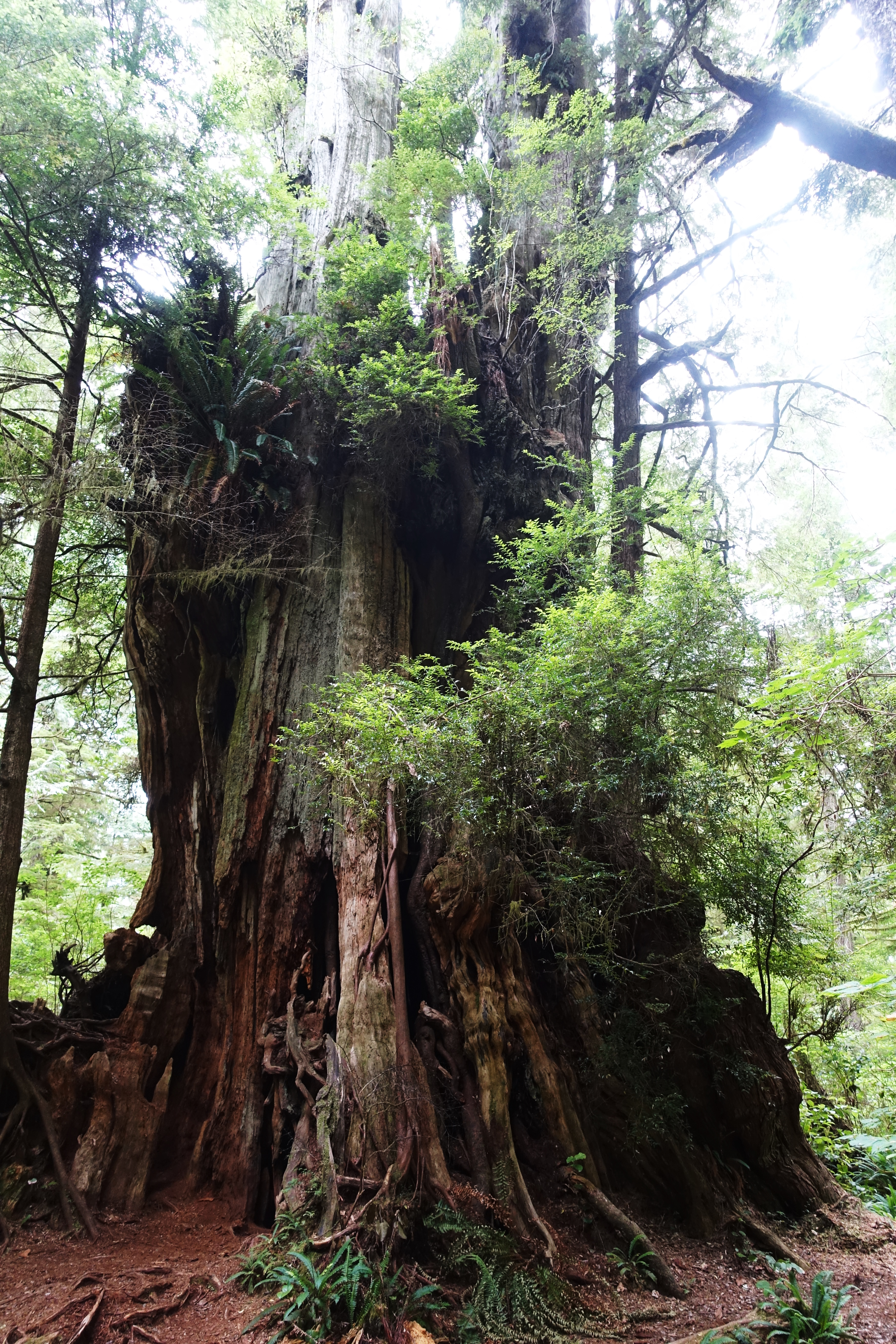
DSC02671Meares Island.


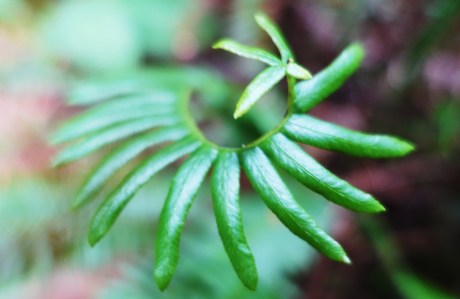
DSC02682 (1)An unexpected twist on a deer fern. Meares Island.
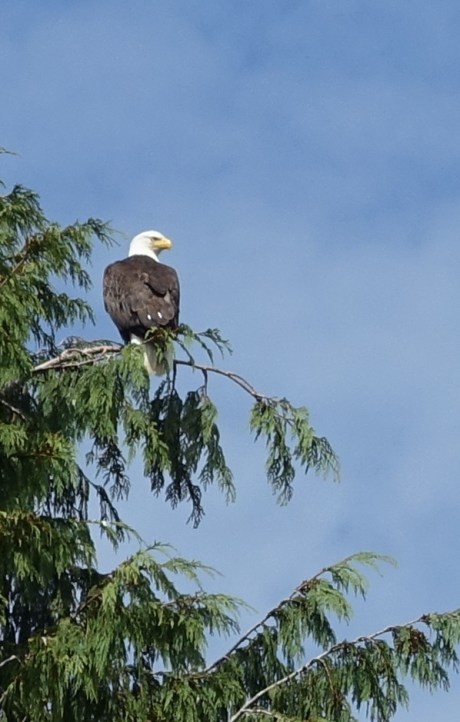
 

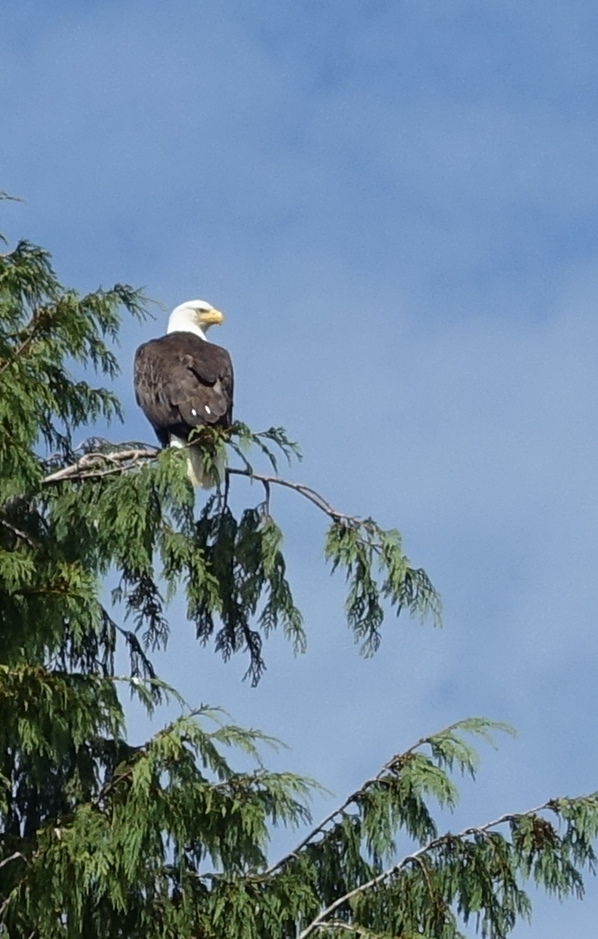
DSC02703 (1)Bald eagle, Tofino.

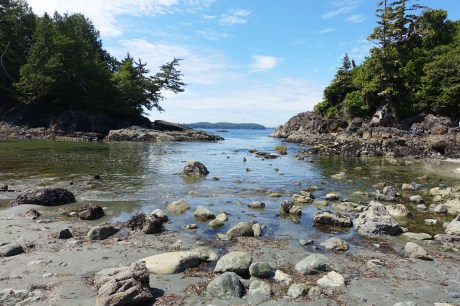
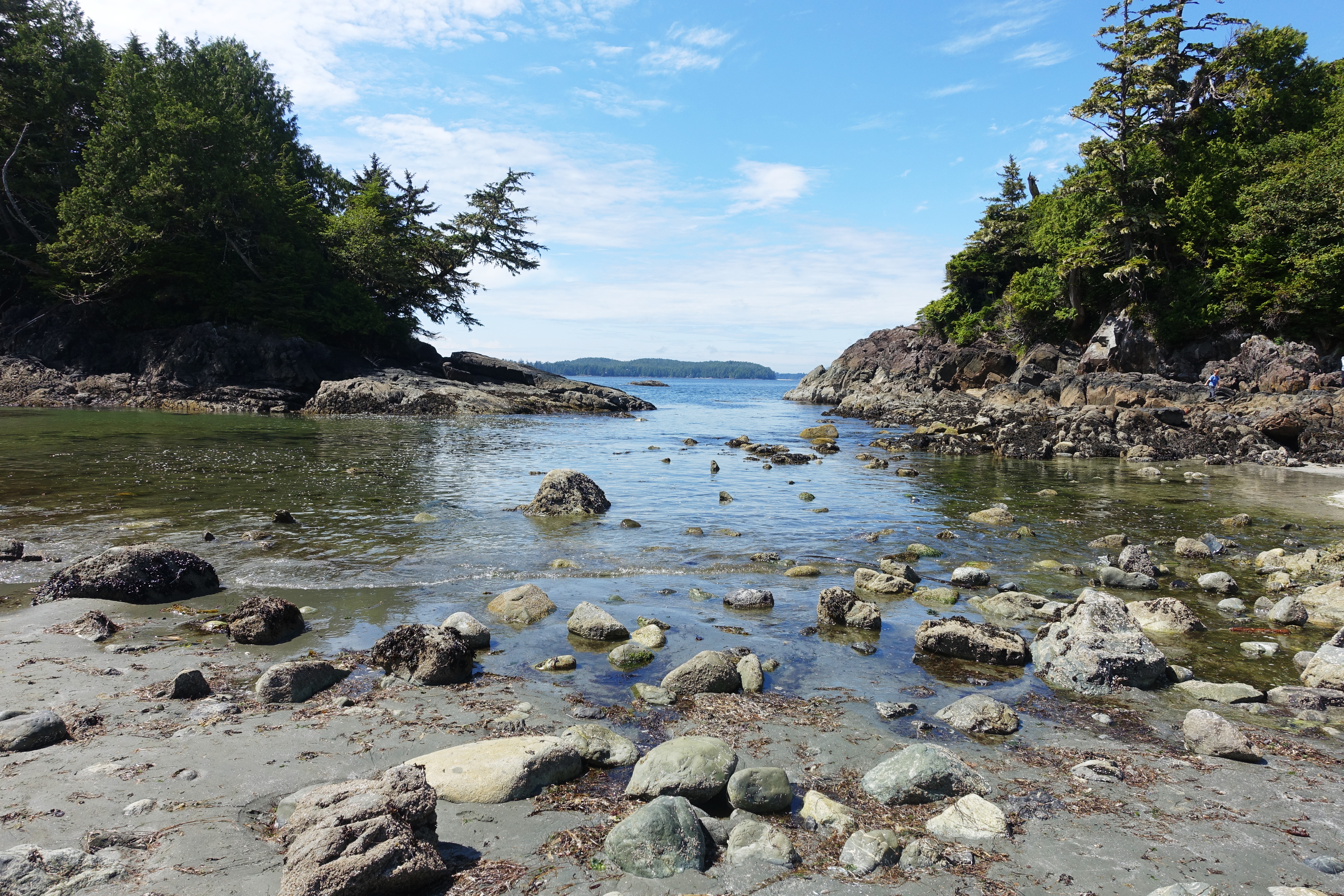
DSC02715Middle Beach, Tofino.

DSC02785Coombs Market, famous for the goats that graze on the sod roof. Alas, I was too busy socializing with my friends, Kathryn and Nel, below, to remember to take a photo!

DSC02790

Lindbergh High School Reunion '82, '83, '84, '85

Join us this summer for our reunion in Renton, WA!

George Lakoff

George Lakoff has retired as Distinguished Professor of Cognitive Science and Linguistics at the University of California at Berkeley. His newest book "The Neural Mind" is now available.

KomenWatch

Keeping our eyes and ears open.....

4 Times and Counting

Confessions Of A 4 Time Breast Cancer Survivor

Nancy's Point

A blog about breast cancer, loss, and survivorship

After 20 Years

Exploring progress in cancer research from the patient perspective

My Eyes Are Up Here

My life is not just about my chest, despite rumblings to the contrary.

Dglassme's Blog

Wouldn't Wish This On My Worst Enemy

SeasonedSistah

Today is Better Than Yesterday

The Pink Underbelly

A day in the life of a sassy Texas girl dealing with breast cancer and its messy aftermath

The Asymmetry of Matter

Qui vivra verra.

Fab 4th and 5th Grade

Teaching readers, writers, and thinkers

Journeying Beyond Breast Cancer

making sense of the breast cancer experience together

Entering a World of Pink

a male breast cancer blog

Luminous Blue

a mother's and daughter's journey with transformation, cancer, death and love

Fierce is the New Pink

Run to the Bear!

The Sarcastic Boob

Determined to Manage Breast Cancer with the Same Level of Sarcasm with which I Manage Everything Else

FEC-THis

Life after a tango with death & its best friend cancer