Archives for posts with tag: grief

I’ve belonged to a small online meditation group for the last two years taught by Donald Rothberg, a psychologist and major teacher on socially engaged Buddhism. He comes from a long line of nonviolent activists and really merits a separate blog post. Donald was very close friends with Joanna Macy, an environmental activist and Buddhist scholar who died last month at age 96. Joanna led the development of a collective grief ritual, for world events, the Truth Mandala.

At our request, Donald led the ritual with our online group of seven people, to deal with the current democracy crisis in the U.S. There are four phases of the ritual. During the first phase, people talk about gratitude. The second phase is opening to the pain of the world. The third is seeing in a different way, and the fourth phase is to “go forth into the world”. We completed the first three phases. Participation was optional at all times.

Most experience meditation practitioners have a gratitude practice. We all shared during this phase, such as for our health, personal safety, music, and the beauty of nature. Then we opened ourselves to the pain of the world expressing feelings of sorrow, fear, anger, and confusion, the four segments of the Truth Mandala. People spoke when they felt like they had something to share, after which, the group said, “We hear you.” It’s simple but it was also very deep. Since what people say in our group is private, I will only share my own feelings. I expressed sadness and anger at the cruel actions of the government and people in support of it as well as the apparent enjoyment in it, as if it were a game. I shared my sadness that so many were disconnected from activism because it is too painful to act or because anxiety and anger have led them to hopelessness.

Although the second phase was painful, by the third phase, when there were some people able to share a different kind of seeing. For example, I expressed fear and confusion about the outcome of our democracy but clarity about my immediate next steps as an activist. I also shared that I view myself as having resources to draw on for activism given my age, race, economic security, and emotional resilience. Others appeared to be in deep despair and chose not to speak. I could see a lot of pain in their eyes and body language. I have spent a couple of years with these people and they have wisdom and fortitude.

I saw their distress and I felt it. I wondered if I should not have shared about my sadness that more people were not engaged in activism. I know how people are, especially emotionally sensitive people. They often don’t think they are doing enough even when they are doing a lot. I didn’t want to make anyone distressed with my statements. Then I thought, “Well, this is the truth mandala. This is true for me and is not targeted toward anyone in the group.”

Most of us in this country are going through collective grief, which has intensified with the second Trump administration. Many are familiar with the late Swiss American psychiatrist, Elizabeth Kübler-Ross’ work on death and dying, in particular, the stages of grief, denial, anger, bargaining, depression, and acceptance. An important thing that a lot of people don’t realize is that this stage model was never meant to be a strict progress toward a final end point of acceptance.

I realized that what was making me most distressed was that although my meditation group was in shared grief, we were not all experiencing it in the same way at that moment. We typically share about our perspectives on an individual experience, not on a world event.

I am often distressed by other activist’s distress, the distress that results along the lines of “we’re doomed” or beliefs that there is only one answer to the problems we are facing. People can be so sure that they have the right answer and everyone else is wrong. My right answer is that there is not just one, even when we share guiding principles of non-violence, building an inclusive, “We, the People”, democracy, and respecting the Earth and living things.

A teaching I am taking out of the Truth Mandala is to recognize that some of the disconnect I often feel with others who also want a better world, is a difference in the way we are grieving, in that moment. I can respect that. I can also respect that grief changes.

My friends, however you are grieving, I am working to honor and validate it.

Much love,
Elizabeth

Dear friend,
a sincere apology
I know that my words
are often rather repetitive
please believe me
it is not intentional
but to be honest with you
I only ever really say one thing
and it’s getting more difficult
to find new ways to say
that we should take care
of each other.

Zachary Loeb
LibrarianShipwreck
8/04/2023

This is one of the many “plague poems” documenting the Covid-19 pandemic. Mr. Loeb writes about 4 poems a day and has done so since March 2020. He is a Ph.D. student at Penn State who studies technology, disasters, and more.

I also feel that my words are rather repetitive during the pandemic, which is one of the reasons I don’t write much anymore. Actually, I have no problem repeating myself but it is discouraging that “we’re all in this together” has turned to a message of individual responsibility.

I feel gaslighted by leadership, even the administration I help vote into office and fervently hope will be re-elected. The CDC (Centers for Disease Control, a federal agency) posted a photo on social media earlier this week showing a line up of cars, carrying staff members, to the offices with a caption commenting on how many CDC employees had returned to in-person work. The CDC houses administrative staff and researchers. In other words, they are perfectly set up for distance work. Meanwhile Covid-19 rates are climbing again. Why not wait until we better understand how to prevent and treat Covid, especially long Covid? Why not talk about how the CDC is reducing risk for employees with increased ventilation, filtration, and masking?

It’s not just the U.S. I see this pattern all over. Yes, the acute death rate from Covid-19 is down. It’s no longer in the top 3 causes of death in the U.S., for example, but it is still in the top 10 and may remain there. It is also a common cause of long-term disability. I’d give you the stats but you have probably already read them so I will tell you a true story about a real person.

My brother, Joe, is 66-years-old and just retired as a high school special education math teacher. In early 2020, he was working at a middle school, down the street from the Life Care Center, a nursing home in Kirkland, WA. You may remember that this was the place originally designated the North American epicenter for the Covid-19 pandemic. The teacher’s aide in the classroom is married to a first responder. She got Covid from her husband and gave it to my brother in January/February 2020. It was mild and he just thought he had a cold. Fortunately, his wife was away at the time and was not exposed to him. My brother’s physician told him to assume that he’d had Covid (there were no tests then, remember?) and he got vaccinated as soon as possible. Joe followed recommendations carefully. In August 2022, he attended a family wedding in Montana. He contracted Covid again, this time long Covid.

Joe told me, “I don’t remember between August and November”. He took a leave-of-absence from work because it was too difficult to teach mathematics and write I.E.P.’s (individualized educational plans) for his students. Fortunately, he was able to get a good neuropsychological assessment, which established his need for workplace accommodations, including a workload reduction. He made it through the year but said it was really hard. Thank goodness that he had already planned to retire and did not have to do so earlier in his career.

Nonetheless, it is feeling like an increasing struggle to get my extended family to take precautions even given that our brother has had long Covid, our mother is nearly 89 years-old, and their sister has a rare heart disease. There are others in the family with significant risk factors but they don’t see themselves at being at higher risk. There are also a lot of teachers in my family and a couple of them teach little kids, who at this point have been found to be more likely to carry and transmit the disease. During the summer, it is no big deal because we can visit outside. But in the colder months, it is getting increasingly difficult. I nearly opted out of Christmas last year and I am strongly considering skipping it later this year. Everyone can just leave me alone to live my semi-hermit life in peace. Bah, humbug!

My mother-in-law, Nancy, is currently going through cancer treatment for non-Hodgkin’s lymphoma. I won’t go into detail but it was serious enough that we cancelled our planned three week camping trip in Alaska. About 1/3 of the people in the cancer center wear a mask, including front office staff. In fact, one women at the front desk makes it a point to tell people wearing masks that they don’t have to. THIS IS IN A CANCER CENTER! WHAT THE HELL? People were so careful about it before, now even healthcare settings with highly health compromised patients are leaving it up to individual responsibility.

Don’t get me wrong. I’m not depressed and I am still having fun in my life, going on local hikes and making pottery. I am lucky in my job to have a lot of control over my office environment. But I am discouraged about our species. On the one hand, it seems like little sacrifice to wear a mask or put a HEPA filter in place to make public spaces more accessible to people at risk. Don’t people with liberal politics believe in inclusion and accessibility? On the other hand, these are most challenging times. I get it. There is a lack of clear guidance. I do spend a significant amount of time keeping up with research advances from a few sources that I trust. But until we have better prevention and treatment options, I will continue to use the tools at my disposal to reduce my risk of contracting or spreading a serious disease. That means I get to do a lot but I also miss out on things.

With every new wave
the message is the same:
“we have the tools”
do not worry do not panic
for we have the tools
and since you
are part of the we
you ostensibly have them as well,
though it has been a long time
since an appeal to you
as part of a we
was itself one of the tools.

Zachary Loeb
LibrarianShipwreck
8/04/2023

Lately, I am finding it easy to tip my toe into waters of despair. There have always been heartbreaking world problems but in this country, there are heartbreaking problems being purposefully created. Purposeful assault against vulnerable people and against our fragile Mother Earth. Oh yes, there is also the continued assault against our republic. The first anniversary of my dad’s death is coming up on July 5th. I have been feeling that, along with other personal losses, my scary past illnesses, parenting worries, for the last month.

Even for a mostly extremely lucky person like me, life is hard. Fortunately, I am able to take my toe out of the water of despair. Then I see a sliver of hope. It is a sliver but it is there. It is meaningful. It is an opportunity, fragile as it is. I would like to be more hopeful but I’m not.

Most of the day and most days, I feel energetic and happy. And then I feel the restlessness of wanting to get away. The sadness doesn’t last long, sometimes 30 seconds, other times, an hour or so. When I feel despair, it is perhaps for a few seconds. However, the restlessness stays with me. It makes it hard to do seated meditation. It makes it hard to write, which is why it has been so long since I have posted.

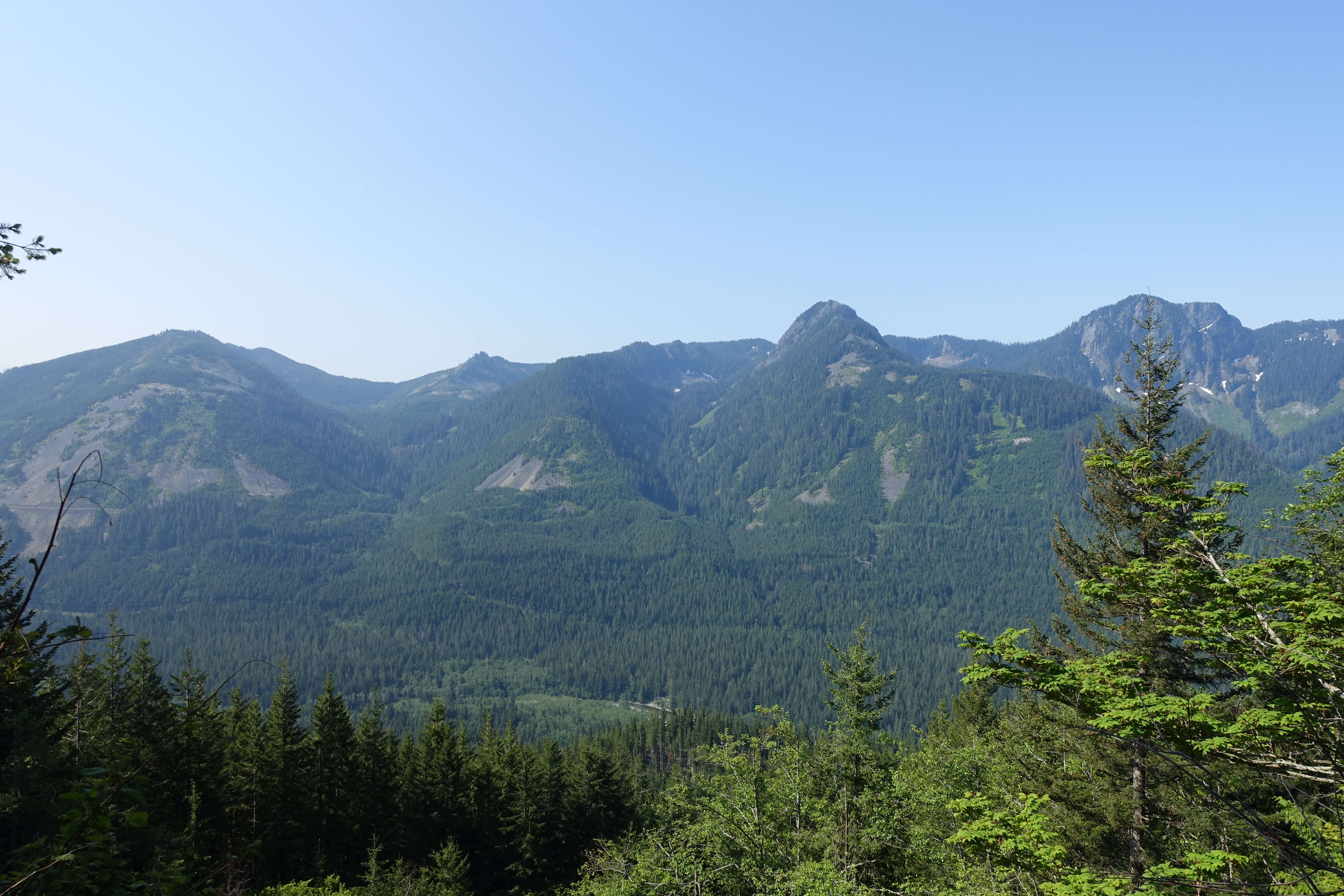
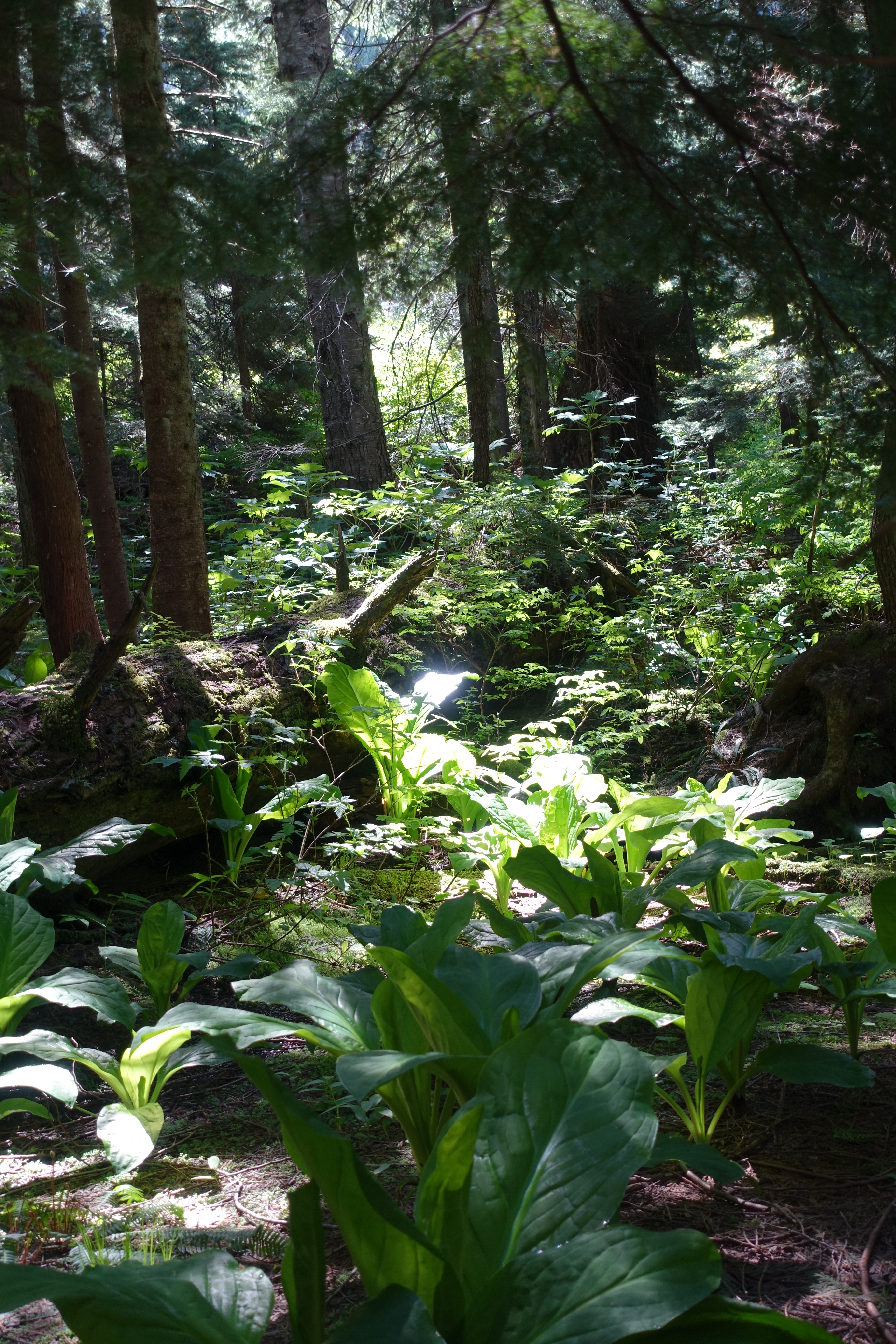
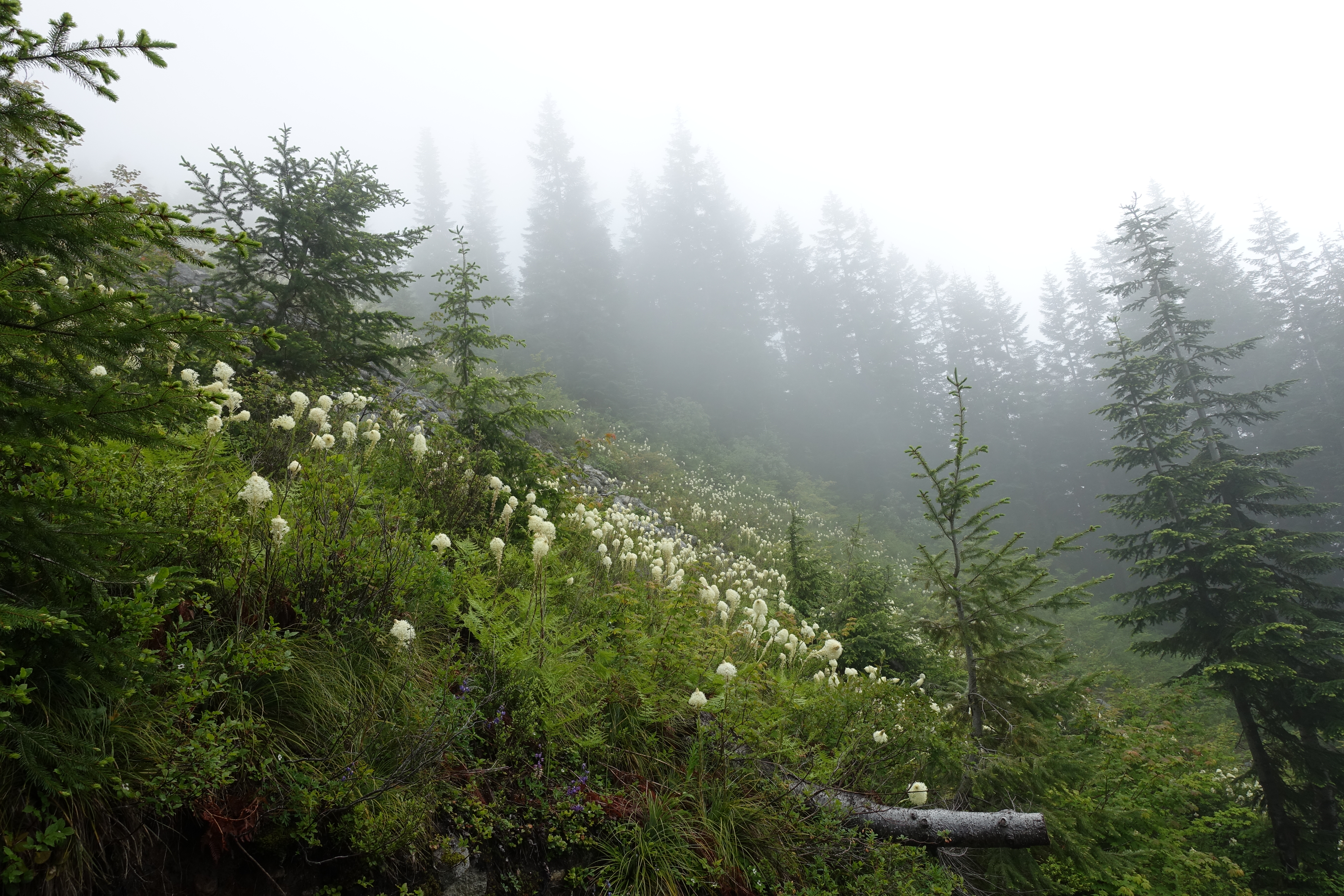
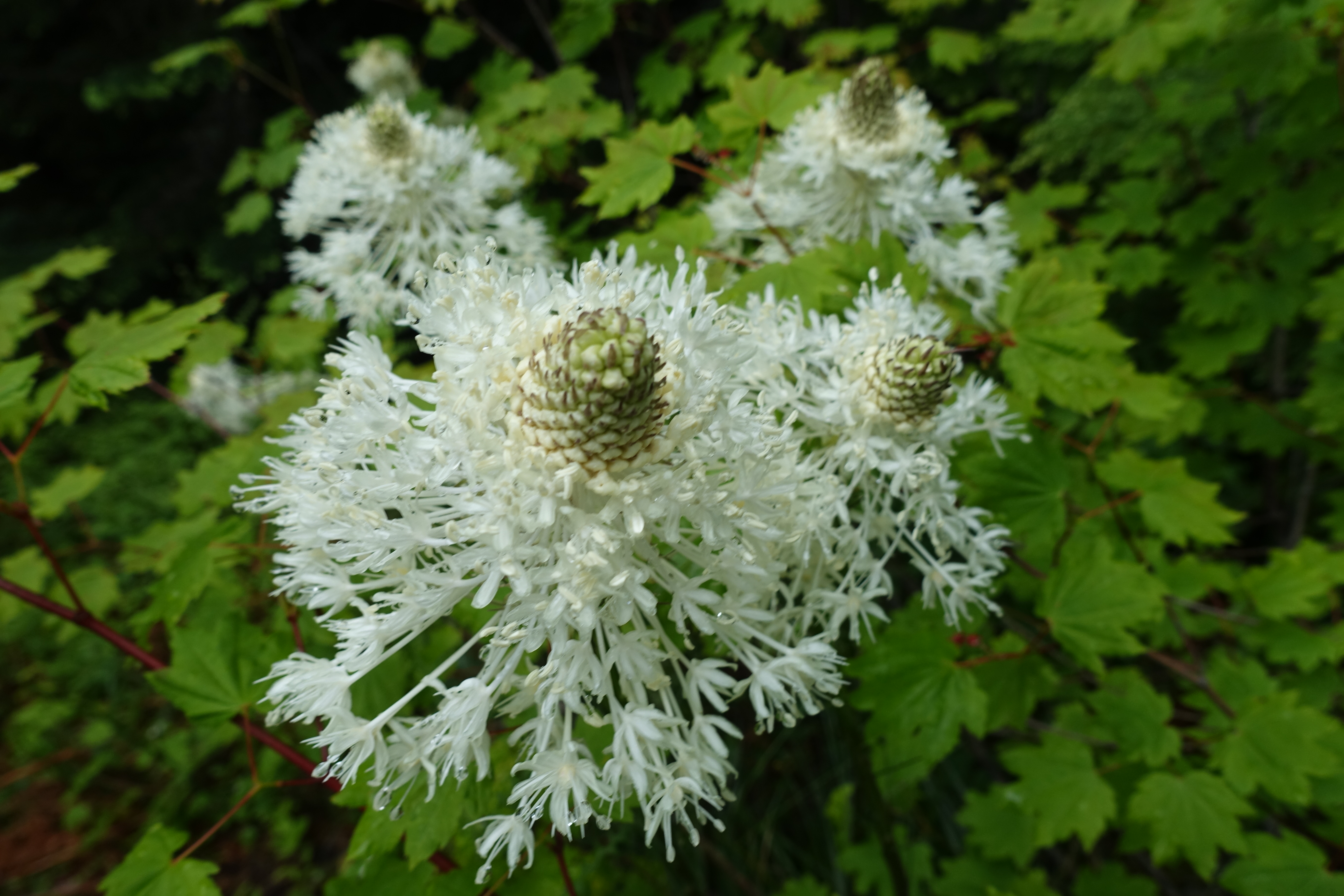
What I find easy, these days, is to hike. The forest is lush and green. The mountains are abundant with wildflowers. My body is gaining strength to handle steepness that I was not able to do when I was younger. Steepness gives way to vistas of nearly unimaginable beauty. The promise of a hike is enough to motivate me to put in long days of work and to get my chores done at home. I am able to free up time and space to get away.

And it’s not that I don’t think of the big problems when I am hiking because I do. But I do it while also being surrounded by a larger context of beauty and nature’s reminder of the vastness of time, space, and the ongoing life cycle. These things are bigger than me. They are bigger than our species. My mindfulness teacher talks about “residing in a larger container of awareness”. She is talking about something I don’t yet fully understand but I think I am getting gaining understanding.

I am grateful for the life circumstances that allow me to protect my hope and to protect my love of life and being. This hope motivates positive action. Thinking about problems is not the same as constructive action. It is merely grieving in place. I am learning and re-learning that I can grieve and move at the same time.

Peace to you, friends.


DSC07165DSC07174DSC07276DSC07455DSC07462DSC07468DSC07477DSC07480DSC07496DSC07508DSC07509

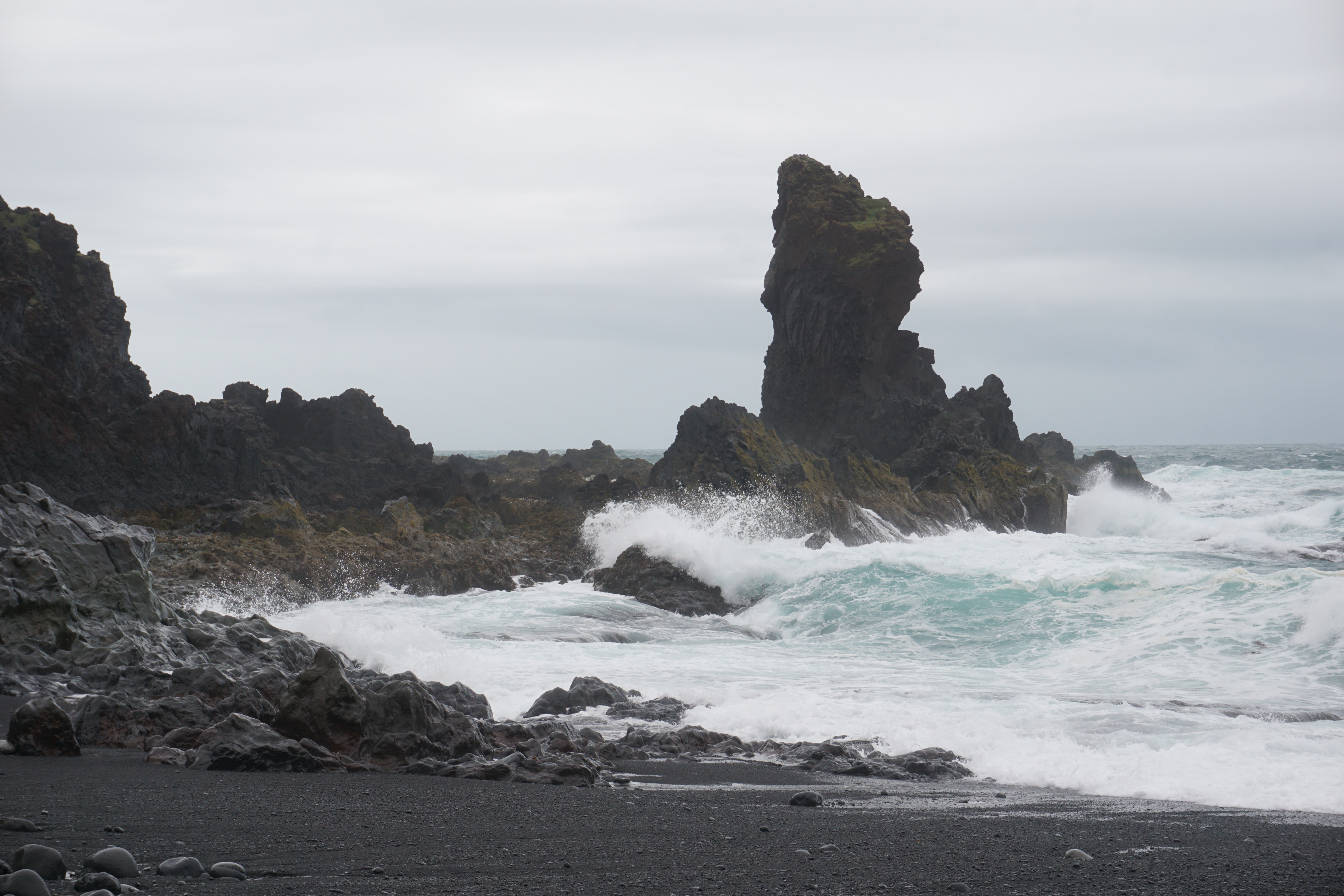
Today, John and I went hiking on the Nisqually Delta, where the Nisqually River runs into the Puget Sound. This is a hike that my parents have taken and I recall my dad telling me about it.

It is muddy. The water is brackish. It is winter in Western Washington. The ground and the plants are dark. The sky is changeable from grays to white to peeks of blue.

This is a popular area. We see many people, mostly families with kids and gray-haired married couples. The trail is flat and wide. There are short and medium length trails. It is perfect for the young and the old. I see my past as a child learning to hike, as a mother teaching her daughter to hike, and hopefully, my future, continuing to hike with my beloved husband for many years to come.

It seems like an in-between world, between solid and liquid, earth and sky, salt and freshwater, youth and old age. I see death, in the silver tree snags that stick out from the mud. These trees will never get leaves again. I see dormancy in the live but leafless trees on the shore and in the brown bushes in and around the water.

I also, of course, notice a lot of life, when I get quiet and still. There are so many birds. Honking geese, so many kinds of ducks, gulls, waders, and those little bitty beach birds that scurry along the shore like mice when they are not flying in tight formation just over the water’s surface. Every once in awhile, I hear a frog, sounding like a cross between an animal and a one-stringed musical instrument.

Every life is in-between. It is in some moments that we are fully aware of this. Today, I see it. I hear it. I feel it. It is poignant, hopeful, sad, and sweet.

This slideshow requires JavaScript.


I finished an 8-week-long Mindfulness-Based Stress Reduction (MBSR) class last Wednesday. I am not new to MBSR but wanted to increase my formal mindfulness practice since it had waned over the past year, with my dad’s cascade of health problems and death last July.

It was a wonderful class. I haven’t been writing much. As my meditation practice has gotten deeper, I have longer times when I am experiencing sensation more than language. This is something I knew could happen in meditation, but as a person who typically has a running monologue in my brain, it is a rather magical and new experience. It is not, however, easy to write about.

I feel some loss about the class ending. To prevent my being totally adrift, I have also started seeing a mindfulness psychologist, Bonnie, who specializes in working with cancer patients. I had actually sought her out first, her practice was full, and she recommended the class. In the mean time, space opened up and I have been seeing her. She also happens to be a friend of my dear friend, Nancy. This is not surprising since 1) Nancy seems to know almost every other psychologist in Seattle and 2) Nancy also works with cancer patients as well as being a breast cancer survivor herself. (Nancy, you may remember, is the dear friend who cleared her schedule to be with John and I for my first breast cancer appointment, back in 2012.

I feel pretty fortunate to work with Bonnie. She is very skilled and worked for many years as a researcher at the Fred Hutchinson Cancer Center. Bonnie did mindfulness classes with cancer survivors and the classes were associated with reduced recurrence.  This is why I began my mindfulness practice in 2012, by the way, after following some Canadian research on a specific mindfulness class for breast cancer survivors.

But wait, I was intending to write about endings, not beginnings. The other thing that ended was the U.S. Midterm elections.  I did a lot to prepare myself for dystopian outcomes and good thing the worst case scenario did not occur because I was not successful in my preparation. They were not horrible, not great, and maybe not even good. Not horrible. That is the current benchmark for success in current U.S. national leadership. Actually, some really great things did happen. Lots of women were elected, especially women of color. Some of the people elected were LGBT/Q. Eight scientists were elected. Two women of color who are also Muslim, were elected.

So the election ended but as I had anticipated, there is still a lot of work that needs to be done. Our republic is very much in peril and so many people are suffering. I am exhausted by the news but I am also mindful of the fact that experiencing exhaustion is one of the best outcomes of our current situation. As I said, many people are suffering from abhorrent treatment and some have died or are dying due to lack of access to basic human needs or violence.

One thing ends. Another thing begins. Sometimes it is tempting to jump from one thing to the next without acknowledging the ending. Today, I feel the endings and the beginnings. I had put myself, intentionally, in a protective shell of self-care practices for the last few months. I come out for periods of time and then retreat to a thinner shell, for a shorter period of time, but it is a shell, nonetheless.

Overall, I am doing well. Most of the time, I feel happy. In the last week or so, I’ve felt not so much a wave of grief, but a persistent lapping at my toes. I have reacted more strongly to situations than normal, for example, feeling shame at times, over minor incidents. It is as if grief takes me back to a much younger time of my life. Bonnie says that the energy I am using to cope with my dad’s death is leaving me with less to cope with the normal daily stresses and that I am going back to older ways. That makes sense to me.

Working on grief is helping me define the edges of the persistent lapping at my toes. It turns out that today, they are not lapping at my toes. I am standing in the middle of the ocean. I feel sad today and a bit angry.

I don’t like to be in the middle of the ocean but I am grateful that I am standing, for now.

Peace to you, friends. I hope you are well.

-Elizabeth


You may have heard that the west coast of the U.S. is filled with smoke from summer wildfires. We’ve been in the latest cloud for a few days. As I watched the ash land on my car yesterday, I was reminded of the last time I saw ash in the sky.

It was last October. I was at Spirit Rock Meditation Center for a five night meditation retreat. To the north, there were fires in California, ravaging forests and homes. I was at the meditation center without my cell phone. I had given it up on the first day of the retreat so I could have the retreat experience I wanted. I had, however, told my husband that if any time while I was there, he feared for my safety, he merely needed to call and tell them there was an emergency and I would return home. That never happened. The retreat staff did a masterful job of informing us, just enough, of our safety and the progress of the fires. I was assured that they would not put us in harm’s way.

I had gone to the retreat to be alone with myself, five months after the unexpected calamity of two heart attacks caused by Spontaneous Coronary Artery Dissection, a poorly understood cause of heart attack among primarily seemingly healthy women.

I meditated. I ate. I walked. I slept. I watched the ashes fall on the days of smoke. Sometimes I felt restless. Sometimes I felt bored. Sometimes I felt awkward. Mostly I felt that I was exactly where I wanted and needed to be. I had moments of lovingkindness, peace, equanimity, and mindfulness.

We have ashes falling again. They fall from the sky and settle. The air is hot and acrid. There have been health warnings to avoid vacuuming carpets inside to prevent the ashes that have settled into the fibers from roiling back into the air.

There has been a roil of ashes in my life. Natural calamity. My father died. This happens, especially after a life of 85 years. It is natural but it is calamitous. Normal doesn’t mean good. It means, common. Death is a normal part of life that is really really hard.

Some of the ashes are settling. As I watch them, I am reminded of the mindfulness analogy of the snow globe. If you stop shaking a snow globe, the roil of snow settles. The scene is peaceful but the snow is there.

I can’t help the ashes that fall from the heavens and follow the winds, but I can keep my vacuum tucked away in the closet, at least for now. For me, this means, continuing to protect my emotional and physical energy. I am careful about how much socializing that I do. It takes a lot of energy right now. I do a lot of art. I continue to keep my patient load on the lower side. I ask for help and understanding. I keep in touch with my mom every couple of days. I am taking short vacations.

I am doing my best to let enough ashes settle so that I can see where I am.

Peace friends.

I was walking in my neighborhood last week and I passed two men. One of them had a newborn strapped to his chest in one of those little baby carriers. His baby looked blissfully asleep and his father looked like he was enjoying his time with his son.

This is not an uncommon sight where I live. It was a rather uncommon sight when I was a girl. When I was young, a man changing his own child’s diaper was considered a rarity. Men played with their babies. They were not as involved with the day-to-day caretaking as they are now. Caretaking was considered “woman’s work” and therefore “beneath” a man. It still is, to a certain extent,  but there really has been a significant overall increase in men’s level of involvement in their children’s lives not to mention an increased appreciation for “women’s work”. I have been providing mental health services to families for since 1991. When I started out this meant working with mothers and their children. Father participation was not common. It is far more common now and it is rare that I never meet with a child’s father.

When I saw the man with his infant, I smiled in recognition of what our culture has gained from the women’s movement. There is still sexism. “Feminist” is still a “bad word”. But it is difficult to deny if I REALLY think about it that men’s lives have been improved by feminism. To know your children better and to be a nurturing force in a vulnerable being’s life are gifts. With the loosening of gender roles, I also think it is easier for gay men to be parents together.

Civil rights and social movements are often met with resistance, the resistance that to give up a privilege is an absolute loss. That there is nothing to be gained through change. There is a lack of acceptance.

Loss, perceived or actual, is often a sticking point. It is a place where we hesitate, trip, or in some cases, fall into a deep pit, for which climbing out is virtually impossible.

Honestly, sometimes we want to stay in the pit even if climbing out is a possibility. We struggle. We suffer. We want to be heard, seen, and felt. At other times, we deny that we are in a pit. “What, this isn’t a pit? Everything is fine.” This is another kind of nonacceptance, and it too causes suffering. Denying and suppressing loss and the grief that comes with it, is a short term solution with painful consequences. In the world of cancer and other griefs, I see this acutely.

In the world of cancer and other griefs, I see this acutely. It can be so difficult to find balance. It is so difficult to find the time and space we need to grieve our own losses and come to some kind of peaceful place with them. On top of that, there is no final destination. Grief is an iterative process, one that we must come back to over and over. This is why we can get on with life and yet not ever “be over” a significant loss in our lives.

This weekend, I have been feeling anxious. I had awful nightmares last night. I feel justifiably underappreciated by my family. However, the way my impatience has played out in my behavior is a way that increases my suffering as well as that of my family.

I came back to my well-spring. I did a sitting meditation and I am sitting her with my own thoughts and feelings, writing this post. I can feel myself letting go of hurt and anxiety. I am not quite solidly balanced, but I am getting there. I am nurturing myself and it is radiating within. When I leave this office and rejoin my family, I am hoping to radiate compassion toward them, as well.

I’ve been trying to do a lovingkindness meditation each day of March. I have done one most days. I did one of them while I was taking one of my neighborhood walks. It is true that the meditation is designed as a sitting meditation but I was curious and decided to play the 30 minute-long meditation during a walk. It was actually quite a nice experience. The birds seemed to be singing more loudly and sweetly. The air had the scent of flowers.

As is typical of all mindfulness meditations, I was instructed to examine my current experience. It was suggested that I might be feeling physical or emotional pain. The instruction was to pay attention to the uncomfortable aspects of my life but also, “to see if there is something else.”

“Something else.” There is always something else. The suggestion in the meditation struck me as one of the most powerful aspects of mindfulness meditation, which is the consideration of the “something else” in addition to what is weighing heavily on the mind, body, or emotions.

There are those of us with a cancer experience who wince at words such as, “Cancer is a gift.” That statement omits the “something else”. The something else is life changing and painful in a way that merely writing the words, “life changing and painful” seem to discount the way that cancer changes everything.

For me, however, there is  another side. There is the side of not everything about my life as a cancer patient is awful. Not everything I made of my cancer experience was awful. Although I think about my breast cancer every day, it does not encompass my life.

My life is full of the “something else” in addition to the pain, discomfort, and loss in my life. My life is full of the “something else” in addition to the joy and emotional health I experience.

Life is full. I have long known this. It does seem that a gift of mindfulness is the opportunity to experience more of the “something else” and to get more aware of and engaged in the expansiveness of life, while not getting lost in it.

Today, the “something else” was experienced with by me with my camera. The small gems of beauty mean so much.

DSC04463

Yesterday was a gloriously sunny spring day. Actually, it was like a summer day. It was 77 degrees (25 degrees C). I was taking my daily walk in a different neighborhood than usual. A light breeze carried the scent of lilac, bearded iris, and wisteria. At times, I could see the mountains and the sea. At one point, I passed a man working in his yard. I greeted him, “Beautiful day.” He looked at me, smiled broadly, raised his palms toward the Heavens and exclaimed, “This. Is. Seattle.” I replied, “Yes, the city at its very best.”

It is gray today and considerably cooler. I am wearing long sleeves and walked from my car wearing my waterproof and hooded trench coat.

This. Is. Seattle.

The statement is as true today as it was yesterday. And yes, I am using the weather as a metaphor.

And yes, you are no doubt familiar with this metaphor.

My daughter is a very bright and sensitive teen. She is as cynical as Hell with liberal doses of wit. Just yesterday, she responded to friend of mine’s sincere compliment, “Aren’t teenagers GREAT!?!, ” with “No. All we do is complain about you guys ruining the economy and being close-minded.”

To her, the negative aspects of life are more real, at least from an intellectual standpoint. I was the same way at her age; it is part of growing up, realizing that the world is complex and largely uncontrollable. That part of reality sucks.

But it is part, not the whole. I come back to this metaphor time and time again as well as to just the thought that almost no situation is all good or all bad. A lot of my blog posts are about this very topic, staying positive, but realistic. Staying in balance.

I almost didn’t write this post because I thought that the theme was too much of a cliche. Then I realized that there are things that never get old like saying, “I love you” or giving someone appreciation, or even TALKING ABOUT THE WEATHER. Those are actions that tie us to our loved ones and to our communities as a whole.

I repeat these thoughts, the importance of seeing both the positive and negative, the good and the bad, the painful and the joyful, because they tie me to my own mental health. My life is not going to be about pink ribbons. But it’s also not going to be a black out of light. If there’s a flower to to look at, I am going to do my best to see it. If there a need for compassion, I will do my best to give it. If there’s a loss, I will do my best to grieve it.

This.

Is.

Life.

Geum.

Geum.

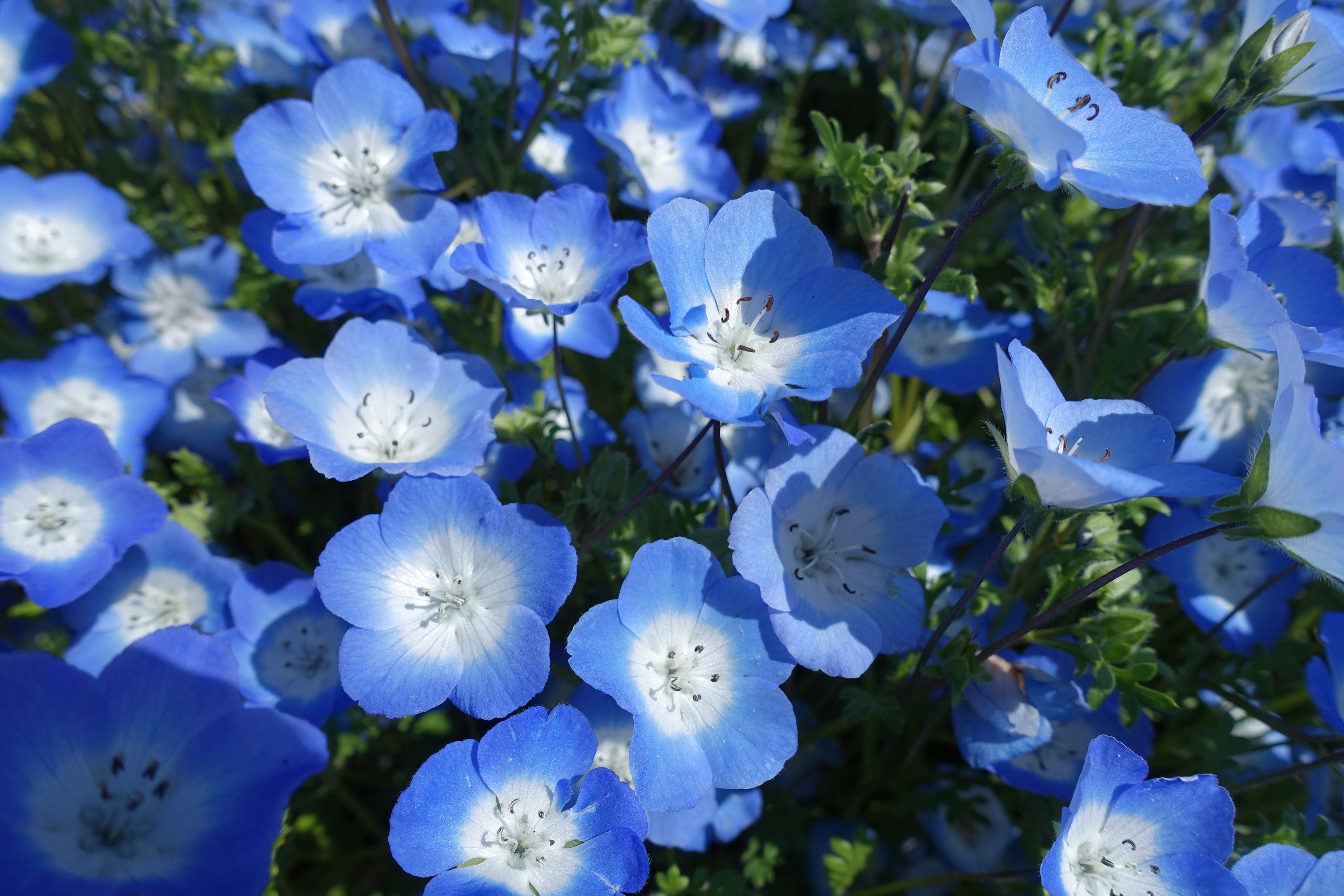
Nemophila.

Nemophila.

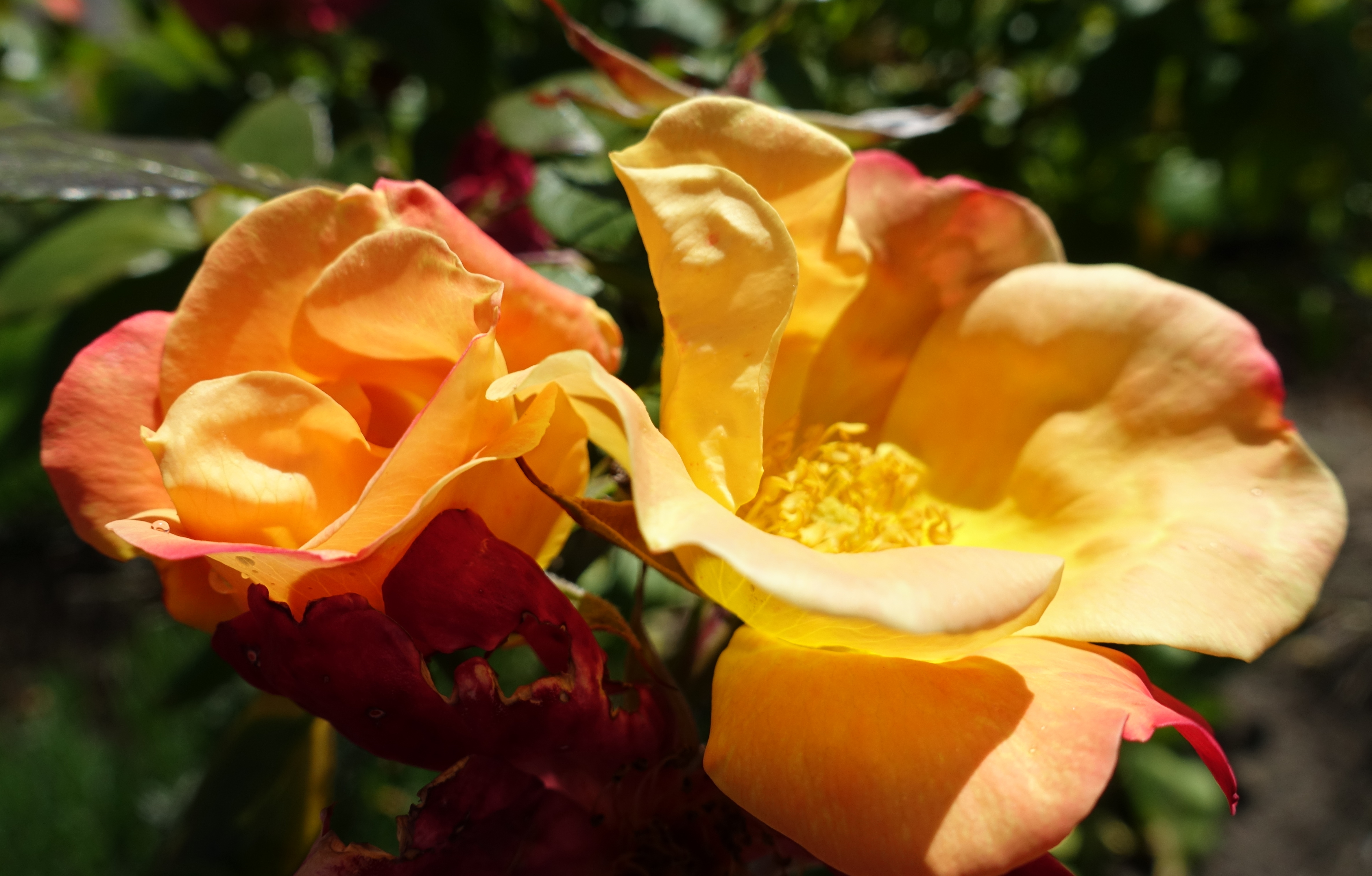
The roses will be at their peak in about a month.

The roses will be at their peak in about a month.

The bees have been back for awhile and the lavender has just begun to blossom.

The bees have been back for awhile and the lavender has just begun to blossom.

My husband and I moved around a lot during the first several years of our marriage. We were married in 1990 and it was not until 2001 that we bought our first home in Seattle, which is the home in which we still live. This is one of the most expensive cities in the U.S. and we don’t live an ostentatious life style. Consequently, our house is not fancy or stylish. But we love our 1950’s house and have worked to inject it with our own personal style, which is colorful and eclectic.

When we moved into the house, there were flower beds in the back. I spent the first year in the house weeding and seeing what kind of plants there were. There was a grassy front yard, bordered by two huge juniper shrubs. Juniper shrubs were commonly part of the landscaping for homes built in the 1950’s and 1960’s. I imagine that they were cute back then. They get rather prickly and enormous over time. Also, they are really ugly, so ugly that the house had what my brother, a realtor, called, “No curb appeal.”  After we’d been in the house for about three years, John removed the shrubs and built a rock wall. The shrubs were weighed at the city dump for the composting program; a half ton of shrub. 1000 pounds of juniper, people!

I planted a rock garden. A year or two later, John removed the front lawn. I covered it in layers of newspaper and cardboard followed by four inches of beautiful black compost that I had delivered to my house, which I carried around the yard by the wheelbarrow full. I didn’t plant anything in the yard for a year to make sure that all of the grass and weed seeds under the paper barrier would not get exposed to light. The following years, I started a long project of putting in flowers, summer vegetables, shrubs, garden art, soaker hoses hooked to an automatic watering timer, and slate walkways.

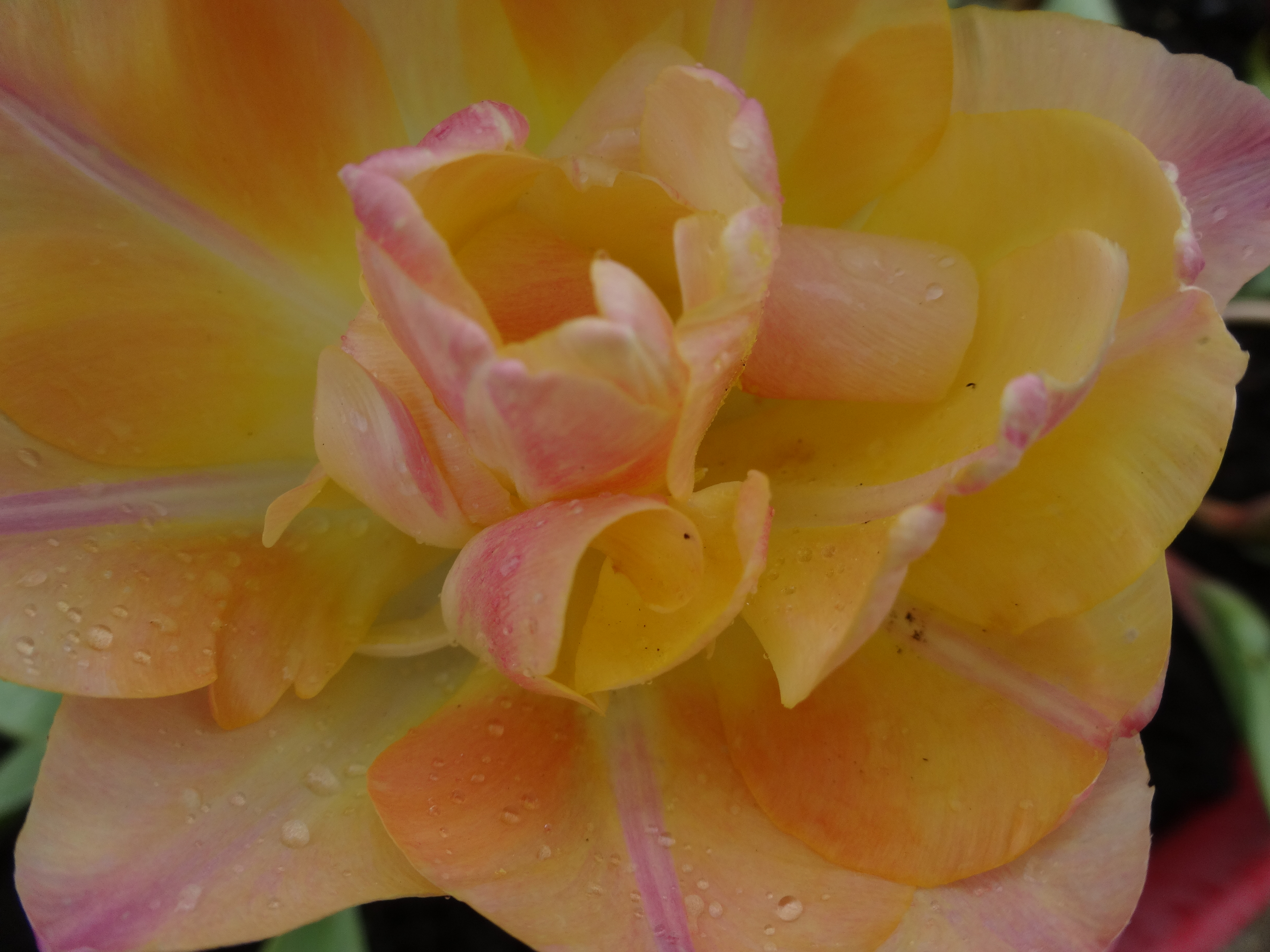
After the front yard was “done”, I started work on the planting strip, the piece of grass between the sidewalk and the street. This land is owned by the city but the home owner is responsible for upkeep. The city encourages people to make the strip into a garden. We had already planted two trees there, which were given to us by the city as part of their Street Trees program. I got out my garden edger and started the long process of removing sod from the strip. I did it in pieces, removing a small square and filling it with compost and new soil. I planted beans there the first summer. After a year, it was all removed and planted. Right now, it is full of blooming tulips, which I have planted in wet fall weather, my garden gloves filling with cold muddy water.

Until my cancer diagnosis, I spent a great deal of time in my yard, weeding, pruning, and planting. Then I stopped working in my yard, for the most part. I had repeated surgeries that made it hard for my to use my arms and abdomen. I started exercising regularly, which meant less time for gardening and also another way to fulfill my need to spend time outdoors. I had trouble with fatigue. I had friends that came to help. Later, I decided to get rid of the little strip of grass on the left side of the house to open up more planting area. I got about half done with that project and lost steam. It is still unfinished, a year and a half later.

But after years of working out there several times a week during the summer and frequently during the rest of the year, I found out what happens when a yard doesn’t get such regular attention. It’s not pretty. It gets weedy and full of brown stuff. Some plants get out of control and propagate wildly. The rose bushes did not get pruned. One of them got as large as a Volkswagen. It was really overwhelming. I often found myself thinking, “My yard used to be so beautiful. It was so much easier to maintain. Now it is a mess.”

Last spring, I actually hired a landscape service to weed, prune, and mulch the front yard, which is where most of the flowers are. I couldn’t afford for them to work on my back yard, too. I figured that after they did the heavy work, I would be inspired to get back into the yard because it would not be so overwhelming. The landscapers did a great job and I didn’t end up doing anything out there.

This year, I found my yard overgrown once again and myself, once again, thinking, “My yard used to be so pretty. People used to take photos of the flowers in my yard. Sometimes cars would slow down to look at my yard.” I called the landscapers out again. It was not quite as big of a job this year and it made an enormous difference. And this year, unlike last year, I did gather some momentum. I weeded my raised vegetable containers, my husband turned over the soil, and I added compost, fertilizer, and new soil. I transplanted flowers to other containers because they were getting in the way of the vegetables. I replaced broken soaker hoses for the front yard as well as for the vegetable containers. I removed three years of old bean stalks and tomato plants from my two story metal growing cages.

Today, I went back to the yard. I planted lettuce and bok choi seeds in my vegetable containers. They are fast growing and should be finished by the time for planting summer vegetables, beans and tomatoes. I cleared the hair allium that had started out as about eight bulbs and spread into several hundred plants. Waaaaay too much allium. Clearing that out took a couple of hours, working around tree roots and plants I wanted to save. The number of little allium bulbs under the soil was unbelievable. (Hair allium is cool looking and it used to be a moderately expensive plant. My guess is that they are now being giving away at Home Depot check stands. They are worse than bluebells for “naturalizing”, a.k.a. taking over like a hostile alien race from another planet.) After I dug that out, I had to use a couple of bags of soil to replace what I’d removed. When I finished, my yard looked so nice, nicer than it has looked in years.

I came across a random photo of my front yard from my pre-cancer days. It shocked me. My yard looked terrible! Now the fact that I’d taken a photo tells me that it was probably a “before” photo taken for spring clean up. The yard always looks bad for part of the year. My surprise at the photo got me wondering how much I had exaggerated the state of my garden in comparison to the years prior to cancer. “My yard was so beautiful before cancer.”
In truth, it was better maintained in the past and that does make an aesthetic difference. But I think nostalgia and loss has nudged my memory to increase the contrast, closer to, “Before cancer everything was wonderful.”

Truly, there are a lot of losses than come with cancer, and they are losses to grieve and honor. But sometimes I think I may be too quick to interpret “before and after” in a negative way, when I am feeling discouraged, worried, or overwhelmed. I think this is natural for people to do, to think about significant aspects of life from the past with fewer shades of gray. I learned last year with my 30th high school reunion that perhaps my recollection of high school being terrible in certain respects, was not accurate. I suspect that friends who look back at high school with very strong positive feelings and memories, may be forgetting some of the bad aspects. And then of course, there is the whole lamentation of culture and young people, “Kids today…” “Society is going to Hell in a hand basket.” It can be easy to idealize the distant past. It is not clouded with immediacy of the present or the unknown of the future.

I don’t really know how much better or worse my yard is. After all, living things grow and die, regardless of whether we work the soil or not. Things change all around us.

What I do know for sure is that today I dug in the dirt and I had a marvelous time.

DSC04702


My garden

My roses in 2012. They will start blooming again soon.

My roses in 2012. They will start blooming again soon.

Lindbergh High School Reunion '82, '83, '84, '85

Join us this summer for our reunion in Renton, WA!

George Lakoff

George Lakoff has retired as Distinguished Professor of Cognitive Science and Linguistics at the University of California at Berkeley. His newest book "The Neural Mind" is now available.

KomenWatch

Keeping our eyes and ears open.....

4 Times and Counting

Confessions Of A 4 Time Breast Cancer Survivor

Nancy's Point

A blog about breast cancer, loss, and survivorship

After 20 Years

Exploring progress in cancer research from the patient perspective

My Eyes Are Up Here

My life is not just about my chest, despite rumblings to the contrary.

Dglassme's Blog

Wouldn't Wish This On My Worst Enemy

SeasonedSistah

Today is Better Than Yesterday

The Pink Underbelly

A day in the life of a sassy Texas girl dealing with breast cancer and its messy aftermath

The Asymmetry of Matter

Qui vivra verra.

Fab 4th and 5th Grade

Teaching readers, writers, and thinkers

Journeying Beyond Breast Cancer

making sense of the breast cancer experience together

Entering a World of Pink

a male breast cancer blog

Luminous Blue

a mother's and daughter's journey with transformation, cancer, death and love

Fierce is the New Pink

Run to the Bear!

The Sarcastic Boob

Determined to Manage Breast Cancer with the Same Level of Sarcasm with which I Manage Everything Else

FEC-THis

Life after a tango with death & its best friend cancer