Archives for category: Flora and Fauna

One of the recent activities on Facebook has been for women to post five photos of themselves in which they feel beautiful. It is framed as a challenge.

I think it is good for women to recognize their beauty as we so often do not appreciate it in ourselves.

But what is beauty, anyway?

I didn’t feel beautiful for the majority of my life. There were moments, of course, during which I did.

But what is beauty, anyway?

Is it aesthetics?

What are aesthetics, anyway?

Well, most people agree on a certain set of guidelines for determining who and what is “good looking”. Looking healthy has something to do with it. Looking youthful has something to do with it. Looking fertile has something to do with it. Looking just enough out of the ordinary to be striking but not too much as to look alien, has something to do with it. Tradition has something to do with it. Looking non-threatening has something to do with it.

We could say that human aesthetics don’t really matter. But is that really true? Look at Michelangelo’s David. Look at Boticelli’s Venus. One only has to look at two pieces of art to realize that there are aspects of the human form that are aesthetically superior to others, at least as aesthetics are subjectively defined. Plus, if we are to say that aesthetics in the human form do not exist, then it is fair to argue that aesthetics in other forms, also do not exist like in trees, mountains, or other natural forms.

Beauty, though, is not the same as aesthetics. It can include aesthetics but it can also go beyond the visual. Beauty has meaning as well as looks. Beauty is also not the same as “pretty” for the same reason.

Beauty has meaning and the meaning is usually related to a virtue, like love. Love of people, including ourselves, love of animals, love of nature, love, couched in marvel of the best aspects of our planet Earth.

Love is always beautiful but it is not always pretty. Conversely, what and who are aesthetically pleasing, are not always beautiful.

Now, coming back to the Facebook challenge. It was to post photos of when one FELT beautiful. I have never felt beautiful when I was unhappy. It wasn’t that I necessarily felt ugly, though at times that was true, it was just that the unhappy feelings predominated.

The times I have felt the most beautiful, are mostly times that I also looked pretty. It was like the aesthetic aspects were the icing on the cake. But I’ve felt beautiful without the icing. Here is an example:

Here she is, Miss America!

Here she is, Miss America!

Do I look pretty in this photo? No, I don’t and I’m not going to go over the reasons for that. But I felt beautiful. That photo was taken by me last September. I had been walking six days a week for nearly a year. It was pouring down rain that day. I didn’t want to go for a walk. But I did it and it was actually really fun. I felt beautiful because I had taken care of myself and not just survived my walk but thrived in it. This felt like a triumph of my body and mind that had been through so much through my cancer treatment and reconstruction. I felt strong and there are few things that feel more beautiful than feeling strong and capable in one’s own body after a cancer diagnosis.

But there have been times in my life when I felt beautiful and looked pretty. I have written about a number of those times in my blog, times that have been captured on film. A photo of my kissing my newborn girl on the cheek while she smiles blissfully. The photo I shared recently that my husband took during a lovely evening out. Those were times, incidentally, when I was totally in the moment with a person whom I love.

My aesthetic beauty will continue to fade. I would be lying if I said that this is 100% okay with me. But it’s still okay. I have a lot of beauty in my life. I have a lot of meaning in my life. I have a lot of love and I hope you do, too.
I used to be a masterful list maker and follower. I made goals and got them done. Then I made new goals and got them done. As I got older, I started getting involved in large projects. I taught myself how to use Microsoft Project. I thought it was amazing. I could make multiple timelines by task and responsible party as well as define relationships between the tasks and sub timelines. I could track progress. I thought the software was one of the handiest and coolest things I’d ever encountered. I know how to build in motivators and incentives to keep progress going.

I took one of those silly Facebook personality quizzes last week, “What one word best describes you?” The result was, “ambitious”. I didn’t post my results, as I often do, just for fun. I didn’t like the answer. I’m not exactly sure why because objectively, I am ambitious. I set high goals. I have been an achiever my whole life. And I have certainly had people tell me that I was ambitious.

I used to take it as a compliment. Now I don’t because to me it connotes unnecessary competition with others and with myself. I realize that it doesn’t have to be that way but for me, it reminds me of unrelenting standards, of the sadness and disappointment I’ve felt when I didn’t live up to standards set by myself or others. Most importantly, it reminds me of times that I’ve relapsed from healthy life changes such as regular exercise and eating well, because I took setbacks too hard, losing my momentum.

Making and achieving goals is an important part of life. But making a life of setting and achieving goals is not a life I want to lead. It leaves out too many of the good, enjoyable bits. Enjoying the process of life. Making new discoveries. Finding new directions.

I have written a lot in my life. Thousands and thousands of pages. A lot of the writing I do is technical, in the past, scientific writing and in the present, psychological report writing. A few of my published research articles as well as my past grant proposals had 50-100 revisions. They were painstakingly outlined, re-outlined, reviewed, fleshed-out, referenced, reviewed, revised, reviewed, etc. Many lists were made and this is necessary for this kind of highly technical, collaborative, and competitive work.

I do not write multiple drafts of my reports. I write 1-2 drafts, the 2nd being a light edit for typos and such. I use templates to organize my reports, which include lists of procedures, headings, empty tables into which I dump numbers, and other information. The information is presented in a highly linear fashion, the same way that I’ve presented information, with very few changes, for many years.

Prior to starting my blog two years ago, I had not done any other kind of writing for decades. And then came my blog. I write what is on my mind. I may have mulled it over for an hour or two or in some cases, a number of weeks. But I don’t use outlines and only rarely do I make notes of stray thoughts I don’t want to lose. And I don’t always write what I had intended to write. Sometimes the stream of thoughts takes me to new places, some revelatory.  And as you’ve probably noted, I don’t do a whole lot of editing. I barely proofread and occasionally copy edit. Editing on a grand scale has yet to ever occur. Sometimes I later add to a post but it is not because I wasn’t happy with it. Rather it is because I am still thinking about the topic and have found more that I wish to say.

I have written over 600 posts in 26 months. I have not yet ever written myself a reminder to write a post or to have needed to schedule time to write. This may change over time and that would not necessarily be a negative thing. Right now, the freedom of writing in an organic fashion both in respect to process and content, is an amazing gift, in what had been a very linear periods of my life.

This is a mindful way of writing. Not all of my writing can be that way, nor should it. It suits the kind of writing I am doing right now, short bits of personal meanderings. Personal writing, not professional writing.

Similarly, I am not a professional athlete. But on most days I walk almost as far as I drive in my car. I have a general goal in mind in terms of distance but I let myself take different routes and walk longer, if the spirit moves me. I am also not a professional photographer. I have no technical or artistic training, just a desire to take photos, 90% of an art history degree, and a love for the outdoors.

I enjoyed taking photos with my smartphone and decided that I wanted to take better photos. I spent some time researching prices and types of cameras as well as their reviews, probably a total of 3-5 hours. Once I found a camera I thought would suit my needs and price range, I bought it. I knew that my decision may not be the best decision but I wanted to follow my interests and I figured that there are a lot of good cameras out there.

After the camera arrived, I started taking photos, lots of them. I had read a little about the operation of the camera but I really just wanted to use it and not analyze it. I have an analytic brain and I like to let it go free from time to time, like when I am taking photography. Analyzing is hard work.

Using this organic and intuitive process, I have become a better photographer. I am using my interests to guide my gradual learning of the existence and operation of the overwhelming number of features on my little camera.

Is this the most efficient way to become a good photographer? No, it really isn’t. But it is the way that is the most enjoyable way for me, right now. Yesterday, I left the house on a beautiful Sunday morning. I walked where my legs took me, which was to two parks and one community garden. It was still early so the air was crisp and there was a wonderful breeze. It was gorgeous and I took a lot of photos, a few of which I’ve shared with you.

Sometimes listlessness leads to mindfulness, a yielding of the “shoulds” to the freedom of how one moment leads to the next, almost effortlessly.


DSC02582


DSC02547 (2) DSC02558 DSC02567


I was driving a rental car with my daughter in the back seat; she did not yet weigh enough to sit in the front. She was 12 years old and on spring break from middle school. We had just been hiking at Kasha-Katuwe Tent Rocks National Monument in New Mexico. It was just the two of us; one of the mother-daughter trips we used to do together.

I entered in our next destination into the GPS and started following the directions. I got an instruction to turn onto a gravel road. I thought to myself, “Hmm, this doesn’t seem right.” I re-checked the GPS and then took the turn onto a well maintained but gravel road.

I still felt nervous. Gravel roads are not main thoroughfares. I was out in the wilderness. But I also thought, “Wilderness. I am from the Great Northwest. I have lots of wilderness experience.”

I kept driving, even though I knew that it was a one lane road. That was the total number of lanes. One. There were no turn around spots. At first I was concerned that we would encounter another car traveling the opposite direction. What would we do then? And then upon driving a number of miles and not seeing a single other vehicle or person, I started having different concerns.

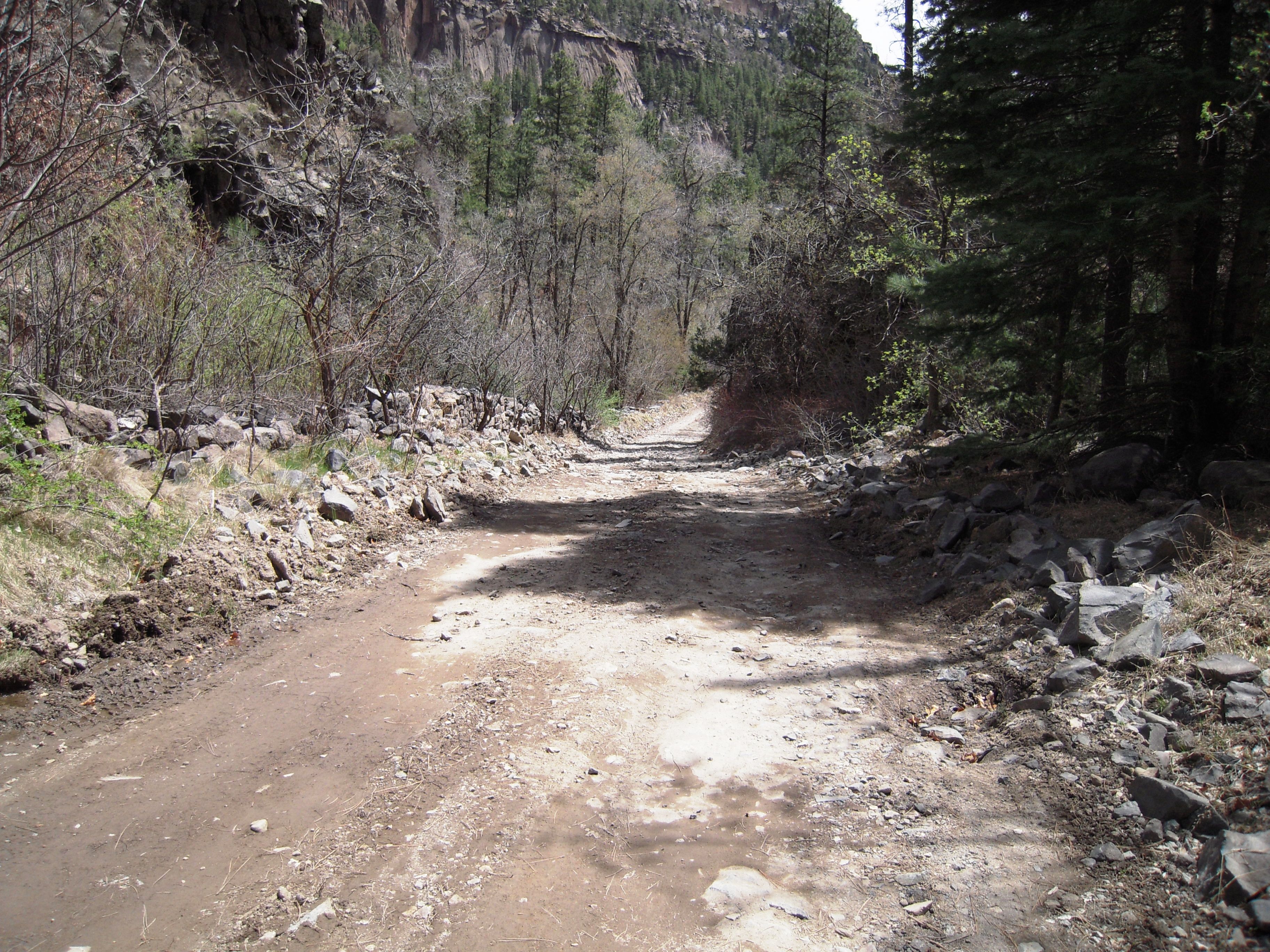
The road led up gradually but persistently in elevation. I was driving through high elevation pine woods. The street was so narrow, it was like walking on a path in the forest. There were rock formations in the distance. It was breathtakingly beautiful.

As we got higher, the quality of the road started to decline. It was rutted and bumpy. It all happened really gradually. Then I saw it. It was a place to turn around. Now, if I had started driving at this spot, I would have immediately turned around and driven back to where we came from. I would have seen the situation for what it was. It was a dangerous place to drive. It was a place that required a four wheel drive and even then would have been difficult.

But I am a person of momentum and I was anxious. Usually I am quite risk adverse when it comes to physical safety. But I was not only anxious about the drive. I was anxious about my relationship with my daughter. She was shifting to preferring my husband to me. Dad was cool. Mom was not.

So a reason I kept driving was because I didn’t want to be an overly uptight mom anymore. I decided to take a chance. We got stuck when I drove over a boulder in the “road”.

It was noon. I had water and a first aid kit, which I put into a bag along with my GPS (from which I had recorded the GPS coordinates for the rental car) and my cell phone, the latter of which was low on battery power.

I was externally calm. I was doing the best acting job that I could. I told my daughter that we would walk back to the gas station we had passed prior to going up the gravel road. I had located the name and address of the gas station on my GPS. It was hot. I knew it was a long walk. I was wearing hiking shoes but my daughter was wearing Converse low tops. I was on the edge mentally and emotionally. I was barely keeping it together. I kept having fears that we would be attacked or raped and no one would be able to help us. I knew that I had made a horrible error in parenting. I didn’t know how we were going to get the rental car back.

Knowing if I also had to contend with a cranky tween, I would totally lose my composure, I told my daughter, “We need to walk about 10 miles. I’m sorry I got us into this situation. If you do the walk without complaining, I’ll give you $50.”

Suffice to say it was the best money I’ve ever spent. Along the walk, I intermittently checked for cell phone reception. When I found it, I called 911. However, the reception was spotty and the calls were lost when I shifted my weight. Further, dispatchers from different jurisdictions answered each time, because we were lost in an area close to border between two counties as well as close to tribal lands. After many attempts, I gave multiple dispatchers the GPS coordinates for the car, the address for our destination, the name of the road I was on (you know it’s bad when the 911 people can’t find the road on their maps), and our current location. I also knew that texts would be sent as soon as I walked into areas with cell coverage. I texted my husband our location and instructions to call 911.

We finally found our way to the beginning of the gravel road. I recorded the GPS coordinates and took a photo of some distinguishing features at the entrance to the road since there were no street signs. Just as we were starting to walk on asphalt, a car filled with a family of sight see-ers stops to ASK US DIRECTIONS about the gravel road. I explained our situation and they kindly offered us a ride to the gas station. We got to the gas station and I asked to use their phone since I was still out of cell phone reception. I informed 911 of our location. Then I dug enough change out of my purse to get my daughter and I something cold to drink.

About 10 minutes later, I saw two police cars pull into the parking lot, one from the county sheriff’s office and the other from the city of Santa Fe. I walked out and the sheriff looked annoyed. And he was. None of the information that I’d communicated to the 911 dispatcher had been communicated to him. Stealing my mom’s catchphrase for embarrassing situations I said, “Whatever you are thinking, it is probably true.”

He said, “We’ve been looking all over for you along with the Santa Fe and the tribal police. We were just going to send out a search helicopter.”

I communicated a great self-awareness of my major judgement error along with my multiple attempts to communicate my location to the 911 dispatchers. (Meanwhile, my stomach was lurching as I was thinking about how much money a helicopter search would have cost the fine tax payers of New Mexico.)

He settled down and turned out to be super nice. He actually even pulled the rental car and got it facing the right direction. It took a lot of skillful maneuvering. Then he followed us until he was sure that we made it out of the wilderness okay.

I called my husband that night when my daughter was out of earshot. He had not received my texts. I told him what I had done. Then I started bawling. “I’m so sorry. I made a horrible and dangerous parenting decision. I am so sorry.” At times like these, my husband knows exactly what to say.

Was it true that I was an uptight mom?

Yes.

Was it true that I needed to take more chances in my life?

Yes.

Was trying to be a cool mom a good reason to keep driving?

No, absolutely not.

The problem was, and I was mindful of this as I reflected on the incident, was that being so careful in my life, I did not know when to heed my own anxious feelings and when to move past them. And this was a situation that sneaked up on me gradually.

Some fears are rational, some are not. When I’m afraid of everything, I don’t know the difference.

I’ve come a long way since that drive and so has my daughter. I accepted the fact that I was not cool to her about one second after we got stuck; I have never turned back. Mom’s are not supposed to be cool. I have learned to face many fears, both rational and irrational. I will face many more.

In the meantime, I am staying clear of gravel roads.

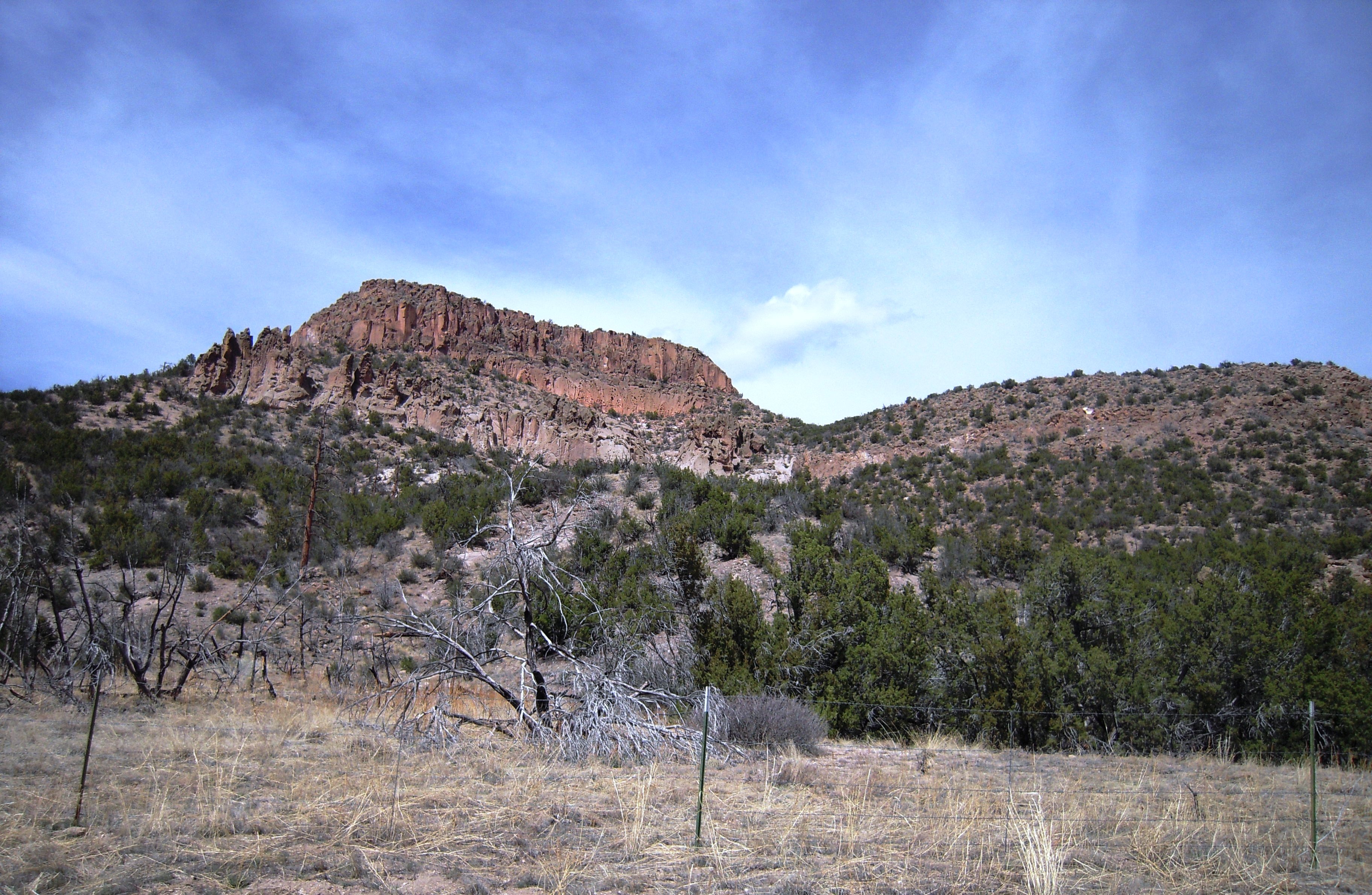
Kasha-Katuwe Tent Rocks National Monument

Kasha-Katuwe Tent Rocks National Monument

New Mexico with Zoey 04_2011 105

This is the nice part of the road.

This is the nice part of the road.


The scenery for the long walk. The sheriff informed me that we walked through cougar habitat. Yikes! I am more afraid of cougars than any other wild animal I've encountered, including alligators and bears.

The scenery for the long walk. The sheriff informed me that we walked through cougar habitat. Yikes! I am more afraid of cougars than any other wild animal I’ve encountered, including alligators and bear.

Ross McElwee is a documentary film maker originally from North Carolina, the state that is the top grower of tobacco in the U.S. In his 2003 film, Bright Leaves, he explores the industry, especially its impact on his family, who still live in the state. In one scene, he films an examination carried out by his brother, Tom, a physician, on one of his patients, a middle aged woman.

The dropping of her examination gown reveals an enormous black tumor that has replaced where the woman’s breast tissue used to be. It has been there, growing for a VERY long time. This is the first time she has gone to a physician about it. Tom asks her questions with a gentle professional tone that belies his obvious incredulity and alarm. His patient calmly answers the question while the audience feels the horror of, “Oh my God, she has REALLY bad cancer and she’s acting like she has a hangnail!”

After this horrific moment, McElwee zooms in onto just the tumor. No one being filmed is talking. And then he keeps the tumor in view for a very long time; it seemed like several minutes but it probably was not nearly that long.

The disgust and horror abated and I was able to look at the tumor, I mean REALLY look at it. By getting a close up view, it became an abstract and almost sculptural object. I looked at the color, the shape, and the texture. When the scene was over, I thought about it for a great while and obviously, I still think of it today. The horror I felt initially was real. And the tumor, up close, removed from its emotional associations, was also real. And then I integrated both of these experiences into my understanding of this woman, her physician, and her cancer.

There are upsetting aspects of life that keep us noticing our feelings about them. And we can get stuck on the fear. I know this very well being a naturally anxious person. It is easy for me to start fixing a problem that I assume is real because I feel anxious. The real problem may be that I have gotten myself overly stressed and that I need to slow down, think about something else, exercise, talk to someone, write, or something else that calms me.

I started my mindfulness practice two years ago to gain more balance and calm in my life. It has helped me enormously in this respect. I am learning to observe my life in small pieces but much more thoroughly. And in observing little pieces at a time, I find it much more tolerable. It is easier for me to move past the fear, anger, and sadness of the painful aspects of my life. It has helped me understand my experience of cancer, bit by bit, and has contributed dramatically to my emotional recovery.

Since mindfulness is an approach to experiencing life, it can be done at any or all times of the day. Mindfulness meditation is a more discrete practice. I did it several months as a resting meditation, twice per day, using a meditation timer. Then I noticed I was having the experience when walking, especially when I am in the woods, looking at flowers, or at the beach. Although I still do resting meditation, I more frequently do active meditation while on my walks.

When I first started meditating, I could see the benefit but frankly, I thought I was doing it wrong or cheating in some way because my brain was full of jumping monkeys. I was often thinking about other things, in rapid succession. My mind is typically active, but in the stress of cancer and for many months to come, it was kind of ridiculous. I knew that in mindfulness, I was just supposed to notice my distraction and this would typically redirect my thoughts. In other words, I wasn’t doing it “wrong”. Although I still had a little doubt in myself, it was relaxing to meditate and I was committed to my healthier life style so I persisted.
Over time, I have found that mindfulness has gently seeped into the rest of my life. It is not something that I have to schedule though it is a byproduct of other activities that I do on a regular basis such as see my psychologist or more frequently, writing this blog.

I find that mindfulness is more about “what to do” than “what not to do” To a person who has struggled with anxiety, guilt, and depression, I find this to be a very liberating approach. My main goal in practicing mindfulness was to reduce the distress in my life and build my emotional resilience.

It has done just that. It has also increased my experiences of joy, bliss, and contentment. In other words, mindfulness has not only helped me feel “less bad”, it has also helped me feel “more good.”

I have rediscovered myself as a physically active person. Most recently, I have rediscovered my visual talents. I typically think of myself as being very verbal, a talker, a person who thinks in words rather than images. And this is true. I will not deny this. If I were to do so, there would be a line up of friends and family who would remind me of my chatterbox ways.

But I am also a visual person. I excelled at mathematics. I used to be able to read music with a startling array of notes on the page, 32nd notes, 64th notes. I could play really really fast and I needed to be able to visually process that information as well as use the other parts of my brain, which translated the notes into motor movements as I touched the keys of my flute, supported my breath, made the quick changes to my facial muscles needed to produce different sounds.

Most importantly, I love visual arts. I have yet learned how to draw or paint but I am an artistic person. I am good with color. I am good at arranging physical spaces. I have an artistically decorated home and office. I love to make things with my hands. And as I’ve mentioned recently, I have recently resumed taking photos.

I take my camera with me on my walks. I used to take photos with my smartphone. I enjoyed it so much that I bought a “real” camera last April. Little did I realize when I bought that camera that I was adding another layer to my mindfulness practice.

My camera is not expensive but it is surprisingly good. In particular, the macro lens has allowed me to get up close to things and see them in a different way. I started taking photos of leaves and flowers up close. And then I got even closer.

When I get really close, the blooms become abstract and almost sculptural. It is like entering a new visual world. I am not an expert at either mindfulness or photography, but combining these practices has deepened my joy in life. I am noticing patterns, some interesting, some beautiful, everywhere. I am seeing the familiar in a different way.

Kurt Koffka long ago said, “The whole is other than the sum of its parts.” I believe this to be true. But I do find that in looking at parts, lots of them, bit by bit, by examining them in detail, I am not only seeing more of the whole but I am feeling more whole.

DSC01705

Rose

DSC01689 (1)

Poppy

DSC01714

Allium

DSC01682 (1)

Hibiscus

DSC01751 (1)

Passionflower

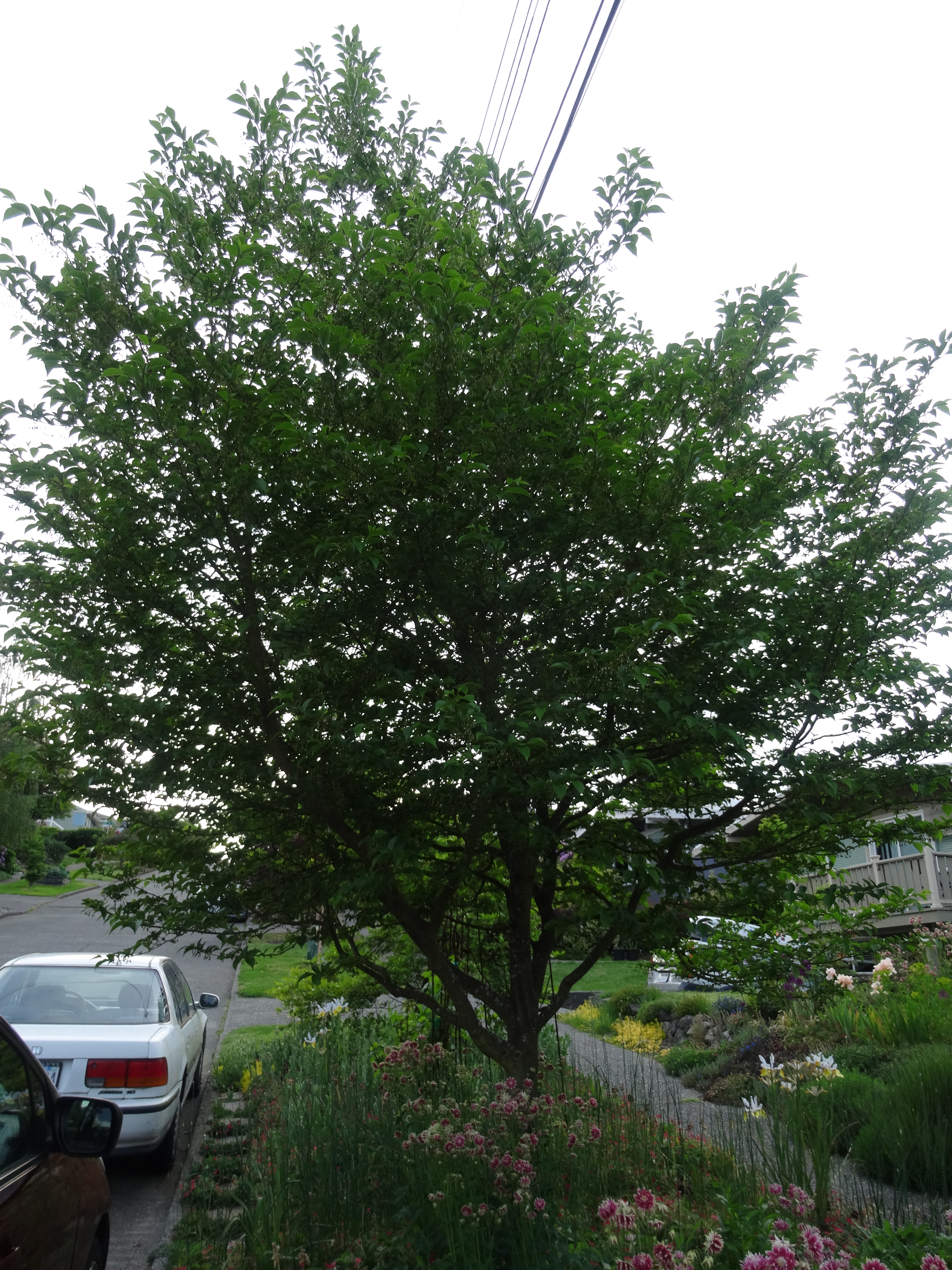
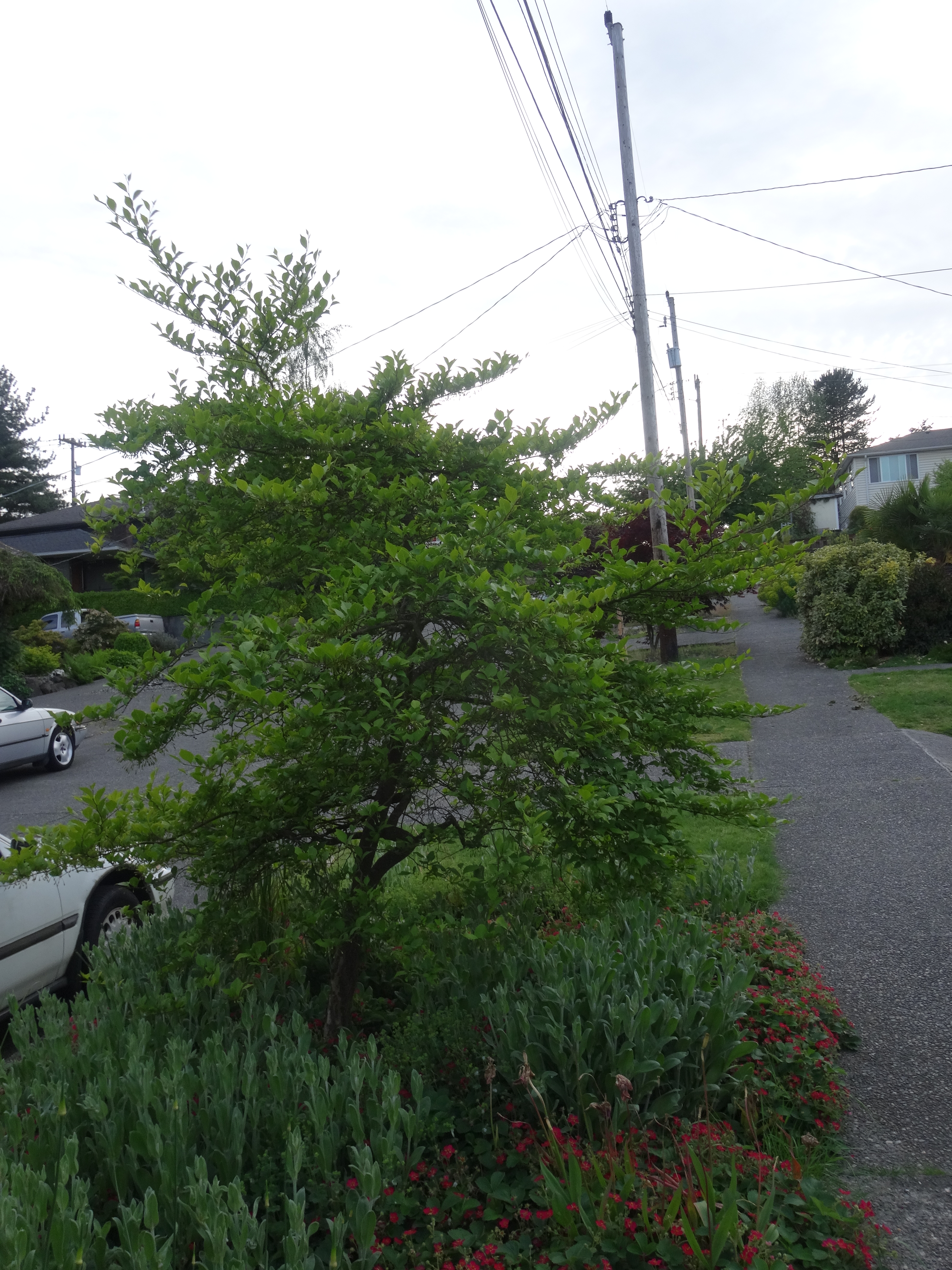
About ten years ago, we planted two trees in front of our house. They were the same size and the same kind of tree, styrax japonicus (Japanese snowbell). We made planting holes of the same size and fertilized the bottom of each hole identically. They receive about the same sun exposure and I watered them in the early summers, the very same amount. Water drainage may be slightly different as one of the trees is a tiny bit uphill from the other.

If those trees were my children, one could say that I loved them equally and that they both came from “good homes”.

This is what they look like:

DSC00722

DSC00723

The first tree is the picture of health. The second tree is about half the size and oddly shaped. This difference became noticeable several years ago. Although the size difference has increased, at least the little tree is looking healthier these days. It is actually going to bloom this year. It didn’t for a few years and I actually wondered if it was going to make it. The leaves, however, are already yellowed with age on the small tree but not the big one even though they have not had leaves for more than a few weeks. When the tree was misshapen and stopped blooming, I sought out advice and gave it extra care and attention. Maybe I’ve actually given that little tree more love than the big tree.

I really don’t understand why the little tree is making such poor life choices. I really don’t understand why it isn’t trying harder. I really don’t understand why that tree doesn’t care enough and isn’t living up to my expectations. Doesn’t it appreciate everything I’ve done for it?

Yes, those are really ridiculous statements about a tree, that for whatever reason outside of its control, has a much harder time growing and thriving than the tree next to it.

However ridiculous those statements are, they are applied to children daily. Yes, I know that children have brains and trees do not. But children are vulnerable and developing beings. They need much care and support.

And you know what else? Some of them, for whatever reasons beyond their control, have a much harder time growing and thriving than others. Some of these reasons have to do with mental health.

An estimated 20% of children and adolescents in the U.S. have at least one diagnosable mental disorder. That’s a lot of people and most of them do not receive mental health services. Most of the children and adolescents in my practice have more than one mental disorder. A lot of the kids I see display behaviors that are frustrating, irritating, and annoying to their parents and teachers. And sometimes the intensity of their misery and lack of thriving is downright scary.

Unfortunately, time and time again, children even the very youngest of them, are blamed for their mental disorder with quick explanations such as, “He is choosing to act that way.” “She just needs to try harder.” “He just doesn’t care.” “She shouldn’t be behaving this way anymore.”

Sometimes those statements are just plain wrong. And sometimes there is truth to them but they are not a solution. People act as though these statements are the final word and nothing is to be done. So I ask, “Why is it so hard for this child to make healthy choices? How can we help?”

I ask, “Why is it so hard for this child to motivate himself? How can we help?”

I ask, “Why is this child not meeting developmental expectations? How can we help?”

A good bit of the time, there are adults around the child who “step up to the plate” to help. They do so despite the amount of parenting stress. They do so despite the unfair number of students in their classrooms. We also need to provide more support to parents, teachers, and the other caregivers who are the most important influences in the early part of children’s lives.

These are very difficult roles that most of us choose to take on in life. Frustration is inevitable. Sadness is inevitable. Confusion is inevitable. But the children are not responsible for the fact that it is harder for them to grow, thrive, and meet our expectations. The fact that their jobs are harder to do often translate to our jobs being harder to do.

After all of these years, my little tree is very much alive and I actually think it is interesting and pretty. I wonder how it would have grown if I’d just yelled at it?


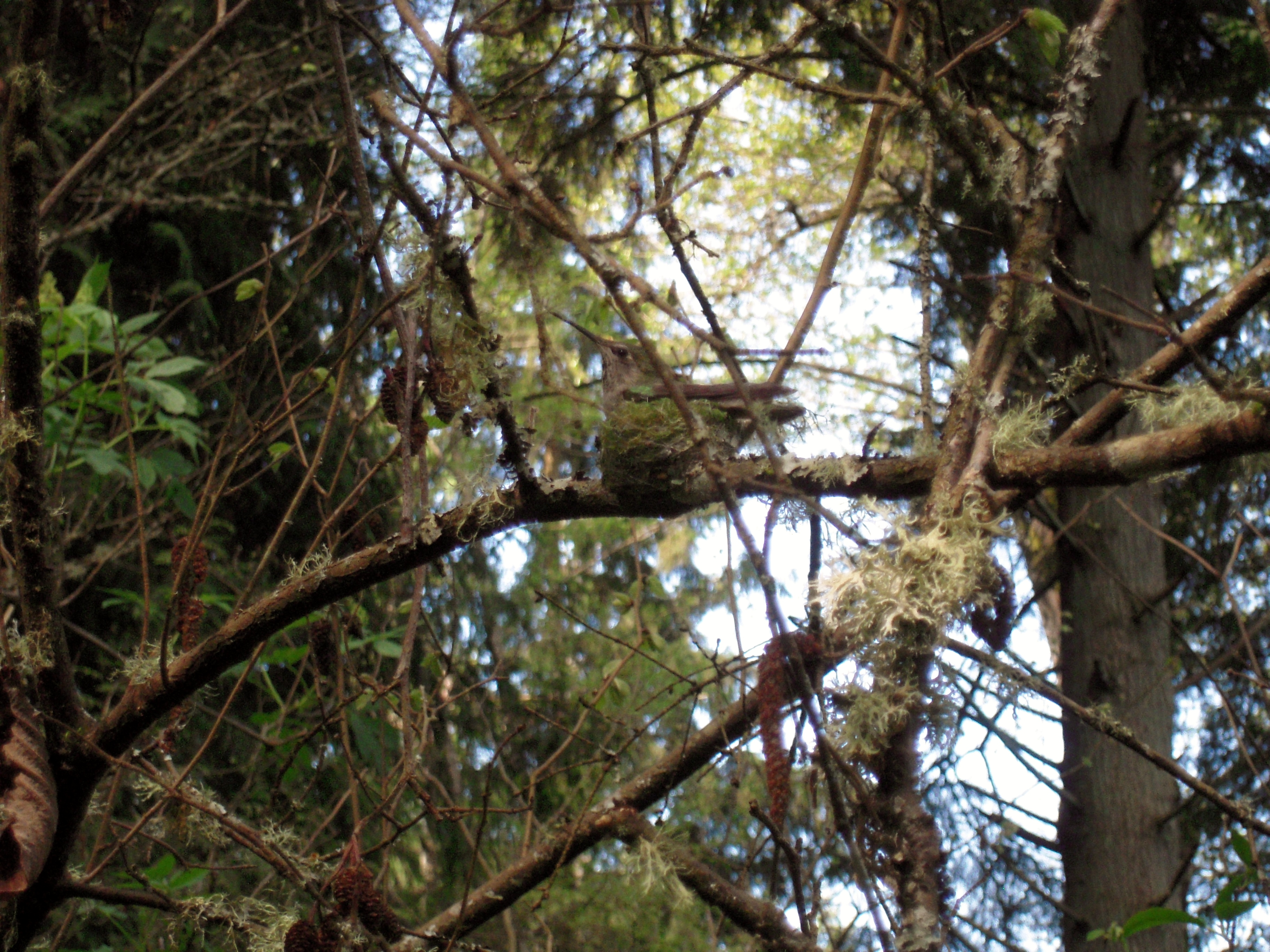
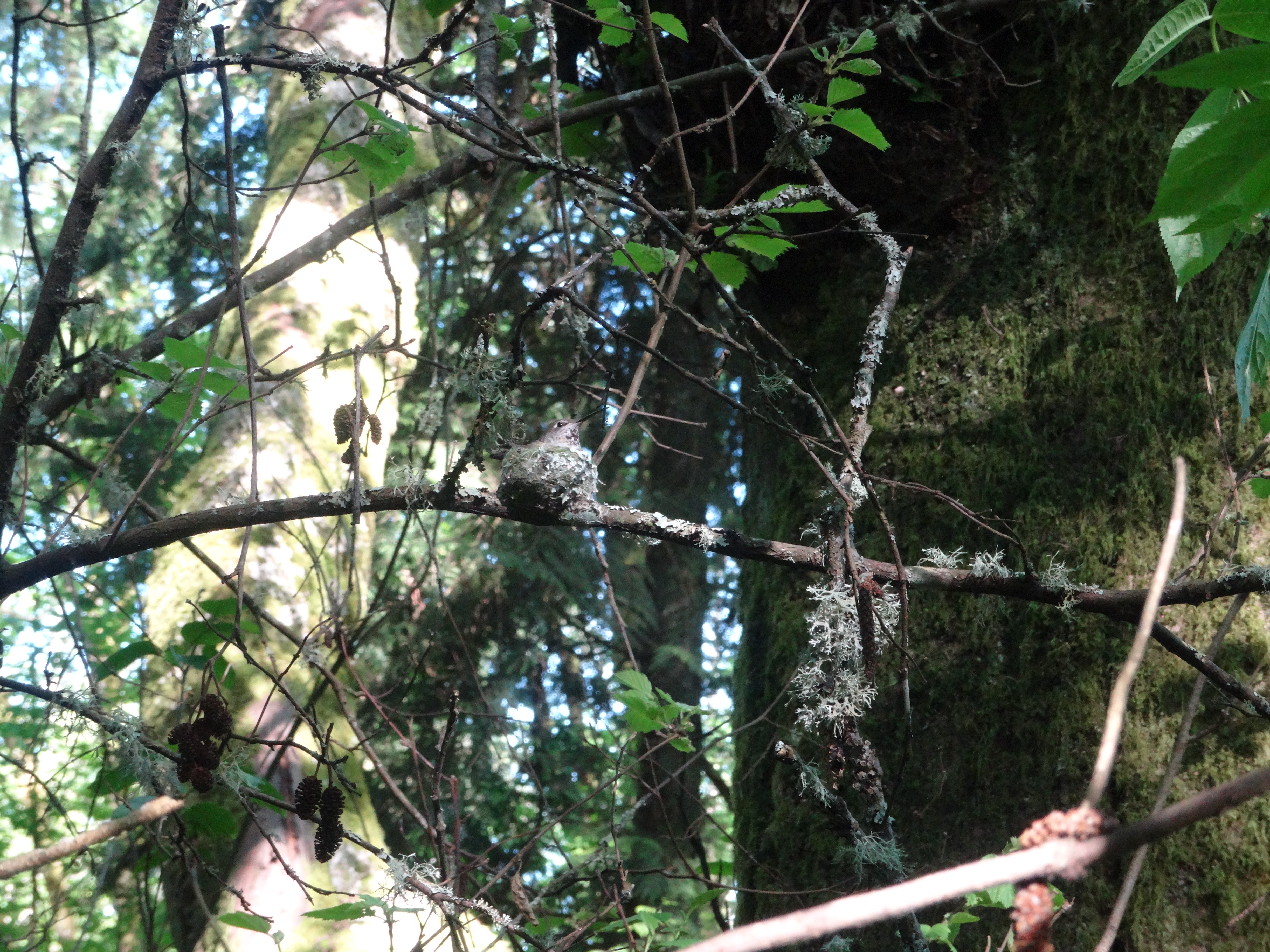
I was walking through the woods and I noticed her out of the corner of my eye. I snapped some photos using my phone and I memorized her location.

293

A humming bird sitting on her nest! I was thrilled! I ordered a real camera to take better nature photos. And the next day, I found this.

273
An egg! The tiniest egg you could ever imagine. A tiny little package of life.

This was the only view I got of the egg. Here’s a little video of the time she was kind of peeved with me for getting too close to her.

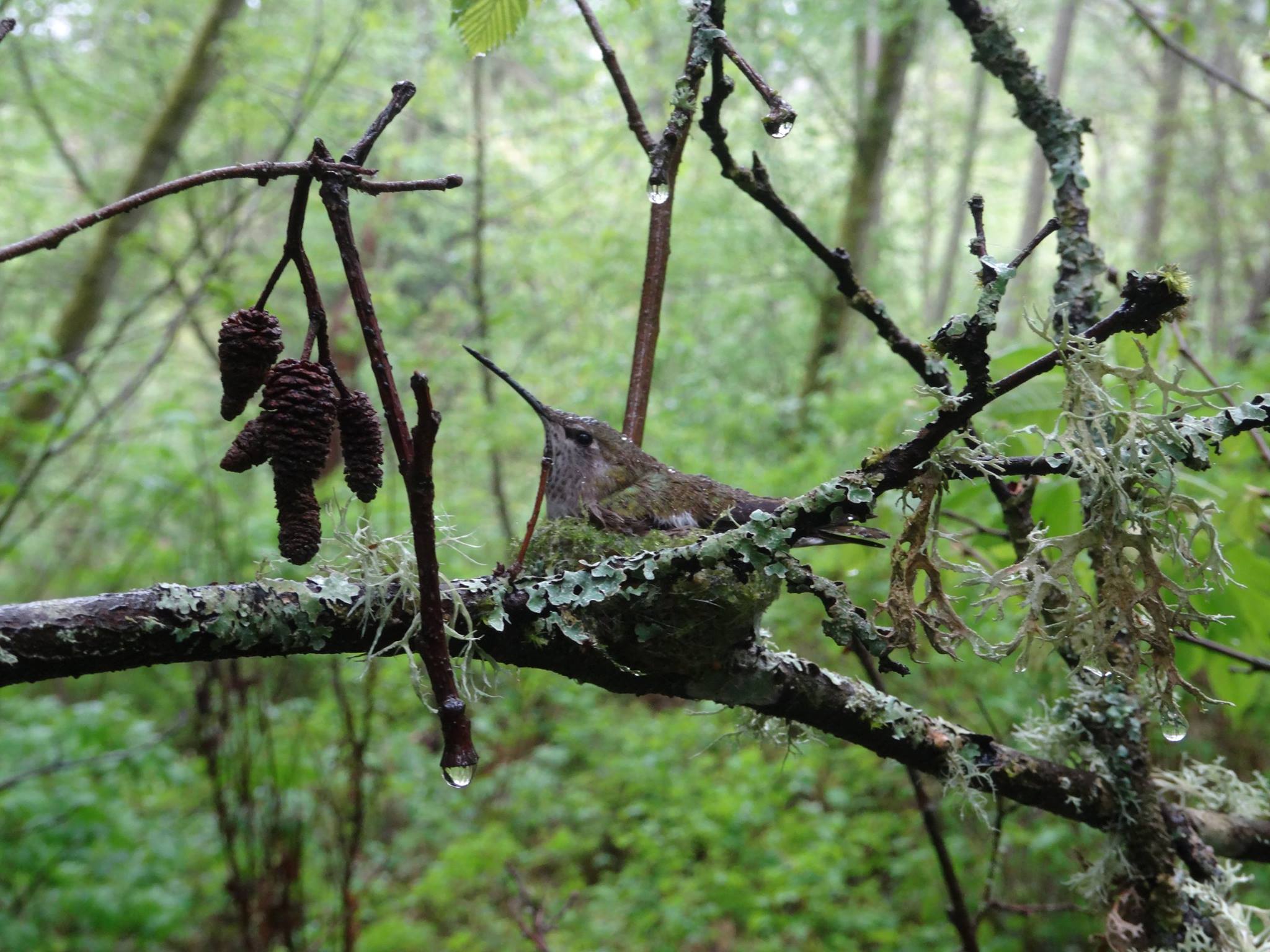
After a couple of days she seemed to get used to me. And she sat on that little egg, day after day. I was thrilled to have a chance to see the miracle of life in the nearby woods. Hummingbirds are small and feisty. And this mama, despite the fact that she has the brain the size of a pea, had the instinct to protect her baby. She knew how to fly around to make herself look larger and to make lots of noise. And she also knew when it was time to quell her own instinct to flee and to stay sitting on that egg.

This is a photo I took on a very rainy day. She sat there with the rain dripping on her head from the little twig above her. I thought it was a good metaphor for a mama’s love.

10271383_10203505974960413_6338930511465061000_o

Every day or two, I visited the nest. I had done a little research on hummingbirds and learned that the gestation time would be 16-18 days for the egg to hatch. So, not knowing how recently she had laid her egg when I first found her, I expected to see a chick within a couple of weeks. I kept visiting and started feeling a little impatient because day after day, there was no chick.

Then I went to New Orleans for a few days. John and I walked back into the woods the day after our return.

DSC00487
Still no sign of the chick! It is possible that there was a chick under mama but it had been far longer than 16-18  days! Rip off! Where’s my miracle? Isn’t this a zoo?

Then it happened! A chick, a chick, a chick!!!!!!

DSC00528

I visited the chick a couple of times. I was planning to keep taking photos of the chick’s growth, the increase in feathers, and how little bird get loud and demanding as they await food from mamas who are scurrying around to get food for a baby who grows to her size.

Today, John and I set out for the woods. It was a breathtakingly beautiful Seattle spring day.

DSC00594

Nothing. Empty. That chick was still small and homely two days ago. Sometimes nests are empty because a chick has gotten strong and fledged. But other times, they are eaten by a predator or fall from the nest. This chick, whom I’d affectionately called my “grand baby” and who my Facebook friends had fussed over, is dead.

I had been saving my photos for a post on this blog. This is not the post I had in mind. But life is still a miracle and this Mama did her best, as we all do with our children to help them be strong enough to leave us.

Mothers’ Day is typically a very happy day for me. I have a close relationship with my mother, who is a healthy woman. I have a wonderful daughter. But I know that it is a day of loss for many. For those of you who have lost your mothers, who have lost your children, or who wished for children who were never to be, Mothers’ Day has a much different meaning. And then there are those of us who are mothers who understand that we can’t take our own health for granted. We pray that we will be there for our children as long as we can, especially while they are still chicks in the nest.

Life is full of mixed feelings. I hope that at least one of the feelings you experience tomorrow is serenity. If you are a mom who has lost a child, I know you worked to love and protect your children. If you are a daughter who has lost a mother, I know you brought moments of great joy into your mother’s life just by being her child. If you wanted children but it was not meant to be, think of all of the children to whom you have mattered by being a nurturing presence.

I used to work in my garden a lot. Along with reading and cooking, it was one of my favorite hobbies. A garden is not so hard to maintain if I work on it a little bit at a time on a frequent basis. The garden was my space. I appreciated being outdoors, having my hands in the ground, and watching the birds, the bees, and the butterflies along with the changes of the seasons. And people appreciated the garden. I designed it organically. I started with a few plantings and then worked my way around them. I chose plants that were interesting and pretty. I chose plants that attract beneficial insects and birds.


Then I had all of those stupid surgeries. I got behind on every imaginable household task. And I got really tired. My yard got overwhelming. I’ve got tired of the jungle of weeds. I am not a super tidy person but I have more of a love of order than do my family members. Consequently, my house is typically about 50 times messier than I would like it to be. I spend a lot of time picking up after other people and I do a pretty bad job of it because there’s so much picking up, putting away, and cleaning to do. My home office is in need of a clutter coach. Who am I kidding? My whole house is in need of a clutter coach.

A few weeks ago, I made a bold move. It was also expensive. I hired landscapers to weed my front yard. They weeded, pruned, deadheaded, and mulched. And it was like I could breathe again. Weeds started to pop up again in the last week. I was able to go out and take care of them because it wasn’t an overwhelming task. I spent a couple of hours in the garden today, including time chatting with neighbors, which is also an invaluable part of the gardening experience. It was an amazingly beautiful day and I had a wonderful time. This was the first time I’ve worked like this in my yard in nearly a year. It was like a resuscitation.

I hope that I will be able to continue working in the yard on a regular basis because it has been such a great love of mine. I can see how I feel tomorrow, and the next day, and the next. In the mean time, I hope you enjoy my spring garden!

324 (2)


20140413_152055 (2)


20140413_152201 (2)

20140413_152209 (2)

20140413_152102 (2)


This morning it was clear and cold. I considered walking to the beach for my daily exercise but saw that the mountains were clouded in. So after I got my coffee, I walked to Fauntleroy Park. My neighborhood is relatively quiet for an urban area but the street that runs along the park boundary gets a fair bit of traffic. There’s a burst of street noise as I cross it and follow the path into the woods. The first thing I notice is the myriad of greens in the trees, the ferns, the mosses, and the woodland plants. Then I start hearing song birds and crows. The street noises fade as I walk further into the interior until all I can hear is the sounds of the forest and of my own footsteps on the trail.

This morning there was mist rising from the ferns. I could see my breath. I looked at the mist as it rose upwards, felt my breathing slow, and noticed that I was smiling, as I often do when I am surrounded by nature. I felt immediately transported, like ice to steam, and that my spirit was rising above the nests in the trees and above the canopy. I stayed in that blissful state as I walked along. Then I looked down and noticed something.

I was off the trail. I had meandered with my eyes on the trees and the new plants growing and had not noticed that I’d lost the trail. I knew that if I walked down hill, I’d eventually find the trail. But it did make me reflect on the way that we live in multiple worlds and both worlds are necessary.

I think this is one of the reasons I don’t like a lot of pithy inspirational sayings. They seem dreamy and overly ethereal. There’s not enough reality to provide ballast. And I also think that it may be one of the reasons that a number of people with cancer do not like to be referred to using idealistic terms like “hero”, “inspirational” or “brave”. Those terms live up in the Heavens. Cancer is isolating and I know for myself, I want to be very much seen as a real human being. I want to be able to connect with other people.

Then there are the attitudes that are all ballast. Those are the stigmatizing attitudes, the view of cancer as a death sentence, the fears that keep our friends away from us because they fear our death as well as their own.

What matters to me more right now than if I am brave, inspirational, or a hero, is that I am still carrying the sounds, sights, and smells of the forest in my heart as I go about my daily chores and consider life’s obstacles and joys in the past, the present and the future.

20140312_101044


The trilliums are starting to bloom! This is our native trillium ovatum

The trilliums are starting to bloom! This is our native trillium ovatum


The fiddlehead ferns are unfurling. They are edible at this stage.

The fiddlehead ferns are unfurling. They are edible at this stage.


When I walk in the forest, I see many dead trees and other plants. Sometimes even dead animals. Although everything that grows in the forest dies, none of it is lifeless.

That’s my meditation for the day.

20140226_111708

20140226_11450320140221_111948


20140216_141616


I know that a lot of you have experienced great hardship this winter. Some of you have lost loved ones, some of you are sick or have been sick. And then there are the terrifying weather events that are getting increasingly common, most recently the impact of the polar vortex on a substantial portion of North America.

I made all of you a little film of a portion of my walk today along with some of the thoughts I have when I am in the woods. I am hoping this is an encouraging experience and if not, you get to see some very pretty trees and hear some crows having quite a conversation in the woods.

It’s funny to me because although I am surrounded by earth forms and plants so much larger than me when I am in the woods, It’s okay to be small. We don’t need to be big. We can just be.

Lindbergh High School Reunion '82, '83, '84, '85

Join us this summer for our reunion in Renton, WA!

George Lakoff

George Lakoff has retired as Distinguished Professor of Cognitive Science and Linguistics at the University of California at Berkeley. His newest book "The Neural Mind" is now available.

KomenWatch

Keeping our eyes and ears open.....

4 Times and Counting

Confessions Of A 4 Time Breast Cancer Survivor

Nancy's Point

A blog about breast cancer, loss, and survivorship

After 20 Years

Exploring progress in cancer research from the patient perspective

My Eyes Are Up Here

My life is not just about my chest, despite rumblings to the contrary.

Dglassme's Blog

Wouldn't Wish This On My Worst Enemy

SeasonedSistah

Today is Better Than Yesterday

The Pink Underbelly

A day in the life of a sassy Texas girl dealing with breast cancer and its messy aftermath

The Asymmetry of Matter

Qui vivra verra.

Fab 4th and 5th Grade

Teaching readers, writers, and thinkers

Journeying Beyond Breast Cancer

making sense of the breast cancer experience together

Entering a World of Pink

a male breast cancer blog

Luminous Blue

a mother's and daughter's journey with transformation, cancer, death and love

Fierce is the New Pink

Run to the Bear!

The Sarcastic Boob

Determined to Manage Breast Cancer with the Same Level of Sarcasm with which I Manage Everything Else

FEC-THis

Life after a tango with death & its best friend cancer