Archives for category: Mindfulness

I know that a lot of you have experienced great hardship this winter. Some of you have lost loved ones, some of you are sick or have been sick. And then there are the terrifying weather events that are getting increasingly common, most recently the impact of the polar vortex on a substantial portion of North America.

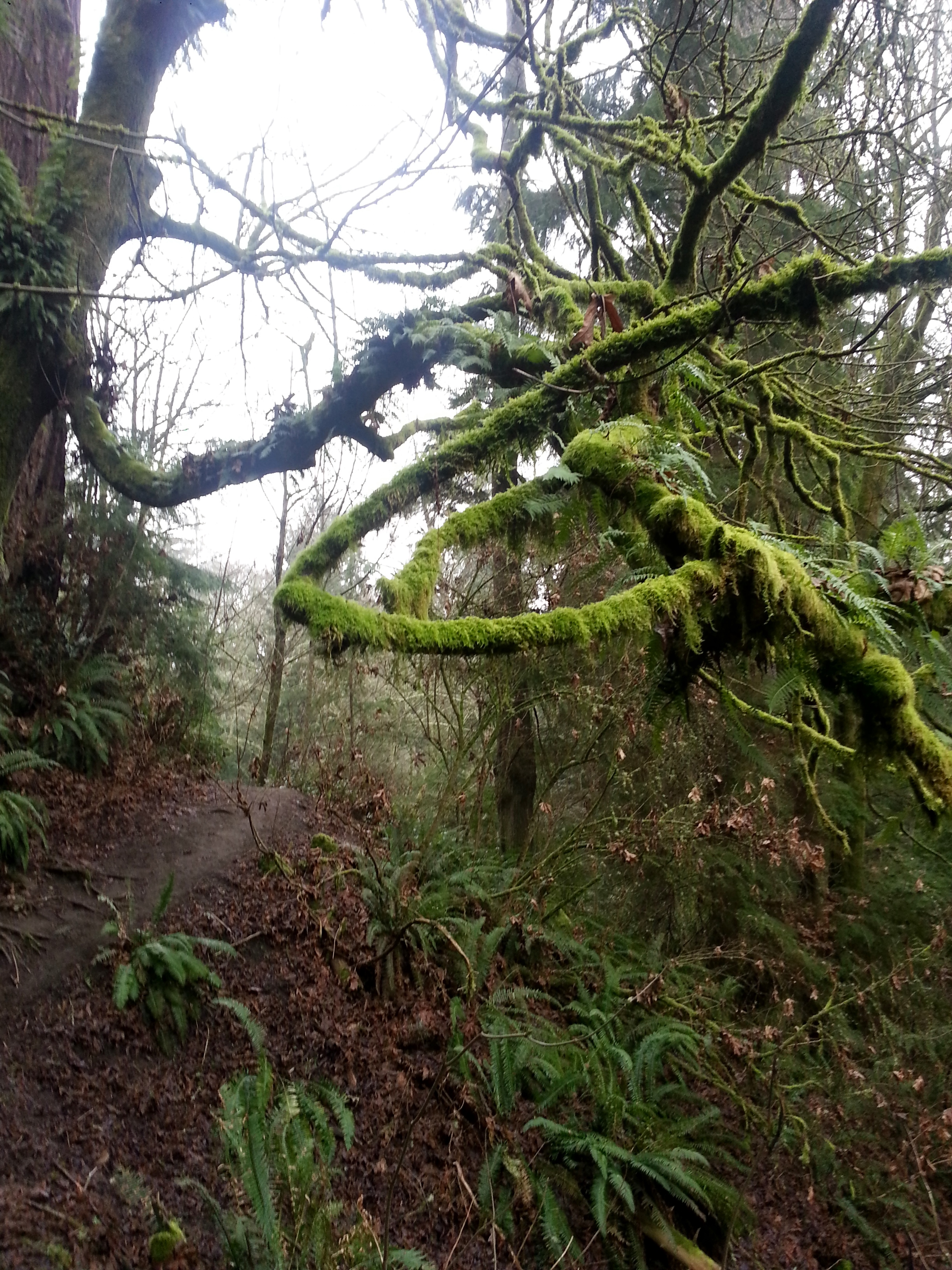
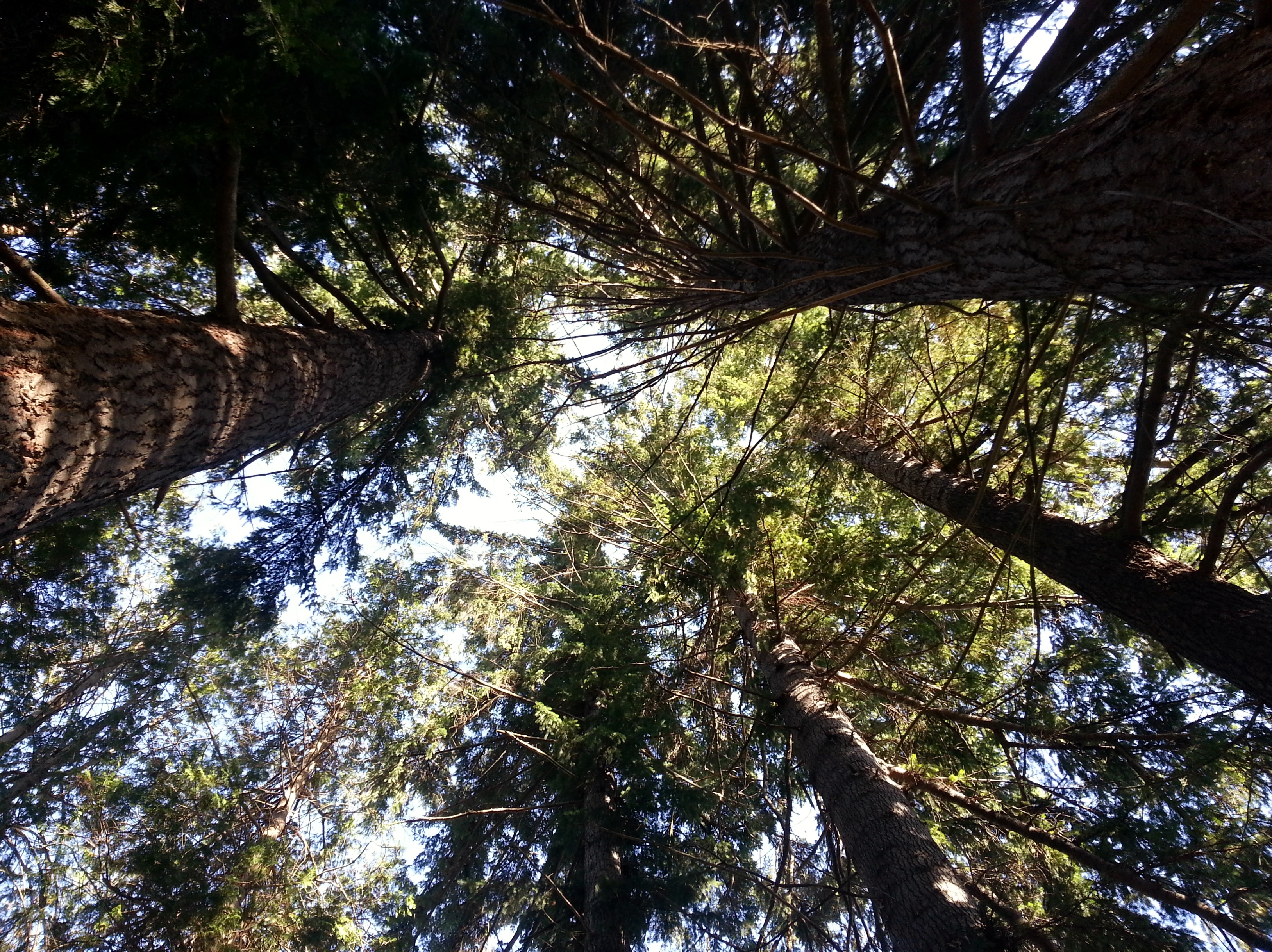
I made all of you a little film of a portion of my walk today along with some of the thoughts I have when I am in the woods. I am hoping this is an encouraging experience and if not, you get to see some very pretty trees and hear some crows having quite a conversation in the woods.

It’s funny to me because although I am surrounded by earth forms and plants so much larger than me when I am in the woods, It’s okay to be small. We don’t need to be big. We can just be.

A large part of my training as a Ph.D. student in clinical psychology at the University of North Carolina-Chapel Hill was completed at a state psychiatric hospital in Butner, NC. The hospital, which has been since closed down was located amid tobacco fields, a federal prison, two orphanages (segregated by race even in the 90’s), a “training school” (jail for kids), a residential center for people with severe developmental disabilities, and a drug and alcohol treatment center. It was like this small tobacco town had taken up the industry of institutionalization. It was odd.

The hospital building had previously belonged to the federal government as World War II Army barracks. The federal government sold the buildings to the state of NC for $1. There were no interior signs in the hospital. All of the walls were blank. I have a poor sense of direction. I felt a great deal of empathy for the patients in the hospital, many of whom had trouble getting through the simplest of daily tasks.

I spent five semesters, spread over four years in that hospital. For an entire school year, I spent 16 hours a week there. I remember before I first started training there in the spring of my first year of graduate school, worrying about accidentally hurting someone there emotionally because I was unsure of what I was doing. I thought of psychiatric patients as extremely fragile and vulnerable people.

But then I had a thought. I realized that I would try my best to be kind and compassionate, to try to understand and to listen. I thought of all of the things these individuals had been through. Most of the patients had been farmers. Most of them were dirt poor. Most of them had been subjected to some of the worst imaginable life circumstances. If they had survived their lives up to this point, I figured that they could survive me, a sincere but inexperienced first year graduate student.

We all survived. It was not easy. The hospital environment itself was somewhat of a trial. Smoking in hospitals was still legal in NC during my first years there and then became illegal. During the first couple of years, the hospital was veiled in cigarette smoke (not great for my asthma, by the way) and always smelled at least lightly of urine. When I worked full days at the hospital, I noted that as the day wore on, I was more likely to encounter patients emerging naked from the showers. Many of us who have spent time in hospitals know that privacy is in short supply. Someone is always peering, prodding, or poking at us. But some psychiatric patients lost their boundaries around privacy. They don’t make sure that they are dressed before entering a public area. For many, there is a general disorientation either due to a general numbing or a disconnect with what most of us call real life.

The life stories of many of these patients were those that made soap operas plots sound like the dictionary. I mostly did assessments. But I did have one long term psychotherapy patient. She was 58 years old and it was her 30th hospitalization in as many years. My job was to help her interact in a somewhat normal way. When I first met her, she kept asking me if she was dying and tried to take all of her clothes off. I brought her tea and a deck of cards twice a week. I engaged her in conversation. She told me about being a mother. She was proud of herself as a mom. I knew from her background history that she had been a horrible mother. She shared a bed with her husband while he raped their daughter, night after night and year after year. I knew that this patient, as low functioning as she was would never be able to appreciate the horrors that they inflicted on their now adult daughter. So I just tried to help her interact in a pleasant fashion with another adult and that adult was me.

One would think that this hospital was an extremely depressing place. And yes, the hospital itself was kind of a downer. And the patients, by and large, were very very ill. But I was perpetually amazed by their resilience. The fact that even thought they were in the hospital because they could not care for themselves and many were suicidal, most days they wanted to live. This to me was a testament to the resilience of the human spirit. I found it both humbling and inspiring.

As you know, I often take walks in the forest. Yesterday, I walked in nearby Fauntleroy Park and I was reminded of the resilience of life. Stately maple trees have bulges, also known as galls, looking like tumors along their trunks. They are caused by a number of factors including fungi and injury. They ultimately, shorten the life of the tree. I see trees that have been nearly uprooted by storms continue to grow at unbelievable angles.

People, like trees can be very resilient. They can adapt to severe diseases at times and continue to live. But what I am reminded of in the woods is that there are degrees of resilience ranging from the barest of survival to lush and abundant thriving. But for all resilience does not mean unmarked or unaffected.

I took a couple of films in the woods of examples of resilience in the woods. I find it helpful to make these comparisons. If you do also, you might appreciate the films. Also, the trees are PRETTY.

 

In my job as a psychologist and a diagnostic specialist, I am asked to answer questions and make recommendations. Answering diagnostic questions can be really hard, especially in my areas of specialty. I sift through multiple data sources, try to find patterns of behavior, and predict how behaviors change across settings and over time. Meanwhile, I have to remember that diagnoses do not define children and that their functioning at school, home, and in the community vary as a function of many many other individuals and environmental factors.

Often however just asking the question is harder than answering it. Yesterday, I received the following email:

We have a 13 year old son who is struggling in school. His main challenge is executive functioning and spacing out in class. We are not interested in assessments or medications but do want to understand how to get at the root cause of the lack of motivation. Do you think this is something you can help us with?

This email was obviously written by a very loving parent. The parent has also done some reading, I suspect given the terminology used in this letter and the reference to medication. But it is hard for me to help when I am asked to help solve a problem without finding out what it is. Asking the question, “Is there something wrong with my child?” is sometimes even more frightening than asking, “Is there something wrong with me?” Parenting hits us in the tender places in our heart. For many of us the two questions are really the same question, “Am I a bad person who is passing off my inherent badness to my child?” Some of the variations of this question are less severe but it boils down to fear of coming up short in some very critical way.

Fear of asking the question, “What is wrong” can lead to all kinds of odd little dances. So often, people try to solve problems without knowing what they are. Some people even try to solve problems without admitting that there are even problems. This sounds silly but problems have real consequences with which we are left to cope. You can’t make a problem go away by not believing in it.

Parents often feel responsible for their children’s issues. And honestly, as parents we are responsible for a lot. But we aren’t responsible for every part of our child’s reality. It is particularly hard for people who appear to be successful and high functioning on the outside but fear being exposed for the horrible people they fear themselves to be. I have met many parents who think, deep down, that they are awful people. And you know what? They are never horrible people. And some of them are quite wonderful people who nonetheless feel fundamentally flawed.

The saddest part is that when people refuse the help I can give them because they fear themselves, it perpetuates bad decision-making and bad problem solving. Then they just feel like really bad people and are even less likely to seek help for themselves and their children.

I believe that I am a worthwhile person, a good wife, and a good mother. I believe I am good at my job. But like everyone else, I am deeply flawed. I am a kind person but I hurt people and sometimes I do it on purpose. I am a loving person but sometimes feel contempt for others. I am a generous person but at times act with keen selfishness. It has never been easy in my life to engage in constructive self-reflection. At times, I have sought professional help but with great difficulty. At other times, it was not so hard. It was pretty easy to be open to seeing a psychologist after my cancer diagnosis. After all, who am I to begrudge myself support for CANCER? But I have seen psychologists multiple times in my life for individual, parenting, and marital purposes. I am happy for all of the experiences. They were extremely valuable. I did it because I felt like I owed it to myself and my family to be a well-adjusted person. Because truthfully, unhappy people are hard to live with, especially when a very unhappy person resides in your own heart.

I will keep working on myself and I wish all of you the happiness that comes from seeing yourself, the good and the bad, working on things knowing that things can get better but not perfect, and being okay with that. Self-acceptance is an amazing power and I have been happy to have gotten more and more glimpses of it as I continue through life as a beautiful and flawed human being.

I had a weird dream last night. I went to a photography studio to get my picture taken. It was kind of a combination of high school senior photos and my wedding. Tom Colicchio a famous U.S. chef who can be seen on the show Top Chef was there. My former boss from the University of Washington was there. Once I got to the studio, I realized that I had left my shoes at home. I asked how much time there was left until it was my turn for Senior/wedding photos. I was told 30 minutes. I decided to go back home for the shoes. In an Elizabeth dream first, someone loaned me some sort of jet pack like device and I was able to fly all of the way home and most of the way back to the studio. (My daughter has lots of flying dreams. This was my first. I am growing as a person in my dreams.) Unfortunately, I ran out of fuel and had to run most of the way back. By the time I got to the studio, I realized that I’d again forgotten my shoes. I was also rather disheveled from running and had no make-up to freshen up. And for whatever reason, I was wearing a men’s sport coat over a white wedding dress. (Now that sounds more like a typical dream for me.) My old boss would be thrilled to hear that in my dream he helped me out by fixing my hair. The photographer was a sweet woman who let me borrow some shoes in my size as well as a tube of lipstick that she said was, “just my color.” Friends and strangers helped me out and put me back together again.

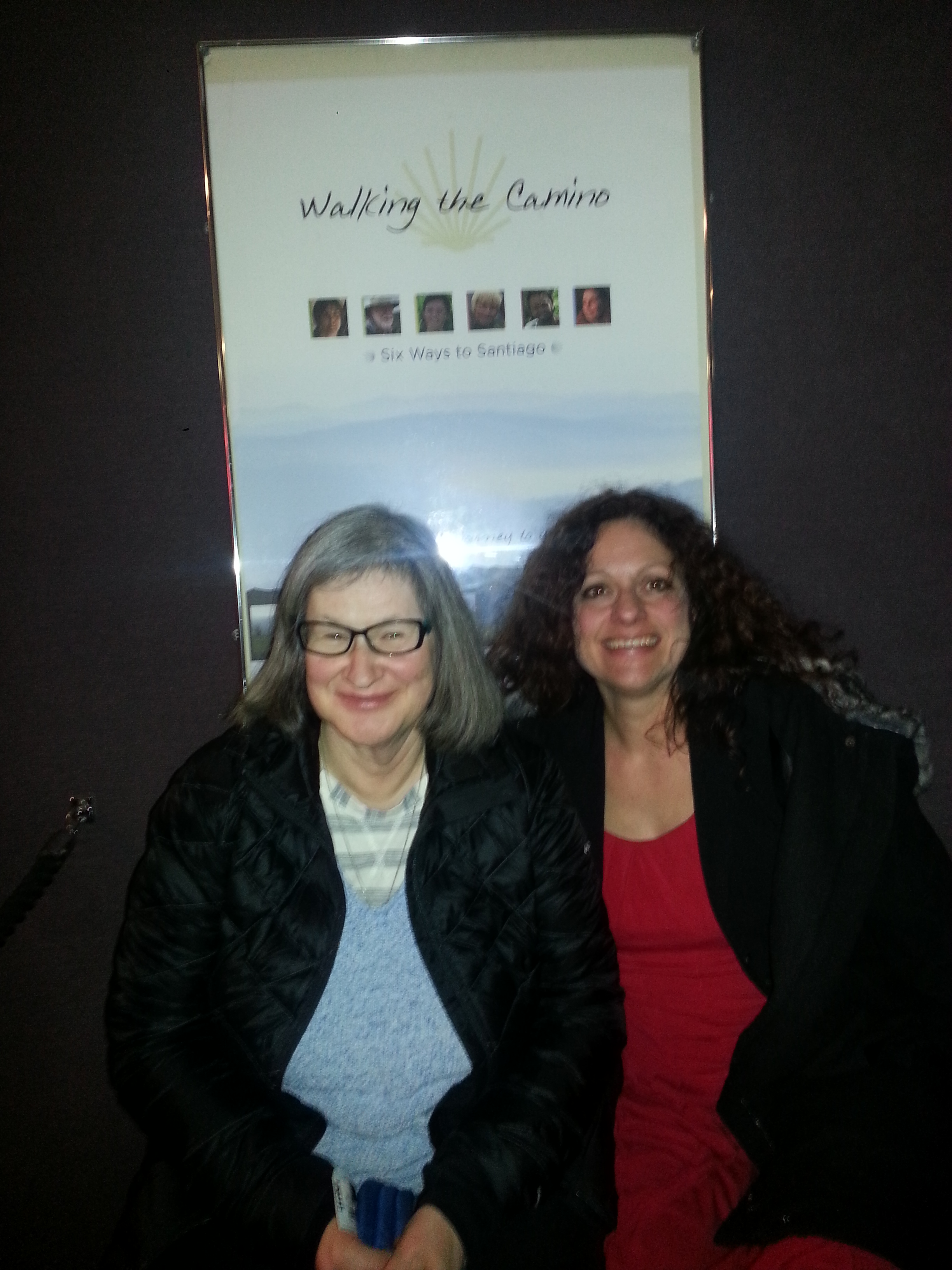
I think I am an imaginative person but I don’t fantasize a great deal. Well actually, I fantasize but my fantasies are usually pretty realistic. They are things that could really happen. I think this is one of the reasons I enjoy documentaries so much, especially those about every day people having meaningful experiences that are in the range of possibility for many. Last night, I saw the documentary, Walking the Camino: Six Ways to Santiago with my former Internet-only friend, Meredyth and her friend, Liz. We belong to a photography group on Facebook. The group includes a couple hundred people from all over the world. Meredyth and Liz live in nearby Vancouver, BC. They came down for the weekend and Meredyth invited me to the movie. We had the best time. There are a lot of lovely and interesting people in the world. Meredyth and Liz are both teachers and I can tell that they are very excellent teachers. It was nice to share our mutual love and commitment to children and their development. Liz, as it turns out, also belongs to the photo group but I have not seen her photos or interacted with her previously. Meredyth posted a photo to the group last night and awoke to a number of charming comments from group members about how happy they were that the three of us had met in “real” life. Most of the people in the group have never met one another in person. Meredyth and Liz were the first group members that I have encountered in the tangible world. I hope to meet more of my cyber friends in the future. It was a very special experience.

The documentary followed a group of people from all over the world, most of whom had never met previously. They were people who traveled to Spain to complete the Camino de Santiago, a long distance spiritual walk from one end of Spain to the other. Pilgrims have been making this walk for over 1000 years. The walk meant different things to each person followed for this documentary. Most of the pilgrims came alone. One set of pilgrims was a young mother, her brother, and her young son. They walked the entire trail, though the mountains, the plains, and the forests, pushing a stroller!

The pilgrims made new friends and were met with great kindness along the trail. People who fed them, housed them, and washed their feet. At one point, one of the pilgrims was so moved by the generosity of at stranger that she cried tears of joy and self-reflection. She was sure that she had never treated another person with the kindness that she had received. It was a beautiful moment because instead of beating herself up for not measuring up, she looked moved and inspired. The pilgrims also experienced ecstasy, times of great mindfulness of their surroundings, love, and lots and lots of struggle with their minds and the rest of their bodies.

A beauty of the film was that not only does the walk serve as a metaphor for life but the film also shows individuals having the day to day experience of transformation over the course of a month or so. I found myself thinking about how different pilgrims might integrate their transformation into the rest of their lives and for how long would they feel transformed and connected to something much larger than themselves or the small worries that consume us on a daily basis. I know that the answer to that question is different for every pilgrim and the answer changes over time.

I am still fighting the treadmill right now. I’m not going to lie to you. I am still feeling the sting of disappointment that my dream of taking my own pilgrimage to see all of my dear friends back East is just not going to happen any time soon due to responsibilities and financial realities. I also told my husband last night that it is unlikely that I will be able to contribute enough to our family income for us to save up for a big trip for our 25th wedding anniversary, which is in 13 months. I know this is a trip on which his heart was set. It was actually supposed to happen last summer so it’s already been postponed once.

Life is like walking the Camino, so is breast cancer. I have experienced both struggle and transformation. I have been the recipient of great kindness and generosity from both old and new loved ones in my life. These are the realities than inspire actual dreams of being unprepared for life and receiving help! (Although I believe I will be able to do my own hair and not need help from my former boss at U.W.)  I have learned the powerful and gentle gifts that come from walking outside. As one of the pilgrims in the film commented after having walked for hours through heavy rain (paraphrasing), “I saw the raindrops hanging from blades of grass. Painters paint this and I get to see it.”

I know why I like documentaries. I know why I steep myself in reality. I love life. Life is transformative, powerful, spiritual, inspiring, energizing, exhausting, loud, quiet, painful, scary, and at times very very boring. But life has everything.

Meredyth and me at the movies transforming cyber friendship to something more.

Meredyth and me at the movies transforming cyber friendship to something more.

This content is password-protected. To view it, please enter the password below.

My brothers and I used to play with tops as children. There were the big metal ones with stripes and the little wooden ones. They never spun in one place and the fastest spins would send the top traveling far across the unfinished concrete basement of our house. (We did not feel deprived. We used to roller skate, shoot pool, and play table tennis down there. It was a kids’ paradise.)

I have written over 550 posts since beginning this blog in May of 2012. There are recurrent themes. Recently, I actually used the same title for a post that I’d used near the beginning of my writing. The other day I thought to myself, “I am really writing about the same things over and over.” But because I try to practice mindfulness, I tried to let that observation set for a bit before coming to quick conclusions like, “Wow, people must be getting bored.” Or, “I am in a creative rut.”

Eventually, I realized something that I’ve realized before, which is that our lives are full of re-experiences and re-examinations. I spin on these themes and as I travel through my life, instead of losing momentum like a top, I find myself finding deeper meanings. I also find myself able to better integrate the aspects of my life, which leads to a greater sense of integrity and connection.

I have long known that I am a naturally anxious person and that most of my anxiety in the past has been around fearing not being “good enough” as well as social anxiety. And I have also had anxiety about my physical safety, which led to years of avoiding real or simulated danger (ex., roller coasters). As I’ve just scratched the surface of mindfulness, I find myself still aware of my natural inclination to be stressed by unknowns, to worry about my friends and family, and to sometimes act like a less than entirely confident person.

The difference now is that I have gotten to the point in accepting my anxiety, when I am actually started to stop myself from apologizing to other people for the fact that I can fret a bit. Because really, I cope pretty well. I am a pretty resilient. Plus, apologizing for a little bit of excess anxiety just makes other people anxious, I have found. Yesterday, instead of thinking to myself that I was a somewhat high maintenance friend for requesting reassurance, I thought to myself, “I could tell myself not to get worried about people but that solution hasn’t worked. I think I can reveal the fact that I am a bit of a worrier and is not going to be a deal breaker for this friend.”

I concluded my post “mess” with, “I may be a mess, but I am a mess with potential.” Similarly, I may spin and whirl and come back to the same lessons over and over in my life. I may be a dervish, but I’m a dervish with a purpose. I am getting somewhere.

20140126_100235

Today I thought I’d revisit the words of Rumi with a horrible pun! Sorry, I couldn’t resist. But seriously, I’ve been thinking back to a Rumi quote that I encountered at the beginning of my mindfulness practice, also near the beginning of my cancer treatment in 2012.

Don’t turn away.
Keep your gaze on
the bandaged place.
That is where the light enters you.

At the beginning, the bandaged places were literal. Dr. Beatty did my first three of surgeries. He left a single 2 inch wide strip of Arglaes film dressing over each surgery site. This was even true of my mastectomy. One piece of adhesive film. I know that it was called, “Arglaes” because he was so excited about using it. And having had subsequent surgeries with more traditional dressings, I could see why. It was comfortable, flexible, didn’t bind, and it was waterproof. I could shower immediately.

I did look at my bandaged places. I know a lot of women don’t like to deal with their surgical drains or to see their mastectomy incisions, especially prior to reconstruction, if reconstruction is chosen. And I know that some women don’t even like to look at themselves after reconstruction. But as a naturally curious person who is trained both as a scientist and as a healthcare provider, I wanted to look. I was calmly fascinated with how surgery is done, about how my body was changed, and about how healing took place. This helped me a great deal in coping with the physical losses and to keep myself from being overwhelmed by the enormity of it all.

I realize now that my training in observation and data gathering helped set a perfect stage for me to start mindfulness practice. I am very good at noticing things in the present as well as noticing patterns across time. The adjustment that I had to make was in minimizing the interpretation and even harder, to let myself have my experiences without trying to immediately change them. I am a very good problem solver. I will continue to solve problems in my life. But sometimes I do it out to avoid feeling anxious, guilty, or sad. And some problems can’t be solved through problem-solving. Some problems just need to breathe. They don’t even need a bandage.

I am a mother, a wife, a psychologist, and a friend. I deal not just with my own hurts but the hurts of my loved ones as well as those of my patients and their families. I am paid to help solve people’s problems and to not only look at their bandaged places but find the sources of the bleeding. And even as early as middle school, boys and girls solicited my advice about relationships and other typical teen issues.

In my professional life, it is a challenging process to adopt an appropriate role with my patients and their families. I can’t solve all problems and ultimately, I can’t solve their problems for them even if I am fairly certain that my recommendations will improve matters considerably. I teach people strategies for coping with life, I offer ways of thinking about things that may be helpful. But I don’t carry out the strategies or do the thinking. And I can’t control every aspect of a child’s internal or external environment. Wow, when I put it that way, I am kind of amazed that I can be effective at my job at all!

What is even more challenging, though is seeing wounds on family members and friends. Even when I am right about it, they may not see these wounds themselves. Or they may be desperately trying to cover them to avoid appearing incompetent or weak to the rest of the world. I remember when I started graduate school, I was pretty open about my anxiety. I flailed openly! A number of my classmates looked incredibly nonplussed. How could they be so confident? When I found out that one of these folks was keeping a running score for how all of us had done on exams and assignments so that he could gauge his place in the pack, the fact that I was always seeing him taking aspirin started making a different sort of sense to me. Those people don’t tend to ask for help even if they need it. They do not want to be exposed for the failures that they fear they are.

Other people in my life have been very open in their distress and instead of having trouble asking for help, they ask for too much. Help to solve problems that don’t really exist. Help to solve problems that are best solved by oneself. Help to avoid solving problems altogether and other types of reassurance seeking.

I am learning more and more with my loved ones when to speak up and when to listen. The hardest for me, however, is to say and to do nothing. To watch someone suffer and want to do something active to help. To turn down requests to bail someone out when I know it would be better for him or her to solve the problem independently.

I am growing a lot as a person. I have so much more to learn and thank Heavens for that as it makes life rich and interesting.


One of the things I am trying to do in my mindfulness practice is to be engaged and present with both my external and internal worlds. This requires awareness of myself, awareness of my surroundings, and awareness of people around me. When I am very engaged and aware, I have occasionally surprised myself with my behavior.

When I was an intern at the University of Florida, I was asked to interview a woman. She was about 50 years old. I was a child/adolescent track intern but all of us worked with children and adults, as part of our training. I remember that her hair was blonde. She had a nice hair cut but was disheveled in appearance. She was accompanied by her husband.

She cried nonstop. She was expressing suicidal ideation. I was accompanied by my supervising psychologist, who introduced himself and introduced me to the woman. Then he left the room. And then it was my interview to drive unless I made such a mess of it that my supervisor would have to take over for me. He would have to determine this from another room where he and a group of students were observing my interview.

I was nervous. This was not my forte. I write in all sincerity that I would have much preferred doing a four hour long test battery with a hyperactive 4 year-old. Yes, they are a challenge but they have a certain joie de vivre. And they still believe in magic and limitless possibilities. And they love my loud laugh and high energy.

This lady felt hopeless and helpless. She said she wanted to die. She didn’t believe in magic and limitless possibilities. My laugh and high energy were not what was needed. I felt out of my depth and out of my comfort zone. But like every other good trainee, I did my best to adapt and do my job.

In my hand was a writing pad and a pen. I looked at the woman. I saw the way she held my gaze. I heard the distress in her voice and her urgent need to be heard, really heard. I put the pad and pen aside. I looked into her eyes and we had a conversation, a long one for over an hour. The conversation included a suicide assessment, as was appropriate. But I had the strong gut feeling that she needed to talk to a person with free hands. I knew that I had a break right after the interview and at that time, my memory was like a steel trap. After the interview was over, I took my pad and pen and wrote nonstop for 45 minutes.

When I met back with my supervisor (this was my first case with him, by the way), he looked at me with an incredulous but not critical look and asked me why I had not taken notes during the interview. I gave my explanation, which appeared to satisfy him. We also compared our notes and he was impressed that I had gotten everything down. He told me that I’d done a wonderful job interacting with the woman. I worked with him a number of times during that particular rotation and I remember that he rated my skills very highly.

I would have never seen myself doing that before I made that quick but nonetheless considered, decision. I knew that I was supposed to take notes during the interview and depending on the particular question, follow certain interview protocols. I had always taken notes in the past. I knew that there were people watching me, including my supervisor.

I have taken notes during all of the interviews I have done subsequently, with the exception of interviews with young children. Those particular circumstances have never arisen again. And if they presented themselves to me again, I will probably take notes because my mind is no longer like a steel trap. But at that time, it was the right decision and I made it by being as fully engaged with that woman as I could even though I had been initially quite afraid that I didn’t know what I was doing. And perhaps by focusing so much on her, it allowed me to disengage from the anxiety and self-consciousness I had as a young trainee.

I read a book in college called, Experiencing Architecture. I took a lot of art history classes. I don’t recall for which class this was a required text. It was a slim volume, beige in color, with an abstract human figure drawing on the front. Other than that, I don’t remember anything else about it. Except one thing. And that one thing has stuck with me for the last nearly 30 years. The author wrote about the architecture of European medieval cathedrals. Anyone who has visited these buildings knows that they are beautiful, stone, and cavernous.

And then I came to the part of the book that blew my mind. You’ve heard Gregorian chant, right? It’s beautiful, peaceful, and perfectly harmonious. It is particularly beautiful when heard sung in a large stone church. The familiar note combinations in Gregorian chant were developed, in part, as a result of the characteristics of medieval architecture. Sound travels and changes course when it hits hard surfaces. A stone cathedral is basically an echo chamber. This means that as notes exit the singers’ mouths, earlier notes are bouncing back off of the walls. The notes collide. If the exiting and the returning notes are consonant, they create a harmony that could not be there without those stone walls and a cavernous space. If the notes are dissonant, cacophony is created by those stone walls and the cavernous space. The melodies in Gregorian chant were created, in part, to keep the reverberated notes harmonious with current notes. In other words, part of the structure of Gregorian chant is an adaptation to both the strengths and the weaknesses of medieval architecture.

Just as a beautiful medieval cathedral is not a perfect backdrop for EVERY kind of music, none of us, is perfect. I am not perfect but I have harmony in my life, most of the time. That’s one of the reasons I expose so many of my faults. Perfection is not attainable but harmony is. I know so many wonderful people who despite the fact that they are lovely, generous people, feel dissonant.

One of the things I love about mindfulness meditation is that as a person, when my thoughts are dissonant with my happiness, I try to just observe them. I try to accept them as they are in the moment. When I don’t, I find myself arguing with myself, invalidating my feelings and thoughts. “You should. You shouldn’t. You’re better than this.” Those types of invalidating notions create dissonance.The collisions hurt.  I find that I keep flailing around. The dissonance expands from a lack of acceptance of myself to a lack of acceptance of others. Then it becomes a cacophonous orchestra of many players instead of an ugly duet with just myself. It extends to my family, my friends, and to the world. Another version of this story is denying that the dissonance is even happening. Denying that the limitation even exists. Well, medieval composers could have pretended that sound didn’t reverberate the way it does in stone cathedrals, but guess what? The pretending would not change the fact that dissonance is hard on the ears. The music would not have been made prettier by pretending that reality did not exist.And without their acceptance, a beautiful form of music that has inspired for centuries, would never have been developed.

To me, that’s what perfectionism, nonacceptance, and denial do. So I am striving to be more accepting of myself. Part of that is being mindful of my limitations without coming to the conclusion that I am damaged or less than because of them. I am striving to adapt to the particular strengths and limitations that I have as a person. None of us are perfect, but we are all beautiful. The times I am able to accept that, I am able to move forward. The notes I sing as well as the ones that are returned are sweet and harmonious indeed.

Yesterday, I was reading through my posts for 2013 as a review. I’d had a good and productive day. I was happy all day. And then I came to my post from August when I was hit with grief over the anniversaries of my mastectomy as well as the death of my friend, Gina. I remember that day in August. I cried for hours, which is something I have done less than a handful of times in my life outside of the two times I had clinical depression.

Yesterday I cried for about 20 minutes and then I actually felt good again. I’m not one of those people who usually feels better after crying. I mean I know that it is necessary to express grief but I still usually feel exhausted and cotton headed after I cry. The grief startled me because I found instantly found myself loudly and sloppily crying. The intensity of my grief felt like the day Gina died. And my worries about my own mortality, especially the prospect of dying before my daughter is grown, only intensified it.

I’m of the opinion that life is complex and there’s usually not one reason why something happens. But I will say that viewing a series of black and white photos of a husband and wife over the course of the wife’s treatment and later death from breast cancer, likely was a catalyst for this latest crying jag. One of the photos is a head shot of the pair in bed, holding each other, each with a look of utter bliss. It’s a beautiful and happy image. And it reminds me of my husband and I. John is a very affectionate man. He hugs me in his sleep and if I awaken in the middle of the night and put my arm around him, he makes a sigh of contentment and holds my hand. And I don’t mean that he sometimes does this. He always reaches for my hand, every time over the past 23 years. So I looked at that photo and immediately inserted myself into the image. And this woman who was born in the 70’s died. And you can see the progression of her illness in the photos with each photo showing loves and losses in the most poignant way. I found myself thinking, “That could have been me. That still could be me.” I didn’t dwell on the thoughts but I had them nonetheless.

I had nightmares that night. (People, when you wonder why I am careful about watching intense, violent, and/or scary films. This is why. They have given me nightmares since I was about 6 years old.) In one, I was at a parade that included some past beauty queens, women who were now middle-aged. They were beautifully dressed but instead of being on a parade float, they were lying in open caskets on wheels! Even in the dream I thought, “What on Earth? What is this supposed to symbolize about women, beauty, and aging?” And then later in the dream, I was at the funeral of a relative. I don’t remember anything except she was a woman in my family. I remember having grief during the dream about missing my grandmother who died in 1993. In the final part of the dream, my daughter was acting completely and utterly out of control. As rebellious and angry as she could be. It was terrifying.

I am a genuinely happy person. One who has been through a lot. And lots of people have been through a lot in their lives with different impacts and different ways of coping. I am a person who feels things deeply but I am also a deep thinker. And I feel both positive and negative emotions as well as having positive and negative thoughts. I feel happy and calm most of the time. I think part of these intense moments I have of sadness and fear come from the enormity of what I have to lose, my family, my friends, my independence, my capacity to help others as a psychologist.

Today’s New Year’s Eve resolution is to remind myself of the strength of my connections, my connections to myself through my own self-awareness and the purposeful way in which I try to lead my life. My connection to my daughter who is doing so well and so happy right now. My connection to my husband who loves me so dearly that he reaches out to me even when he is fast asleep. Who trusts me so deeply that he allows me to be very open about the ups and downs of our relationship as well as our own personal shortcomings. My connection to my parents; I can’t imagine how hard it must be as older people, to worry about your child’s health and mortality. When my friend, Preben got cancer over five years ago, while still in his 30’s, I noticed that his parents started visiting him much more frequently. I told him half jokingly, “That’s what you get for getting cancer and scaring your parents.” My connections with my extended family have also strengthened. I have some wonderful cousins and sister-in-laws and my brothers have actually nudged themselves out of their comfort zone a little to be a bit more affectionate with their sister.

My friendship connections over the past year and a half have seen the most change. I have made a number of new friends who have startled me with their intense and generous kindness. I know that some of them will come and go but I think that a good number of them will be lifelong friends. I have had old friendships that have evolved into something much deeper than they were in the past. But I have also experienced some lost friendships and some that have been made weaker by my cancer. This mixture of bitter and sweet, of gains and losses, is somewhat dizzying to a person like me who craves consistency and solidity. But I have learned to cope with chaos in my life. I want to be happy and I know chaos happens no matter what I do. So what is my choice other than to try to make peace with it, live along side of it, and accept that I sometimes lose my footing.

Finally, today I remind myself of my reconnection with nature. I spend time outside every day. I have been able to travel to the mountains and to the sea. I am outdoors during good weather and in bad. Even in the most exposed and vulnerable parts of nature, there is beauty. I feel a strong spiritual connection to everything when I walk. It is both intensely personal and beautifully communal.

That is today’s resolution. Tomorrow is a new day and a new year. I wish all of you good things in 2014: moments of joy, moments of peace, and fortitude among the suffering and chaos. Thank you for your connection and support. Xoxoxoxo.

20131120_131015

Lindbergh High School Reunion '82, '83, '84, '85

Join us this summer for our reunion in Renton, WA!

George Lakoff

George Lakoff has retired as Distinguished Professor of Cognitive Science and Linguistics at the University of California at Berkeley. His newest book "The Neural Mind" is now available.

KomenWatch

Keeping our eyes and ears open.....

4 Times and Counting

Confessions Of A 4 Time Breast Cancer Survivor

Nancy's Point

A blog about breast cancer, loss, and survivorship

After 20 Years

Exploring progress in cancer research from the patient perspective

My Eyes Are Up Here

My life is not just about my chest, despite rumblings to the contrary.

Dglassme's Blog

Wouldn't Wish This On My Worst Enemy

SeasonedSistah

Today is Better Than Yesterday

The Pink Underbelly

A day in the life of a sassy Texas girl dealing with breast cancer and its messy aftermath

The Asymmetry of Matter

Qui vivra verra.

Fab 4th and 5th Grade

Teaching readers, writers, and thinkers

Journeying Beyond Breast Cancer

making sense of the breast cancer experience together

Entering a World of Pink

a male breast cancer blog

Luminous Blue

a mother's and daughter's journey with transformation, cancer, death and love

Fierce is the New Pink

Run to the Bear!

The Sarcastic Boob

Determined to Manage Breast Cancer with the Same Level of Sarcasm with which I Manage Everything Else

FEC-THis

Life after a tango with death & its best friend cancer