Archives for category: Uncategorized

“He’s a boy. He’s my friend. But he’s not my boyfriend!”

Since I was a girl, I have heard other girls say this time and time again. First they were my peers, then my patients, then a variation of this said by my own daughter. The last time I read the research literature on the subject (ahem, awhile ago), I learned that children will play and interact with both sexes equally until about age 3, at which time same sex preferences become the norm.

I have had close male friends since I was a teen. And since I was an adult, men have been among my very closest friends. My husband is my best friend and has been for 28 years. I’m not talking about him. I’m talking about my platonic male friends.

I suppose this is somewhat unusual. At least, most of my women friends do not have non-related close male friends. At my core, it’s felt natural to me. I grew up with five brothers and my mom has had male friends through choir for many years. I am interested in people and men are people.

I have to admit, though, that making and keeping male friends requires hard work. The easiest way to have a male friend, or any friend, really, is to work together. I don’t have any male colleagues at my office. Most of my close male friends don’t even live near by. Most of them live on the east coast.

I had a sad epiphany last week. I was talking to a close male friend and asked him a question. I don’t remember what the question was but I realized after asking it that I already knew the answer and I had been asking out of irrational anxiety and seeking reassurance about the stability of our friendship. I commented on this to him and noted that I needed to think about why I had asked the question in the first place.  Then the answer came to me. “I’ve lost every close male friend I’ve ever had.”

I didn’t mean that I’d fought with them or that I no longer considered them to be friends at all. People move. I’ve lived around the country. So have a good number of my friends. Men get married and get busy with family. They tend to work longer hours. On top of that, men are less likely to be taught how to maintain friendships across distance, how to make phone calls, emails, send Christmas cards, etc. Whenever I happen to see these friends, however, they are thrilled to see me.

Are you surprised that the reasons were not because of the man/woman thing? There is research showing that men tend to sexualize friendliness from women whereas women just think they are being friendly. And I also recall many hours as a research assistant reading essays by men and women who were asked to pretend that they had met God and to describe the encounter. As part of the research, men were told that God was female and the women were told that God was male. The women tended to describe God as an ideal friend, a great listener, kind, and someone who understood them. The men’s essays included a lot of sexual fantasies. But these studies were conducted long ago and the men and women studied were college students. People have a way of growing up.

It is true that I have had a couple of close friends try to cross friendship boundaries. But they were not crazy and I was clear about the relationship. They got an earful from me, I let my husband know what had transpired, and the relationships survived. And yes, sometimes I flirt with men to whom I am not married. It happens. I never found myself in hot water over it but maybe in luke warm water.

The main impediments I have found are logistical. And yes, I can reach out. I have, many times. There are only so many times I will call, email, or write with no reply. I don’t take this personally but I find it very sad.

Later this week, I will be in North Carolina for my graduate program reunion. I am spending a good part of the day with one of my male friends, who was one of my very closest friends for 3-4 years. We have not spoken to each other since I last visited NC eight years ago. We have texted 2-3 times since then. I know that we will have a marvelous time together. He will be thrilled to see me. But I also know him and he will feel guilty for not keeping in touch. He’s that way, plus when he disclosed recently that he missed me a lot, I did not let him off the hook. “If only there were some communication tools we could use to solve that problem”, I asked. (Yes, I know. I can be an ass kicker. But sometimes people need a light ass kicking from their good natured friend. This was one of those times.)

Friends are so very important. There are a source of love, joy, silliness, and solace. They are only a phone call, a Skype, or a text away.
A common recommendation that I make on behalf of the students I diagnose with ADHD is to seat them in front of the teacher.

I mean, who wouldn’t think of that? A kid who has attention problems? Where else would you put him or her?

Although most teachers figure this out on their own, the number of times it doesn’t happen is surprising.

“Next to the fish tank”, “In the back”, “Next to the open door” are the seat locations that I hear about  with alarming frequency.

Today I thought to myself, “Why would a teacher do that?” I’ve had this thought before but this time I really thought about the answer.

“Hmm, if I sat a kid next to the fish tank, he might just zone out on the fist right next to him rather than repeatedly getting out of his seat to walk to the fish tank.”

“Hmm, if I sat a kid with ADHD right in front of me, I might be distracted when I am trying to teach.”

Sometimes we move problems away from “front and center” because it is more convenient, at least in the short term. In the case of these students, the short term solution may leave them better entertained and thus less disrupted. But in the long term, they are also less well educated.

A major challenge to a happy life is to know when to move challenges to front and center and to know when they are best left in the periphery.

Last Friday, I hosted a lovely dinner party for friends, most of them new. One was a new “3 D” friend, someone with whom I have been friends via cyberspace but not in close proximity. (Read about it here.) At a certain point of the evening, we noticed that one of our six month old kittens, Basie, was missing. Since our house has been “Party City” since early September, the kittens have had lots of experience with visitors to the house. And they have taken strangers in stride, not hiding away like some cats are prone to do. So I was very worried. Our kittens have never been outside but I suspected that Basie had gotten outside. We live near a busy street. We also live in a neighborhood with many raccoons, who have been known to hurt or kill cats and small dogs. Not to mention the occasional coyote that sometimes graces our urban landscape.

In the back of my mind, as the hours ticked by, I was fairly convinced that there was a very good chance that Basie was dead. And his sister and litter mate, Leeloo was acting distressed without him.  It was already dark out. How does one find a black kitten in the dark? It’s not easy, let me tell you. I could tell that during the dinner party, John was going outside with a flashlight from time to time. And when he returned, I did a couple of outside rounds of “Here, kitty kitty kitty kitty kitty!” No response.

So I returned to my dinner party and did my best to keep my worry in the background. The party came to a close and I went to bed, with only one of our awesome kittens in bed with us. But again, I knew that worrying about it wouldn’t help. I just needed to do my best to sleep.

At 1 am: “Meow meow meow meow meow” we hear on our deck. Basie had come back! What a relief! Oh Basie, please no more adventures!

But I was so glad that I did not put my worry front and center when I had a dinner party and very little I could do about a jet black kitten lost in the night.

It is so difficult to know, at times, what thoughts, feelings, or experiences need to be at the “front and center”. Sometimes it is now, sometimes it is the past, and sometimes it is the future that needs to be there. And then it can change again in a second.

It’s a wonder we don’t all have psychological whiplash.

I just got a call that my MRI was clear. Yay!

Some days have all of the ingredients for a delicious meal.

Then the salt is mistaken for the sugar and it’s all gone to shit.

I’m working to correct this day.

Sometimes the only solution is for time to pass. An early bedtime for me and then a do over for tomorrow.

Having admitted defeat to Wednesday, I am already starting to feel better.

My memories of high school and of my adolescence have changed over the years. I remember as a very young adult, being embarrassed at my adolescent immaturity. In most ways I was a square. It was not so much about whether I inhaled because I didn’t take drugs, smoke, or drink. Exhaling, however, was another matter. There were some not so bon mots that emerged from my big mouth. Over time, I came to appreciate that I was still pretty young with much to learn. That’s what youth is for, lots of rapid growth.

For a long time, I thought that high school, though not as horrendous as middle school, was pretty awful. Over the last two years, as I’ve reflected on my life in this blog, and further, as I’ve reconnected with old friends, I’ve questioned the accuracy of my recollection. Maybe it wasn’t so bad.

Memory is dynamic. It changes over time and I’m not just talking about the decay of memory. We also add information, without even realizing it. Our current state of mind also impacts what we remember and how we remember it. Imagine how this impacts our memory as we reflect time and time again about different events in our lives. It is a process that may or may not increase the accuracy of our memory but nonetheless solidifies our confidence in the correctness of recollection.

On Friday night, I attended my 30th high school reunion. I was on the reunion committee this time and I was in charge of the Facebook page for the reunion. It put me in the role of interacting with a wide number and variety of former classmates, not just the ones with whom I was friends.

By and large, it was a really fun thing to do. There are a number of interesting and kind people with whom I had the privilege of interacting in the months leading up to the reunion.

I received a lot of positive feedback for being active and inclusive in my handling of the Facebook page. It was gratifying because I worked very hard to do just that. And at the reunion a surprisingly big cheer emerged from the crowd when my name was announced as a member of the reunion committee.

People appeared to enjoy themselves a good deal last Friday. As the ”voice” of our reunion, I got more credit than I deserved for its success. A lot of people worked very hard on it, they just did so mostly behind the scenes.

The flip side of this is that by the next day, a few complaints started rolling in, some communicating privately and other posting publically.

I can’t speak for another person’s heart or mind, but a minority of the comments seemed rooted in pain from the past and negative memories of events from the past.

I attended my 20th reunion. At that time, I spent a lot of energy trying to remember everyone and our experiences. I was worried about people feeling forgotten and left out.

Something interesting happened this time, though. I  went to a large high school and was managing a Facebook group that contained nearly two-thirds of my graduating class. There was no way I was going to remember all of those people so I focussed a lot more on learning about people as they currently are.

I found that this helped me reconnect with old friends at a somewhat deeper level and to make new friends with people with whom I shared a very important time of life, our childhood.

Today, I realize that this is something that my husband and I are trying to do. We started dating in our late adolescence and I have long believed that there is a residual of the tumultuous aspects of that time in our lives that carries forward continued challenges to our relationship.

Added to that, my cancer was scary and confusing. When I am disoriented, I deal with the lack of a coherent knowledge of reality by using my memories, even for mundane daily events, as milemarkers in my life, in order to regain my footing and direction. John and I, however remember daily events quite differently.

This has led John and I to spend a lot of time arguing about differences in our memories for even daily logistics. This disorients me. It feels like being on different pages of different books written in different languages.

But when John and I talk about our current feelings instead of rehashing unpleasantness from the past, even the recent past, we almost always connect at a deep level.

History is always important. Often it is important to reflect upon the past, even the painful past, in order to grow. I am learning more and more, however, to identify the times when this is not the case.

Sometimes in order to be on the same page of the same book, we have to put the book aside and talk to eachother

As a clinical psychologist, an important part of my job is what is called “forming a therapeutic alliance”. This is a bond of rapport, trust, and understanding. It is a necessary component whether I am doing a short term assessment or long-term psychotherapy. I work with difficulties that require a team to effectively address.

As a child and adolescent psychologist, the size of the team is bigger than it is for adult clinicians. Although my primary alliance is to the child or teen, I must also form working alliances with parents, teachers, other mental health providers, and physicians. It is also not uncommon for me to have to interact with school principals, individuals with a school district or with the state superintendent’s office, occupational therapists, speech/language pathologists, or grandparents. I am fortunate in that my contact with child protection, case workers, and police enforcement is rare, but it does happen.

I work with the “it takes a village” kids. And I often take on the role of training the adults who are with the child daily about how to best support the child’s unique needs. The members of the village with whom I have the most contact are parents.

Parents are in a very influential position withe the kids I assess and treat. They often feel helpless. They often feel guilty about their children’s challenges. They often take out these painful states on the people they love the most, their children.

And to my patients, the teens especially, I often look like another adult who is going to tell them how they are screwing up their lives and making everyone miserable.

Because I primarily do short term assessment, I have to work fast. I don’t have the luxury of letting relationships and alliances develop slowly over time. In some ways, this is an advantage as the time limited nature of the process creates a sense of urgency to enact change, assuming the family is ready to make changes. Part of working quickly is that I need to communicate directly, I need to make recommendations, and I need to communicate hopefulness but also urgency not to continue to let problems worsen. Some of the kids I assess have long-standing undiagnosed and untreated difficulties leading not only to a worsening of the primary conditions but to the development of secondary disorders.

I don’t work for a system like a hospital or community health center. I have my own little private practice office. I don’t work in a prison but I do work to prevent children and teens from getting involved in juvenile justice. I don’t work in a mental hospital but I work to prevent teens from being hospitalized or help them transition back to the community from the hospital. I don’t work for the welfare office but I do work to support my patients’ educations as much as possible so that they can complete high school and perhaps even complete college so that they can become reliable members of our country’s workforce.

This is my long way of saying that my job involves a big team and a long view towards the future as well as responding to the present issues. Sometimes I forget how hard my job is.

What I do remember more easily are the times I felt like I needed to break an alliance in order to protect a child. Now I don’t mean calling child protective services, though that would certainly be an example. I am talking about other instances that are not as clear cut as making a suspected abuse report.

I am talking about times I have to give someone very firm direction or feedback when it is a risky thing to do and I have either exhausted other strategies or there are no other strategies available. Sometimes it means writing an email and leaving a voice mail with my patient’s psychiatrist who has been unresponsive despite our mutual patient’s level of depression, saying, “You need to communicate with me more frequently. _____ was talking about killing himself just three months ago. He is not doing well. I know you are busy, but I need to hear from you as soon as possible.” (I heard back within an hour.)

I am also talking about responding to a mom of a teen, adopted from another country. She was mad at him and told him that she was going “to give him back.” Since I had already conducted the background interview and he was there for testing. In other words, she was supposed to be in the waiting room, not in my office. I empathized with her frustration but told her that the next step was to do assessment. She kept telling him how horrible he was. Then I told her that her job was to “make things better instead of worse” and suggested that she go take a walk to regain her composure. She kept yelling. I told her that she had to leave. Believe it or not, I think that she really loved her son. I didn’t think she was a bad person. But she was not well herself, depleted, making bad decisions, and her behavior was hurting her son. It was not her fault that her son had the challenges that he did. But it wasn’t his, either. And it was her responsibility to be the adult.

I was pretty sure I would not see that family again and I didn’t. I knew I had hurt and angered that boy’s mother. I saw the opportunity to do was to let that boy know that the way he was being treated was unkind, unfair, and harsh. It was the best I could do at the time.

Most of the time, I am able to navigate these sometimes conflicting alliances.  It is complicated but doable. One of the things that makes it easier is that my professional relationships are not reciprocal. In other words, my patients and allied health professionals are not responsible for taking care of me.

This is not, however, the case in much of my personal life. In my personal life I have reciprocal relationships with friends, my husband, or with professional colleagues. And that’s where alliances get even trickier. Because now my expectations, my wants, and my needs enter into the equation; they become part of the team of my relationships.

With expectations comes fulfillment and disappointment.
With need comes receiving and hurt.
With wants come desire and loneliness.
With dependence comes relief and uncertainty.
With honest communication comes raw hurt and vulnerability.

Relationships bring the best and the worst to our lives, even with the right people. I am kind of impressed that people keep trying and that many people have strong and resilient relationships. This makes me hopeful. Just because my relationships can be difficult doesn’t mean that I am doing them wrong.

I used to be a masterful list maker and follower. I made goals and got them done. Then I made new goals and got them done. As I got older, I started getting involved in large projects. I taught myself how to use Microsoft Project. I thought it was amazing. I could make multiple timelines by task and responsible party as well as define relationships between the tasks and sub timelines. I could track progress. I thought the software was one of the handiest and coolest things I’d ever encountered. I know how to build in motivators and incentives to keep progress going.

I took one of those silly Facebook personality quizzes last week, “What one word best describes you?” The result was, “ambitious”. I didn’t post my results, as I often do, just for fun. I didn’t like the answer. I’m not exactly sure why because objectively, I am ambitious. I set high goals. I have been an achiever my whole life. And I have certainly had people tell me that I was ambitious.

I used to take it as a compliment. Now I don’t because to me it connotes unnecessary competition with others and with myself. I realize that it doesn’t have to be that way but for me, it reminds me of unrelenting standards, of the sadness and disappointment I’ve felt when I didn’t live up to standards set by myself or others. Most importantly, it reminds me of times that I’ve relapsed from healthy life changes such as regular exercise and eating well, because I took setbacks too hard, losing my momentum.

Making and achieving goals is an important part of life. But making a life of setting and achieving goals is not a life I want to lead. It leaves out too many of the good, enjoyable bits. Enjoying the process of life. Making new discoveries. Finding new directions.

I have written a lot in my life. Thousands and thousands of pages. A lot of the writing I do is technical, in the past, scientific writing and in the present, psychological report writing. A few of my published research articles as well as my past grant proposals had 50-100 revisions. They were painstakingly outlined, re-outlined, reviewed, fleshed-out, referenced, reviewed, revised, reviewed, etc. Many lists were made and this is necessary for this kind of highly technical, collaborative, and competitive work.

I do not write multiple drafts of my reports. I write 1-2 drafts, the 2nd being a light edit for typos and such. I use templates to organize my reports, which include lists of procedures, headings, empty tables into which I dump numbers, and other information. The information is presented in a highly linear fashion, the same way that I’ve presented information, with very few changes, for many years.

Prior to starting my blog two years ago, I had not done any other kind of writing for decades. And then came my blog. I write what is on my mind. I may have mulled it over for an hour or two or in some cases, a number of weeks. But I don’t use outlines and only rarely do I make notes of stray thoughts I don’t want to lose. And I don’t always write what I had intended to write. Sometimes the stream of thoughts takes me to new places, some revelatory.  And as you’ve probably noted, I don’t do a whole lot of editing. I barely proofread and occasionally copy edit. Editing on a grand scale has yet to ever occur. Sometimes I later add to a post but it is not because I wasn’t happy with it. Rather it is because I am still thinking about the topic and have found more that I wish to say.

I have written over 600 posts in 26 months. I have not yet ever written myself a reminder to write a post or to have needed to schedule time to write. This may change over time and that would not necessarily be a negative thing. Right now, the freedom of writing in an organic fashion both in respect to process and content, is an amazing gift, in what had been a very linear periods of my life.

This is a mindful way of writing. Not all of my writing can be that way, nor should it. It suits the kind of writing I am doing right now, short bits of personal meanderings. Personal writing, not professional writing.

Similarly, I am not a professional athlete. But on most days I walk almost as far as I drive in my car. I have a general goal in mind in terms of distance but I let myself take different routes and walk longer, if the spirit moves me. I am also not a professional photographer. I have no technical or artistic training, just a desire to take photos, 90% of an art history degree, and a love for the outdoors.

I enjoyed taking photos with my smartphone and decided that I wanted to take better photos. I spent some time researching prices and types of cameras as well as their reviews, probably a total of 3-5 hours. Once I found a camera I thought would suit my needs and price range, I bought it. I knew that my decision may not be the best decision but I wanted to follow my interests and I figured that there are a lot of good cameras out there.

After the camera arrived, I started taking photos, lots of them. I had read a little about the operation of the camera but I really just wanted to use it and not analyze it. I have an analytic brain and I like to let it go free from time to time, like when I am taking photography. Analyzing is hard work.

Using this organic and intuitive process, I have become a better photographer. I am using my interests to guide my gradual learning of the existence and operation of the overwhelming number of features on my little camera.

Is this the most efficient way to become a good photographer? No, it really isn’t. But it is the way that is the most enjoyable way for me, right now. Yesterday, I left the house on a beautiful Sunday morning. I walked where my legs took me, which was to two parks and one community garden. It was still early so the air was crisp and there was a wonderful breeze. It was gorgeous and I took a lot of photos, a few of which I’ve shared with you.

Sometimes listlessness leads to mindfulness, a yielding of the “shoulds” to the freedom of how one moment leads to the next, almost effortlessly.


DSC02582


DSC02547 (2) DSC02558 DSC02567


Ross McElwee is a documentary film maker originally from North Carolina, the state that is the top grower of tobacco in the U.S. In his 2003 film, Bright Leaves, he explores the industry, especially its impact on his family, who still live in the state. In one scene, he films an examination carried out by his brother, Tom, a physician, on one of his patients, a middle aged woman.

The dropping of her examination gown reveals an enormous black tumor that has replaced where the woman’s breast tissue used to be. It has been there, growing for a VERY long time. This is the first time she has gone to a physician about it. Tom asks her questions with a gentle professional tone that belies his obvious incredulity and alarm. His patient calmly answers the question while the audience feels the horror of, “Oh my God, she has REALLY bad cancer and she’s acting like she has a hangnail!”

After this horrific moment, McElwee zooms in onto just the tumor. No one being filmed is talking. And then he keeps the tumor in view for a very long time; it seemed like several minutes but it probably was not nearly that long.

The disgust and horror abated and I was able to look at the tumor, I mean REALLY look at it. By getting a close up view, it became an abstract and almost sculptural object. I looked at the color, the shape, and the texture. When the scene was over, I thought about it for a great while and obviously, I still think of it today. The horror I felt initially was real. And the tumor, up close, removed from its emotional associations, was also real. And then I integrated both of these experiences into my understanding of this woman, her physician, and her cancer.

There are upsetting aspects of life that keep us noticing our feelings about them. And we can get stuck on the fear. I know this very well being a naturally anxious person. It is easy for me to start fixing a problem that I assume is real because I feel anxious. The real problem may be that I have gotten myself overly stressed and that I need to slow down, think about something else, exercise, talk to someone, write, or something else that calms me.

I started my mindfulness practice two years ago to gain more balance and calm in my life. It has helped me enormously in this respect. I am learning to observe my life in small pieces but much more thoroughly. And in observing little pieces at a time, I find it much more tolerable. It is easier for me to move past the fear, anger, and sadness of the painful aspects of my life. It has helped me understand my experience of cancer, bit by bit, and has contributed dramatically to my emotional recovery.

Since mindfulness is an approach to experiencing life, it can be done at any or all times of the day. Mindfulness meditation is a more discrete practice. I did it several months as a resting meditation, twice per day, using a meditation timer. Then I noticed I was having the experience when walking, especially when I am in the woods, looking at flowers, or at the beach. Although I still do resting meditation, I more frequently do active meditation while on my walks.

When I first started meditating, I could see the benefit but frankly, I thought I was doing it wrong or cheating in some way because my brain was full of jumping monkeys. I was often thinking about other things, in rapid succession. My mind is typically active, but in the stress of cancer and for many months to come, it was kind of ridiculous. I knew that in mindfulness, I was just supposed to notice my distraction and this would typically redirect my thoughts. In other words, I wasn’t doing it “wrong”. Although I still had a little doubt in myself, it was relaxing to meditate and I was committed to my healthier life style so I persisted.
Over time, I have found that mindfulness has gently seeped into the rest of my life. It is not something that I have to schedule though it is a byproduct of other activities that I do on a regular basis such as see my psychologist or more frequently, writing this blog.

I find that mindfulness is more about “what to do” than “what not to do” To a person who has struggled with anxiety, guilt, and depression, I find this to be a very liberating approach. My main goal in practicing mindfulness was to reduce the distress in my life and build my emotional resilience.

It has done just that. It has also increased my experiences of joy, bliss, and contentment. In other words, mindfulness has not only helped me feel “less bad”, it has also helped me feel “more good.”

I have rediscovered myself as a physically active person. Most recently, I have rediscovered my visual talents. I typically think of myself as being very verbal, a talker, a person who thinks in words rather than images. And this is true. I will not deny this. If I were to do so, there would be a line up of friends and family who would remind me of my chatterbox ways.

But I am also a visual person. I excelled at mathematics. I used to be able to read music with a startling array of notes on the page, 32nd notes, 64th notes. I could play really really fast and I needed to be able to visually process that information as well as use the other parts of my brain, which translated the notes into motor movements as I touched the keys of my flute, supported my breath, made the quick changes to my facial muscles needed to produce different sounds.

Most importantly, I love visual arts. I have yet learned how to draw or paint but I am an artistic person. I am good with color. I am good at arranging physical spaces. I have an artistically decorated home and office. I love to make things with my hands. And as I’ve mentioned recently, I have recently resumed taking photos.

I take my camera with me on my walks. I used to take photos with my smartphone. I enjoyed it so much that I bought a “real” camera last April. Little did I realize when I bought that camera that I was adding another layer to my mindfulness practice.

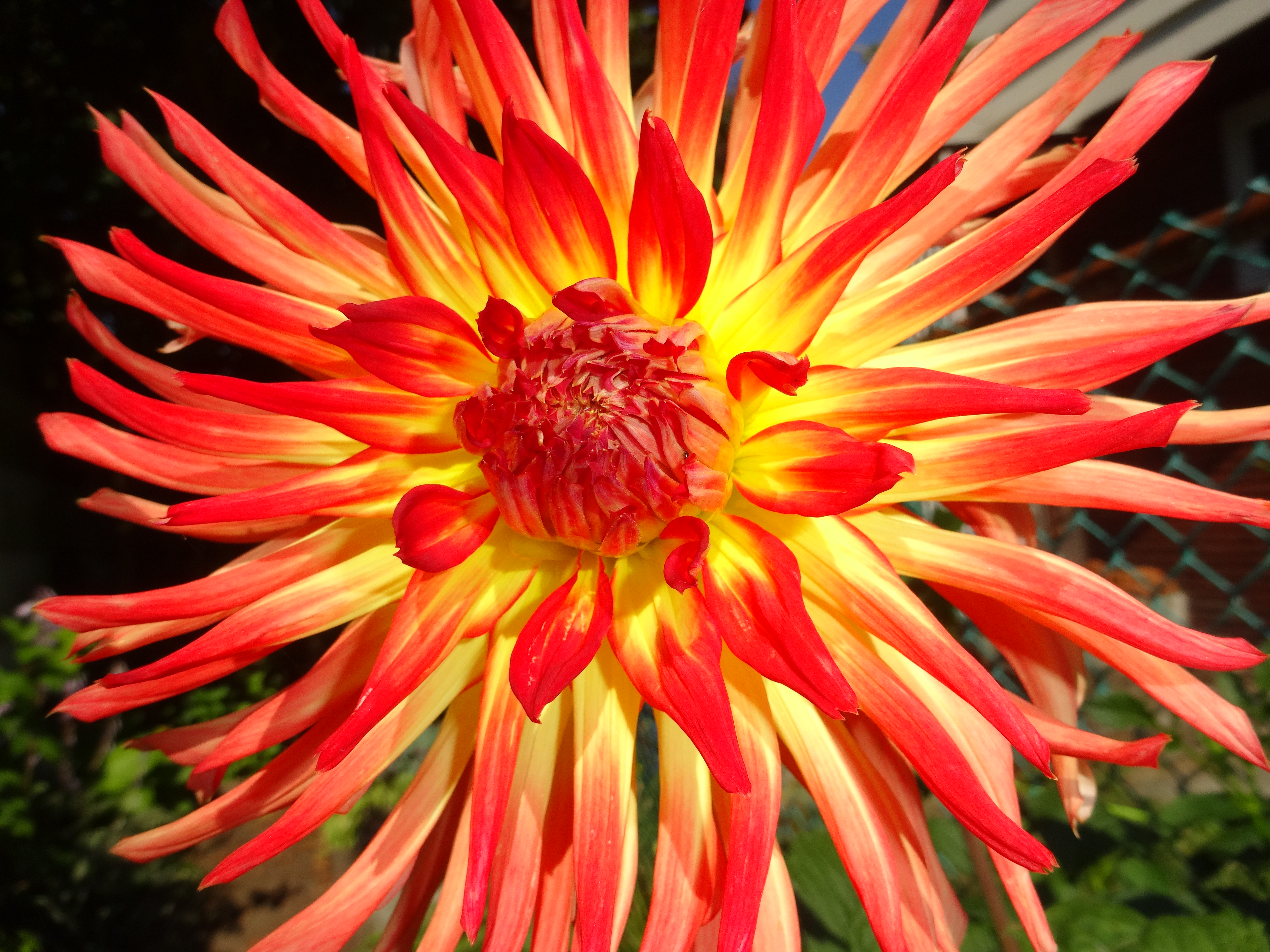
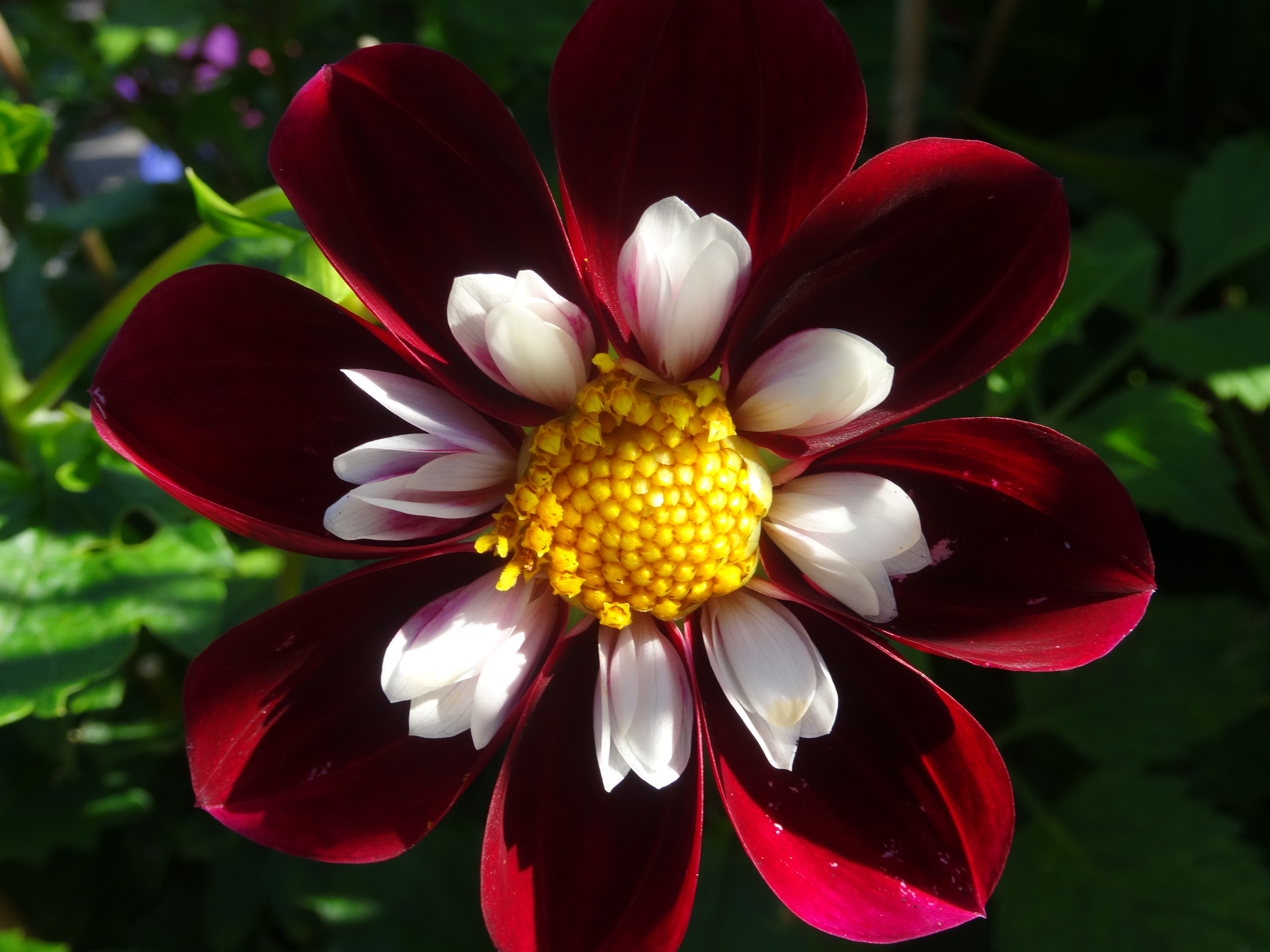
My camera is not expensive but it is surprisingly good. In particular, the macro lens has allowed me to get up close to things and see them in a different way. I started taking photos of leaves and flowers up close. And then I got even closer.

When I get really close, the blooms become abstract and almost sculptural. It is like entering a new visual world. I am not an expert at either mindfulness or photography, but combining these practices has deepened my joy in life. I am noticing patterns, some interesting, some beautiful, everywhere. I am seeing the familiar in a different way.

Kurt Koffka long ago said, “The whole is other than the sum of its parts.” I believe this to be true. But I do find that in looking at parts, lots of them, bit by bit, by examining them in detail, I am not only seeing more of the whole but I am feeling more whole.

DSC01705

Rose

DSC01689 (1)

Poppy

DSC01714

Allium

DSC01682 (1)

Hibiscus

DSC01751 (1)

Passionflower

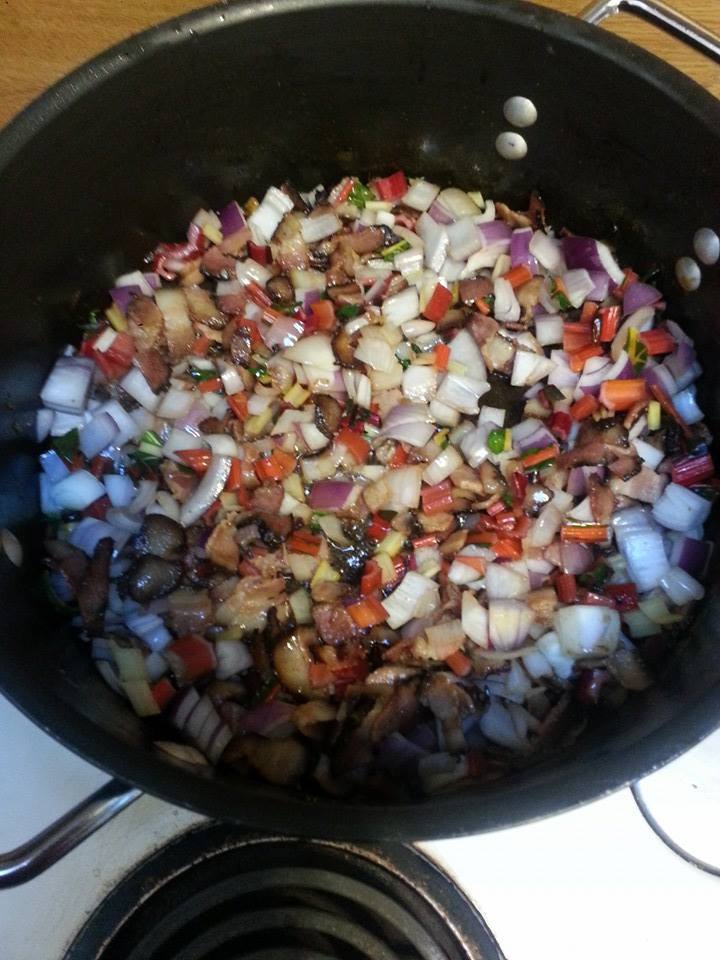
I come from an Italian-American family. I learned early on that eating is a way for people to connect. Cooking is a way to say, “You are important. I care about you. I want you to enjoy this meal and our time together.”

I also come from an artistic family. Some food is BEAUTIFUL. The way it looks, it smells, it tastes, the texture on your tongue. Beauty in edible form.

Good food brings people together. It can hold you in place while simultaneously transporting a group of people to another world. I have cooked a number of Thai menus, before this cuisine was ever present.

When I was a girl, I watched Julia Child on television. I thought her awkwardness and lack of pretension were funny. I found her cooking to be mesmerizing. I also watched Graham Kerr, The Galloping Gourmet and loved Jeff Smith’s books.

Even though I started cooking early, it took many many years to become a good home chef. I still have much to learn. But honestly, I can turn it out for guests. I can create a food experience for many that is unlike the best restaurant experience.

Is this because I am fine restaurant quality chef? No, of course not. At my best from a technical standpoint, I am an excellent home cook.

What I aspire to provide my friends and family is my communication of love in food form. I try to provide healthy and tasty food in a warm atmosphere.

Also, I like to eat.

That is why I cook.

1185191_10201805153160931_1671469321_n 1268306_10201805153480939_1505079312_o 1459859_10202482551615469_1759293863_n

He was a young teen and had been a patient of mine for at least a year. He had a long history of aggression, both verbal and physical. He expressed a lot of aggressive fantasies. But he was also a very smart and sensitive boy. At times, when he spoke it sounded like beautiful poetry.

He was hurting and vulnerable, a time that could produce a lot of aggressive posturing or that could produce some real talk about the real things that were bothering him. On this day, he told me proudly about his plan to end the Iraq War. His knowledge of military strategy was impressive, I must admit.

His aggressive fantasies, however, only fed his black and white thinking as well as his use of real aggression. I was not trying to encourage this. Seeing that I was not responding he said, “Dr. MacKenzie, isn’t that a great idea?” I responded with a couple of statements like, “You’ve given this a lot of thought” and perhaps even an interpretation, “Sometimes when we feel out of control of our lives, we like to feel very very powerful.”

He was a very persistent kid, though, and he was really proud of the elaborate combination of air, land, and sea forces that would win us the war. “Come on, you’re not answering the question. What do you really think?”

I knew that this boy respected me and considered me an important person in his life. He had very little peace in his life. We’d had many many conversations in the past like this one. I wanted to try a different response but I knew it was risky. I replied, “I am a pacifist.”

I’ll never forget the look on his face of incredible disappointment. I explained to him that I thought that finding peaceful solutions to world problems should be a goal of our country, that I knew it was unrealistic to expect to avoid all war, but that I was concerned that aggression was used so readily. There were additional reasons that had nothing to do with my self-disclosure, but he stopped seeing me within a month or two.

Pacifism is not a dirty concept but as a word it is treated as such. Pacifism is not “passivism”. Peace making is an incredibly active process requiring lots of planning, reflecting, listening, understanding, persistence and just plain work. It is also not being a door mat. Pacifism is about relationships, respect, and getting along. It is about justice and equality.

I know there are some people who believe in pacifism as an absolute. I don’t. I believe that it is a relative concept and further, that it is relatively neglected.

I think most people would agree that military force should not be the first line solution to a problem. War is often an act of domination. But it is often an act of desperation, if you really think about it. But it is often treated as a ready solution. And probably part of the reason for this is that we have a military at the ready all of the time. We have a war machine. Where is our peace machine? We don’t have one that is nearly the size, scope, and organization as our military.

Today, we commemorate D-Day, when Allied forces stormed the beach at Normandy, contributing to the end of WWII. So many sacrifices were made by so many people because the world had turned completely upside down.

How better to honor those losses by working harder not to repeat them?


Lindbergh High School Reunion '82, '83, '84, '85

Join us this summer for our reunion in Renton, WA!

George Lakoff

George Lakoff has retired as Distinguished Professor of Cognitive Science and Linguistics at the University of California at Berkeley. His newest book "The Neural Mind" is now available.

KomenWatch

Keeping our eyes and ears open.....

4 Times and Counting

Confessions Of A 4 Time Breast Cancer Survivor

Nancy's Point

A blog about breast cancer, loss, and survivorship

After 20 Years

Exploring progress in cancer research from the patient perspective

My Eyes Are Up Here

My life is not just about my chest, despite rumblings to the contrary.

Dglassme's Blog

Wouldn't Wish This On My Worst Enemy

SeasonedSistah

Today is Better Than Yesterday

The Pink Underbelly

A day in the life of a sassy Texas girl dealing with breast cancer and its messy aftermath

The Asymmetry of Matter

Qui vivra verra.

Fab 4th and 5th Grade

Teaching readers, writers, and thinkers

Journeying Beyond Breast Cancer

making sense of the breast cancer experience together

Entering a World of Pink

a male breast cancer blog

Luminous Blue

a mother's and daughter's journey with transformation, cancer, death and love

Fierce is the New Pink

Run to the Bear!

The Sarcastic Boob

Determined to Manage Breast Cancer with the Same Level of Sarcasm with which I Manage Everything Else

FEC-THis

Life after a tango with death & its best friend cancer