After a couple of recent inquiries about my physical health, I realized that I have not provided an update for some time. So I will take out a bit of time from my concentration on my emotional and cognitive health (a post about my challenges with attention, organization, and memory is forthcoming) and focus on my medical status.

Medications

I started taking Lupron injections last summer. I now get one every three months and will continue to do so for a total of two years. Lupron “shut down” my ovaries by disrupting the signal between my pituitary gland and my ovaries. So my ovaries think my days of monthly cycles are over and done with. I am currently infertile and functionally in menopause. However, Lupron induced menopause is reversible. Once I stop taking Lupron, I may start my cycles again and go back to being peri-menopausal.

In October, I started taking tamoxifen, another hormone blocker. I will take that for a long time. At the time of my diagnosis, the usual treatment protocol was to take it for 5 years. Subsequent research suggests that 10 years might be better. I’m not going to worry about it because we’ll have more information by the time that decision needs to be made.

Other than those stupid hot flashes, occasional foot cramps, and having to work out harder to maintain a healthy weight, I have been very lucky and tolerated these medications very well. Knock on wood.

Scans

I have an annual diagnostic mammogram and an annual MRI, staggered by six months. I had a “clear” mammogram last January. I will have my next MRI in September, six months after my TRAM surgery. (Recent surgery makes it harder to read the images for MRI.) Both diagnostic mammography and MRI missed three of my four invasive tumors as well as a 6cm area of DCIS. A disadvantage of being “young” (under 50) in the breast cancer world is that our breast tissue tends to be denser because there is  higher water content. The water shows up as white on imaging as does cancer. So it’s hard to know. I have also read measurement research on the sensitivity and specificity of breast imaging techniques. Imaging should get considerably more sensitive as I age. However, the specificity of mammography in particular is not great. As you know, there is a high rate of false positives. But that was not my problem. My problem was of false negatives.

Surgeries and recuperation:

As many of you know, I had seven surgeries between 6/27/12 and 3/11/13. I know I mention this a lot. I also know that it is not a race as in she who gets the most surgeries wins! Let’s just say that one of the reasons I keep mentioning it is because I am still trying to believe it. And I kept my sanity that whole time. And I know that many of you out there have been through similar and even rougher treatment protocols. Let’s pause a second to reflect on our resilience. It’s really rather incredible.

Back to me, sorry, I told you that I was going to write a post about my ever-changing cognitive functioning. I had an appointment with Dr. Welk, my plastic surgeon last Friday. Even though I was feeling good and nothing appeared to be amiss with my healing, I was kind of nervous about the appointment as I had not seen him since April. I am happy to report that nothing appears to be amiss.

I am still slightly swollen from my TRAM surgery, which was 4 1/2 months ago. A significant portion of my sensation has returned to my abdominal area. There are no areas that are totally “dead” to heat, pressure, etc. I intermittently feel those little electrical shock sensations associated with nerve regeneration, especially right after my acupuncture appointments. And then after several hours of on and off shocks, I notice that I have more feeling. I just now read a plastic surgery abstract from a very small study of women post TRAM surgery. A good number of them had at least some sensation return. (Yes, it would be better to read the entire article but the journal was charging $30 for the privilege.) I had not expected any sensation to return and so had not mentioned this issue to Dr. Wang. I will talk to her about it next week when I see her. Perhaps there could be some welcome improvement in the “being able to feel stuff” department.

An unexpected positive is the fact that my abdominal strength is much better than I expected it to be. I had a pedicle TRAM procedure which means that one of my rectus abdominus muscles was sacrificed to create a blood source for the transplanted tissue. Microsurgical procedures can be used to prevent this but I was not enamored with the higher rate of complications and failed surgeries. There is a little bit of controversy regarding the pluses and minuses of these procedures but I am happy with the choice I made.

I am seeing Dr. Welk again in October after my follow-up MRI. I may have another set of plastic surgeries, which Dr. Welk said could be done in one office visit. (Dr. Welk’s time estimates are like dog years so this means two office visits.) The purpose of the procedures would be to improve symmetry between lefty and righty. But at this point, I don’t have to do a thing and Dr. Welk was very clear that this was a perfectly reasonable option. He provided a range of possibilities including doing breast enhancements on each side, which would involve getting a set of implants. For me, this is a big “no, thank you”. He was fine with that.

Healthcare visit schedule:

Currently, I see my breast surgeon every six months, my medical oncologist every three months, my naturopathic oncologist every 4 months, my Chinese medicine physician every two weeks for acupuncture, and my psychologist every two weeks. And I continue to get a full body massage every three weeks, something I have done for nearly 13 years now for stress and chronic pain management. (I had chronic neck pain for twelve years during my 20’s and early 30’s. It went away after two months of massage.) I typically have 1-3 healthcare visits a week, about half of which are across town or in another city. I am very lucky to have such wonderful care. The logistics, however, contribute to a frequently interrupted life and work flow especially on top of parenting duties.

So that’s the state of the union as of today. I will keep you posted and thanks to all for your continued support and concern.

When I picked up my purse today, I discovered that I’d left a zipper open and a number of cards fell out onto the floor. One of them was my medical device identification card.

Going to the airport with a tissue expander? Don't leave this at home.

Going to the airport with a tissue expander? Don’t leave this at home.

I received this card on 9/26/12. That was the day of my tissue expander placement surgery, nearly two months after my mastectomy. Tissue expanders are usually used to stretch the pectoral muscles and skin prior to implant surgery. In my case, it was basically used as a place holder and a skin stretcher during the six months prior to my TRAM reconstruction.

I remember thinking that this card was kind of funny. The tissue expander looks like a poached egg. The “yolk” is a magnet. Tissue expanders are gradually filled with saline over a several month period. (This is one of the reasons that breast reconstruction can take such a long time, by the way.) There is a port in the expander, which it can be filled using a syringe. A “stud finder” type device is used to locate the magnet, which marks the way to the port, and tells the surgeon where to place the syringe full of saline. It’s really kind of an elegant design. A couple of magnets, a plastic bag, and syringes of saline. The magnet is metal, which poses some problems at the airport. Hence, the card. On the back, it is signed and dated by my surgeon.

The expander served it’s purpose but it was weird. A friend of a friend called it a “breast like object.” I called it an, “undercover piroshky”. It was an odd shape and since mine was right under my skin, I could feel the outline of the metal and the firmness of the plastic. When I pressed on the skin over it, it was like pressing on the seal of a Tupperware lid. It set two inches higher than my left breast, and was flat on top, creating a shelf. I often joked that if I were a party girl, I could have balanced three shot glasses on that savory pastry shaped implant.

My expander was removed on March 11th, over four months ago. There’s transplanted abdominal tissue where that plastic expander used to be. So why is this card still in my purse? You might observe that you yourself, have all kinds of cards in your purse or wallet that are no longer of use. And if you don’t clean out your wallet or purse, cards accrue because everything has a card these days. However, my obsolete medical device card fell out of my purse today AND I PLACED IT BACK IN MY PURSE KNOWING FULL WELL THAT I NO LONGER NEED IT.

I’m not sure why I still have it except that the expander was part of my experience with breast cancer. The experience is still very much a part of me. For the past several weeks, I have been working on my grief and loss regarding breast cancer. And when one grieves one loss, other losses often bubble to the forefront. It is unpleasant work I am doing. There’s a reason there are no books out there like, Ten Awesome and Fun Ways to Grieve. But it is really important to do this work in order to heal.

I think I will always have souvenirs of cancer, the scars, the permanent lack of sensation in my right breast, and the memories. I have this blog.

I don’t need a breast cancer membership card.

I know who I am, where I have been, and where I belong.


This content is password-protected. To view it, please enter the password below.

My dear friend, Rachel, just posted a comment on Facebook, “I think I’m about to get in trouble on a friend’s page. Best shut my yap.” My response was the following comment: “Do a cost/benefit analysis and then proceed accordingly. I saw my comment in print and thought, “And to think I used to write poetry.”

But when it comes to sticking our necks out and debating, it is probably pretty good advice. As I have described elsewhere, I am naturally argumentative and love a good debate. You may recall from an earlier post that my fellow grad school mate, Penny once described me in her amazingly wonderful Appalachian drawl, “Elizabeth would argue with a post.”

Some of those arguments were transformative and some were just fun. At other times, they were draining, left me in a lingering state of emotional turmoil either because I felt hurt and/or that I felt that I had hurt someone else. I am not a mean person but I am a quick thinker and when hurt or angry, I can use my verbal ability in a very aggressive way. This was particularly true in my teens. One of my high school teachers wrote in my senior year book, “I will miss your acid tongue.” I don’t think he missed it because he ignored my Facebook friend request when I put it out there a couple of years ago. And I could see that he was active on Facebook and friends with other students.

An excellent lesson I learned during the horrible work situation that led to my first of two major depressive episodes was to trust myself and choose my battles carefully. I spent nearly three years at that workplace, surrounded by some amazingly competent and dedicated people and others, well not so much. And since the folks in the “not so much” category were in management, even us amazingly competent and dedicated underlings misbehaved. I spent a lot of time in conflict with managers and coworkers because I felt both personally and professionally attacked and unable to do my job. I was given two managers, with totally different training, and totally different goals. In other words, it was a structural set up for failure. Before I fully realized how futile my situation was I spent a lot of time questioning in my head, “Is it me or is it them?”

Sometimes arguing for me is an intellectual exercise or sport. At other times, it has been a way of seeking reassurance when I am anxious. I did a lot of that kind of arguing at that place of employment. The illogic and chaos of the place was so disorienting. If only I could explain my ideas logically or counter criticisms in a reasonable manner, the universe would become organized again.

The universe didn’t reorganize itself until after I was laid off from the job in a very nasty way. But it was freeing. I got my depression treated. I got my Washington state psychology license and planned to start a small private practice in case my research career, the one I had fought to achieve and maintain over the span of 20 years, wasn’t viable. I wrote a small grant with a software company that designs web-based training, using a rather ingenious curriculum design developed by a professor at mid-west university. The grant was from the U.S. Department of Education to develop a pilot educational program. This was truly exciting as I had been working in computer-based parent education program research and development since my doctoral dissertation. Telehealth was a new, growing, and much needed research area. I live in a metropolitan area but I spent my training years, six years in North Carolina, one year in northern Florida, and two years in southern Indiana, working with rural families with very little access to even the most basic parent education on how to help little kids learn to cope with the difficulties in life in ways other than hitting, kicking, or throwing tantrums.

For my doctoral dissertation, I had carried out an independent project (as opposed to working on a professor’s project) a clinical trial evaluating a parent education program that I developed along with my husband, who is a software engineer. The results of the trial were modest, but positive and statistically significant. Working with an established professor translating parent education to his web-based instructional design meant continuing a line of research using technology as an additional mental health service delivery method.

You know I love writing about context. This is why I am not making a long story short. If you have not yet gotten my message, I was REALLY invested in my line of research. Getting help to under served populations. Preventing the really treatment resistant mental health problems that can develop in folks who don’t get early intervention, many of whom end up being “treated” in our penal system. This may sound overly self-important or idealism bordering on delusion, but I really viewed it as a vocational calling of sorts.

Back to the grant. We spent the $50,000 the government provided very very well. The pilot project was a success and something of which I will always be extremely proud. The parents who used the program loved it and they also provided me with very positive feedback regarding the email-based discussion thread moderation and coaching I provided to them as they completed our little program.

Although I enjoyed working with my co-principal investigator, the Big Time University Professor, I was extremely unhappy with a key staff member at the company, with whom I interacted daily. I think it basically boiled down to his taking a different role on the project than the one that he had been accustomed to, which was being in charge functionally if not officially. In other words, management had been very hands off. He really did not like this and fought me over everything including the program content and learning objectives.

I also disliked managing a project being carried out in the Midwest while I lived in on the west coast. It was time to write the “big grant” the one that was the follow up for the pilot grant (the granting mechanism was defined as a two-stage grant, the little grant followed by the big grant.) If the government were to funded the second grant, it would have been a $250,000 grant, which is not enormous in the research world but it is significant and a huge amount for a researcher at my career level.

I knew people in Seattle with relevant production and project management experience. REALLY GOOD PEOPLE WITH WHOM I’D WORKED WELL IN THE PAST. I’d contacted nationally known researchers, primarily psychologist and they had agreed to serve as consultants on the grant with no financial compensation. (That is standard, by the way. Psychology professors do a lot of stuff for free.) The pool of possible Internet programmers in Seattle was huge compared to a small university town in the Midwest. The professor and I set up a meeting with the company C.E.O. I wanted to request that I hire a Seattle crew to carry out the project, should the grant be funded. Big Time University Professor thought this was a grand idea, in fact I think he was even the one who suggested it.

C.E.O.’s response was a surprisingly loud and angry, “You work with the team you’ve got or we part ways.” I REALLY wanted to write that grant. But I was clear about what I was and was not willing to put myself through in order to get that chance. He had made a bold and seemingly bullying move. I calmly replied, “If the only choices are to keep this team or to part ways, then we will part ways. But I think there are other solutions to this problem. Let’s discuss those.”

I didn’t argue but I stood my ground. The small grant was over. I was back to collecting unemployment. My family needed for me to make an income. It wasn’t just about my idealistic goals or my career. It was about putting food on the table. The meeting ended on an ambiguous note something along the lines of “Let’s keep talking about this.”

My gut told me to get out and that what looked like a wonderful possibility would not be in reality. The C.E.O. was not a bad guy but he was disrespectful and I had no confidence in his ability to treat me like someone with something of value to offer the company. They were also struggling financially, had been through a number of rounds of lay-offs, and a few years later, the company folded. So he was also trying to protect existing staff rather than to expand the company into Seattle.

My husband agreed with me and I declined to write the grant. It was disappointing but felt like the exactly right decision. I ended up getting on research staff at the University of Washington and starting my psychology practice. I ended up loving both jobs, the former as long as it lasted, which was three years.

These days, I keep my arguments with posts (figurative or literal Facebook posts) to a minimum. I try to think about the costs of acting as well as the costs of not acting. I think about what things I will not get to do if I am busy arguing. I think about the fairness and strength of my argument. I consider the other side. I consider other solutions to the problem. I think about whether I am trying to solve the right problem.

Conflict is a fact of life. Some conflict is even necessary for life, especially if one has relationships with at least one other human being. But conflict as a way of life? No, thank you. I’ve got too many other things I want to do with myself.

In my last post, Orange Alert, I wrote about another chapter in my complicated relationship with orange. Chapter one involved my unsuccessful attempt color my own gray roots before my mastectomy, since I had to cancel my salon appointment due to my surgery. Some how I thought that having cute hair would buffer the negative impact of losing a breast. Perhaps I was right but since my hair turned out a decidedly not cute Oompa Loompa orange, I will never know.

The second chapter involved two surgeries, the first last September (Wonky Wonka Boob) and the second (Orange River Grafting) in October. As I wrote a couple of days ago, As the orange in question was betadine, which was used as an antiseptic to prepare my skin for surgery.

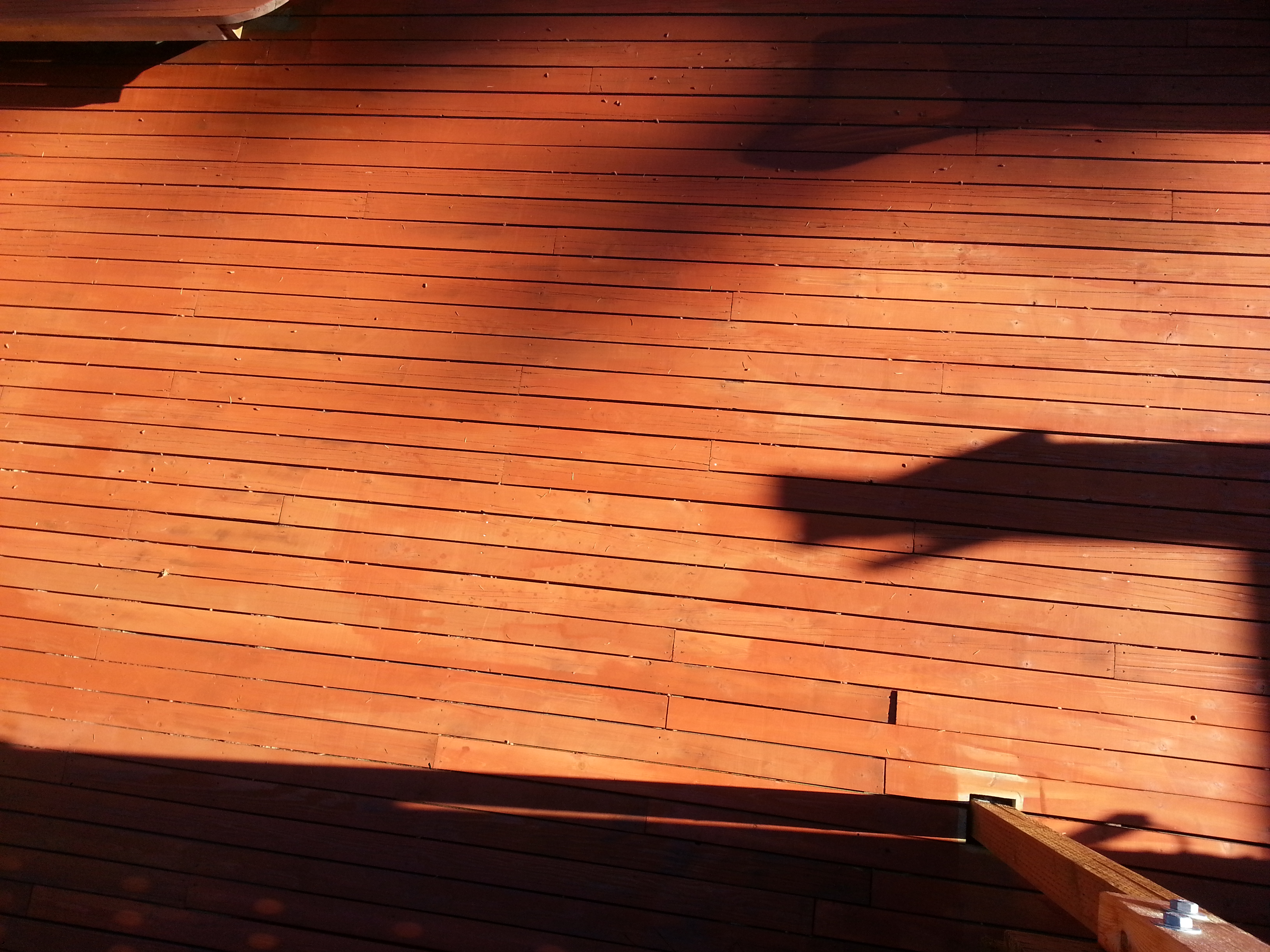
I was mostly jesting about my fear of orange prior to last weekend when my husband swabbed out ground floor deck with a very orange stain. It was a trauma cue for me and hit me out of the blue.

As a psychologist I know that one of the best ways to keep a trauma cue powerful is to avoid it. (Now, sometimes there are little baby steps and skill building that need to be accomplished before facing a trauma cue head on, but this was not the case for this particular situation.) The deck continues to be orange and I look at it every day. This has helped quite a bit.

I was also thinking about betadine and yes, those orange stains on my skin happened in the course of breast cancer. And breast cancer is bad and scary. And yes, they happened during a period of time during which I was feeling particularly low.

Then I realized that one of the advantages of using an antiseptic that stained my skin is that the OR nurse knew that she had swabbed all of the areas she needed because she could see exactly what she had done.

So the orange in the betadine helped protect me from infection. My orange roots gave me a huge laugh and buffered me from some of the fear of having a breast removed. I loved writing that Willy Wonka post.

So orange, you can stay.

This is the phoenix in my garden. The artist made it out of an old pink flamingo. This is a good kind of orange, the orange of transformation.

This is the phoenix in my garden. The artist made it out of an old pink flamingo. This is a good kind of orange, the orange of rebirth and transformation.

My husband built a deck off of the second story of our house. To say that it is beautiful is an understatement.

July is the driest month of the year so he waited to stain it until now. We also have a large wooden patio off of the ground floor, which is in need of refinishing. John got some stain samples, which he carefully applied to samples of all three types of lumber he used to construct the upper deck. We chose the stain color together.

He started staining last weekend. He ran out of stain on Sunday. The kind he purchased was not available at any of the stores that are open on Sunday. Additionally, this stain is quite expensive. He decided, after consulting with me, that he would buy a similar color, more economical stain for the lower deck. However, this time, he did not test the stain on wood samples. John just started staining away.

By the time I looked at it, here’s what I saw.

20130715_081910(1)

When John asked for my input on the deck color I said, “No orange.”  There it was, a sea of orange. And I felt irrationally anxious and angry, not so much with my husband but with the color.

I may have asked John to sand off the finish.

I may have even characterized it as “looking like ass.”

I may have said, “Maybe I can learn to live with it but it looks like BREAST CANCER!”

I have had a couple of run ins with Oompa Loompa orange during my time as a breast cancer patient. I tried to make light of it and I actually enjoyed writing posts like Wonky Wonka Boob. During the initial placement of the tissue expander, betadine was used to prep my skin for surgery. I also had trouble with some tissue necrosis after that surgery. Since the betadine was not removed during surgery, I was left with a Oompa Loompa orange “breast”, complete with tissue necrosis. When I had a skin graft the following month to correct the necrosis, I was awake. I saw the nurse put betadine on my skin as she was prepping me for the surgery.

And guess what? Betadine is a liquid, just like deck stain. And it stains the skin just like deck stain puts color on wood.

What’s the big deal about having orange skin, Elizabeth? You’ve had a wire in your nipple, been injected with radiation multiple times, had each boob squished for 7 minutes at a time for a PEM, and had a mastectomy that made your chest wall look like Craters of the Moon.

The difference is that my first two plastic surgeries took place at a time when I was mentally and physically exhausted. I was working too many hours upon my return to work following my mastectomy. It was hard to know how much work I would be able to handle and I guessed too high. And even trickier is predicting the times when the strong emotional consequences of dealing with breast cancer will come crashing down. And in the fall of 2012, there was about six weeks when theo accumulated stress and grief that came crashing down over me.

So orange has become associated with a really low scary time of cancer. Some might even say that it is a trauma cue for me. Stress can cause trauma but not all stress is traumatic. And not all people who’ve been traumatized developed Post Traumatic Stress Disorder (PTSD; I mention this just for clarification because I don’t think I have PTSD).

I knew I was stressed. I knew that I was experiencing grief. But trauma, that was news to me, until I went off on that orange deck.

I’ve got a lot more emotional work left to do on breast cancer. I’m going to keep digging. Fortunately, I have a big and strong shovel.

Last week I had one clinic day (Monday), followed by six days of painting and redecorating my private practice office. My daughter was also gone on a band trip during this time. So this week has been about transitioning back to my normal roles and routines. It was really hard, much harder than I expected. My brain was fragmented for several days.

Even more distressing was the fact that I felt really anxious and unsure of myself outside of work. This was particularly difficult socially, especially with my cyber friends. Cyber relationships do not have the same familiar codes and handshakes on which I gauge other social interactions. My cyber buddy, Greg Smith, wrote about the limitations that electronic communication put on his “Spidey Senses” in navigating his interactions with patients via Skype. He is an emergency department psychiatrist who practices telehealth in his job to provide consultation to patients who live far away from services. (As an aside, although my psychology practice is in Seattle, a “little big city”, the majority of my training was done in rural areas. Access to care is a major big deal.)

Earlier in the week, I found myself anxious that I’d written the wrong thing to one cyber friend or worrying that another cyber friend thought that I was a creepy stalker because a compliment I’d paid to her did not seem to go over in the way I had intended. I worried that I was being too flirtatious with cyber friends, male and female. I thought about what I might do to repair relationships that may have been damaged by my electronic awkwardness.

I have not felt that way for a VERY long time. What the heck is going on? I’ve had cyber buddies for awhile now and although I am sometimes frustrated by the limitations of this form of communication, there are benefits as well. When I write, I can communicate without interruption, for one. That is a major gift to me in this time of my life when some level of introspection is needed for health and healing. But I do miss the body language, tone of voice, or even hearing any of my cyber buddy voices. And I know in my own communications, the parts of me communicated beyond the words that I write or by my smile in the photos I post, are lost.

Last week, I dredged into some painful past experiences to write the post, Predator, about my own experiences with sexual harassment as a teen and how they relate to the sexualization of breast cancer.  If you’ve read the post, you know that the experiences I wrote about are very typical for women my age and most of the experiences still occur with girls and women today. The post resonated with a lot of women and I was very glad to have written it. I also suspected that it would help me integrate the vulnerability I have felt as a breast cancer patient to another time in my life when I felt scared and vulnerable.

I knew this would be a hard post to write and even waiting until my mother went on vacation to post it. I know that by the time she comes back home and reads it, I would have processed through the hard emotions and she would not have to worry about me so much. She had already suggested to me a couple of posts prior that I needed to take a break and write something light and/or funny. It’s hard to see one’s child in pain, even when she is 47 years-old.

Writing the post was harder than I expected and was like taking a time machine back to the worst parts of my adolescence with the extra layers of breast cancer and being a mother of a vulnerable teen girl.

Actually, let me put it this way. It was like being 16 again.

There are folks that rhapsodize about their youth and feel that they have lost something. Don’t get me wrong because I had a generally happy childhood and adolescence, but I am happy where I am. I have never had a stronger combination of individual, familial, and professional satisfaction than I have experienced in middle age. Emotionally, I feel so much more solid, as well. And this is not because my life has been easy in middle age. It is a benefit of maturity. My parents are very happy people who love their family, friends, and each other. They help me look forward to my future, should I be so lucky to live a long life.

Back to being 16 again. Do you all remember what your teens years were like with your peers? I don’t know about you, but although I had good friendships, they involved a frenzy of unnecessary activity. Worrying, “Did I say the right thing?” “Should I have said that?” (That was a popular one for me. I am loud and chatty.) “Should I have looked at him that way?” “Did I hurt her feelings?” Then I would go and try to repair things. Later in my life, a good friend would characterize my repair attempts as, “Elizabeth, you flail.” Now she has more of a passive, slug like coping style but in respect to the situation she was describing, I was totally and completely flailing when I should have been leaving things alone.

These days, I typically feel solid as a communicator. There are parts of me that can be perceived as being “too much” (see “loud and chatty”, above). This was particularly true in the past. I have learned to be myself with confidence and I think part of what bothered people about the big parts of my personality was the anxiety and lack of confidence that were sometimes underneath. Now I get a lot of compliments about my loud laugh and I can tell from patients and their parents that for the most part, they enjoy the fact that I am a happy person, eager to help, and a lover of my fellow human beings, especially the small ones. But I also know when I need to scale things back and tone them down. It’s a dance of a sort and in my profession, I am usually extremely good at it.

To be 16 again, was no fun. I saw Rebecca, my psychologist yesterday. The session may have only lasted an hour but by the time I left, I’d aged 31 years.

So cyber and face-to-face buddies, I am ready to play like a grown-up again.

Photo by Aaron Eidinger, 1983-ish. I am 17 or 18 in the photo.

Photo by Aaron Eidinger, 1983-ish. I am 17 or 18 in the photo.


Yesterday, someone told me that she’d had a strange man ask her to be a Facebook friend. She accepted the request and then he told her that he was in love with her, would always be true to her, etc. I was quite surprised to hear that she had not unfriended him but had decided to stop responding to him and was convinced that he would get the message.

PEOPLE WHO TELL YOU THAT THEY ARE IN LOVE WITH YOU AFTER NOT EVER MEETING YOU ARE NOT VERY GOOD AT GETTING MESSAGES!

But that’s not really what this post is about. I started thinking about what it takes for me to “unfriend” someone. I’ve only ever unfriended one person on Facebook. Let’s call him John Doe. He was a very quiet boy in high school. I didn’t really know him. I do remember that although he did not attend my 20th high school reunion, he contributed a write-up to the reunion book. His contribution was written in rather child-like scrawling script. He wrote about his cat and how pretty “Suzy Cheerleader” was in high school. It struck me as being a little stalker-y, but I suspended judgement.

Nine years later, he asked to be a Facebook friend. I gave him the benefit of the doubt. On the same day, we had the following conversation:

JD: “I am John Doe from high school. Do you remember me?”
Me: “Yes, I remember you.”
JD: “Are you single?”
Me: “No, I am very happily married.”
JD: “Do you ever talk to Suzy Cheerleader?”

I opted not to respond and quickly unfriended him.

But I have also had times in my life when I’ve unfriended face-to-face friends. It has been rare but it has happened. The first time was a college friend. Initially, she told me how wonderful I was, how interesting I was, yada, yada, yada. It was a bit much but I thought she was thoughtful, smart, and fun. After a year or so, she became very critical of me. In retrospect, it was likely just because we were young women and because we had become roommates. She had a slow way of moving and speaking. She was large, standing at six feet. I was comparatively small, quick, and intense. She complained that I turned pages too quickly when I read and that I bounded out of bed too happily each morning. The criticisms became more so over time and honestly, I don’t remember them. But I did not like the juxtaposition of being idealized followed by lots of criticism. Neither extreme set well with me. I actually broke up our friendship formally, like one would a romantic relationship. It felt so justified at the time but later I regretted it. A mutual friend called me several years ago to invite me to his wedding at the last minute. My former roommate was officiating at the wedding. I could tell he was trying to get us “back together.” I had a schedule conflict.  We are now Facebook friends but I have not yet reached out to her. I don’t exactly know what is holding me back from doing so, especially.since I think I made a mistake by not trying to work out the friendship. We were just teenagers when we shared a dorm, after all.

I had another friend in grad school. My husband and I were friends with both he and his wife. They divorced. We had planned to stay friends with both of them. But things got a little weird when the husband accused me of thinking and doing things that I had never done TO ANYONE, least of all to him. I understand that he was hurting and feeling judged. But he was pretty nasty to me and I was going through a difficult pregnancy. My husband and I parted company with him. I sometimes wonder what his life is like these days but I do not regret our decision.

A final individual is someone I’ve avoided since 2007 because I am ambivalent about our friendship. We used to work together as researchers. Promises were made about a job opportunity on a grant application on which she was a principal investigator. I left the research group when my own grant application was not funded on my third submission. I increased my private practice. I later heard that my friend’s grant had been funded but no one called. The promises that were made were very concrete and expressed with certainty that they would occur. I figure that it was assumed that since I had a small private practice, which could be expanded, that I wouldn’t want to continue with the research opportunity in the grant. I also figure, although it is highly speculative, that there were thoughts that the money that had been set aside in the grant to pay my salary, might be better spent in another fashion. On top of this, a co-investigator had called a meeting to discuss a paper on which I was first author, without inviting me to the meeting. It was my thinking that my friend should have (1) talked to me about whatever change happened with staffing on the grant and (2) that she should have given me a heads up that there was a meeting on my paper. I had done fine work on the paper and ultimately, I ceded first authorship, but found a home for the paper in a very good journal. All in all, I felt that my friend had been disloyal. I didn’t talk to her about it because it was true that by that time, that I had moved on. I didn’t want to work for a friend. But I wanted to be able to make the decision myself. But what was I going to say? “You promised me you’d offer me that job. I wouldn’t have taken it but I’m angry and hurt, anyway.” I also understood that because of her degree, she can only be a researcher. She doesn’t have the flexibility that I have. But it didn’t feel good and I’ve been on the fence about the friendship, waiting for my attitude to change. I am almost ready to attempt to repair the friendship, but not quite.

I think in 47 years, I’ve been pretty friendly. I don’t like losing friends. My breast cancer experience has been a time of strengthening some of my long-term friendships and a number of new friendships with blogging friends. The nature of blogging friends is unique and unlike any other friendships I’ve experienced. Some day I’ll blog about that, I suspect. But in the meantime, please know that if you are one of my face-to-face or blogging friends, you are precious to me now and I hope in the future, as well.

This content is password-protected. To view it, please enter the password below.

I grew up in a loving household, in a good neighborhood, and went to good public schools. Despite this, as an adolescent girl, I became quickly and keenly aware that part of being female was being prey to boys and men.

I went to middle school in the late 70’s. Like many teens, I had an ugly duckling/swan transformation. As a 7th grader, I was considered to be rather homely. Boys fake-flirted with me to humiliate me. They treated me like I was stupid. By 8th grade, I had undergone a bunch of pubertal changes, lost weight, grew several inches, and got fashionable. But it didn’t matter whether I was pretty or not. That school was an incredibly humiliating place for a girl. Walking the hallways was like running a gauntlet because boys hands would be groping everywhere and I mean everywhere in what seemed to be full view of teachers. Not one of the adults did a damn thing about it.

The summer after 8th grade, we went to a Seafair (Seattle’s summer-long festival) parade. One of the Seafair clowns, a GROWN ASS MAN, picked me out of the crowd (did I mention I had just finished the 8th grade?) and gave me a sloppy kiss full on the lips. I tried to make a joke to regain my footing and recover from the confusion and humiliation. He made some mildly sexual comment. That was my first kiss, by the way.

When I was a high school freshman, I often walked the mile between my bus stop and home by myself. There were other kids in the neighborhood so I don’t know exactly why I walked alone so frequently, but I did. On more than one occasion, a car would pass, come to a halt in front of me, and open the door to the passenger side of the car. They were strange men waiting for me to get into their cars with them like this would be something I would want to do. I would freeze and I remember being afraid to walk past that open door. After a bit the door would close and the car would drive off.

When I was in the 10th grade my history teacher, who was at the time THE SAME AGE AS MY FATHER, engaged in some super creepy behavior with me. Whenever we had independent work time, he would sit on top of the desk in front of me and stare at me. Occasionally, he would try to start up a conversation. I hate to be crass but feel compelled to point out that when he was seated this way, his crotch was right at my eye level. I argued with him about one of my grades once and he looked a little desperate, as if he were somehow losing me. He put his hand on my shoulder and told me that he loved me. I told two teachers and a guidance counselor about this. I was told that I had misunderstood what was fatherly concern. My peers teased me and told me that I thought everyone was in love with me. I felt ashamed and didn’t tell my mother about this or any of the other middle school and high school incidents. I would learn later in my life that my mother would have likely kicked some ass and taken names on my behalf. That’s because my mom did kick ass and take names on my behalf but that’s an incident that I’d rather keep private at this time in my life.

These events were creepy and felt clearly wrong to me. But there were many other experiences with peers that were far more confusing. Some of my male peers could be disgusting one moment and sweet another moment. I dated very little in high school but I did have one little “fling” at music camp when I was 15 years old. The boy was smart, funny, and at times, sweet. At one point he characterized the appearance of my legs as “good for spreading.” I can’t remember the context of this comment except that there were other kids around when he said it. I made out with him anyway, in the kind of barely PG-rated way that a 15 year-old girl “good Catholic girl” would do.

This is the world of females, when being sexually desired is mixed with degradation. And I would clarify that it is the world of straight females but even non-heterosexual girls and women are subjected to expectation from many boys and men that they exist for male pleasure and domination. What a way to tarnish healthy sexual development. What a way to make it feel wrong and dirty.

Why do I tell you about my life experience? Is it because it is so unusual? No, I describe my experiences because I think they are close to the typical female experience. Actually, my experiences may arguably be better than the typical female experience. Tellingly, I took myself off of the dating market until college by having crushes on boys so shy they’d never ask me out or boys who I would later learn, were gay. And I went to a high school where being a smart, outspoken girl meant a death knell to dating. I kept my head in the books. I decided when I was 12 years old that I wanted to get a Ph.D. I was lucky enough to have academic skills and support that I could leverage, to build this future for myself.

Last week, I learned that Larry Flynt and his “gentleman’s club” put on an event called “Flight of the Ta-Tas”, a topless skydiving event to benefit Living Beyond Breast Cancer (LBBC), an organization devoted to women and men who have had breast cancer and later developed metastatic cancer. As it turns out, LBBC’s logo was used to promote the event without their permission. They did not sponsor the event. To read more about this, Knot Telling wrote an excellent series of posts about it as well as communicating directly with LBBC about it.

But let’s back up a second to Larry Flynt, the publisher of Hustler Magazine. The first time I learned about this magazine was when I saw this 1978 cover.

2hustlerjune9.gif

But look at Larry Flynt’s quote on the side, “We will no longer hang women up like pieces of meat.”

Oh wow, Larry Flynt was speaking up for women. He was trying to help! You buying this because I’m sure not. When one looks at the context of this statement, the context of all of the degrading photos of women in Hustler not to mention the juxtaposition of this quote with an image of a woman in a meat grinder, the real message is as clear as day.

Sexism has long been protected by ignoring context. That is why I’ve told you about aspects of my life. And no, not all males are exploitative of women. And not all women allow themselves to be exploited. I am talking about culture, the group. And as a group, girls and women are subjected to sexism and it hurts.

Yes, I can see a specific instance where going topless skydiving might be a positive experience. But done within the context of the sexism that pervades our culture as well as the culture that trivializes and sexualizes breast cancer because it involves “boobs”, “The Flight of the Ta-Ta’s” does more harm to women and girls than it does to help by raising money for a worthwhile cause. A lot of people may think that I’m making too much out of this, wasting my time and energy. I mean LBBC would get a big check if they chose to accept it, right? Let me ask you this. Would the same rationale apply to a black face/minstrel show to raise money for the NAACP?

Larry Flynt, I’m not taking the candy you offer me to get into your car. Keep your money. We aren’t going to sell ourselves, other women, or our daughters.

Lindbergh High School Reunion '82, '83, '84, '85

Join us this summer for our reunion in Renton, WA!

George Lakoff

George Lakoff has retired as Distinguished Professor of Cognitive Science and Linguistics at the University of California at Berkeley. His newest book "The Neural Mind" is now available.

KomenWatch

Keeping our eyes and ears open.....

4 Times and Counting

Confessions Of A 4 Time Breast Cancer Survivor

Nancy's Point

A blog about breast cancer, loss, and survivorship

After 20 Years

Exploring progress in cancer research from the patient perspective

My Eyes Are Up Here

My life is not just about my chest, despite rumblings to the contrary.

Dglassme's Blog

Wouldn't Wish This On My Worst Enemy

SeasonedSistah

Today is Better Than Yesterday

The Pink Underbelly

A day in the life of a sassy Texas girl dealing with breast cancer and its messy aftermath

The Asymmetry of Matter

Qui vivra verra.

Fab 4th and 5th Grade

Teaching readers, writers, and thinkers

Journeying Beyond Breast Cancer

making sense of the breast cancer experience together

Entering a World of Pink

a male breast cancer blog

Luminous Blue

a mother's and daughter's journey with transformation, cancer, death and love

Fierce is the New Pink

Run to the Bear!

The Sarcastic Boob

Determined to Manage Breast Cancer with the Same Level of Sarcasm with which I Manage Everything Else

FEC-THis

Life after a tango with death & its best friend cancer