My 40th High School Reunion is this year. Somehow, I was asked to be on the reunion committee 10 years ago for the 30th reunion. I agreed to be the administrator for our reunion Facebook group. One of the things I did besides helping people reminisce was to acknowledge birthdays. People liked it, a lot of us had fun at the 30th reunion, and I kept celebrating birthdays. I was surprised at how appreciated it was by people, these small acts of kindness. Consequently, I have kept posting about my classmates’ birthdays for the last 10 years.
I was contacted by one of the heads of the reunion committee to ask if I would continue my role as reunion promoter for our 40th reunion. Given my health risks, the fact that I have no one who can cover for me at work if I get sick, and the fact that I work with kids who are also at high risk for severe or long Covid, I avoid crowded indoor gatherings. And knowing that there are Trump supporters who are likely to attend the reunion, I don’t want to get harassed for wearing a mask.
I told the reunion committee member that I was happy to help, regardless, but that my attendance was going to depend on the venue, basically, whether it was indoors or outdoors. Her response was, “You have to come! You’re our girl! You deserve to be there!”
I had breast cancer in 2012 and two heart attacks in the space of 8 days caused by Spontaneous Coronary Artery Dissection (SCAD) in 2017. I didn’t expect these diseases at the ages I was, 46 and 51 years, respectively. Treatment, recovery, and facing my mortality was painful and scary. I try to live my life with the awareness that time is precious.
What I don’t think about is whether I deserved the illnesses or whether doing ten years of birthday greetings on FB somehow protects me from disease exposure because I deserve to be there.
I stopped believing in divine intervention decades ago. People get sick and die, people who don’t deserve it. Babies, children, families, refugees, living in all kinds of harrowing internal and external environments of famine, disease, violence, and war.
Everyone gets sick. Everyone dies. It is true that some suffer more than others but none of this is about deserving, except for people who’s basic rights to live without violence, with good food, clean water, access to medicine, are violated.
For the rest of us, it is just about the body, its capacity for life and healing as well as its capacity for sickness and death. Loss is painful and at times devastating. But there are many types of losses that are the normal.
In cancer recovery, we often speak of the “new normal”. It is a useful concept for many. When I got cancer, I worked with an psychologist who had a lot of experience with people facing physical illness. I told her that I not only wanted support through my cancer assessment and treatment but that I wanted to work hard to prevent depression or experiencing traumatic stress. Her main recommendation was to integrate my cancer experience into the rest of my life and to not compartmentalize it. She noted that people who try to shut off potentially traumatic experience from the rest of their lives, are more likely to get depressed or traumatized.
I can only speak for myself, but I found that accepting cancer as part of my life, writing nearly daily about my experiences with cancer assessment, cancer treatment, and my day-to-day life to be very healing. I don’t mean that it wasn’t painful. I experienced all of the grief emotions. I mean that my grief process was one that brought forth acceptance and healing. I drew on this when I got sick again.
Death and illness, life and healing, anger and happiness, joy and sadness, growth and decline, anxiety and equanimity, all of these things are part of the oldest normal.
Be well, friends.
P.S. The reunion has outdoor opportunities, so don’t worry about whether I can attend or not.
As you can see in the photo, Basie, our 9-year-old cat is beautiful. He is also snuggly and purrs a lot. Basie has asthma, which has gotten worse. He’s been a “good eater” for many years but during the pandemic, with someone at home all of the time, we did not do a good job monitoring his food intake. Basie would eat all of the time, if he could. Consequently, he is on a diet to lose 7 pounds. He has lost about 1/10th of a pound. 7 pounds is a third of his total body weight since he was weighed at his last veterinarian appointment. His vet has prescribed special food. I’ve been measuring it carefully. Basie complains loudly but he is getting used to it.
Having to lose a 1/3 of one’s weight is A LOT. As a comparison, if I had to lose a 1/3 of my weight to get into the “healthy weight” category for my height, I would have to lose nearly 60 pounds. Basie’s current weight makes his asthma worse and puts him at risk for diabetes. When I tell people that Basie is on a diet for his health, they don’t bat an eye. It makes sense that he needs to lose weight. When people see photos of Basie, they recognize what a beautiful creature he is.
Now, let’s talk about weight and people, specifically female people. How many of us have had our worth judged by our weight? How many times have we had our worth judged by our weight? I’d say that it would not be unreasonable to think a typical number is in the thousands.
How many of us have been judged for trying to lose weight or not trying to lose weight? Or trying and not being successful? How many of us have prioritized how losing weight can make us look more attractive versus physical or emotional health benefits?
There’s a lot of policing of women’s bodies and there’s a lot of reactivity about that. People can be repulsed by the sight of an overweight person and say something negative. When called on it, the response is often, “I just care about their health”. This response is bull shit most of the time. It’s just fat shaming. I’ve also seen reactivity when women tell someone that they are exercising and watching their diet, “BMI doesn’t really mean anything. It’s biased and a form of fat-shaming. You should never follow a restrictive diet. You need to love your body.”
I had a lot of shame with my body and being overweight from the time I was a kid to about age 48-ish. I had shame about my body and my weight even when I was not overweight. I had an audio-tape in my head that told me everyday that I was fat. By the time I was diagnosed with breast cancer at age 46, the tape only played when I was overweight. Having breast cancer provided me with a natural opportunity to re-visit my relationship with my body. I decided to make a concerted effort to try to stop the tape and over time, I learned to love my body and to appreciate what it allows me to do in my life. The daily tape stopped and although I still have to work on it, the shame is nearly completely gone.
Even when I had a negative body image, I was careful around my daughter to not talk about my weight, her weight, or the times when I was engaged in a campaign to lose weight. Once she became an adult, like 21 or so, I commented once that I was trying to eat less. (This was after my SCAD heart attacks in 2017, while I was completing cardiac rehab.) She said, “But Mom, you’re not fat.” I replied, “I like my body and I think I look good but my doctor thinks it would be better for my heart to weigh less.”
Like a lot of people, I put on weight in the first few years of the pandemic. I’ve tracked my meals with apps for years and although I did not follow plans perfectly (I tend to do a fair bit of late night snacking after a day of healthy eating), I was not really eating more than I did when I was younger, and weighed less. I am active and walk 3-4 miles almost every day in addition to hiking during the summer. I’ve done this for 12 years. Nonetheless, my attempts to lose weight in the last few years, have been difficult.
In the meantime, I’ve injured the ball of my right foot. I have Morton’s Neuroma, which is caused by a thickening of the nerve under the metatarsal bones. The nerve thickens like a callous in response to repeated pressure on the ball of the foot and then the bones hit the nerve. It causes extremely painful shooting pains in addition to soreness. The injury was caused by my stair training last spring and summer in preparation for our camping trip to Alaska (which ended up being postponed). So my right foot was getting pounded by walking up and down all of those steps. My first response was to change my shoes from hiking shoes to HOKA’s, which are thickly padded and made for foot rehab. That helped and then it didn’t. I stopped doing the steps. For hiking, I bought a second pair of HOKA’S, a different model, and then I switched shoes halfway through the hike. That helped put the pressure in a different place but I was not able to do some of the hiking, especially when it was rocky or there were lots of tree roots.
By December of this year, I was in pain my often than not and by last month, I could barely walk around the house. So I went to my internist, thinking that I could get a referral for physical therapy (I thought I just needed to stretch my calves and Achilles tendon). Instead, she diagnosed Morton’s Neuroma, which is not treated with PT, and referred me to a podiatrist. I was able to get into the podiatrist the next day and I am now getting treated with accompanying improvement.
The main goals of the treatment is to 1) reduce inflammation of the nerve and 2) reduce pressure on the ball of my foot. I’m taking a series of steroid shots to reduce inflammation of the nerve quickly. I’ve started wearing orthodics that shift my weight to my arches from the ball of my foot. I have selected shoes that all better for my particular foot problem. I met with a different podiatrist (a well-known evidence-based podiatrist) earlier in the week. He told me that for the short-term, my bare foot should never hit the floor, even in the shower. So now, I have shower shoes and house shoes.
What does this have to do with weight? Not surprisingly, carrying more weight puts more pressure on the ball of my foot when I walk or run. Carrying more weight also makes my heart work harder and I have a chronic heart disease. Yes, there is a bias against women and weight in our society and that affects the medical field. And yes, programs like Noom and Weight Watchers contain harmful elements. And yes, restrictive eating is a bad idea for some people. This is my body. Losing weight is a good goal for me, and I know that tracking what I eat, being selective about what I eat, and reducing what I eat can be a helpful combination for me.
Losing weight is not easy, especially after menopause. Research on weight loss suggests that diet is more important than exercise in dropping pounds. (Exercise has so many emotional and physical health benefits. I am not discouraging people from exercising.) I’ve long suspected that in following a weight loss plan like Noom or Weight Watchers (I’ve lost weight on both in the past), I’d have to eat less than the plans suggested. I’d been on both Noom and WW during the pandemic and even when I followed them, I didn’t lose weight. I’d never really considered weight loss drugs before but I thought it was worth exploring. I take a statin drug now for my cholesterol. Losing weight is really hard. Why do we think we’re “cheating” if we consider other options?
I had my annual physical last December with my new internist. (My long time internist, Dr. Hyde, is enjoying a well-deserved retirement). I brought up my weight. She mentioned her weight loss success by reducing late night snacking. (She is not overweight and looks no older than 40.) In other words, she made weight loss sound easier than it is for many people. I told her that I’d tracked so many consecutive meals on Noom, thousands, that the counter went back to 1. I’d exceeded the counting capacity of the program. I told her that I’d been keeping within my points on Weight Watchers. I said, “I’m giving this one more effort to be incredibly scrupulous and to make sure that I am tracking portion sizes correctly. I’ve lost a couple of pounds since Thanksgiving. But it is so difficult to lose weight since menopause and if there were weight loss drugs that I could take that didn’t have bad side effects, I would do it.”
She told me that I qualified for weight loss drugs. We discussed options. I expressed interest in the oral medication, Contrave, which is a combination of two drugs that have been around for a long time. The combination is associated with modest weight loss for about 45% of people and it is not contra-indicated for me in light of my cardiac issues. She told me to do research and to message her if I wanted a consultation with the pharmacist. This is a new process at my medical clinic. You meet with their pharmacist for a new prescription. So I set up a telehealth visit with the pharmacist after one of my healthcare team informed me that my insurance does not cover Contrave (it’s $500/month) so I could not get a prescription. I replied, “Can’t the pharmacist prescribe the generic forms of the two medications that make up Contrave?” The health coordinator replied that this was possible. I am perpetually stunned by the amount of medical knowledge that’s required to advocated for my needs.
To make a long story short, I got the prescriptions ($15/month) and completed my first week yesterday. Even on the starting dose, it seems to be making a difference. I’d been losing an average of 1 pound a week since Thanksgiving and lost 2 pounds last week. My portion sizes and snacking have decreased a lot. I have lost a total of 10 pounds and I am starting to feel the difference. I am hoping that all of my efforts to heal my foot injury will translate to wonderful hikes in Alaska this summer.
Like Basie, I am beautiful. My body is a marvel. I hope to lose more weight so that I can do more of the things that I like to do, like ceramics, cooking, walking, and hiking, all things that require my being on my feet.
I hope sharing this will help reduce some of the baggage around women and their bodies. Our bodies are beautiful. They keep us alive. This is my body. I do with my body what I believe is best for me. You have your body and you make your decisions for yourself. This is body autonomy and it’s a beautiful thing to support in one another.
Diane and I met over seven years ago. We went through breast cancer treatment at about the same time and we both blogged about it. We’ve stayed in touch through social media. Yesterday, we met face-to-face, for the first time.
That’s the short version of the story. The larger truth is that Diane and I joined a group of breast cancer bloggers who provided and continue to provide much needed connection, understanding, thoughtfulness, compassion, joy, and humor during the most vivid technicolor aspects of our lives from the traumatic, the ridiculous, the ecstatic, the sublime, and all of the places in between.
Some of us from that original group are still connected either through continued blogging or interaction on social media. Some of us have died in the past seven years from metastatic (stage IV) cancer. Others have left social media for reasons, perhaps, related to the progression of disease. Quite a few of us don’t blog anymore or like myself, write much less frequently, and when I do write, it is usually no longer about breast cancer.
Diane lives in Florida now. She traveled to Seattle to pick up a new Golden Retriever puppy, who she has named, Yukon. Those of you who know Diane, know about what her dogs mean to her, how much she loves them and her talents in training them to be prize winning bird dogs. As of this writing, Diane is still traveling around the area before she picks up Yukon.
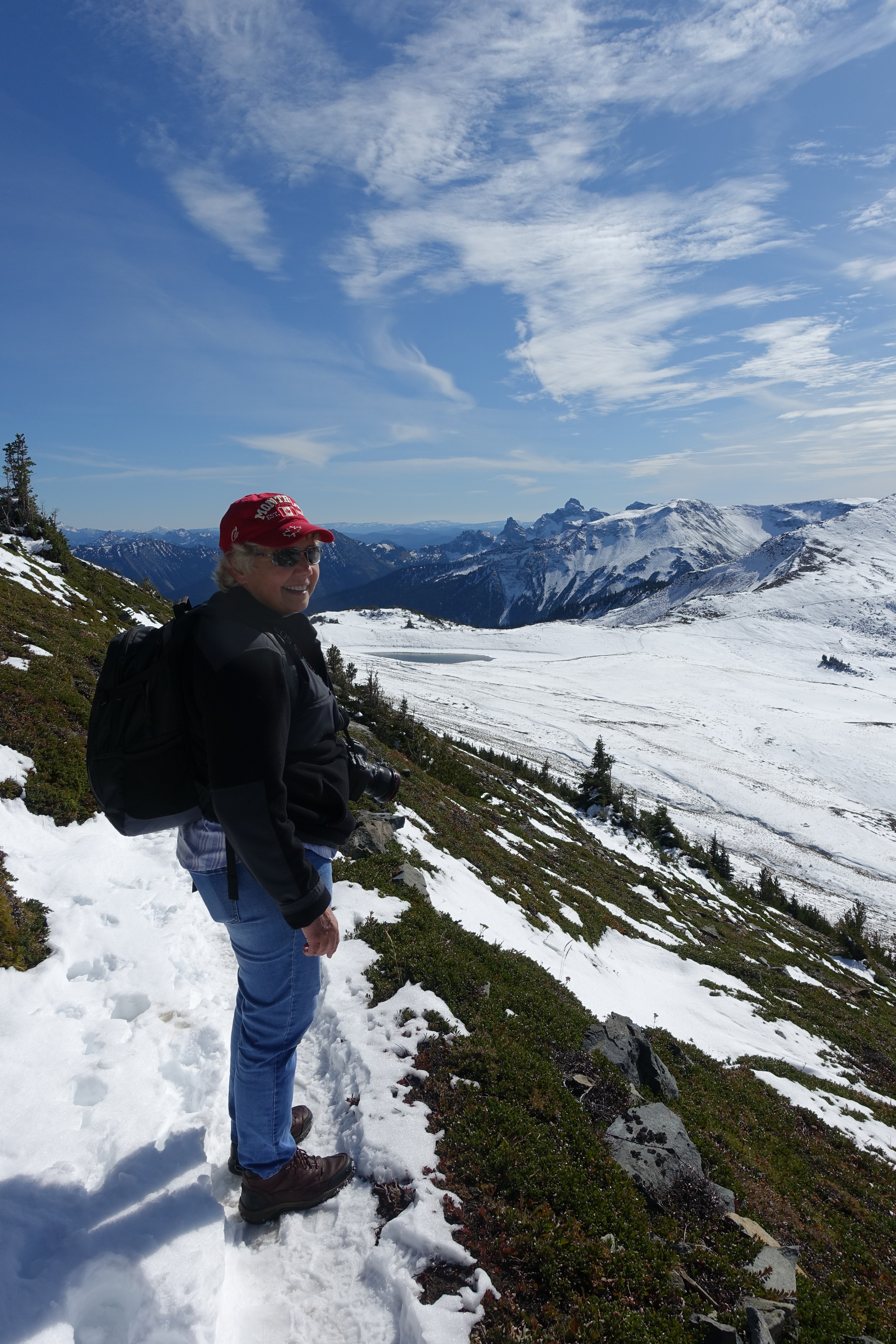
Diane and I both love the outdoors, so last Wednesday, the day of our meeting, was spent hiking in Mt. Rainier National Park. We had great conversations during the four hour round trip of driving, as well as during the hike itself. Diane is a skilled photographer. This is something I knew about her. What I didn’t know is that she has studied visual arts pretty seriously. I learned a lot from her on the hike. She shared her knowledge of composition and photographic technique. Diane loves to take photos, as do I. It was so wonderful to share our love of photography as well as our love of nature.
Diane and I had a daylong conversation with easy-back-and-forth. Speaking for myself, I felt not even one moment of awkwardness. We had a wonderful time. I’ve long admired Diane’s tenacity, humor, generosity, no nonsense honesty, and intelligence. I admire her even more now that I’ve learned more about her and had the privilege of sharing a day in the mountains on a truly glorious fall day.
There is something really special about these cyber relationships. We’ve had years of supporting each other and cheering on each other’s health and happiness. I am really happy to have Diane as a friend as well as to have the love and support of this community.
People, I’m going to get nerdy. I’m going to talk about a subject that strikes doom into many people’s heart. I am not joking even though I am using strong language.
I am going to talk about risk factors and what they mean from a research perspective.
When the media talks about “what causes/prevents cancer” or “what causes/prevents heart attack” or any other bad disease, they are usually referring to risk and protective factors. Example number 1. We know that smoking “causes” lung cancer. What that really means is that smoking is risk factor for lung cancer. We all know people who smoked throughout their lives and never got lung cancer. And some of us know people who got lung cancer who were never smokers.
So from a research perspective, smoking does not cause cancer. Smoking is a causal factor for lung cancer. It increases the risk of developing lung cancer by quite a bit.
“Elizabeth, that means that I can smoke, not feel guilty about it, and because George Burns smoked cigars all those years and lived to 100 years-old, I won’t get lung cancer?”
No, it means none of that. George Burns beat the odds. I mean literally just that. One, he lived much longer than average. Two, he lived much longer than average given that he was a smoker. No one reasonable ever said that there is a 100% chance of getting lung cancer if you smoke or that there is a 0% chance of getting cancer if you never use tobacco products in any way.
Okay, I promised to get nerdy but I am taking it back. Let me put this plainly. You can engage in activities or behaviors that are risk factors and end up with none of the risky outcomes. Risk is relative, not absolute. You can engage in activities or behaviors that are protective factors, you can be a teetotaler, never smoke, exercise regularly, eat well, be nice to your mother, and still end up with scary diseases. Those behaviors only reduce risk they do not eliminate any risk of disease.
And come to think of it, no matter what we do, some day, we will end up dying.
Does that mean that what you do today, tomorrow, or the next day doesn’t matter?
Thanks for understanding my need to be a a psychologist nerd. Yes, we are all about the thoughts, feelings, and behaviors but as Ph.D.’s, we are additionally, all about the research. Also, guilt is when you regret doing something that is in conflict with your beliefs and values. Sometimes I wonder when we talk about feeling “responsible” for our diseases that we are really talking about shame rather than guilt. Guilt actually can be productive and helpful. I didn’t believe that for most of my life until I understood the difference between guilt and shame. Guilt refers to behaviors that we can chose to change. Shame is the feeling, “I am bad.” That’s a lot different than guilt, “Wow, I wish I hadn’t done that.” Sometimes I do things that are at odds with my beliefs and values. I don’t think that I am alone in this. I try to treat myself with compassion. I am not always successful. I try to be compassionate and patient with myself for not living a perfect life. I am not always successful.
My proposal to myself and with all kindness, to you is, “How do you want to live your life today?”
Lately, I am finding it easy to tip my toe into waters of despair. There have always been heartbreaking world problems but in this country, there are heartbreaking problems being purposefully created. Purposeful assault against vulnerable people and against our fragile Mother Earth. Oh yes, there is also the continued assault against our republic. The first anniversary of my dad’s death is coming up on July 5th. I have been feeling that, along with other personal losses, my scary past illnesses, parenting worries, for the last month.
Even for a mostly extremely lucky person like me, life is hard. Fortunately, I am able to take my toe out of the water of despair. Then I see a sliver of hope. It is a sliver but it is there. It is meaningful. It is an opportunity, fragile as it is. I would like to be more hopeful but I’m not.
Most of the day and most days, I feel energetic and happy. And then I feel the restlessness of wanting to get away. The sadness doesn’t last long, sometimes 30 seconds, other times, an hour or so. When I feel despair, it is perhaps for a few seconds. However, the restlessness stays with me. It makes it hard to do seated meditation. It makes it hard to write, which is why it has been so long since I have posted.
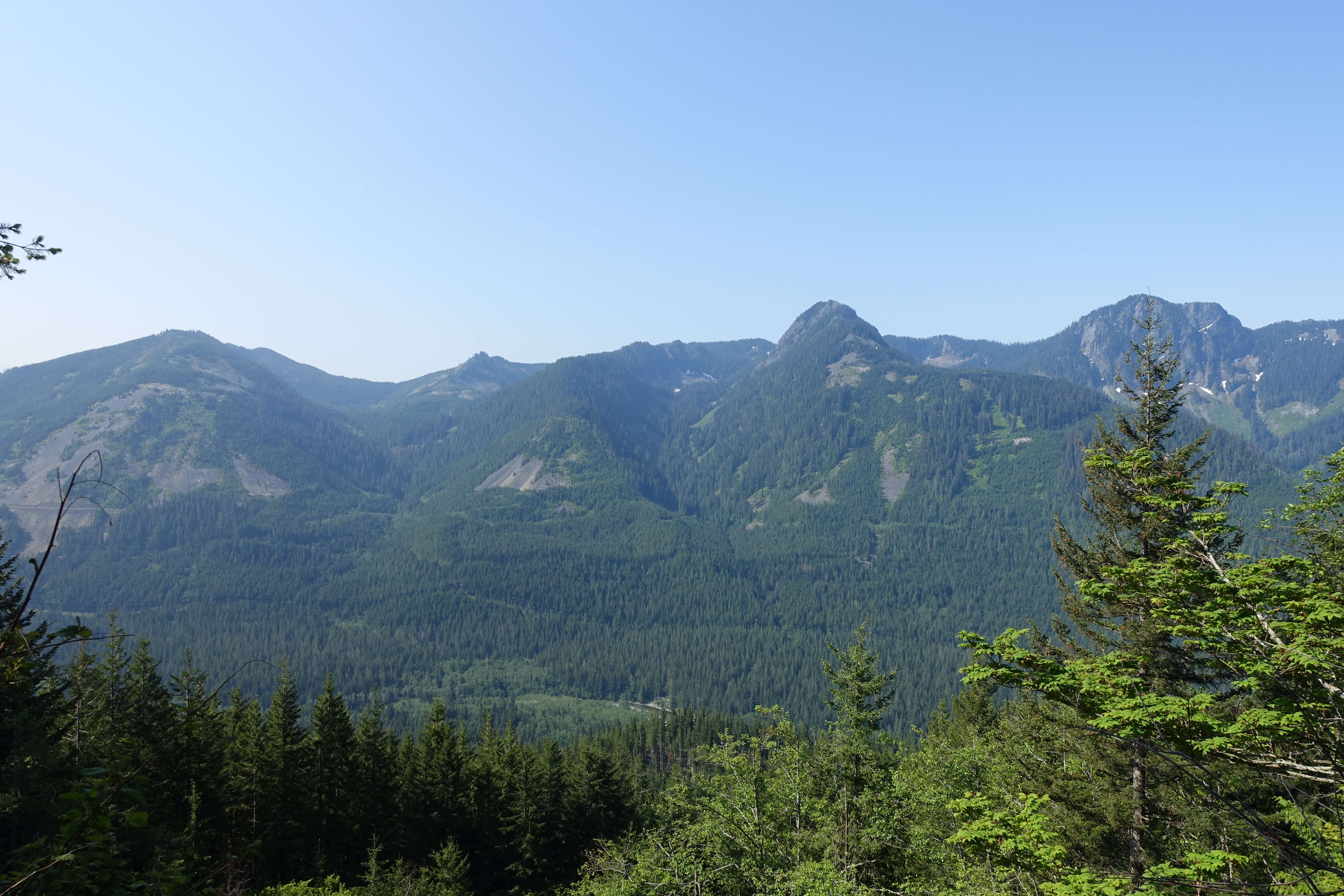
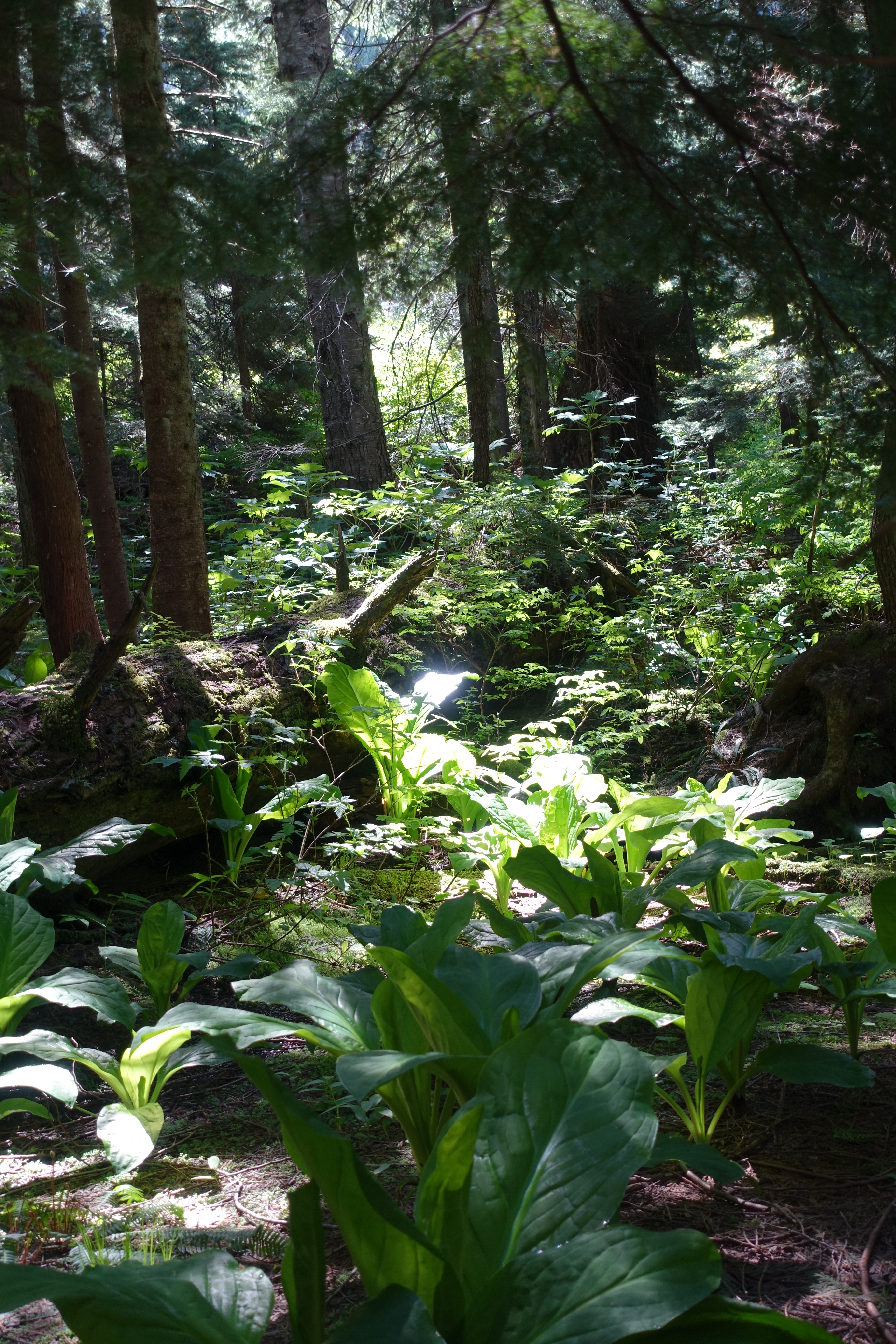
What I find easy, these days, is to hike. The forest is lush and green. The mountains are abundant with wildflowers. My body is gaining strength to handle steepness that I was not able to do when I was younger. Steepness gives way to vistas of nearly unimaginable beauty. The promise of a hike is enough to motivate me to put in long days of work and to get my chores done at home. I am able to free up time and space to get away.
And it’s not that I don’t think of the big problems when I am hiking because I do. But I do it while also being surrounded by a larger context of beauty and nature’s reminder of the vastness of time, space, and the ongoing life cycle. These things are bigger than me. They are bigger than our species. My mindfulness teacher talks about “residing in a larger container of awareness”. She is talking about something I don’t yet fully understand but I think I am getting gaining understanding.
I am grateful for the life circumstances that allow me to protect my hope and to protect my love of life and being. This hope motivates positive action. Thinking about problems is not the same as constructive action. It is merely grieving in place. I am learning and re-learning that I can grieve and move at the same time.
The first time that I learned the importance of pacing, I was pregnant. The fatigue was really challenging. I was keenly aware of myself as a limited resource. I prioritized. I still ended up doing a lot but it was stressful and work was unsatisfying in many ways. Then I became a mother and it all became too much for me. I became clinically depressed, got treatment, and took a good look at my life. I was no longer depressed and with time, my energy increased and I was able to do more work than I had previously.
In 2012, my daughter was a teen and did not need my constant attention. I was working a lot at my private practice. I worked hours that I thought I “should” even though I was working more than full time hours during most weeks. I was working at a hard pace and if I am completely honest with myself, enjoying making decent money for the first time in my life.
Later in that year, I was diagnosed with breast cancer. I learned how quickly daily work schedules can be changed when they have to be. It was incredibly hard. Two years later, when I was done, I was still wiped out, though slowly regaining energy, not to full strength, but to a higher level than before. I have not returned to full-time work since that time. I work about 80% of full time to allow for self-care.
Lately, I have been literally pacing myself. I am in training for a big hike. I am not naming it because it is a kind of hike and not really a specific hike. I want to increase my ability to hike uphill. I really enjoy hiking but I have avoided certain hikes for decades because I had trouble with elevation gain either due to injury or lack of fitness. I also had a fancy cardio test a few months ago and learned that although my aerobic capacity is better than average, my anaerobic capacity is less than average. I start building up lactic acid earlier than most. I wonder if this has always been true. It may explain why as a kid who was athletic, I hated running long distance and sports like soccer, which seemed like non-stop running. I am from Seattle and as you may have noticed, it is surrounded by mountains. There are a lot of steep hikes.
I am hiking a lot, gradually increasing the elevation of the hikes. I take photos, an activity I love to do, which also provides little breaks along the way. I am learning to hike at my own pace instead of trying to match the pace of others. Uphill, I am slow, but steady.
The frequency of the hiking is higher than before. I am going out 1-2 times a week to hiking areas. Sometimes I hike alone and other times I don’t. I am enjoying it immensely.
I do notice that it is a big difference in my level of outdoor activity. It reminded me of the second summer after my cancer diagnosis. I spent the first summer in surgeries, one after another, three total until the margins were finally clear with a right side mastectomy. At the end of the summer, I started one of many reconstructive surgeries. I had lost a summer of outdoor opportunities living in a place that has some of the nicest summers you will ever experience. By the next summer, I was bound and determined to live outdoors as much as I could, considering that I was still in treatment. We had a ball.
Two years ago, I was recovering from a SCAD induced heart attack and traveling to the Mayo Clinic. Last year, we were caring for my dad, who died in July.
At this moment, I am healthy and energetic, thanks to luck, exercise, healthy eating, yoga, and meditation. I am enjoying what I am able to do with this body of mine, which has been through a lot, and will be through more. At this point, this pace is right for me.
April was wet but beautiful.
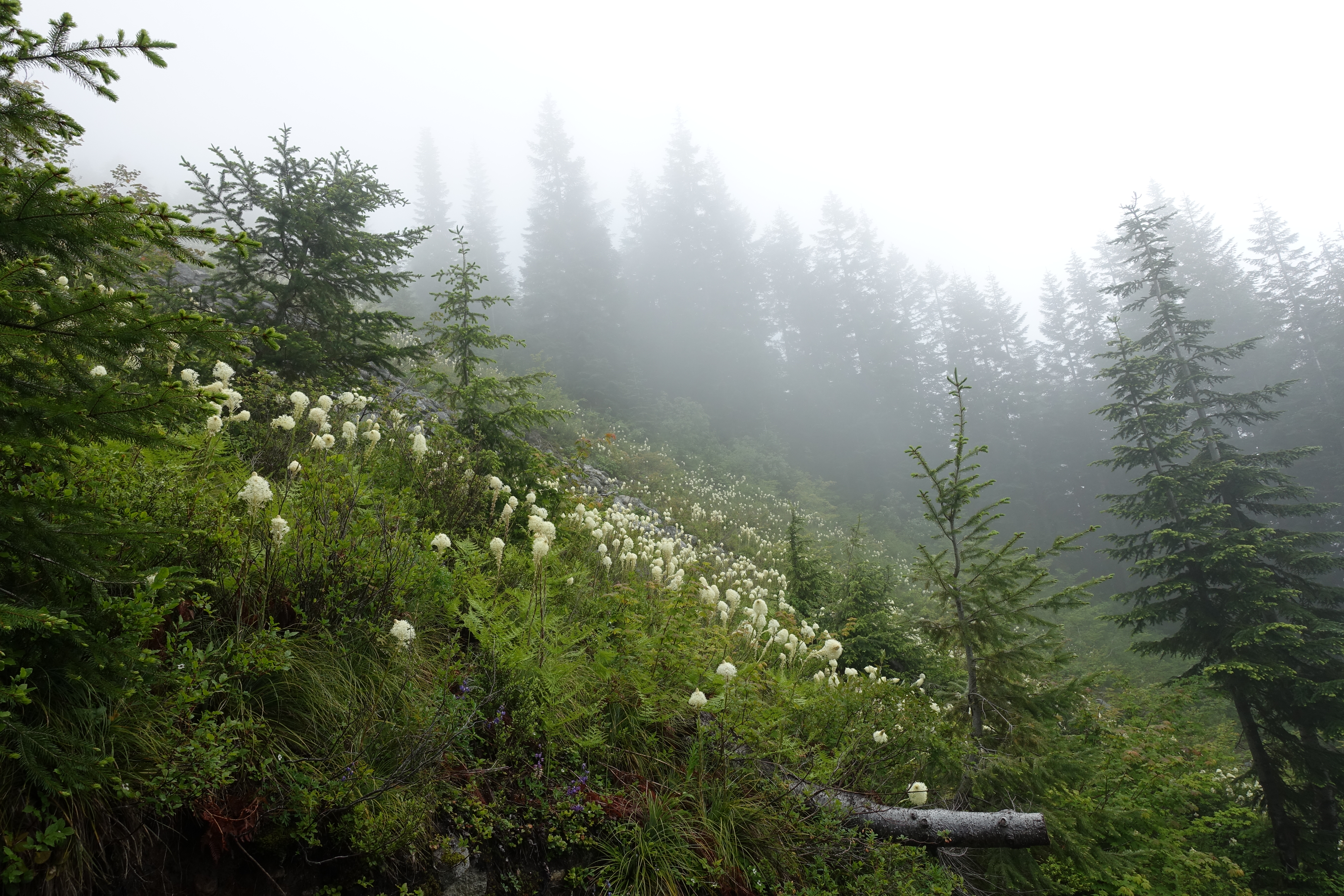
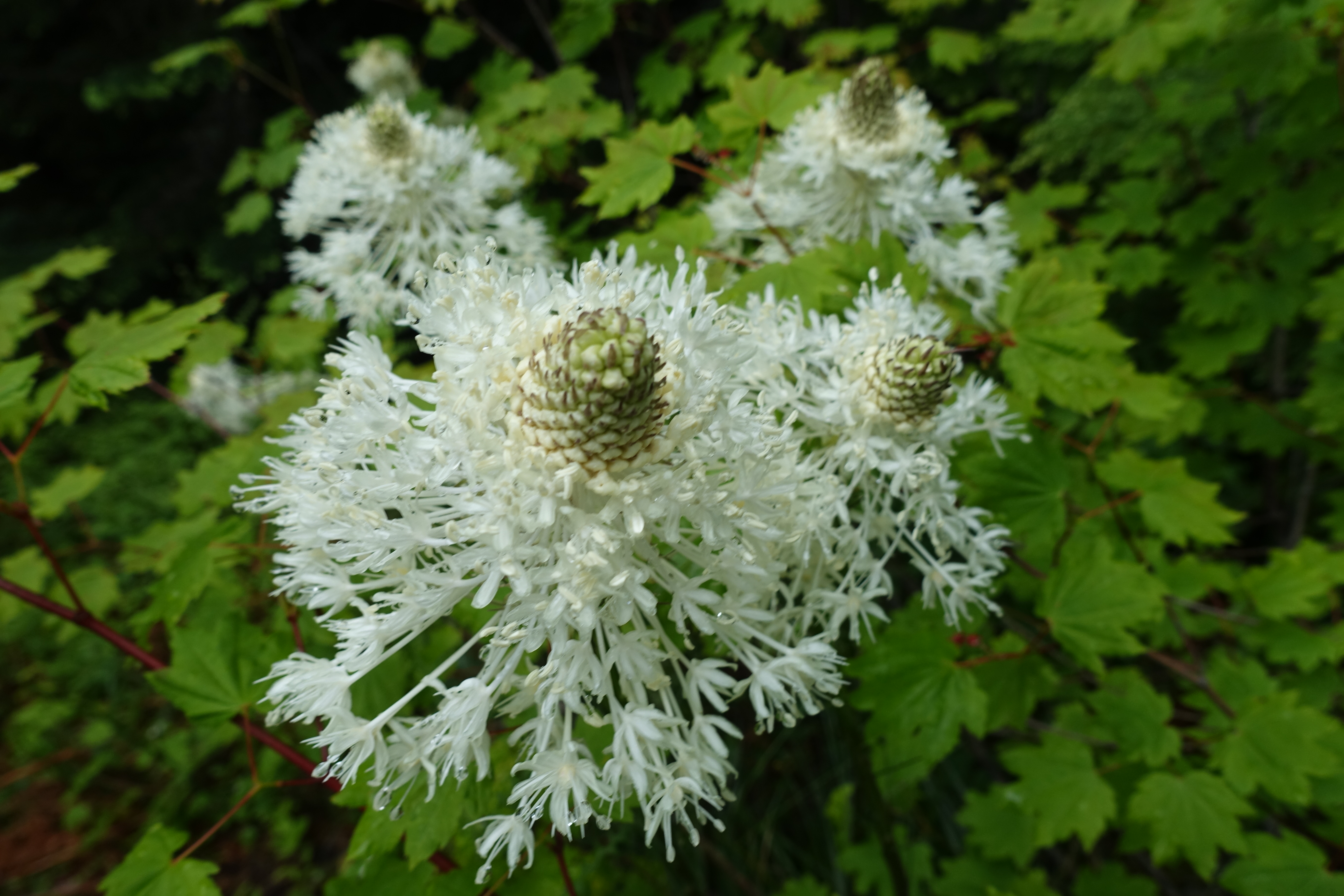
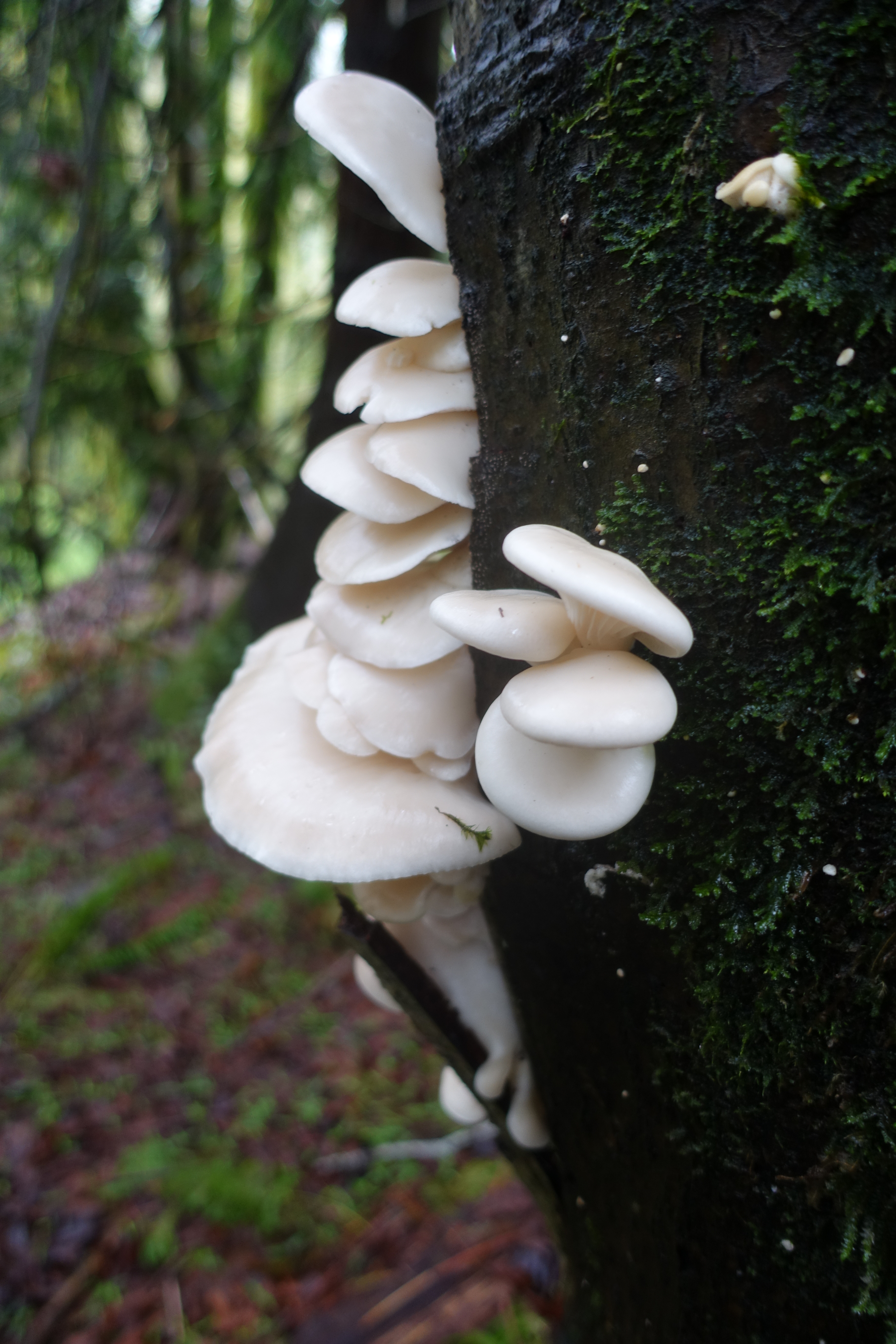
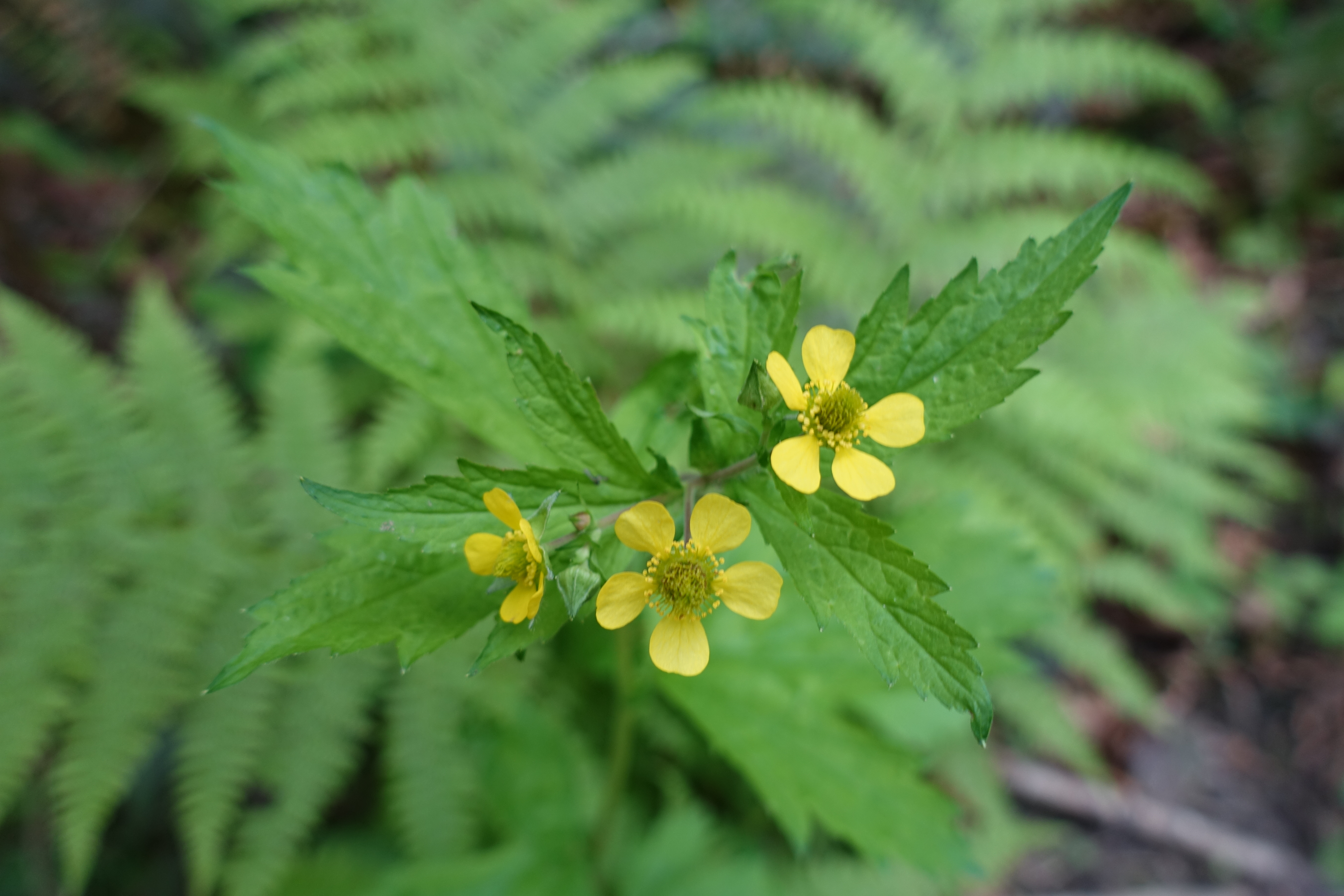
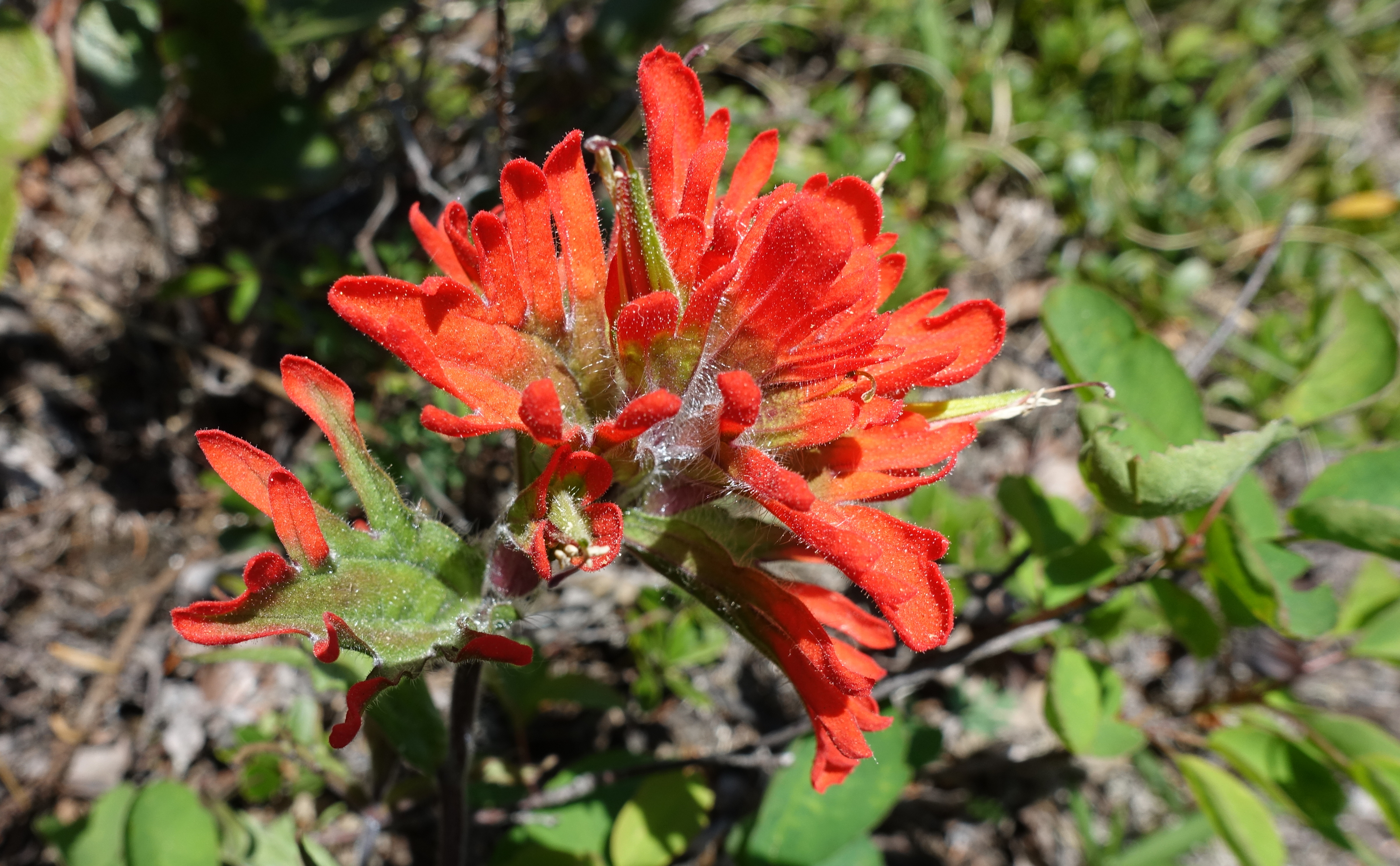
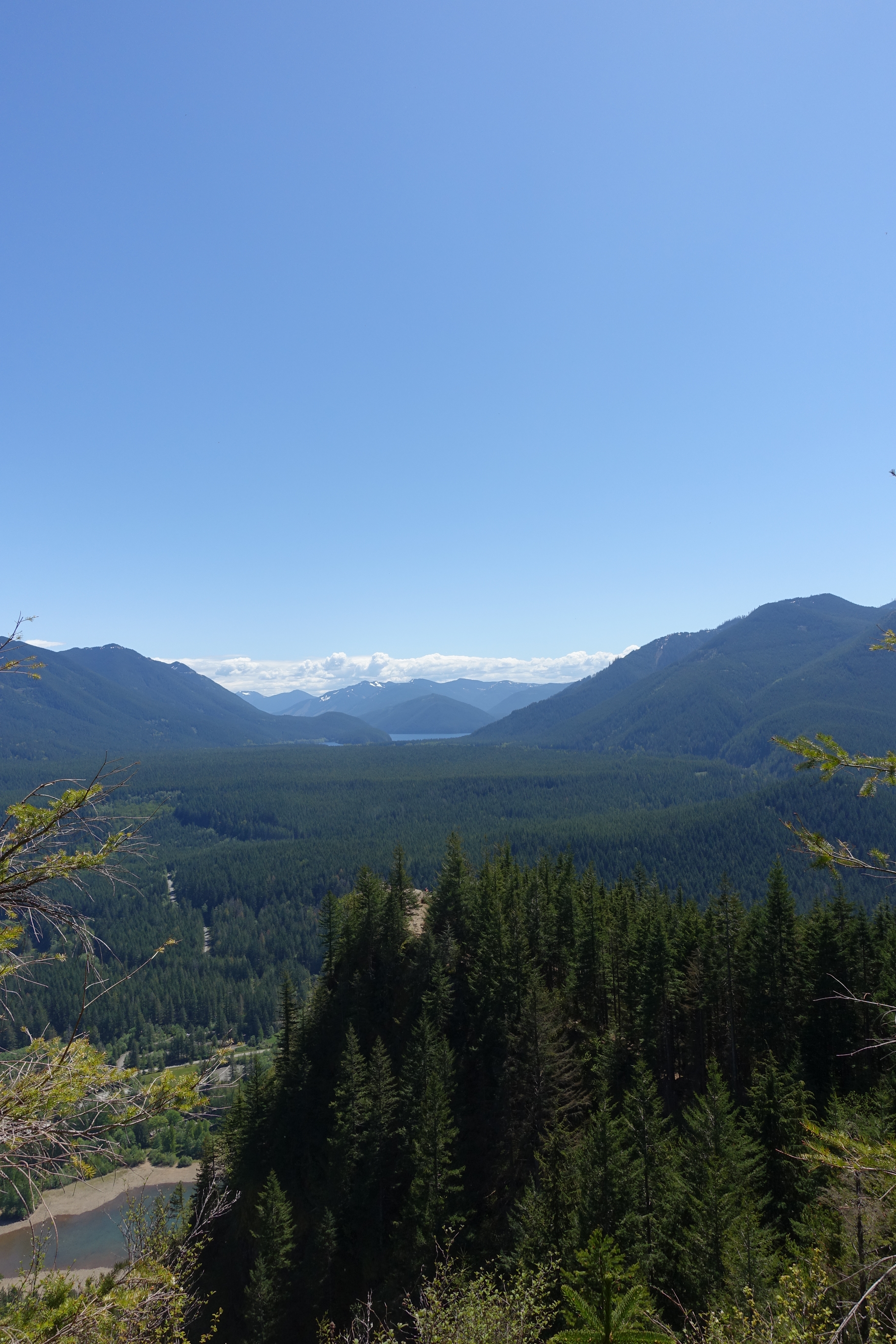
May has been filled with splendid views and wildflowers!
Our dear friends, Robin and Nate, were visiting from North Carolina recently. They asked a question about a parking sign they’d seen in Seattle, Robin had even taking a photo of it, “No Parking West of Here”. “We saw this weird parking sign. How do we know what direction is west?”
I thought immediately, “What’s weird about that sign? West is the direction of the Puget Sound and the Olympic Mountains. Lake Washington and the Cascade Mountains are to the east.”
My second thought was, “Oh yeah. I live here I know the landmarks.”
A life with without major landmarks is confusing. Disorientation is exhausting.
I am at a point in my life when I am establishing new landmarks. Actually, that’s not accurate. I am at a point of my life when I am mindful of the fact that I am in a perpetual state of landmark establishment.
I still think, every day, about the fact that I was diagnosed with breast cancer nearly 8 years ago.
I still think, every day, about the fact that I had my first heart attack (the second, 8 days later), nearly 2 years ago.
Despite this daily mindfulness, these landmarks have changed in my life.
I have been working hard on my mental and physical stamina. I am working hard to have a positive influence on my health. I meditate regularly. I do yoga twice a week now. I have increased my exercise and a couple of months ago, I tracked my 500th meal.
I am feeling healthier and more fit. I have had fitness testing and my cardiovascular health has improved a good deal in last last year or so.
Despite all of this, I am still considered, “obese” with my current body fat percentage, which was calculated in fancy ways. I actually think I look good. But that’s not what it is about, is it? I thought I looked good 25 pounds ago. I started working on my fitness so that I can do more of the things that I want to do and to reduce my body fat, because it raises my risk for disease.
I have used “looking good” as a landmark for so long. For so long, I didn’t think I looked good. For decades. Bit by by, I developed a better body image.
Looking good is not the same as health. I have improved my health in a great many ways. I can accept it if my current fitness doesn’t improve. I will work to see if I can improve it. I will hike, do yoga, and meditate.
I will do my best to enjoy the process, which does not require, at any time, looking in the mirror.
I will do my best to focus on what I can do right now.
Here are some photos from what I was able to do last week, hiking with John and our friends, who happen to be relatives, near Bend, OR. (Note: I appear in none of the photos because I was the photographer.)
I’m cold. I mean that literally. It is winter and I am cold.
Obvious, huh?
Not so obvious, actually. Through the miracle of insta-menopause, which was part of my cancer treatment, I was hot for a long time. I would find myself stripping down to a sports bra in February during an outdoor walk. I stopped wearing tights with my dresses and went bare-legged through many winters.
Last year, I started wearing footless leggings under my dresses. This year, I notice that my workout clothes are not warm enough. I also noticed that I have a shortage of long-sleeved dresses.
I am longing for the two sweater dresses that I gave away to charity a few years ago because I could never wear them. I always overheated.
Yes, my friends, my body continues to heal from the effects of cancer treatment and the natural hormonal changes that come with middle age. My personal thermostat is much more like it was before the years leading up to cancer when I was in peri-menopause.
Sensation continues to return to my torso, the areas of my surgeries. Although not fully restored, I no longer feel numbness when I am upright. It is odd how a lack of sensation feels very much like something, like carrying around a weight.
After nearly 7 years of survivorship, I am still healing. Perhaps, if I knew this would be the case back in 2012, I would be fearful. But today I find this to be a gentle miracle, an aging body that is better able to sense cold, pressure, and gravity.
May 2019 bring you peace and healing, dear friends.
I finished an 8-week-long Mindfulness-Based Stress Reduction (MBSR) class last Wednesday. I am not new to MBSR but wanted to increase my formal mindfulness practice since it had waned over the past year, with my dad’s cascade of health problems and death last July.
It was a wonderful class. I haven’t been writing much. As my meditation practice has gotten deeper, I have longer times when I am experiencing sensation more than language. This is something I knew could happen in meditation, but as a person who typically has a running monologue in my brain, it is a rather magical and new experience. It is not, however, easy to write about.
I feel some loss about the class ending. To prevent my being totally adrift, I have also started seeing a mindfulness psychologist, Bonnie, who specializes in working with cancer patients. I had actually sought her out first, her practice was full, and she recommended the class. In the mean time, space opened up and I have been seeing her. She also happens to be a friend of my dear friend, Nancy. This is not surprising since 1) Nancy seems to know almost every other psychologist in Seattle and 2) Nancy also works with cancer patients as well as being a breast cancer survivor herself. (Nancy, you may remember, is the dear friend who cleared her schedule to be with John and I for my first breast cancer appointment, back in 2012.
I feel pretty fortunate to work with Bonnie. She is very skilled and worked for many years as a researcher at the Fred Hutchinson Cancer Center. Bonnie did mindfulness classes with cancer survivors and the classes were associated with reduced recurrence. This is why I began my mindfulness practice in 2012, by the way, after following some Canadian research on a specific mindfulness class for breast cancer survivors.
But wait, I was intending to write about endings, not beginnings. The other thing that ended was the U.S. Midterm elections. I did a lot to prepare myself for dystopian outcomes and good thing the worst case scenario did not occur because I was not successful in my preparation. They were not horrible, not great, and maybe not even good. Not horrible. That is the current benchmark for success in current U.S. national leadership. Actually, some really great things did happen. Lots of women were elected, especially women of color. Some of the people elected were LGBT/Q. Eight scientists were elected. Two women of color who are also Muslim, were elected.
So the election ended but as I had anticipated, there is still a lot of work that needs to be done. Our republic is very much in peril and so many people are suffering. I am exhausted by the news but I am also mindful of the fact that experiencing exhaustion is one of the best outcomes of our current situation. As I said, many people are suffering from abhorrent treatment and some have died or are dying due to lack of access to basic human needs or violence.
One thing ends. Another thing begins. Sometimes it is tempting to jump from one thing to the next without acknowledging the ending. Today, I feel the endings and the beginnings. I had put myself, intentionally, in a protective shell of self-care practices for the last few months. I come out for periods of time and then retreat to a thinner shell, for a shorter period of time, but it is a shell, nonetheless.
Overall, I am doing well. Most of the time, I feel happy. In the last week or so, I’ve felt not so much a wave of grief, but a persistent lapping at my toes. I have reacted more strongly to situations than normal, for example, feeling shame at times, over minor incidents. It is as if grief takes me back to a much younger time of my life. Bonnie says that the energy I am using to cope with my dad’s death is leaving me with less to cope with the normal daily stresses and that I am going back to older ways. That makes sense to me.
Working on grief is helping me define the edges of the persistent lapping at my toes. It turns out that today, they are not lapping at my toes. I am standing in the middle of the ocean. I feel sad today and a bit angry.
I don’t like to be in the middle of the ocean but I am grateful that I am standing, for now.
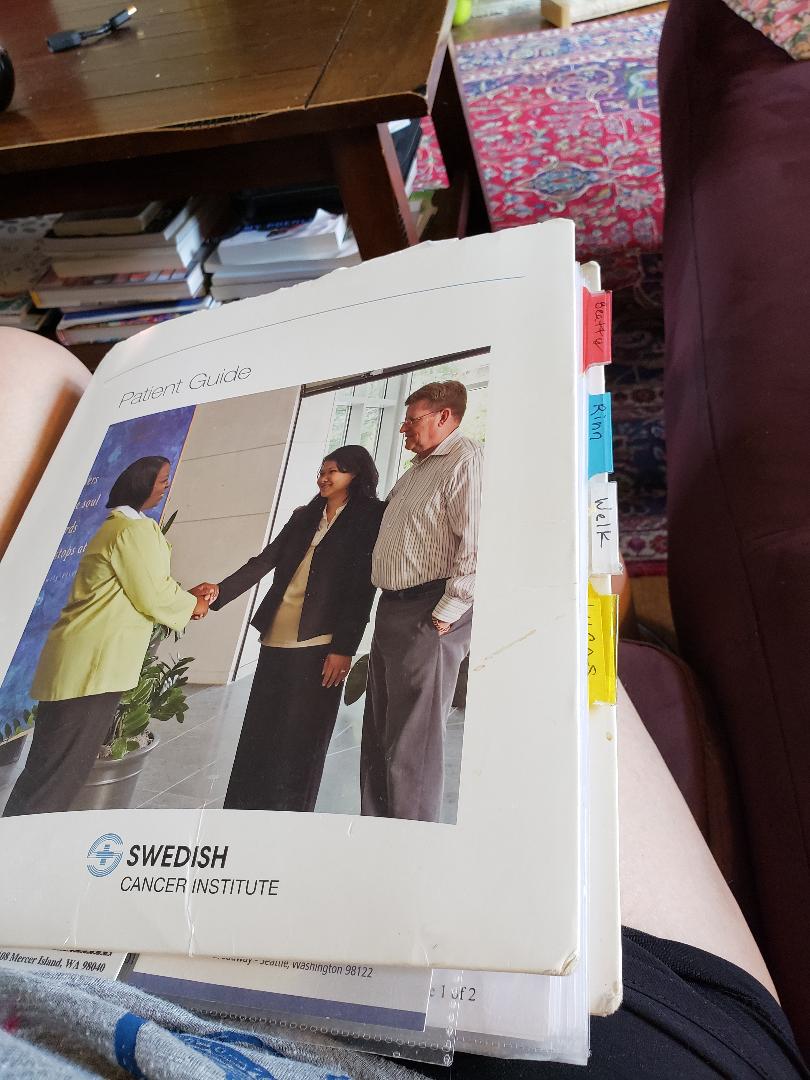
I have been trying to declutter my house. Yesterday, I noticed that I still had my “big book of cancer” on the shelf in my bedroom. It’s the 3-ring binder of information I received from my cancer center when I was first diagnosed with breast cancer in 2012.
I used to carry this book around with me to every appointment. As you can see, I added tabs to it to organize all of my medical records by date. Since not all of my providers were at the cancer center, this helped me keep my care coordinated. It also helped me follow my treatment and form good questions.
When I saw it on the shelf recently, I thought, “Get rid of that! Why is that in the bedroom of all places?”
Then I remembered that every pathology report, every surgery report, and my onco/dx testing results are in there, as well as my notes, and research articles.
I will move it out of my bedroom. I no longer have to have it handy. But I may still need it.
Sometimes it is easy to get rid of the clutter of my experience with breast cancer. The harder part, however, is knowing what is clutter and what is not.
George Lakoff has retired as Distinguished Professor of Cognitive Science and Linguistics at the University of California at Berkeley. His newest book "The Neural Mind" is now available.













 My Eyes Are Up Here