Archives for category: Family

Last Wednesday, I was on a flight from Los Angeles, California to Raleigh, North Carolina. It’s pretty long for a domestic flight, from one coast to another. I boarded the plane and took my aisle seat in the coach section of the plane. Passengers kept walking past me through the aisle and I expected at some point that I would be standing up to let two people sit in the empty seats to my right. And then the announcement that we were about to take off occurred. How lucky! I was going to get an entire row of the airplane to myself.

Within about 5 minutes, a man in the row behind me asks, “Is anyone sitting there?” I replied, “I don’t know” because 1) sometimes the doors are re-opened for someone boarding the plane late and 2) I didn’t want to say, “no” because HE ALREADY HAD A SEAT! WHAT ABOUT MY ROW TO MYSELF?

He let about two seconds go by after my “I don’t know” to say, “I’m sitting there.”

I got up and let him in. He took the window seat.

Meanwhile the thoughts in my head, “WHAT THE HELL, MAN? HOW RUDE! YOU DIDN’T EVEN ASK ME IF IT WAS OKAY!”

But I kept my thoughts in my head. Even though he made me get up while I was trying to write a post on my computer, so that he could use the bathroom. HOW ANNOYING!

Then it happened.  A woman walked up to the aisle, looked at the middle seat and said, “That’s my husband.” Apparently, this was her manner of communicating her claim to the seat beside him. I said, “You mean, you want to switch seats with me?” She said, “No, you don’t want my seat. It’s a middle seat.” She must not have been seated in the same row as her husband. It was a little confusing. In any event, I climbed out of my seat so that she could take the seat between her husband and me.

Meanwhile the thoughts in my head, “WHAT THE HELL, LADY? HOW RUDE! JUST LIKE YOUR HUSBAND, YOU DIDN’T ASK ME IF IT WAS OKAY TO SIT IN MY ROW!”

My row. My seats. Mine. You people are inconsiderate and have bad boundaries.

I observed my annoyance. I paid for one seat and since I used frequent flier miles, I think the total cost of this leg of the trip was about $5. I had fully expected to sit next to two other passengers when I initially sat down. But once it was announced that the plane was fully boarded, it took me all of five minutes to lay claim to an entire row on an airplane that didn’t belong to me. In fact, I was really just renting the seat that I was in.

In those few minutes, I had constructed a small web of expectation and entitlement, which gave way to irritation. The truth is, most people would think that the way this married couple spoke to me was a bit lacking in the finer shades of communication that translate as politeness. “I’m sorry, but I was wondering, would you mind my sitting in that empty seat?”

We might even think that it really would not have been so hard for either the wife or the husband to use a few extra words to acknowledge the inconvenience they were causing. What I am wondering though is why it wasn’t easier for me to initially think to myself, “It’s fair for people to move to another seat and it’s nice that this middle aged married couple wants to sit together on a long flight.”

Instead, my initial thoughts were that something that was mine was being taken from me. And this thought made me curious. I don’t think of myself as being someone who has difficulty with entitlement. I also think of myself as being helpful and generous. But like a preschool aged child who says, “mine!” when she sees someone else’s fingers grabbing for a marker, which she is not using, but is in a favorite color, I had taken ownership of seats I wasn’t using.

Children tend to say, “not fair!” when something they don’t like happens. Even if they’ve had more of their fair share of something and are asked to even things out. “Mine! Not fair!”

We don’t often notice when we have more than our fair share of something and when we do, it is usually not distressing.

I am not a little kid. I know how to take turns on the slide and share my markers. Sometimes I intentionally give myself less than my fair share of something. This has me thinking, though. It has me thinking about some of my pet peaves at home. Those tiny irritations that can accumulate into significant masses of stress. I was very excited to see my family last night after being away for five days. As soon as I walked through the door, I saw chores that needed to be done, just a few, but nonetheless things that had not gotten done while I was gone. My automatic thought was, “not fair”. But then I started commenting on the positives. My husband had gotten to the airport early because he was excited to see me. “John, thank you so much for picking me up.” “John, thank you for taking care of our daughter so I could have time away on my own.”

I started to feel calmer. I still got annoyed with some other things but I was able to get myself back on a positive plane more quickly than in the past.

Appreciation, the buffer against “mine!”, “not fair!”, and “gimme!”.
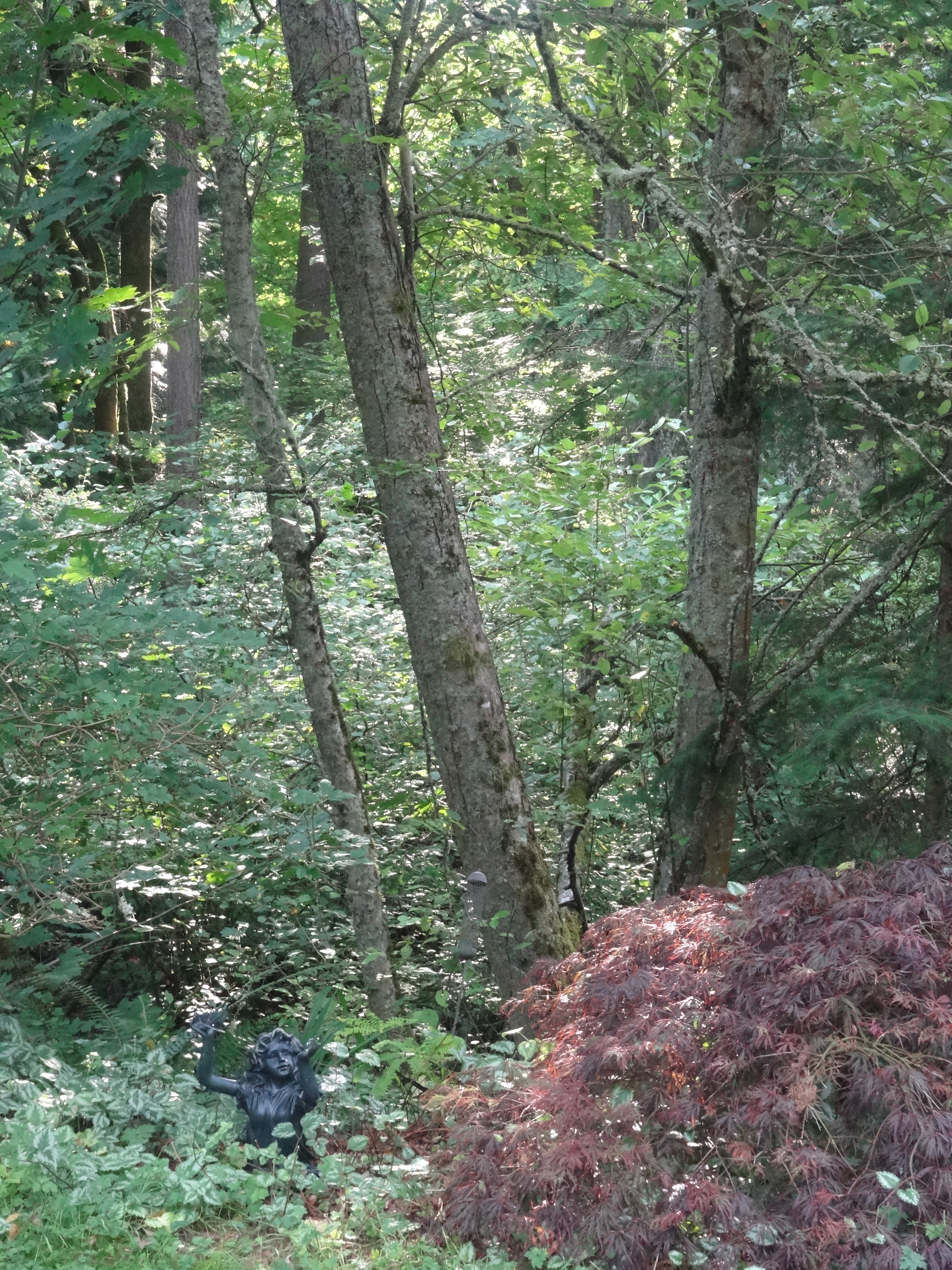
This morning, I awoke at 4:15 am. As is usual for me, I typically sleep poorly the night before I have to wake up early to catch a flight. Last night was no exception. I awoke at 11:00 pm thinking that it was morning, again at Midnight, and again at 2:00 am. I don’t know if my mind doesn’t trust that my alarm will go off or if I’m just too excited about upcoming adventures, or if perhaps, I have wound myself into a tizzy getting loose ends tied up before I leave for a trip. I suppose it is likely a combination of all of these things.

Having not slept deeply, I was able to get ready quickly. I am going out to dinner with my friend, Robin when I arrive in Raleigh. Consequently, I used my friend, Cheryl’s conference travel trick of wearing comfortable traveling clothes that will also be suitable to wear at social hours and dinners out. The comfortable clothes part was fairly easy. I have a stylish professional and dress wardrobe. However, I stopped wearing clothes that need ironing or dry cleaning years ago. So all of my dresses are pretty comfortable. I also used my trick of wearing my bulkiest pair of shoes on the plane to save room in my luggage. This morning, it was a toss-up between my blue hiking boots and my black wedge sandals. The sandals are both very cute and comfortable, having been made by a savvy shoe company that caters to the middle-aged foot. Though I am not above wearing boots or sneakers with dresses in an airport, I opted for the sandals.

I typically get to the airport about 1 ½ hours before a flight. Yeah, I know that they say to get there two hours early but seriously, who does that? The cab arrived a little early and the drive to the airport was quick, and my airline was one of the first gates. So I was at the airport 1 ¾ hours early. I went through security (shoes are coming off again), found my gate, and bought a coffee at Dilettante Chocolates (they coffee is so much better than Starbucks’ plus there was no line, they are also local, and did I mention chocolate?)

By the time I sat in the gate area, I still had 1 ½ hours to kill. I sent out some silly Facebook postings, sent an “I love you” text to hubby, and watched the rain hit the tarmac with a steady strum. Time passed quickly, I boarded, and after the usual wait, the pilot’s assurance that we would be underway in a “minute or two” (airplane-speak for waits ranging between and minute or two and a several hours), we took off.

Despite the rain, the lower skies over Seattle were clear. In the early morning darkness, the city lights sparkled like fireflies. I could see the Puget Sound and islands in the distance. It was quite lovely. The effect reminded me of the beauty of my home town as well as a nostalgic reminder of the fireflies I found so enchanting when I lived in the South, which is where I am headed today, to the Raleigh/Durham/Chapel Hill area of North Carolina. I lived there for six years as a Clinical Psychology Ph.D. student at UNC-Chapel Hill. This Saturday, my Ph.D. program is having its first ever reunion, an idea prompted by the retirement of my dissertation adviser, Joe Lowman, after 40 years with the program, not counting his own years as a graduate student there. One of the faculty figured that since Joe had taught almost every living alumnus of the program, it was only fitting to have a reunion for all graduating years.

When I started graduate school in 1990, I was 24 years-old, and a newlywed of six months. I was one of the only married students in my class of 13 students. I had never lived out of the Seattle area having grown up in Renton, WA and attended college at the University of Washington in Seattle. I was one of only two six children to move more than a one hour long drive from my parents’ house. My younger brother, James and his wife, Meagan lived in South Bend, Indiana for three years while she was in law school at Notre Dame. But everyone knew that they were moving back and in fact they moved the day after her commencement.

At that time, I was planning to become a professor and knowing how few universities there are in the Pacific Northwest, I did not think I would ever again be more than a visitor to the part of the country I love so much. I remember at our first grad student orientation meeting, asking our department chair questions to clarify when the school breaks and vacations would be. She and my classmates probably thought I was a lazy student! The truth was that I was anxious and already homesick. I wanted reassurance that I would see my family again. All of these transitions, not to mention the fact that my childhood dog has passed at age 15 on my wedding day, created an abrupt take off to independence.

There were also the cultural adjustments. I had only been to the East Coast once not counting my changing planes in New York on the way to and from my honeymoon, from which I had just returned a week or so earlier. I had never been to the South and by that I mean the southeastern part of the U.S., which for cultural reasons, does not include Florida. (Having subsequently lived in north central Florida, I beg to differ.)

The first cultural adjustment was the humidity. It was August in North Carolina. I had just been in the dessert near the Egyptian/Sudanese border. This is one of the hottest places on Earth during the hottest time of the year. You know when people say, “It’s not the heat, it’s the humidity?” Word.

Okay, I know what you are thinking. Humidity is not culture; humidity is climate. Well, I believe that it impacts the culture there. The humidity in the South is like a character in a story. At night, walking outdoors among the outlines of live oaks and hanging Spanish moss, it feels like a seductive and exotic embrace. During the day, it is brutal, relentless, and soul-crushing. Life is lived, as much as possible, in air conditioned environments during the hot time of the year.

The second adjustment was the fact that I was only one of three students in my entire program who was from the West Coast. There was only one other student, Steve Geller, who was from Seattle but he was an advanced student who quickly left the area to complete his internship. Five years after I moved back to Seattle, I coincidentally became his office mate in our neighborhood of West Seattle, until he moved to Hawaii in the summer of 2013.

Chapel Hill is a lovely colonial college town. We don’t have colonial era architecture in Seattle. The oldest homes and buildings are from the late 1800’s and those are rare indeed. I only know of one, which is the oldest home in Seattle and the site of a small museum. In Seattle, we have totem poles that old but even Native American artifacts are not in great supply at least in western Washington due to wood being the most plentiful building material and our wet climate. Things rot. To see the old buildings in Chapel Hill, with their red brick that mirrors the color of the Georgia clay in the soil, was a lovely treat, like living in an outdoor museum.

My husband and I adjusted to living in North Carolina. In fact, we loved living there and would have considered settling there. We loved the rich history of contemporary fiction. I remember attending a short story reading in a converted 1700’s barn in Fearrington Village. These were authors who used words that painted characters with deeply saturated hues. And the music of the language was stunning. I loved it. To this day, some of my favorite authors are contemporary southern writers. Anyone who says, “Southerners are stupid” needs to pick up a damn book.

And maybe it has something to do with all of the eccentric, strong women in southern literature that allow my strong personality made waves in the South, it was not as bad as one might predict, though part of that may have been because I was in academia, an environment in which I have felt comfortable being direct and opinionated.

The last adaptation was adjusting to being in one of the most rigorous Ph.D. programs in the country. Psychology is a funny discipline. At the bachelor’s level, it is considered one of the easiest degrees to obtain. Now I took a more rigorous course of study to obtain a B.S. instead of a B.A. but even so my husband’s undergraduate program in computer science was so much harder than mine. But at the doctoral level, especially in clinical psychology, which requires both research and clinical training, psychology is a really hard course of study. Good God, the first semester kicked my ass. And it wasn’t that I performed poorly academically, it was just that I felt that I was working all of the time and running scared. For a while, I feared that I would be kicked out of the program. One of my classmates, who was an older student and therefore wiser said, “Elizabeth, you are solidly passing all of your classes (we did not get A, B, C… type grades). Why would you get kicked out?” Thank you, Craig, wherever you are. Eventually, I became a confident student. Honestly, I loved graduate school.

I have not been back North Carolina for eight years and my past trips have been brief. This is also the first time I’ve been there traveling without my husband. That makes it more of an adventure and a reminder of very exciting and important times in my early adulthood when the world opened up to a big big place.

I look forward to seeing you, my home away from home. You are the place where my husband and I built the foundation of our young marriage and shared our dreams for the future. You are the placed I learned a profession I love deeply. You taught me the importance of friendship and how friends can be like family. For awhile, you gave me a cool accent and you performed the miracle of getting me interested in spectator sports with Dean Smith and the Tarheels.

Chapel Hill, you were good to me, except for that damned humidity.

Several times a year, I observe one of my patients in the classroom as part of my assessment. This step is particularly helpful in assessing very young children. Once kids get older than 1st or 2nd grade, it’s hard to get a good observation in just an hour because the behaviors of interest just don’t occur as frequently by that time. So when I observe in a classroom, the kids are anywhere from 2 to 7 years old.

This morning, I observed a student in a classroom of 3-6 year old’s.   I haven’t seen little kids like this in some time due to changes in my work I made in order to accommodate my cancer treatments as well as to reduce my treatment load (I used to see lots of little kids and their families) so I could get home earlier for family reasons. Honestly, I miss little kids.

What a sweet little classroom it was. I see a lot of wonderful teachers. The teacher in this classroom was excellent in a way I don’t see a lot. The quietly compelling teacher. The gentle but engaging teacher. The patient but direct teacher. She was just lovely to watch.  I told her this as I left the classroom. She smiled, gently set her hand on my arm, and then put it over her heart. The students loved her. They trusted her. They followed her direction, which she did with encouragement and love.  I try not to attract attention when I observe but even so, when children happened to pass where I was seated, they smiled at me and I smiled back.

Sometimes visiting a little community like this is a truly beautiful experience. This was one of those times and I found myself feeling very moved, my eyes nearly welling with tears. It is not that small children learning in a nurturing environment, where they receive and give love, is not worth tears of joy. But there was something else I was feeling, wistfulness, a longing sadness for things lost.

I have had this feeling every morning since Sunday. At first I thought it was just related to my having had a wonderful two day visit with a friend, come to an end, kind of like that let down on Christmas after all of the packages have been unwrapped, the guests have left, the floor is a mess, and the dishes need to be done.  That was part of it but not all. A couple of days ago,  I also realized that the two day visit had given me a very much needed break from the stress not only from my job but from my family life. For two days, I concentrated on fun and entertaining people. We are not supposed to admit this as parents, especially mothers, but I must say also that I experienced many hours of feeling almost childless and this was enormously lightening. It was almost like I imagine not thinking of having had breast cancer for an entire day.

This morning, I understood another layer. I miss having a small child. I love my daughter; she is a force of nature and a singular sensation. It is still normal for her to say something if not very sweet, at least positive about my husband or me, each day. But there are also the other times, the hard parenting times. These are times that stress out the family a great deal. When I was a researcher at the University of Washington, we followed a treatment model for parenting teens, which included a  focus on guidelines, monitoring, and consequences (positive and negative). My husband and I are in the camp of parents who provide all three parts. Most parents provide guidelines to their teens, many provide consequences, effective, ineffective, fair, unfair, and/or harsh. A lot of parents, however, do not adequately monitor or supervise.

Consequently, our kid gets busted for stuff that other kids get away with because their parents aren’t paying good enough attention. And this makes here angry and insulted in only the way teen can get. Instead of “Oh no, you caught me doing x, y, and z” it’s “I can’t believe you violated my right to do x, y, and z, not that I am admitting to doing any of those things!”

Testing parental limits is a normal part of growing up for a teen. And she did it when she was little, too. And sometimes she even said really mean things to me, as mean as a four year old could be, “You’re not my friend!” “I’m going to punish you!” Or in the words of the young patient I used to have, “I’m going to put you in time out for a hundred fousand years!!”

When our kids are little, some of these statements can sound pretty funny, especially if your child still can’t pronounce /th/ in “thousand”. They are also, little. Little kids can make a powerful racket and they can express powerful feelings but in the end, they are small. They are not powerful. But teens have a lot more independence. They have a lot more power. And they often don’t want our help or limits even when they need them. When a little kid has a tantrum after testing limits, it’s typically over in a short amount of time. Even kids who have horrible and intense tantrums are usually done in an hour or two. Not to dismiss the stress of those kinds of tantrums because it is considerable, but an older child due to their increased cognitive development, can hold a grudge for a really long time. And they can test for a really long time. And because they are harder to supervise, there are tests you fail as a parent because you didn’t even know to show up for them.

We all want the best for our children, to be happy, to be responsible, to have healthy relationships, to be able to contribute positively to society, and to be able to care for themselves and others.  Some days it is incredibly exhausting and I know that it is for her, as well. And then empathizing with her tumult, creates inner turmoil for me.

Little children are so much simpler. Their world is so much smaller and they are typically happy to have you be in it. When my daughter was in preschool, she used to tell me how much she loved me in delightful ways. One of them was, “I love you more than the world has changed. And the world has changed A LOT!”

I miss my little girl. I miss her as much as her world has changed. I love the young woman that she is even more. But most of all, I pray for her happiness and her health, that her unique gifts will be fully appreciated out there in the world without my husband and me.

I have an MRI next week. I have them once a year as a routine follow up. In six months, I’ll have my annual diagnostic mammogram. Welcome to Breast Cancer Land. When they aren’t loading you into a noisy, rattling tube, they are smashing your boobs while having you hold the rest of your body in positions reserved for the less commonly read sections of the Kama Sutra.

I actually don’t mind the actual procedures so much. It’s the worrying and waiting for results. I don’t want to do this! I have all kinds of fun things planned for October! So I find myself thinking, “Maybe I should just reschedule my MRI for AFTER I do my fun things. Then if I have a recurrence, it won’t spoil my fun.”

This is a ridiculous kind of thought. I mean I could reschedule for November but then it would be, “What if I have a recurrence? It will spoil Thanksgiving.” Then Christmas may be spoiled, etc.

The fact of the matter is that there is no good time to have cancer. Right before scans, I find myself scheduling patients with the thought, “Hmm, I wonder if I will be able to finish that report if I find out I have a recurrence?”

When I was diagnosed with cancer, I can’t say that my life came to a screeching halt, because it didn’t. But major changes and upheaval occurred in order for me to get the assessments and treatments I needed. On the day I was diagnosed, it was a work at home day and I ended up cancelling two phone consultations with other healthcare providers. I worked on my reports the next day. It was a three day weekend and we were expecting my father-in-law to come stay with us. It was actually nice to have him there. He gave us a lot of support.

My life will stop when I die. A cancer diagnosis didn’t make it stop. I can’t juggle my schedule around the possibility that I will be worried and stressed. I am a planner but this is not one of the things to plan for, at least in the short term. I mean, I do think about the long-term. That’s why I exercise regularly, try to eat well, meditate, and go to psychotherapy. I am taking care of myself for the long term. I am preparing for the possibility of  a long life. And those things I do for the long term, make me feel better right now.

This is my gratitude week. I had an idea in mind when I planned this but I have not quite followed it. Instead, I have gone according to what I wanted or needed each day. Today, I feel like I want to do something different with my anxiety.

I trust myself to do what I need to do if my cancer has returned.
I appreciate and feel deep gratitude to my friends and family for holding my health in their warm wishes and prayers.
I appreciate my access to excellent cancer treatment.
I am grateful that although my breast cancer surgeon has retired, that there are a number of excellent remaining surgeons at my cancer center.
I appreciate my healthcare insurance.
I am grateful to my husband because I know he will drop everything and come to my MRI appointment next week if I ask him to do so.
I appreciate my daughter’s resilience in the face of my health problems and her tenacity in life.

I love living.
I am alive until I am not.
I will do my best to live accordingly.

In 1956, my parents bought the 2 1/2 acres on which their house was built for $2,000.  My dad was laid off so they had time to look at property. But they were taking a chance because $2000 was all of the money they had. They were investing in their future. In 1965, they built a house on it for $20,000.  My mom told the builders that they couldn’t cut down any more trees then were necessary to build the foundation for the house. Despite the fact that she had four children and was pregnant with me, she visited the construction site and pointed to the different stands of trees, little islands of forest still standing in the front of their house. “You can’t cut that down, it’s a Douglas fir! You can’t cut this down! It’s a Western Hemlock”.

I grew up in this house in what was unincorporated King County, about 12 miles from Seattle. Even when I was in high school my friends’ parents would say, “You live out in the Boonies.” We had three close neighbors who had horses. One even had a training arena. Another family had a horse who was the national and Canadian champion (English riding style) for a couple of years running. There were also cows, goats, woodlands, and wetlands.

As Seattle has grown, more and more people have moved to the suburbs. Seattle has become a very expensive city in which to live. I actually live in the city proper. My neighborhood is not fancy. I live in a two story ranch style house from the 50’s. Nonetheless, I spotted two houses this summer valued at a million dollars each. I’m sure there are more.

The house and the surrounding woods are my parents’ home. It was my home for many years. It is also a quite valuable piece of real estate. When my dad was retiring, he and my mom visited an attorney to discuss their estate. I remember my dad coming home from that meeting, pretty happy. He and my mom had also made conservative but consistent investments in bonds and CD’s over the years. My dad was happy because he felt that he and my mom were secure financially for retirement.

My mom turns 80 on Saturday. My dad turns 82 exactly one month from Saturday. They live in the same house. For the last several months, there has been a huge “Notice of Development” sign right next to their driveway. The neighbors asked, “Did you sell your property?” They did not. However, my dad, who makes sure he attends the development meetings and looks at specifics noted that the map of the proposed development included a road that went RIGHT THROUGH THEIR PROPERTY.

Although the design was later modified, the developers still have a problem. Without a road through my parents’ property, the development would be located on a dead end street. My dad attended another meeting this week. The fire department was not happy with the idea of a housing development being located on a dead end street. That’s not very safe. What if they have to get somewhere and the street is blocked? The developers argued, pointing to my parents’ property on the map, “That property is going to be sold really soon.” And they even kept talking about my dad by name, not knowing who he was or that he was at the meeting.

I went shopping with my dad a few weeks ago to pick out an anniversary present for my mom. My parents are practical, no-nonsense people. My dad was getting ready to spend money so it was only natural that money was on his mind. He was also thinking back to the 60 years he’s been married to my mom and the family they created. He said to me, “I got a lot of money. Dead.”

I knew what he meant but I don’t really like to talk about my parents dying with my parents. So I said, “Yes, you have a lot of non-liquid assets. Your house and property are worth a lot of money.”

According to my mom’s blog, which she posted today, the developers were thinking that my parents were worth a lot dead, too. And he’d decided that they were elderly and that would either sell and move or just die. And they also assumed that in the event of their death, all six of us kids would sell to them.

These assumptions could bear out to be true; nobody knows the future. I hate that my parents are being treated like they are a foregone conclusion and that my parents’ end with be the solution to their dead end. I hate that the beautiful woods that has been there for a long long time is being planned for dissection and demolition. I would say that it feels like vultures circling but vultures can’t really help themselves. People can.

I don’t worry as much as I might about my parents. At the end of the meeting, my dad approached the lawyer for the city of Renton, who had actually argued with the developer saying, “For all we know, Joe MacKenzie is 26 years-old!”

Dad said, “”I’m  82 and may not live that much longer but I’m married to a long living Italian, whose Aunt lived to be 106!”

The woods behind my parents' place.

The woods behind my parents’ place.

My parent's antique physician's buggy. My dad built the building for it as well as a number of other buildings on the property.

My parent’s antique physician’s buggy. My dad built the building for it as well as a number of other buildings on the property.

“Are you ready to frolic?”

I overhead the question, spoken in a gentle male voice, from a nearby campsite. After I turned my head toward the source, I saw that a father had asked his young girl, who couldn’t have been more than 17 or 18 months old, this question. She said something about “froggie”. He father responded, “Yes, let’s have froggie go frolicking with us, too.”

Camping brings forth images of enjoying stately woods in solitude, like one’s own personal communion with God. Unless one is a backpacker, this is typically not the case.

I am on vacation, camping on Orcas Island, which is part of the San Juan Islands in northern Washington state. We are extremely close to British Columbia, Canada. The islands are only accessible by boat. Some of them are accessible by public transportation, that is, the Washington State Ferry System, which is the largest of its kind in the U.S. It takes a good part of the day to get up here and there are very few campgrounds. We are staying at one of two on Orcas Island, the other being a dozen sites on Obstruction Pass, which are “walk in” (camp equipment is hauled down a mile long trail to the campground) and cannot be reserved ahead of time.

I reserved our campsite eights months ago and even that far ahead, most of the spots were already taken. So, the campground is a busy place. It also happens to be located right on the main road. Now, Orcas Island is far less densely populated than say, Manhattan Island, but car traffic is heard from our little campsite in the woods. We have also had visitors.  A little dog named, “Nacho” has visited three times since he arrived yesterday, along with his family, who hung both a U.S. and a Seattle Seahawks flag outside of their tent. Earlier this week, we had a number of visits from a blond toddler with big brown eyes. He just observed with curiosity, whatever we were doing in the seconds until his father, a gentle and patient Israeli man, walked down to scoop him up and take him back.

Campgrounds are typically a home base for outings into the wild or at least the wilder. Nonetheless, communion with nature can even be found in a busy state campground. (Tip: In the U.S., National Park campgrounds tend to be prettier and more secluded than state campgrounds. However, state campgrounds often have showers.) In our few days here, I have seen the green mountain in back of Cascade Lake, visible from our campsite, the sun glistening on the water. The nights have been clear and dark. Two nights ago, I saw the constellations and the Milky Way.

I hear people complain a lot about car camping around here because of the people “spoiling” nature. And honestly, sometimes people can really be annoying in the woods. But to me, hearing a father asking his little girl if she’s “ready to frolic” is a most gentle gift.

This is the gift of the next generation learning how to love nature’s majesty and surprise.

And froggie gets to join them, too.

What could be more natural?


There’s a famous developmental model in clinical psychology developed by Drs. Mark Greenberg and Carol Kusche. It is rooted in the larger cognitive behavioral model. The model is called, “ABCD”. It refers to Affect (emotion), Behavior, Cognition, and the Dynamic interplay among them. Because it is a developmental model, it refers to this interplay not only in a particular moment, but across time.

Sometimes AB and C work together in cohesion. Often they work at odds with one another. Sometimes they work in cohesion but in a way that is not healthy. “I am angry with you and I’m beating the shit out of you because I believe I am entitled to beat the shit out of anyone I don’t like for any reason.”
I know that many of us strive to live more peaceful, loving, and cohesive lives. And for extra credit, we are decent and upstanding people. I have worked hard over the years to live a life that is cohesive and healthy. I have focused on this in particular in my mindfulness practices in the last couple of years.

I am pretty happy. In general, I live a pretty balanced and cohesive life that makes sense. To be perfectly honest, I sometimes watch people I love say they want to be a certain kind of person, living by certain values, and then make choices that totally contradict their stated goals without apparent knowledge of this discrepancy. I have tried to make a habit of turning inward at these times. I am getting better at it. Bit by bit.

I decided a few weeks ago to dig deeply into the parts of myself that I try to avoid. To be honest, it is a narrow part of me but it runs very deeply, and when I hit it, it is very painful.

I know I am a good person who does mostly very good things. But there are areas in which I fail. Areas in which I let fears, irrational thoughts, and habits drive behaviors that are very much out of line with my values.

I lose my temper with my husband. I respond to situations as if they are much bigger than they really are. Sometimes, I let other people’s unhealthy behavior toward me define my own sense of worth. At times, I take on a love one’s hurt not only as if it were my own but as if it were my responsibility to fix.  Sometimes these misfires of affect, behavior, cognition, and their dynamic interplay are brief. Other times, they play out over the years, like increasingly gnarled tree roots underground. I can feel them. I know they are there but I can’t see them.

I know I am not alone in this. No one is perfect. But I’m tired of feeling happy and balanced so much of the time only to find myself acting grouchy, ridiculous, and sometimes outright mean, when I pass my stress tolerance. I used to live my life very near or at capacity so I stressed very easily. It’s not so easy now so I figure this is a particularly good time to work on this.

There is a concept of “radical acceptance” in mindfulness meditation. In my understanding, it means observing our own painful thoughts and feelings and allowing them to be, instead of resisting them.

This is why my blog sometimes reads like a confessional. I am, however, not seeking reassurance or absolution. I am trying to better understand myself and be a more balanced person.

I am also trying to show that it is possible to be a happy person without being a perfect person. Over the past year, I have begun to view a lot of coping statements people use as being counterproductive for me. I don’t like telling myself “beauty is only skin deep” or “fat is beautiful” when I am not feeling good about my body. Similarly, in terms of aging, I don’t want to tell myself, “I’m only as old as I feel” or “age is only a number.” I would like to keep working to a point where I say things to myself like, “I am overweight. That may not be the greatest for my health. What do I want to do?” Or, “I am getting older. I’ve had a serious illness. I’m living a pretty healthy life now, doing the best that I can. I think I will get on with my day.”

I am working to get to a point where self-examination is objective and leads to serenity or agency. I am getting there but I still have much further to go. I am trying to take apart the mechanism, bit by bit, that turns self-examination into doubts of worth.

I used to think that having a balanced life meant almost never feeling stress and shuffling through the states of joy, bliss, serenity, faith, hope, and resolve. I actually had a friend years ago who practiced mindfulness, who seemed this way. Then there was the day I tried to say something empathetic about her stress level because we were all working hard. She quickly and somewhat sharply told me that she “never” got stressed. Then I knew. She was one of the rest of us.

People are complicated. Life is complicated. We spend our whole lives at A, B, C, & D. And thank goodness. I want to live a long life and how boring would it be to have it all figured out.

As a clinical psychologist, an important part of my job is what is called “forming a therapeutic alliance”. This is a bond of rapport, trust, and understanding. It is a necessary component whether I am doing a short term assessment or long-term psychotherapy. I work with difficulties that require a team to effectively address.

As a child and adolescent psychologist, the size of the team is bigger than it is for adult clinicians. Although my primary alliance is to the child or teen, I must also form working alliances with parents, teachers, other mental health providers, and physicians. It is also not uncommon for me to have to interact with school principals, individuals with a school district or with the state superintendent’s office, occupational therapists, speech/language pathologists, or grandparents. I am fortunate in that my contact with child protection, case workers, and police enforcement is rare, but it does happen.

I work with the “it takes a village” kids. And I often take on the role of training the adults who are with the child daily about how to best support the child’s unique needs. The members of the village with whom I have the most contact are parents.

Parents are in a very influential position withe the kids I assess and treat. They often feel helpless. They often feel guilty about their children’s challenges. They often take out these painful states on the people they love the most, their children.

And to my patients, the teens especially, I often look like another adult who is going to tell them how they are screwing up their lives and making everyone miserable.

Because I primarily do short term assessment, I have to work fast. I don’t have the luxury of letting relationships and alliances develop slowly over time. In some ways, this is an advantage as the time limited nature of the process creates a sense of urgency to enact change, assuming the family is ready to make changes. Part of working quickly is that I need to communicate directly, I need to make recommendations, and I need to communicate hopefulness but also urgency not to continue to let problems worsen. Some of the kids I assess have long-standing undiagnosed and untreated difficulties leading not only to a worsening of the primary conditions but to the development of secondary disorders.

I don’t work for a system like a hospital or community health center. I have my own little private practice office. I don’t work in a prison but I do work to prevent children and teens from getting involved in juvenile justice. I don’t work in a mental hospital but I work to prevent teens from being hospitalized or help them transition back to the community from the hospital. I don’t work for the welfare office but I do work to support my patients’ educations as much as possible so that they can complete high school and perhaps even complete college so that they can become reliable members of our country’s workforce.

This is my long way of saying that my job involves a big team and a long view towards the future as well as responding to the present issues. Sometimes I forget how hard my job is.

What I do remember more easily are the times I felt like I needed to break an alliance in order to protect a child. Now I don’t mean calling child protective services, though that would certainly be an example. I am talking about other instances that are not as clear cut as making a suspected abuse report.

I am talking about times I have to give someone very firm direction or feedback when it is a risky thing to do and I have either exhausted other strategies or there are no other strategies available. Sometimes it means writing an email and leaving a voice mail with my patient’s psychiatrist who has been unresponsive despite our mutual patient’s level of depression, saying, “You need to communicate with me more frequently. _____ was talking about killing himself just three months ago. He is not doing well. I know you are busy, but I need to hear from you as soon as possible.” (I heard back within an hour.)

I am also talking about responding to a mom of a teen, adopted from another country. She was mad at him and told him that she was going “to give him back.” Since I had already conducted the background interview and he was there for testing. In other words, she was supposed to be in the waiting room, not in my office. I empathized with her frustration but told her that the next step was to do assessment. She kept telling him how horrible he was. Then I told her that her job was to “make things better instead of worse” and suggested that she go take a walk to regain her composure. She kept yelling. I told her that she had to leave. Believe it or not, I think that she really loved her son. I didn’t think she was a bad person. But she was not well herself, depleted, making bad decisions, and her behavior was hurting her son. It was not her fault that her son had the challenges that he did. But it wasn’t his, either. And it was her responsibility to be the adult.

I was pretty sure I would not see that family again and I didn’t. I knew I had hurt and angered that boy’s mother. I saw the opportunity to do was to let that boy know that the way he was being treated was unkind, unfair, and harsh. It was the best I could do at the time.

Most of the time, I am able to navigate these sometimes conflicting alliances.  It is complicated but doable. One of the things that makes it easier is that my professional relationships are not reciprocal. In other words, my patients and allied health professionals are not responsible for taking care of me.

This is not, however, the case in much of my personal life. In my personal life I have reciprocal relationships with friends, my husband, or with professional colleagues. And that’s where alliances get even trickier. Because now my expectations, my wants, and my needs enter into the equation; they become part of the team of my relationships.

With expectations comes fulfillment and disappointment.
With need comes receiving and hurt.
With wants come desire and loneliness.
With dependence comes relief and uncertainty.
With honest communication comes raw hurt and vulnerability.

Relationships bring the best and the worst to our lives, even with the right people. I am kind of impressed that people keep trying and that many people have strong and resilient relationships. This makes me hopeful. Just because my relationships can be difficult doesn’t mean that I am doing them wrong.

Some animals, like bees, are eusocial. They live in highly organized social groups, each with a job to do, and all for the survival of the group. Adult bees are drones, workers, and for one unlucky female, the Queen.

This would all seem so complicated except for one thing. Bees have tiny brains and they don’t live very long. In other words, it is unlikely that more than the tiniest bit of learning goes into this process and I’d say it’s safe to say that no thinking goes into it. Bees follow instinct. They do their jobs, they don’t change roles, and when they communicate, they send messages that are easy for everyone to understand.

People are also social animals but from an evolutionary standpoint, we are driven for individual survival, not group survival, a quality the ethologist Richard Dawkins called the “selfish gene“. Evolution is not everything. There are other forces at work and some of them even motivate us to get along with one another and nurture each other for the greater good.

But people have big brains and live a long time! We learn to play many roles and carry out many responsibilities. And these roles and responsibilities are not predetermined at birth. Unlike bees, we are not born into an inflexible caste.

Living in a group is really complicated. We communicate with our words and other behaviors. We don’t always say what we mean. We don’t always know what we mean. Our roles overlap and our goals may be at cross purposes.

Bees have very organized relationships. However, they don’t have intimate relationships. People bump and scrap with each other all of the time. We protect ourselves from real and perceived slights. Most of us put a lot of energy into individual survival as well as to helping our loved ones.

I try to live a peaceful life. I try to be a helpful and nurturing person. I try to belong to the community of humanity and to contribute to its health. But I often fail to do so and sometimes spectacularly so.

I am a nice person but I am not always nice. I am a caring person but sometimes I try to protect myself at the expense of others. Sometimes, I use my intellect to come up with fancy justifications for my behavior when in my heart of hearts, I know that I am doing wrong. I am a happy person but sometimes I am irritable and sometimes I lose my temper and yell at the very people that in my hearts of hearts, I love the most.

Almost every time this happens it is because I have neglected my self-care. I have pushed myself too hard, worked too many hours, not eaten well, not taken time to myself, and not exercised. When I think of myself last, it is because I am looking outward to what I think my family needs, ignoring cues from myself that a good deal of my distress is simply because I am not caring for myself.

It is at the times I make these seemingly altruistic sacrifices, I am most prone to behaving selfishly.

I am not perfect. That is okay. Expecting myself to have no needs is not okay. Being selfish is not okay.  I am not perfect. That is okay.

bee1

I come from an Italian American family on my mother’s side. Her great grandparents were farmers in northern Italy who immigrated to the U.S. to raise children and work the coal mines near Seattle. In other words, they were not fancy people. They were poor. But they were smart, hard working, life loving, and resourceful. They not only loved food but had a lot of mouths to fill. They knew how to “make something out of nothing”.

My mom knew how to do this, too. It wasn’t as if we were poor but money was tight and there were a lot of people to feed in a family of eight. Mom is also masterful at re-purposing leftovers into new meals so that food is not wasted.

The week has continued to exhaust me. I rallied in the writing of my last post, only to have an extremely fragmented and stressful evening, during which my irritability peaked, and I became quite irrational. My daughter had gotten rather angry with me because she told me that she had another parade the next morning and I had reminded her that I had asked her to tell me about all of her events and she had just told me, “Don’t worry about it, Mom.” I was not able to sacrifice half of a work day to get her there. She got very angry. It was kind of a last straw for me and I mostly took it out on my husband because she had treated me extremely disrespectfully and he left the room instead of backing me up. Realistically, he was probably doing what he needed to do to keep from yelling, with which I was already doing a good job.

I spent a good deal of the early part of yesterday fighting the urge to go back to bed. I have not had a day like this in a very long time. My brain and my heart were utterly exhausted despite the fact that it was a gloriously beautiful summer day in which I had much to do. I forced myself to stay out of bed. By late afternoon, I was sitting on the couch with a head both full of everything and nothing, swirling in eddies of acute pain and numbness.

My husband came home early from work and asked what I wanted to do for dinner. I said, “I am not doing well at all. I know I will be okay. Right now, I can’t think. I can’t answer questions. I need 15 minutes to finish up work.”

Then I started on my unfinished progress notes, one by one, and with the completion of each one, I gathered a tiny but noticeable bit of energy. In about 45 minutes I was done. I had accomplished something. I told John, “Sorry, that took longer than 15 minutes. I’m going to cook dinner.”

I walked into my kitchen. I had a perfectly ripe mango, a perfectly ripe avocado, and some limes. They were not planned for a particular meal. In general, that is often the way I shop. I just buy what looks good. In my freezer, I had some large shrimp. I also had a bit of simple salad left over from another meal. It was made from jicama, radish, and lime. I thought that might be a nice textural and flavor contrast with sweet mango but I wasn’t sure but I started getting excited to try. And as I sliced, zested, crushed, sauteed, and mixed, my spirit continued to lighten and I felt myself filling up again. When I tasted, I could tell that I’d made a lovely summer salad full of good things. My husband and I had a nice meal together, which led to a nice evening.

I had been depleted and feeling in utter need, just an hour before. I needed to give myself an experience of creating from start to finish, to remember that I am capable of making wholes and not just carrying an armload of loose fragments, which keep falling to the ground, and then others fall as I stoop over to pick them up.

Remember what you have and make use of it.

That is my meditation for today.

Shrimp and mango with lime, avocado, radish, and jicama.

Shrimp and mango with lime, garlic, avocado, radish, and jicama.

Here is the recipe:

About 1 pound of large shrimp, peeled and deveined with tails left on.
1 lime, zested (put zest to the side), then cut into quarters.
1 large ripe avocado, peeled, pitted, and cut into large dice. (Squeeze one of the limb slices on it so it doesn’t discolor).
1 large ripe mango, peeled, pitted, and cut into large dice. (If you have not cut up a mango, read some directions on doing it. It’s not hard but it’s different than other fruit.)
1/4 of a jicama, peeled and cut into matchsticks.
3-4 mild-flavored radishes, peel on, sliced thinly. (I used a small portion of a large watermelon radish, which was about the size of my fist and cut it into match sticks.)
3 cloves of garlic, peeled and crushed.

1. Put all of the ingredients into a bowl except for the shrimp, garlic, half of the lime zest, and all of lime wedges into a bowl. Add salt and pepper to taste and the juice from 2-3 lime wedges. Mix gently with your hands so the avocado does not lose its shape.

2. Heat 1 teaspoon of oil and about 2 teaspoons of butter in a large saute pan, on medium to medium high, taking care not to burn the butter. Add garlic and cook for about a minute, stirring frequently. Add the shrimp and cook for a minute or two on each side until curled up and opaque, but not rubbery!

3. Put the salad into a serving bowl and top with the shrimp. Sprinkle the remaining lime zest on the top so it looks pretty!

Lindbergh High School Reunion '82, '83, '84, '85

Join us this summer for our reunion in Renton, WA!

George Lakoff

George Lakoff has retired as Distinguished Professor of Cognitive Science and Linguistics at the University of California at Berkeley. His newest book "The Neural Mind" is now available.

KomenWatch

Keeping our eyes and ears open.....

4 Times and Counting

Confessions Of A 4 Time Breast Cancer Survivor

Nancy's Point

A blog about breast cancer, loss, and survivorship

After 20 Years

Exploring progress in cancer research from the patient perspective

My Eyes Are Up Here

My life is not just about my chest, despite rumblings to the contrary.

Dglassme's Blog

Wouldn't Wish This On My Worst Enemy

SeasonedSistah

Today is Better Than Yesterday

The Pink Underbelly

A day in the life of a sassy Texas girl dealing with breast cancer and its messy aftermath

The Asymmetry of Matter

Qui vivra verra.

Fab 4th and 5th Grade

Teaching readers, writers, and thinkers

Journeying Beyond Breast Cancer

making sense of the breast cancer experience together

Entering a World of Pink

a male breast cancer blog

Luminous Blue

a mother's and daughter's journey with transformation, cancer, death and love

Fierce is the New Pink

Run to the Bear!

The Sarcastic Boob

Determined to Manage Breast Cancer with the Same Level of Sarcasm with which I Manage Everything Else

FEC-THis

Life after a tango with death & its best friend cancer