Archives for category: Family

As I’ve mentioned, I’ve been having a particularly hard time with parenting challenges. I am also working a lot, back to full time hours for the next few months. I am taking off for a number of trips this summer as well as time to entertain out-of-town guests. When I don’t work, I don’t get paid. So on the weeks that I am working, I am putting in extra hours. I am also working extra because for reasons I cannot yet determine, after 12 years of private practice, I am having a particularly hard time collecting balances from the families with whom I work. If I don’t get paid, I don’t get paid.

I may have mentioned about a thousand times that I am not currently popular with my teenaged daughter. I can tell myself over and over  and even from a point of authority as a child/adolescent psychologist, that to a certain extent, this is normative of mother/teen daughter relationships. But I can also tell you, normative or not, it is a source of great pain in my life.  A mama is built to be happy when her girl is happy. Mine is not only frequently unhappy, but often unhappy with me. I have forged a way in my life to be happy, nonetheless, but I have to tell you, it requires a LOT of effort.

This morning, I was feeling overwhelmed with my workload. This is an extremely busy week. Part of that business is related to our going away for the long weekend to a house on the beach. I am very much looking forward to it. I thought to myself, “I’m too busy to walk today.” Then I thought, “I’ll just take a 30 minute long walk. That was my original walking goal, anyway.”

I put on my walking clothes and ventured out into a foggy Seattle morning. I included the local coffee shop, Bird on a Wire, in my walk, I do this when I need an extra boost. The people that work there are always so nice to me and the coffee is a special treat. Angel was the barista today. He is in his mid-twenties and he lives up to his name. Angel customarily introduces people to each other in the coffee shop. He has brought John and me a glass of water when he thought the coffee line was really long and we might need a little refreshment. Angel is also really funny and he actually took his nephew, whom he frequently babysits, to see my daughter’s choir performance!

This morning, I saw that Angel was taking extra care with my latte. He added extra art.

DSC00965

As he handed the coffee to me, he explained, “You are the butterfly and your husband and daughter are the hearts. You are apart from them but looking on to make sure they are well.” Then he laughed. He had made up a little story.

I said, “Angel, I think you know my family better than you realize. My daughter prefers her dad. I know this may change.”

Angel looked sincerely sad for me. I know he likes John and me a lot. We like him, too.

Little moments can mean a lot. Little kindnesses can go a long way when I stop to notice them.

I’m glad that I noticed today because I really needed it.

Thank you, Angel.

P.S. I ended up walking 4 1/2 miles.

We all know people who are hard to contact. They don’t return phone calls, emails, or texts on a consistent basis. My husband is one of those people. It’s kind of a joke in our extended network of family and friends. He’s not mean or thoughtless. He just gets wrapped up in what he is doing at the time and has trouble shifting gears. To be fair, he has gotten much more reliable about returning text messages, though it is not unusual for him to text me a question, my immediately answer it, and then my not hear from him again for quite some time.

Consequently, I don’t communicate with him as much as I’d like to when he’s not home. It’s not particularly effective or satisfying. But I do know that if I REALLY need to contact him at work, if the situation is urgent, I can do it. We have a system. I text him, call his cell phone, and call his office desk phone, one right after the other. Then he knows that he needs to drop what he is doing and to contact me. I don’t do this often, in fact, it’s been years and I don’t even remember the reason I last engaged the Bat phone/text/land line sequence.

John is in southern Utah with his step-dad, camping and backpacking. They’ve been planning the trip for a long time. It is a 10 day long trip, which is slightly longer than our family vacations. They on Saturday of last week. They will return on Tuesday of next week. They are seeing incredible country. John is texting photos to me every day as well as “I miss you” and “I love you” texts. I’ve spoken to him twice by phone. It’s not as if we are not communicating and in fact, this is much more frequent technology-supported communication than we typically exchange. But I can’t rely on being able to contact him at any time. Phone reception is spotty.

I don’t know exactly why but since the day he has left, our daughter has been having a very hard time, and shall we say, she is not suffering in silence. I feel like I am alone in some kind of parenting Hell. We did have a brief texting conversation this morning. He’d spoken to her yesterday and was worried about her, based on the conversation they’d had. I’ve been in a tricky position of wanting him to enjoy his trip but at the same time, I need support and he is my husband. I tried to need less than I did and as usually is the case, this strategy does not work well and I end up getting needier than I was in the first place. This morning, in a texting conversation I told him that I would not agree to him being way and unreachable for so long again. It was not my plan to tell him this. That’s just going to make him worry and detract from his trip. People, I am a work in progress. I will keep trying.

Sometimes being alone is a beautiful and peaceful place. Sometimes it’s just lonely.

Photo of John by Don Girvin, 5/2/15

Photo of John by Don Girvin, 5/2/15

It’s spring.

I have wonderful family and friends.

I am thankful.

DSC04736Salmonberry blossom at Fauntleroy Creek, Seattle.


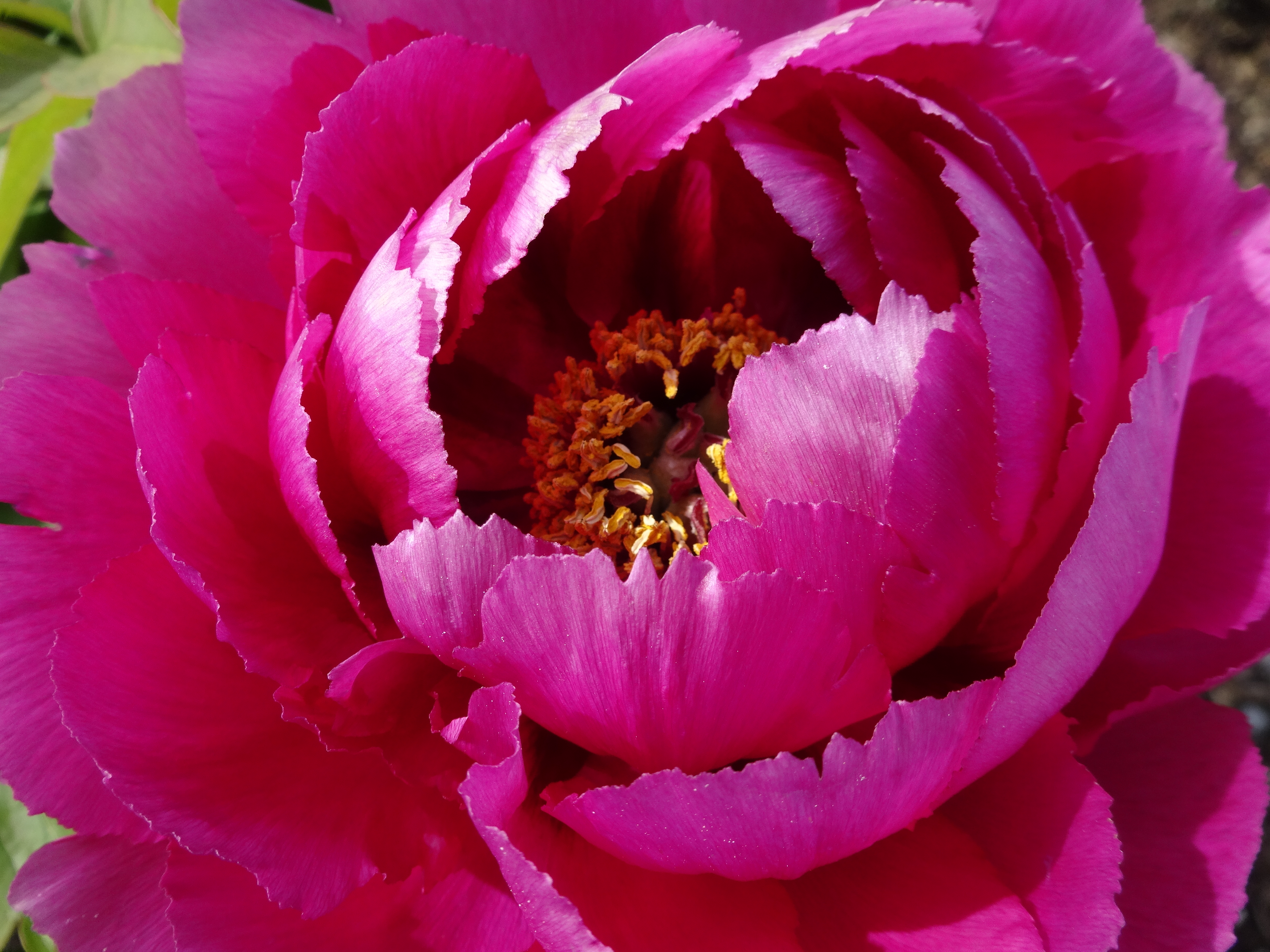
DSC04835Peony. Seattle Chinese Garden.

DSC04998 (1)Dogwood from the neighborhood.


DSC05025Bloedel Reserve, Bainbridge Island, WA

DSC05044Skunk cabbage looking glamorous.
Bloedel Reserve, Bainbridge Island, WA

DSC04446

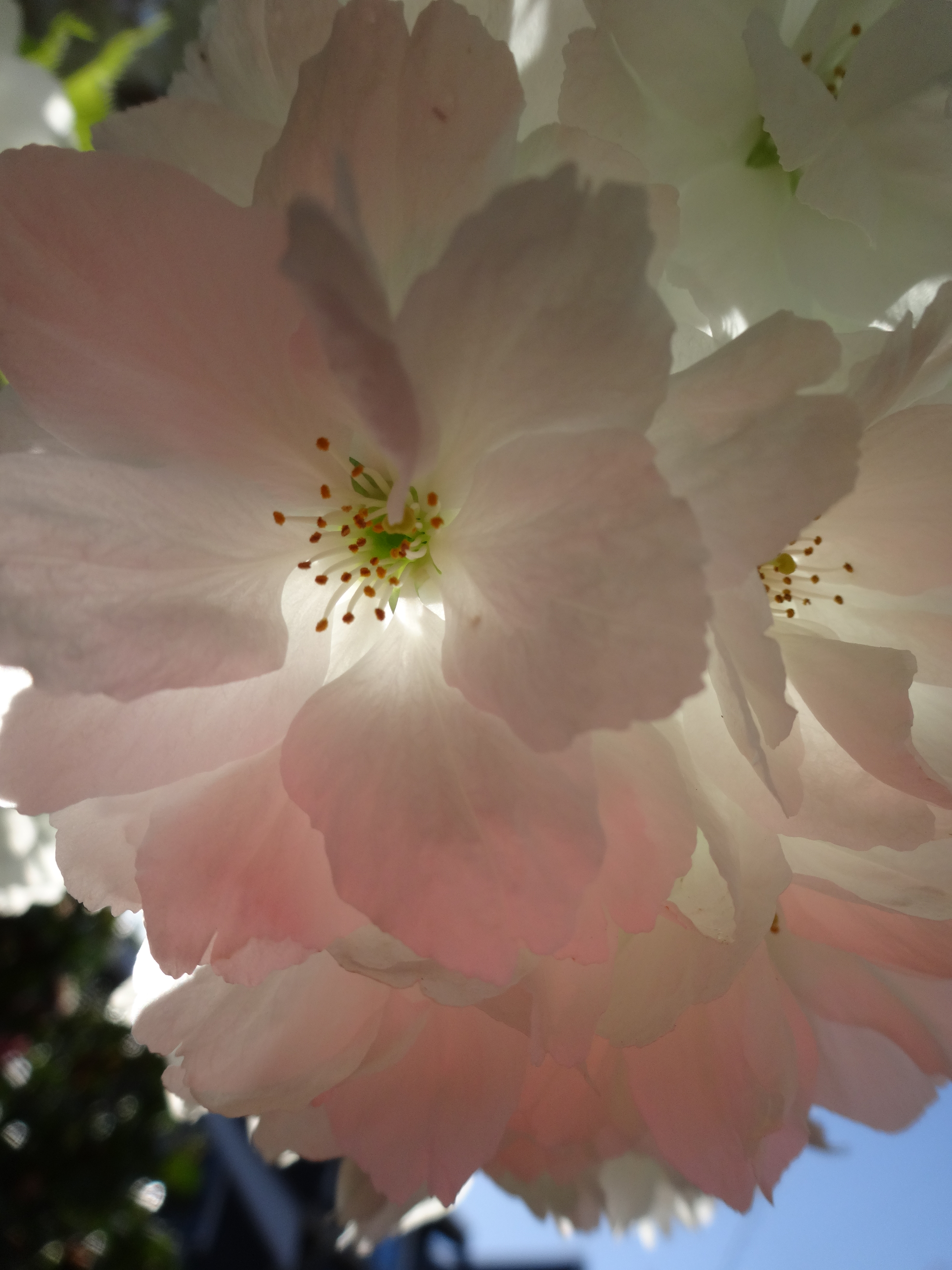
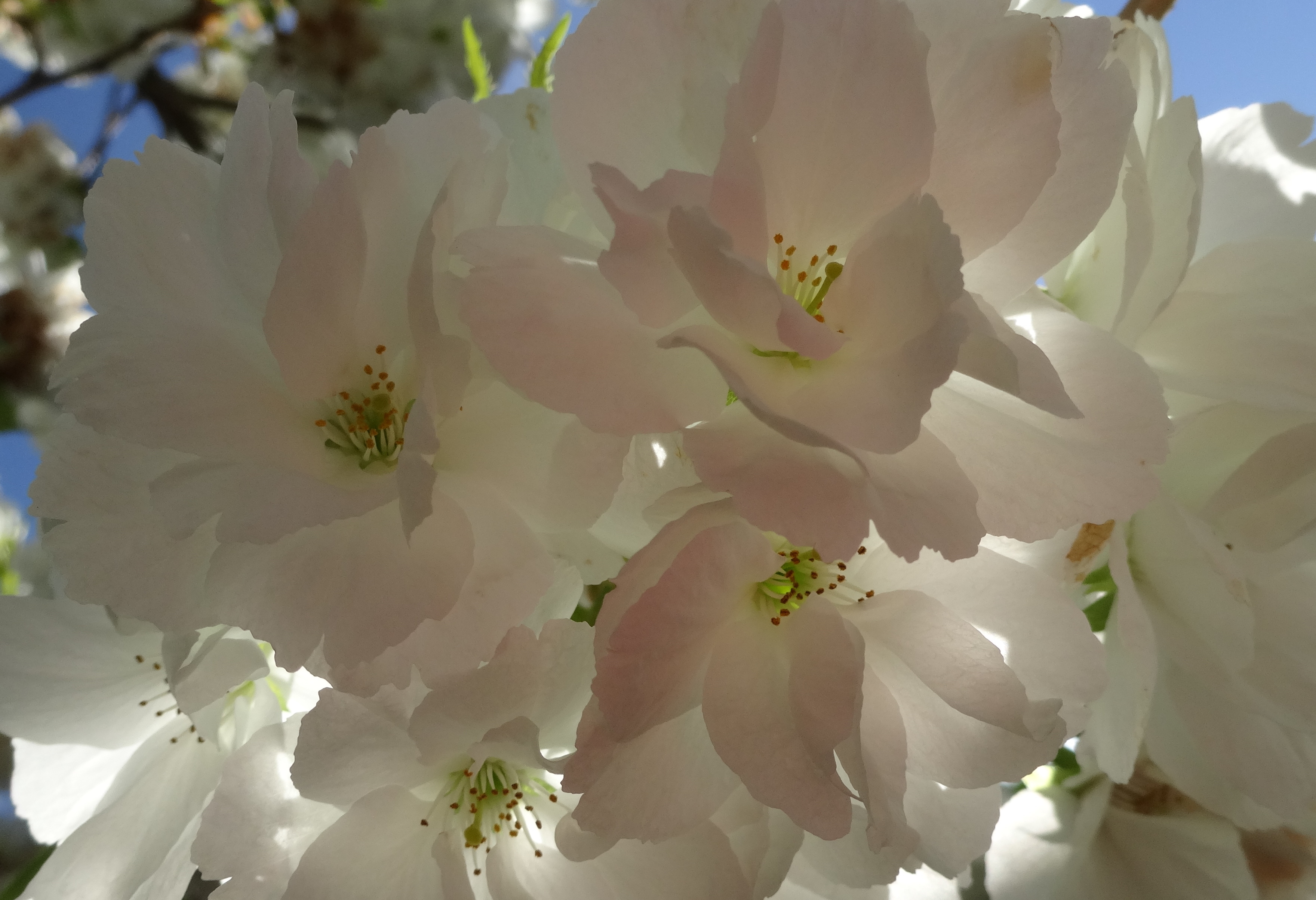
DSC04444 (1)Neighborhood cherry blossoms.

DSC05031Pileated woodpecker at the Bloedel Reserve.
She flew from this tree to her nest, located in a hollow in a nearby tree.

It is National Siblings Day so I am reposting this one from November 2012 about my younger brother and me.

I have mentioned perhaps one or six hundred times that I have five brothers. One of my older brothers’ favorite “games” was pig pile. This involved announcing a victim and then having five siblings tackle and pile atop this person. For example the exclamation, “Pig pile on Liz!” was followed by my being tackled and piled on by five brothers, the oldest of whom was nearly 10 years my senior.

Pig piles seemed to be exclaimed on a very frequent basis and as the only girl of six children and the second to youngest it seemed that I was more often than not, the vortex to which the pile was attracted. A Bermuda Triangle of porcine piling, if you will. As the “baby” of the family, my brother James also spent a fair amount of time face planted on the living room floor beneath four sets of sprawling limbs shod in Converse low tops of various sizes.

Although our older brothers would admit to the pig piling, they would disagree with the metaphorical implications. They believed James and me to be spoiled. We avoided the horrors of ruler wielding nuns, whereas they all attended St. Anthony’s School, for example. Our family also had a little more money when I was growing up, not a lot more but just enough to fuel the “you’re spoiled” flames. I maintain that whatever advantages we may have had were more than offset by their mean older brother shenanigans.

James and I are only 18 months apart in age. Our next oldest sibling, John is 3 ½ years older than me and 3 ½ years younger than our next oldest brother, Mike. John was kind of caught between the “big boys” and the “little kids” of the family.

James and I spent a lot of time together. We played together a lot. We mostly got along very well though we could sometimes fight verbally and physically at which time my mom would yell, “I don’t care who started it. I’m finishing it. Go to your respective rooms!”

We played a combination of traditional boy and girl activities. We played with cars, trucks, and climbed trees. We designed obstacle courses in the yard and spent hours upon hours in the woods surrounding our house and neighborhood. We did not, however, play with Barbies or baby dolls. Remember, this was the late 60’s and early 70’s. My mom made us each two sets of Raggedy Ann and Andy dolls as well as a bunch of stuffed elephants. Due to her combination of genius and industry, we were able to play dramatic reenactments of family life with more socially acceptable dolls.

James was not really interested in formal music training, but he has an incredible ear and natural musical ability. He is also extremely funny. By the time I got to high school, I was pretty serious in my classical flute playing. He had a plastic slide whistle and would frequently copy whatever piece I was practicing in my room, complete with vibrato and when era appropriate, Baroque runs. When it wasn’t infuriating, it was hilarious.

These days my brother plays more music than me; he taught himself drums and plays with his 17 year-old son’s band. The only music we make together is the occasional game of Rock Band. The thread that carries over the years is that fact that my brother can always, I mean always, make me laugh.

He reminded me of this last Friday. James attended the requiem mass at St. James. I was kind of surprised to see him there since it was a pretty long drive for him and I think he hates to drive even more than I do. We got there an hour early to get a seat. During the time before the mass started, he was cracking me up and my laugh was echoing throughout the cathedral. When we were kids, due to different church rules, we were not allowed to talk before or obviously during mass. So with this as a back drop, his jokes have always been extra hilarious. I’d laugh, he’d say, “Now if any other family is coming tonight, they will be able to find us.” Then I laughed harder than before. Then he started singing family gossip in his version of Gregorian chant. I lost it again. Now here’s the thing about my brother. His antics are not particularly loud. He is actually a fairly introverted person whereas I am loud and gregarious. I believe he very much likes to set me up and watch the loud fireworks of my laughter, knowing that he is the one who lit the fuse.

James and I were successful for decades after our childhood in avoiding the bottom of the pig pile. Then I found out I had breast cancer and it wasn’t my older brothers that piled on top of me, it was the world in which I thought I had lived, that dissolved and crashed down on me. During the acute stage of my breast cancer treatment, there were many ongoing assessments and constant revisions of my treatment plan. When I was recuperating from surgery and bored, meaning prime time for worries to creep in, I called him, “James, I am bored. Tell me something funny.” And he did. And when I was anxious about waiting for the results of oncotype testing, which would determine whether my oncologist would recommend chemotherapy or not, I called my brother, “James, I have 20 minutes until I need to leave for my appointment. Can you tell me funny things and distract me?” And he did.

James does not show affection in traditional ways. I remember once, about ten years ago, his closing a telephone conversation by saying, “It was nice talking to you, Liz.” That was a major outpouring of verbal affection. But I know my brother loves me, thinks about me, and keeps the warmest wishes for my health. And he shows his love to me most consistently by making me laugh about today, laugh about cancer, and laugh about the things we did and experienced as kids.

For these things I will be ever grateful. James, you joined me at the bottom of the cancer pig pile.  I can’t thank you enough for doing that. If you didn’t realize it before, please realize it now that you have helped me tremendously. Thank you for making me laugh at some of my lowest and scariest times. I love you a lot and I know you return that even when it may come in the guise of slide whistled Mozart.

James must have been about 1 1/2 years old to my three years. It looks like we were having much fun in a rare Seattle-area snow.

James must have been about 1 1/2 years old to my three years. It looks like we were having much fun in a rare Seattle-area snow.

“Wise mind” is a mindfulness concept in the class that my family has been taking. Wise mind is used when “emotion mind” or “reasonable mind” get out of balance. Wise mind is, well, wise and validates both emotion and reason.

If you look back at my last post, you can see moments where either emotion mind or reasonable mind got out of balance. There is a mindfulness skill called, “ask Wise Mind a question.” No, I kid you not. The judge-y part of my brain has thoughts like, “That sounds silly and dumb.” Fortunately, I am really trying to learn as much as I can from this class so I’ve been able to keep Judge-Y at bay, for the most part.

On Monday, while I was lying on the ultrasound table, feeling fear, scary thoughts, and starting to try to reason myself out of them with arguments that now seem kind of ridiculous, I thought, “Wise mind, what should I do?”

Within a fraction of a second, I noticed that my heart was beating fast and started using paced breathing to slow it down. My heart rate is particularly responsive to breathing techniques so that helped settle me down considerably. It also gave me something to focus on, something in the present, which was much preferable to my worrying about the future.

“Wise mind, what should I do?” was a question that got me unstuck. It helped me shift my attention and thoughts, to cope more effectively, and to make my anxiety much more manageable.

I am finding, more and more, through my practice of mindfulness and the other techniques taught in this class that I am able to limit my suffering around scans to shorter periods of time. Another skill I used is called, “Coping Ahead”. It is not a mindfulness skill. Mindfulness is powerful but it is not always useful. Coping Ahead means identifying a stressful event that you know is happening in the future, identifying skills for handling it, and visualizing yourself successfully applying these skills (mental rehearsal).

When we covered this skill, I knew that my scan was coming up so I made a plan. To be honest, the plan was not perfectly laid out but I put many elements into place. I decided that the most difficult part of my anxiety around my scans was that I am irritable and on edge and end up getting upset with my family for no good reason. I have not only coped in a way that increases my own suffering but that of the people around me. I imagined what I would be like if I was not that way and identified the skills that would help me get there.

As it turned out, the actual scan and the hour or two around it, were much more stressful than I expected it to be. But I didn’t snap at my family. In fact, we had a wonderful weekend together.

When I wrote my last post, I was trying to convey the experience that many of us have as cancer patients. Although I have not had known cancer for nearly three years, I still consider myself to be a cancer patient. I don’t know if that will ever change. I wanted people to understand that. I also wanted people to understand that meaningful and joyful life is still possible, nonetheless.

There are aspects of my life that are scary. I feel my feelings. I think my thoughts. Some of you described my last post as “harrowing”. That’s a pretty intense adjective. I was a bit shocked by the reaction and then felt sorry for having distressed people. But if I really think about it, I was describing the experience of trauma cues and fears of being sick again. That’s pretty hardcore.

My writing and my mindfulness exercises help me put my terror in a transparent box, so that I can examine it, like a specimen. It is still painful. It is still scary. But it is a way for me to move forward without hiding from myself.

“Wise mind, what should I do?”

Live my life.

Every day.

My husband and I host Thanksgiving every year and although not at Martha Stewart’s standard, I like to make the dinner tables pretty. Sometimes, John sets the table with our day to day plates and I say, “No, use the good plates.” The “good” plates consists of the full set of Franciscan dinnerware that my mother-in-law generously gave to me years ago. They match. There’s a gravy boat. There are enough for our extended family crew of 16-24 people, depending on the year. Matching, rarely used plates for fancy occasions.

Today I had a mammogram. I scheduled it many months ago. I remember telling my oncologist’s scheduler that I needed a diagnostic mammogram. She called over to the breast imaging center and told me that I didn’t need a diagnostic mammogram. I was due for a screening mammogram. I said, politely with a tinge of anxiety, “But I’ve had breast cancer.” She talked to the imaging center again and verified that a screening mammogram was what my oncologist had ordered.

I walked into the imaging center. It is in a building that adjoins my cancer institute, where I typically have my appointments. The cancer institute also does mammography. This time, I was sent to the building that is part of the same medical center but not part of the cancer center. Even though I’ve been there before, I was disoriented, even in the parking garage. I don’t have the best sense of direction on a good day but when I am nervous AND underground, it is much worse. The parking garage was packed and although I thought I was following the signs, I knew that I was anxious and distracted when I saw the sign, “Alligator” to show me that it was floor A, for the third time. I was driving in circles. I snapped out of it and worked my way down to “Camel” where I got a parking spot, wrote directions to finding my car after my appointment was finished, and went on my way.

As I walked into the waiting room, I had a sense of unreality bordering on derealization, a dissociative state experienced by individuals with PTSD. The waiting room felt unfamiliar but I knew I’d been there. Then I say myself there, in my mind’s eye. This is where I had the diagnostic mammogram, the ultrasound, and the core biopsy that would establish my breast cancer diagnosis and refer me to the cancer center, nearly three years ago. “Hello, trauma cue!” Once I recognized the cue for what it was, I could at least stop wondering and start coping.

The funny thing about this is that one reason I felt uncomfortable and scared was because I had been “demoted” to a screening mammogram and to add insult to injury, had to leave the safe and familiar nest of the cancer center, to do so. Mammography involves compression of the breast tissue between plates. I’ve had all kinds of mammography, screening, diagnostic, and PEM the latter being the fanciest and as it was in Phase II trials back in 2012, was not covered by insurance costing $2000 out of pocket. PEM took three hours following a 24 hour no-sugar diet and radioactive dye injection. Oh, and did I mention that each picture takes 7 minutes, all 7 of which the plates are compressed? Oh yeah, I just remembered that the PEM tech is seated right across from your eyeballs.  But I digress.

I found myself in the waiting room thinking, “I want the good plates. I want the diagnostic mammogram.” Yes, I know, the difference between mammogram machines is not the plates. But do you blame me for thinking about the plates? (Ladies who do mammograms understand.) When I checked in, the receptionist asked, “Who do you want us to send the report to?” I provided her with the names of my physicians. Then I anxiously asked, “But I am getting a verbal report from the diagnostic radiologist during my visit today, right?” She verified that I was. Deep breaths, Elizabeth.

I changed into a gown and waited for the mammography technician. She soon greeted me and led me to the exam room. She was a very small woman, under 5 feet. As she was positioning the plates, I noted that she was about the exact right height for the job. She would not have to bend over at all to get a view of breast level for most women. I thought to myself, “Why do I notice things like this?”

She was skilled and efficient. I was lead back to the waiting room near the changing room. I waited. I was distracted for awhile talking to other women, waiting for their results. I answered some email. A woman called my name, a different woman than the mammography technician. I didn’t like this. She led me into an ultrasound room and asked me to partially disrobe, lie down, and wait for the diagnostic radiologist, Dr. Bang. She said, “He will give you the results and discharge you.”

“Uh-oh, there’s something suspicious on the mammogram.” Dr. Bang soon came into the room and introduced himself. He was a young Asian American physician with a nice smile and a professional demeanor. One of the first things he said was, “I see a 2mm mass in your left breast. It is probably a non-malignant cyst.”

My thought, “Yay, he’s being straight with me. He told me what was going on as soon as he could without being cold and abrupt. Hmm, but he also told me that he thought it was likely just a cyst. I hope he’s not one of those physicians who is afraid to tell the bad news. I hope this does not affect his judgment.”

He was very thorough, I must say. I looked at the images from the mammography. Besides thoughts to myself like, “recurrence”, I busied myself by noting how much less dense my breast tissue looked in the images than they had in 2012. As many of you know, having particularly dense breasts makes most of the imaging techniques difficult to interpret because water (the source of density) shows up as white, which is also the color that tumors look on the images. Density is reduced with age, as breasts take on more fatty tissue. I could see this change in myself, likely accelerated by my cancer treatment induced menopause through Lupron and over two years of taking Tamoxifen, which I will likely continue to take for nearly a decade.

I am a geek and a healthcare provider. I am very happy for this when I am getting a stressful medical examination. I can distract myself with wonder and fascination. I also joke with healthcare providers. This lot were pleasant but business like. Joking would not be a comfortable option. So I continued to practice paced breathing to keep myself calmer and to geek out on medical technology and to reflect on the the marvel that is the human body, post-mastectomy and all.

Dr. Bang was having trouble finding the 2mm mass on the ultrasound. I asked him if it was located in the part of my breast tissue that is still very dense. He said that it wasn’t and was in fact very close to the surface. Then I thought, “Oh, if the cancer is near the surface of my breast, maybe I can get a small lumpectomy. That won’t be so bad.”

I was also thinking about what the next step would be. Biopsy? Then I remembered that I had gotten a screening mammogram and that the next step is usually a diagnostic mammogram. However, in this case, I was given an ultrasound. Hmm. A memory flooded back to me. Cancer treatment is like giving birth. They tell you what is going to happen like they are invariable steps. But it’s not. There are rules of thumb that I can understand but the course of assessment and treatment can change. I’m not complaining. If I were cookie dough, the medical team could use cookie cutters to do their job.

Another part of my brain was planning who and how to inform people that I would need follow up assessment. Before, I was pretty sure that I didn’t have cancer. After all, only 20% of biopsies are malignant. Mammography has a notoriously high false positive rate. That is one reason that it is so widely criticized. Actually, the prime reason is that we keep getting the message in our culture that it is far more accurate than it really is.

After what seemed to be 500 years, Dr. Bang told me that the cyst had been present on my last mammogram but it seemed to have grown since then. “I don’t think it’s cancer.” He told me that he wanted to “watch it” and that meant having another mammogram in six months. In the past, I would have been hesitant to ask my “worry questions” but I asked away. “Will this be a diagnostic mammogram?” (“Yes”.). “Will it be a 3D mammogram?” (“Yes”.)

There is no cure for breast cancer. I have had a status of “No Evidence of Disease” since my mastectomy on 8/8/12, which was proceeded by two failed lumpectomies performed by a marvelous and kind surgeon. Three of my four invasive tumors could only be revealed after surgery. None of the imaging technologies, MRI, ultrasound, and three types of mammography that were used, found them.

I was diagnosed nearly three years ago. I have thought about cancer every single day since I was informed of the diagnosis. That is over 1000 days. I don’t want “the good plates”.  I wanted the black and white plates. I want the plates of definite “I don’t have cancer” answers.

Cancer has provided me with a daily lesson that bad things, really bad things can happen. And I have learned to live a happy and satisfying life in the last three years despite all that my family has been through, a significant amount that has nothing to do with my cancer. Something that a pathologist looks for in examining an excised tumor and the surrounding tissue is for “clear margins”. A clear margin is the amount of healthy tissue that surrounds the tumor. Larger margins are better than small ones and if they are too small, as was the case with my first two surgeries, more surgery is recommended.

The “clear margin” is not magical or 100% accurate but it is meaningful. It is more than a good sign. There is always the possibility of disaster or hurt at the center of our hearts. I try very hard to live in the present and at present my margins are clear.

When I practice mindfulness, I encounter a paradox of experiencing a greater connectedness with thoughts, feelings, and sensations but also having some kind of buffer. I don’t really know how to describe it exactly. It’s not exactly a distance but it kind of is. No doubt there are individuals far more practiced in mindfulness who have written about this much more precisely and eloquently. I know that the word, “equanimity” is often used to describe this state, a mental composure that wards against imbalance of the mind.

Yesterday morning I was walking and noticing. I do most of my mindfulness practices while I walk. I also do a great deal of contemplation about my life. I was thinking about how much more fun I am having with my family these days and the level of harmony we’ve been experiencing. The sun was out and I could feel it on my skin. The flowers and trees in the neighborhood were beautiful. I felt a great deal of joy. In these times of mindfulness I find that I encounter unexpected thoughts and feelings. The balance that I feel makes this possible, I think.

Yesterday, I felt hopeful, a feeling that is familiar to me. But yesterday it was followed other thoughts and feelings. Hope involves taking mental chances. Hope leaves the door open for good outcomes after a long time of fearing the worst and experiencing very hard times.

Hope can be frightening.

During one of my recent mind adventures, my memory took me back to the old 1960’s television show, The Flying Nun. It starred Sally Field as Sister Bertrille and took place at a convent on Puerto Rico. Due to her small size, the frequent winds, and her cornette (a particular style of nun hat), she could fly, hence the title of the show. After my mind took me to this show, my fingers took me to Wikipedia.

Sister Bertrille could be relied upon to solve any problem that came her way by her ability to catch a passing breeze and fly.

That sentence gave me a good chuckle and I thought, “How could the show’s writers sustain this premise?”

Plot 1: The convent eagerly awaits a visit from the Bishop. After an albatross makes off with the his miter, Sister Bertrille hitches a ride on a gust and saves the day by retrieving it.

Plot 2: Fire breaks out in the convent campanile. After accidentally breaking the tallest ladder in town, Sister Bertrille uses her flying power to reach the fire and put out the blaze.

Plot 3: A little girl’s kitten is stuck in a tree! The fire ladder is still broken. Sister Bertrille flies to the top and saves the day!

Plot 4: Run away kite!

See, not sustainable. Nonetheless, the series lasted two seasons. How did they do it? Also, how did her cornette stay on?

A fictional life needs substance to sustain itself. It can’t be utterly ridiculous.

A real life needs so much more.

Once upon a time, my blog was often humorous. Once upon a time, my blog was mostly about cancer. My blog has changed and my needs have evolved. My husband asked me yesterday, “Do you still think about cancer every day?” I told him, “yes” and I have thought about it every day since May 25th 2012. I mean this literally. Every day.

But thinking about cancer and being actively treated for cancer are different. I think back to what I needed to do during my active treatment and I can’t believe it. The extra work I had to cram into my schedule in order to take time off for surgeries, the number of surgeries, the telling people or not telling people about my health. The changing landscape of my body. The changing energy levels. The changing brain. The major unknowns about even the near future. One of the ways I dealt with the stress and fear with laughing at the ridiculousness of it. That is a coping strategy that is useful to me, it sustains me.

I think about sustainability and capacity a great deal. I want to be a healthy person. It is too easy for an active person such as myself to work too hard and to get my life out of balance.

But sometimes we just have to work really hard. Cancer treatment is one of those times. One of the hardest thing about this time as well as during other unpredictable and serious stressors in my life is that I don’t know how long I will have to work super hard in crisis mode. In the past, I used to tell myself that I would slow down once the stressor passed, for example, once I finished my Ph.D., once I got my career settled, once my daughter was older, once we bought a house, etc.

Those stressors never stop. Life is hard and complicated. Fortunately, I appear to be in good physical health and my mental health is strong. I have a safe place to live, a loving family, lots of friends, and a wonderful job. But it is easy to get caught up in moving too fast, worrying too much, and creating needless suffering for myself even in a life that in most respects is an embarrassment of riches.

As I’ve mentioned recently, right now I am focusing on having more fun with my husband. We do something, just the two of us, at least a couple of times a week. We went on a trip. We went to grown up prom. I have also started having more fun with my daughter. I think that the fact that I am more relaxed has had some positive impact on her among other things. Just last weekend she told me, ‘Mom, have you noticed that I am out of my “I hate my mom” teen phase?’ I have learned to accept these lavish gifts with understatement. “Hmm, I guess yes, I’ve noticed. Why do you think that is?” She replied, “I don’t know. I guess I just got older.”

I take these beautiful moments for what they are, moments. And they seem to be threading together into increased maturity. But her growth is not linear; it has peaks and valleys and plateaus. All of our lives are like this, even the most stable of us because there are so many aspects of life that are out of our control.

My family life is still full of unknowns. My husband and I still deal with major stressors and challenges both within our immediate family and in our extended family. We are part of what is called “the sandwich generation“. Sometimes I feel like we are the PB&J left on the bottom of a backpack for a week that ended up getting run over by the school bus.

Nonetheless, we are making time for fun. We have trips or fun visits planned for every month from May and September. My passport is being renewed as we speak. We will see two coasts, mountains, and two states. We’ll travel by planes, trains, and automobiles. We’ll be surrounded by friends, by cities, and by nature. And yes, friends, there will be photos, lots of them.

I am discovering that  I need to make time for peace and enjoyment. One of the least sustainable premises in real life is waiting for life to get easier.

DSC04400

My daughter used to run on a track team every spring. She is naturally fast and coordinated. However, she is also quite independent and back then, difficult to coach. She had her own ideas about technique as well as what distance was best for her. Oh yes, she was also highly distractible. Whenever she ran, you didn’t know what would happen because the range of her performance was wide. One of of the meets had an 8th grade co-ed relay, with each student running 400 meters. Her team was small. They didn’t have two 8th grade boys and two 8th grade girls. So the coach put younger kids on the relay team, three younger girls and one 8th grade boy.

My daughter was one of the younger girls. They had not practiced prior to the meet. As I recall, she was second or third in the relay. The hand off to her was seamless; the hand off to the runner after her was seamless. She was ready to start when it was time to go and she absolutely flew down the track, passing all of the other teams by a rather large margin. The rest of the team ran well and held on to the lead she’d created. They tied the record time for the Archdiocese. The whole thing was really quite marvelous to watch.

In a relay race, speed obviously counts. But the most critical parts of the race are the hand offs. One has to hold on to the baton for exactly the right amount of time, not too long or too short. And the other part of it is taking the baton at just the right moment.

Much is written about painful feelings, especially those associated with grief. How long do we keep them. When do we let them go? When do we take them on. The relay race keeps coming into my mind. We can’t stay out of the race, altogether. We can’t deny or suppress painful feelings. To do so is a recipe for unhappiness and often leaves us alone. It is too hard to connect with others when one is coping by disconnecting with oneself.

Then there is the other problem, hanging on to the painful feelings too long. This is also a recipe for unhappiness and suffering, often alone. It is hard to connect with others if holding on to pain leaves no room in our hands to hold onto positives in our lives.

This all strikes me as rather complex. Sometimes I need to hang on longer than others want me to. Sometimes, I need to move on, at least temporarily to be functional in my life, to be good at my job, to be a good mother, to be a good friend, and to be a good wife. Sometimes I move on just to give myself a break.

It can all seem like one big game of trial and error. I know that practice helps and life provides frequent opportunities for holding on or letting go of painful emotions. I’m not keen on trial and error, though. I am a pattern maker, an observer.

I have taken on more work lately. My concentration and stamina are improved. I am happy to be able to participate more fully in my professional life, especially since my business operating costs have increased due to my new office’s significantly higher monthly rent. But this change has also made it harder for me to go walking everyday. I am still walking regularly, about five times per week.

Over the past few weeks, I have noticed a pattern. Overall, I am much more patient and less irritable with my family. But sometimes I get my feelings hurt, feel anxious, and get a little heated. My reaction is not huge but it is out of scale with the situation. This almost always happens on a day I have not gone for a walk.

Hold on.

Let go.

Put on the walking shoes.

I remember reading Virginia Woolf’s, A Room of One’s Own, an assigned reading for a course I was taking at the University of Washington. I know it is a classic feminist text. I know that she was part of the Bloomsbury Group, a collection of intellectuals active in the early 20th century. I know that she wore pants at times. I know that she was played by Nicole Kidman in the excellent film adaptation of the book, The Hours, and that she died by suicide.

But frankly, when I read A Room of One’s Own, I missed a lot. I remember her paragraphs being reaaaaaaally long. I would find that I had decoded the words on two or three pages only to realize that I’d comprehended very little and was lost in this book long essay. I’d flip back through the book, begin reading again, and write notes in the margin, a critical thing for me to do when my mind wanders in reading.

But I did get her main message. She wrote about the importance of having time and space to write, something that most women not only did not have but were discouraged from having. A room of one’s own. A room to think and write and be. I also got that “a room of one’s own” has a figurative as well as literal meaning. We need a separate space and time for individuality. We need an identity apart from our relationships with others. As women, we need a relationship with ourselves that is apart from wife or mother. There may be ‘no “I” in team’ but there is an ‘I’ in “being” and all of us, male or female are beings.

As you know, I recently moved my private practice. One of the differences is that the current space has three offices instead of the previous two. That means all three of us, Jennie, Julie, and myself have an office to ourselves.

I have also mentioned that the rent for the new office space is nearly three times what the old office space was. Granted, the old office space was really inexpensive. But this is an increase that is easily noticed, especially since I hold the lease and it it the full rent that is automatically drawn from my bank account every month.

There is also the fact that although I work five days per week, I only see patients on three days per week. In the past, I have only had access to my office space for those three days. Now I have access every day of the week, whether I see patients or not.

There is an allure to subletting my office to another psychologist. This would reduce my monthly rent. At this point, however, I am strongly opposed to this. I have been reminded again and again during the last few years about how little control I have over my own life. I made what I thought was a beautiful workspace for my past office and I didn’t mind sharing it. But we lost it due to our lease not being renewed. I have now created another workspace and it, in my eyes, is lively but restful. And I want it to myself. I want to be able to go there any time I want to do report writing, pick up the mail, or just know I could go there anytime. I want to be able to get there in the morning and know that the room is exactly as I left it the night before. This is not because I am a control freak. It is just nice to know that this very thing is possible. It is also nice to know that if my life goes sideways again that I will have the flexibility to schedule patients on different days of the week. I will not be boxed into three days.

Yes, it is expensive but it is worth it at this point of time. I want my own time and my own space.

My money or my mind.

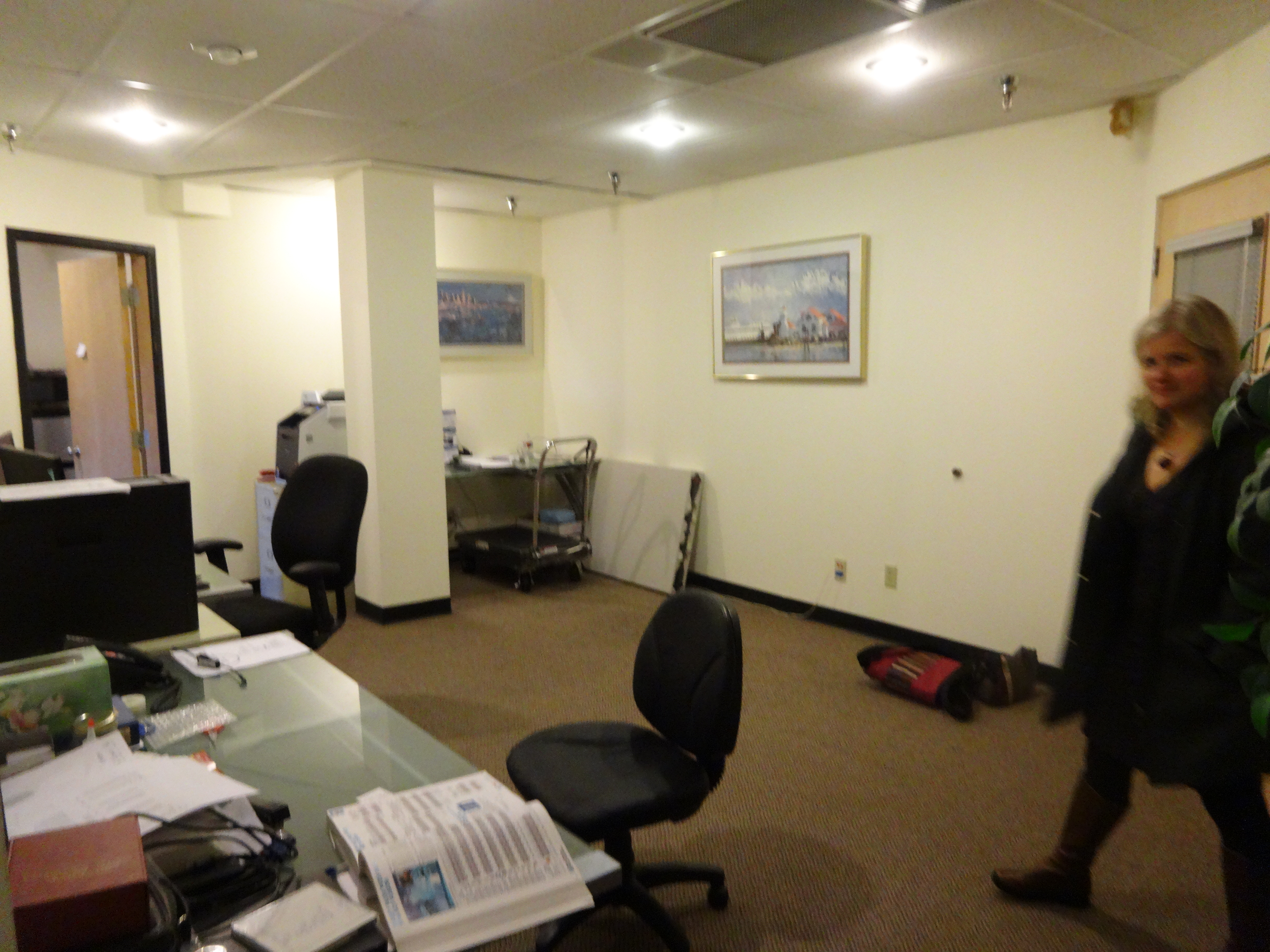
Before: The waiting room. This is how the waiting room looked the month before we started painting.

Before: The waiting room. This is how the waiting room looked the month before we started painting. The woman in the photo is my friend, Jennie.

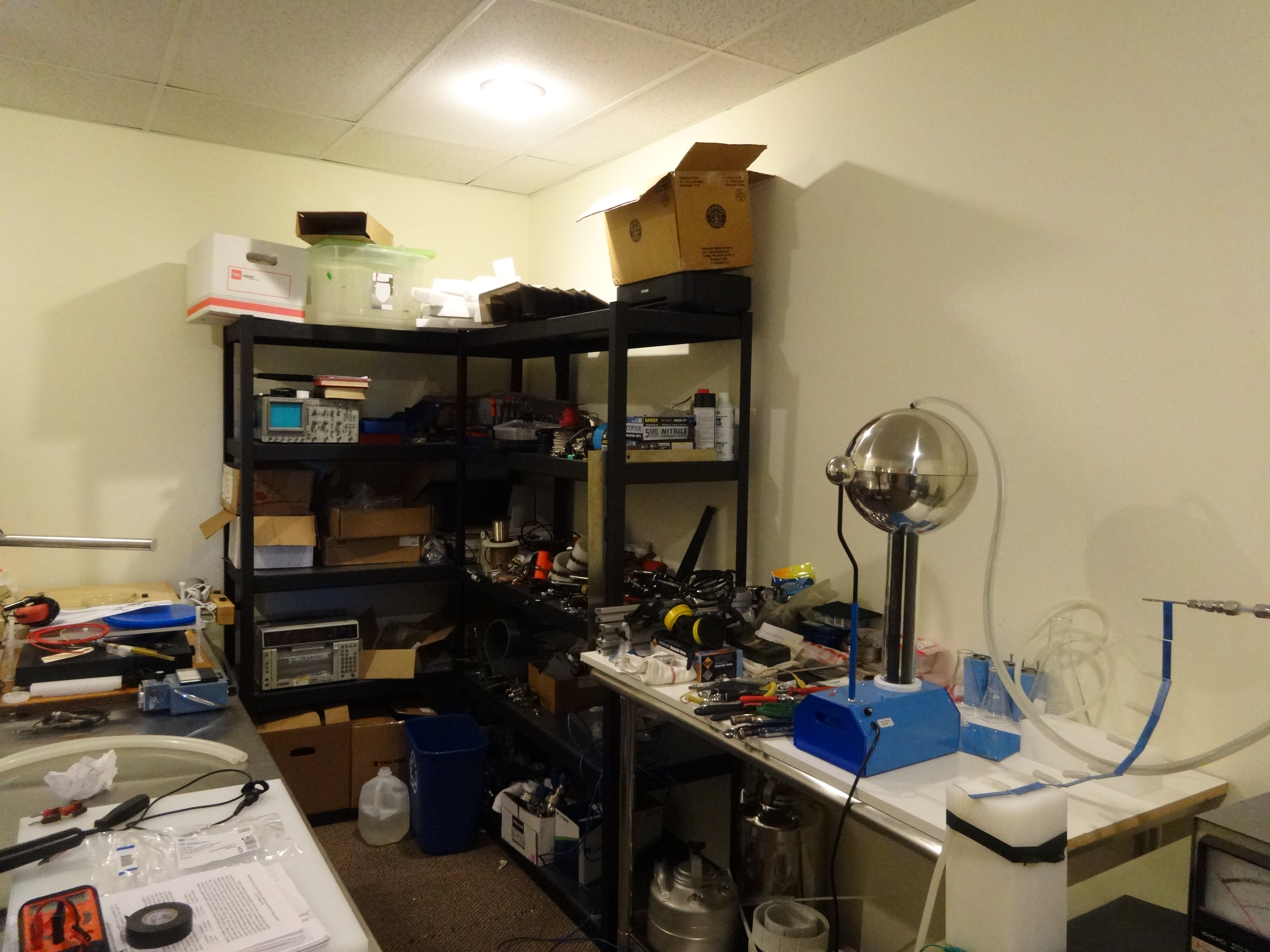
Before: My office when it was used as a lab. This is the first glimpse I got of the space before we signed the lease.

Before: My office when it was used as a lab. This is the first glimpse I got of the space before we signed the lease.

DSC03198

After: The waiting room.

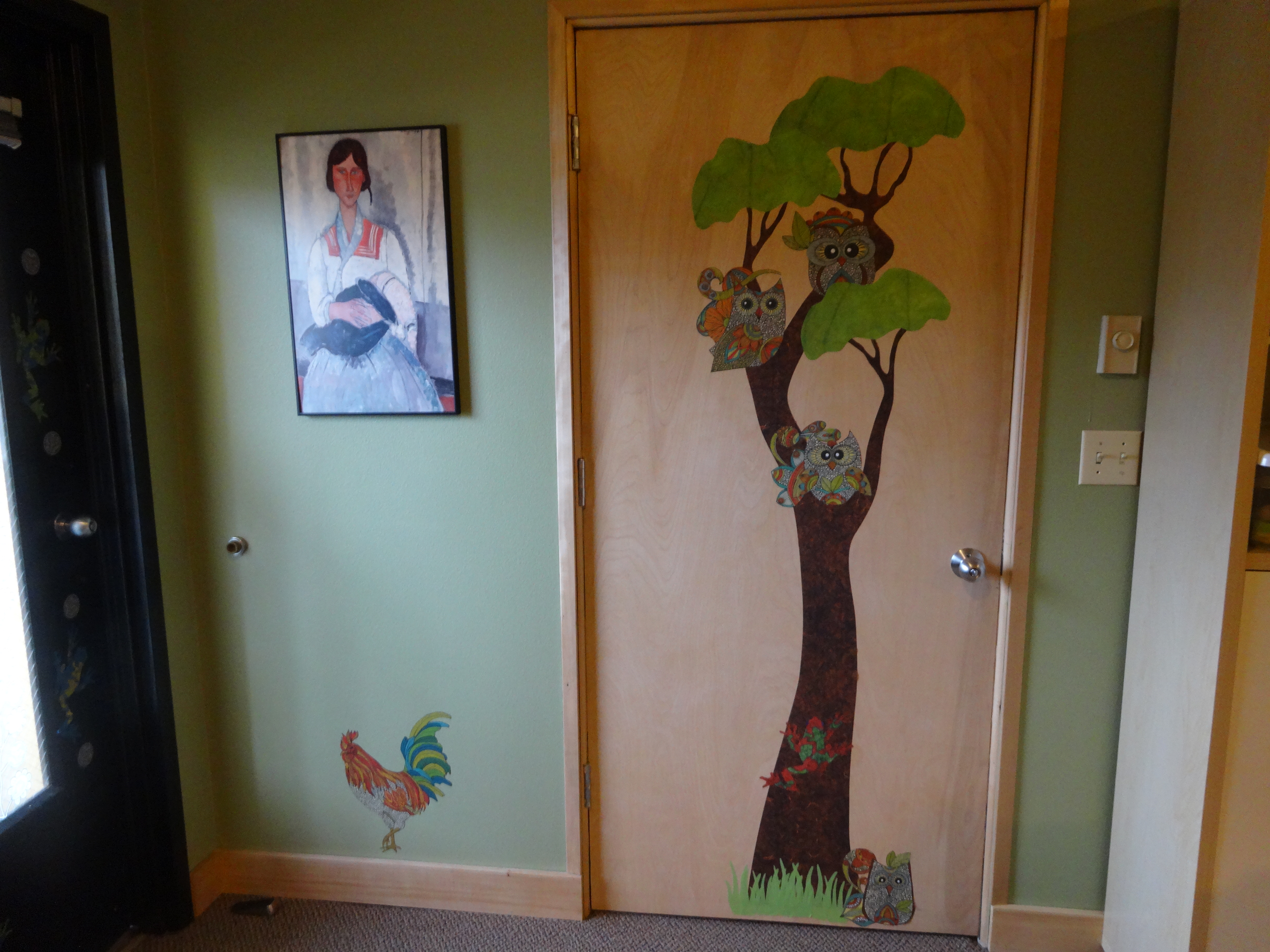
The hallway to my office. I loved the wall stickers!

The hallway to my office. I loved the wall stickers!

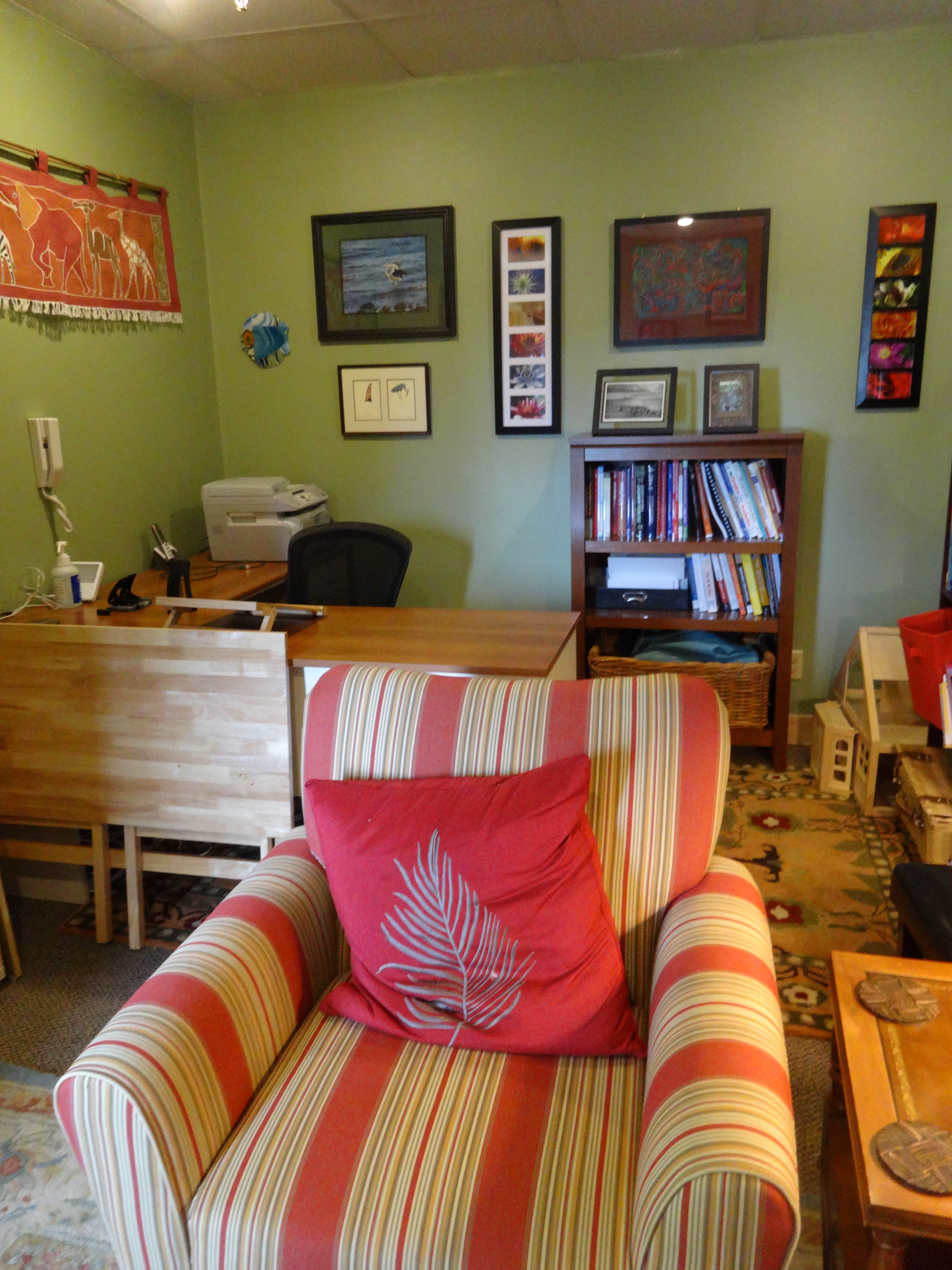
Make yourself comfortable. This is the sitting area for interviewing, psychotherapy, and explaining test results.

Make yourself comfortable. This is the sitting area for interviewing, psychotherapy, and explaining test results.

Testing area.

Testing area. The wooden piece is front of my desk is a folding desk. I unfold it to combine with my larger desk top to make large enough surface for my testing materials.

I made a removable cover for the air conditioner because it was ugly. I bought the owl clock because it was handy and adorable.

I made a removable cover for the air conditioner because it was ugly. I bought the owl clock because it was handy and adorable.

The chicken and tree decals were inspired by the feeling of boredom I felt when I sat in the chairs across from the door of my office.

The purchase of the chicken and tree decals was inspired by the feeling of boredom I felt when I sat in the chairs across from the door of my office.

Lindbergh High School Reunion '82, '83, '84, '85

Join us this summer for our reunion in Renton, WA!

George Lakoff

George Lakoff has retired as Distinguished Professor of Cognitive Science and Linguistics at the University of California at Berkeley. He is now Director of the Center for the Neural Mind & Society (cnms.berkeley.edu).

KomenWatch

Keeping our eyes and ears open.....

4 Times and Counting

Confessions Of A 4 Time Breast Cancer Survivor

Nancy's Point

A blog about breast cancer, loss, and survivorship

After 20 Years

Exploring progress in cancer research from the patient perspective

My Eyes Are Up Here

My life is not just about my chest, despite rumblings to the contrary.

Dglassme's Blog

Wouldn't Wish This On My Worst Enemy

SeasonedSistah

Today is Better Than Yesterday

The Pink Underbelly

A day in the life of a sassy Texas girl dealing with breast cancer and its messy aftermath

The Asymmetry of Matter

Qui vivra verra.

Fab 4th and 5th Grade

Teaching readers, writers, and thinkers

Journeying Beyond Breast Cancer

making sense of the breast cancer experience together

Entering a World of Pink

a male breast cancer blog

Luminous Blue

a mother's and daughter's journey with transformation, cancer, death and love

Fierce is the New Pink

Run to the Bear!

The Sarcastic Boob

Determined to Manage Breast Cancer with the Same Level of Sarcasm with which I Manage Everything Else

FEC-THis

Life after a tango with death & its best friend cancer