Archives for category: Breast cancer

I remember reading Virginia Woolf’s, A Room of One’s Own, an assigned reading for a course I was taking at the University of Washington. I know it is a classic feminist text. I know that she was part of the Bloomsbury Group, a collection of intellectuals active in the early 20th century. I know that she wore pants at times. I know that she was played by Nicole Kidman in the excellent film adaptation of the book, The Hours, and that she died by suicide.

But frankly, when I read A Room of One’s Own, I missed a lot. I remember her paragraphs being reaaaaaaally long. I would find that I had decoded the words on two or three pages only to realize that I’d comprehended very little and was lost in this book long essay. I’d flip back through the book, begin reading again, and write notes in the margin, a critical thing for me to do when my mind wanders in reading.

But I did get her main message. She wrote about the importance of having time and space to write, something that most women not only did not have but were discouraged from having. A room of one’s own. A room to think and write and be. I also got that “a room of one’s own” has a figurative as well as literal meaning. We need a separate space and time for individuality. We need an identity apart from our relationships with others. As women, we need a relationship with ourselves that is apart from wife or mother. There may be ‘no “I” in team’ but there is an ‘I’ in “being” and all of us, male or female are beings.

As you know, I recently moved my private practice. One of the differences is that the current space has three offices instead of the previous two. That means all three of us, Jennie, Julie, and myself have an office to ourselves.

I have also mentioned that the rent for the new office space is nearly three times what the old office space was. Granted, the old office space was really inexpensive. But this is an increase that is easily noticed, especially since I hold the lease and it it the full rent that is automatically drawn from my bank account every month.

There is also the fact that although I work five days per week, I only see patients on three days per week. In the past, I have only had access to my office space for those three days. Now I have access every day of the week, whether I see patients or not.

There is an allure to subletting my office to another psychologist. This would reduce my monthly rent. At this point, however, I am strongly opposed to this. I have been reminded again and again during the last few years about how little control I have over my own life. I made what I thought was a beautiful workspace for my past office and I didn’t mind sharing it. But we lost it due to our lease not being renewed. I have now created another workspace and it, in my eyes, is lively but restful. And I want it to myself. I want to be able to go there any time I want to do report writing, pick up the mail, or just know I could go there anytime. I want to be able to get there in the morning and know that the room is exactly as I left it the night before. This is not because I am a control freak. It is just nice to know that this very thing is possible. It is also nice to know that if my life goes sideways again that I will have the flexibility to schedule patients on different days of the week. I will not be boxed into three days.

Yes, it is expensive but it is worth it at this point of time. I want my own time and my own space.

My money or my mind.
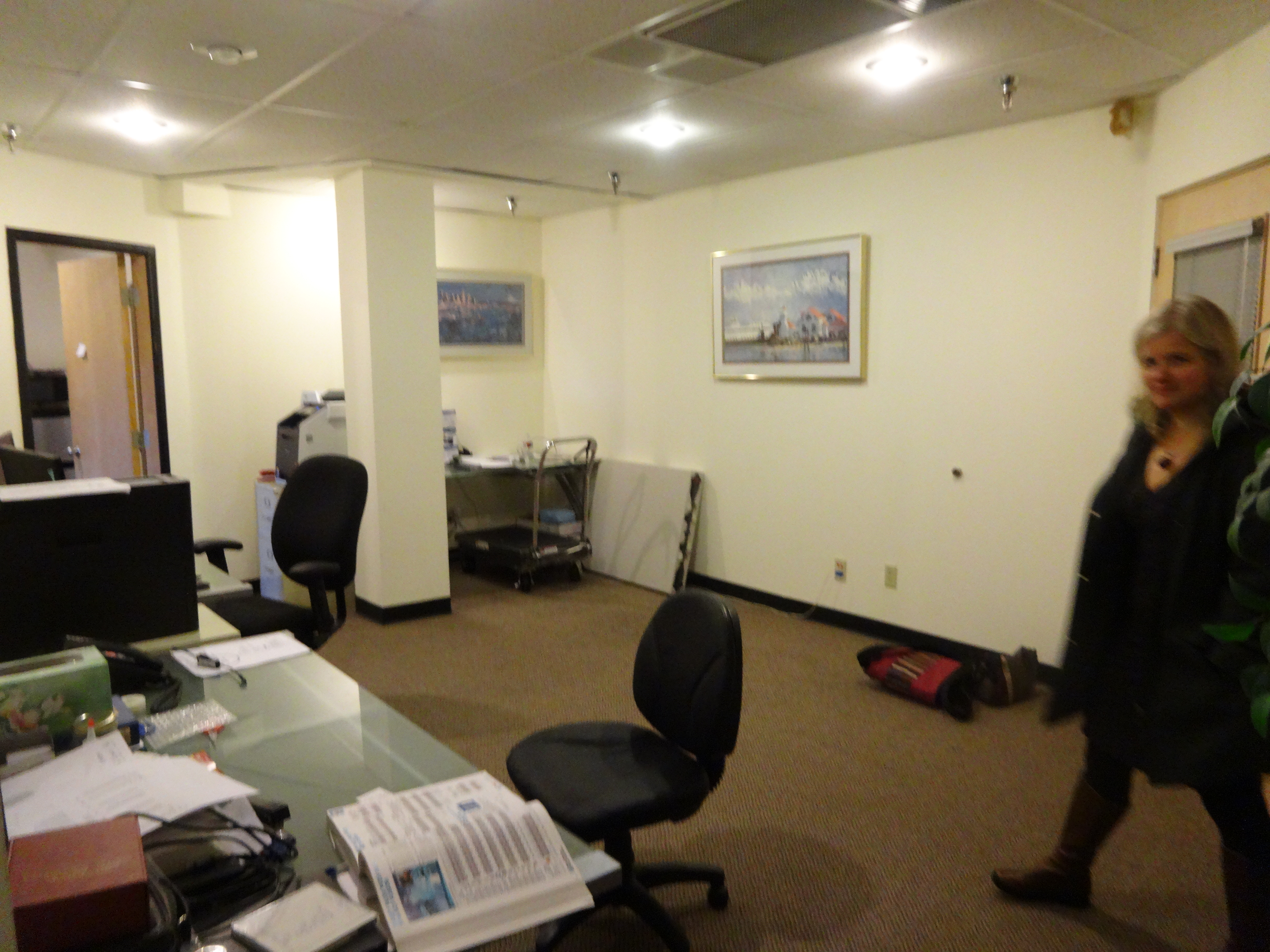
Before: The waiting room. This is how the waiting room looked the month before we started painting.

Before: The waiting room. This is how the waiting room looked the month before we started painting. The woman in the photo is my friend, Jennie.
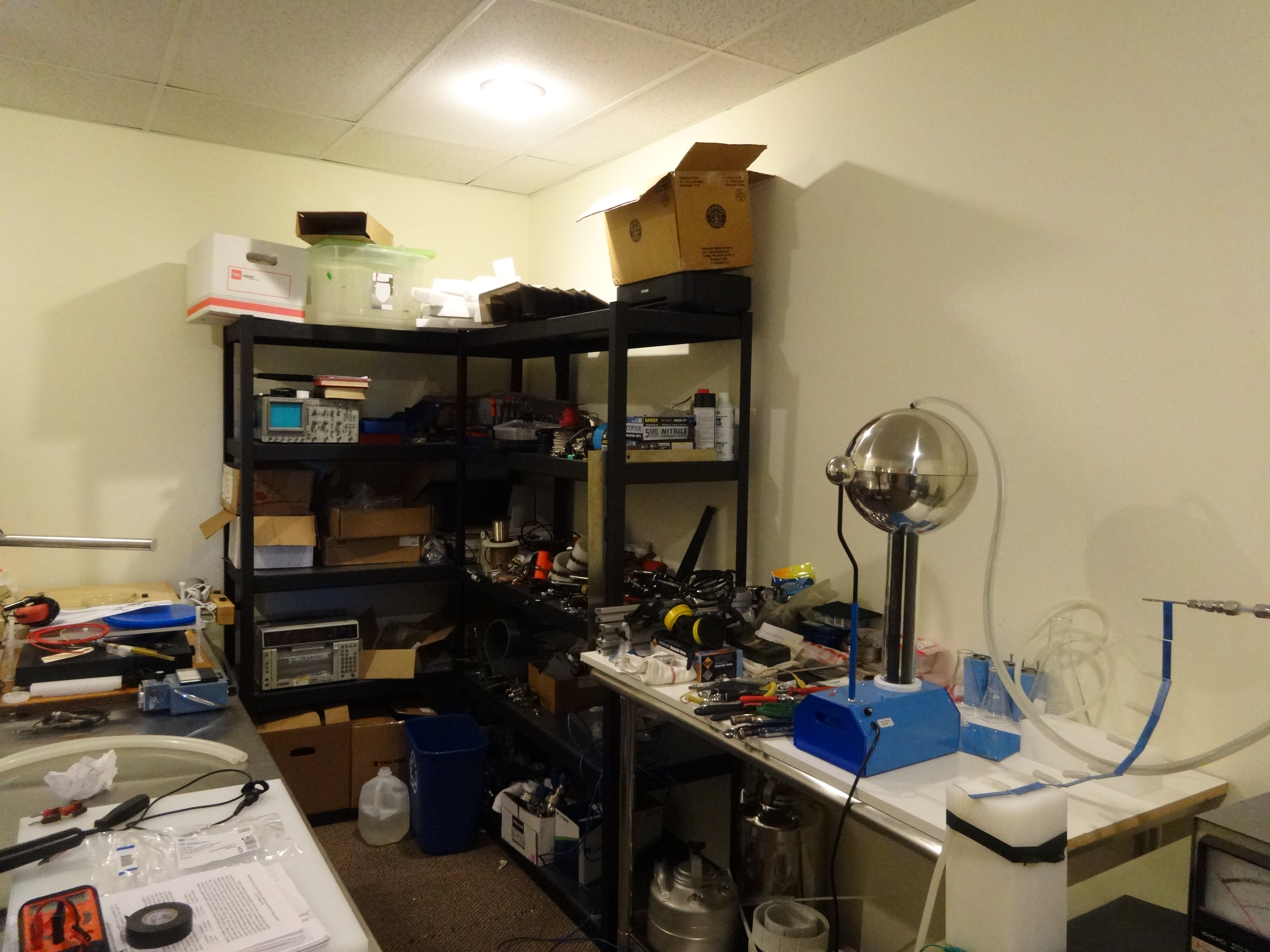
Before: My office when it was used as a lab. This is the first glimpse I got of the space before we signed the lease.

Before: My office when it was used as a lab. This is the first glimpse I got of the space before we signed the lease.

DSC03198

After: The waiting room.

The hallway to my office. I loved the wall stickers!

The hallway to my office. I loved the wall stickers!

Make yourself comfortable. This is the sitting area for interviewing, psychotherapy, and explaining test results.
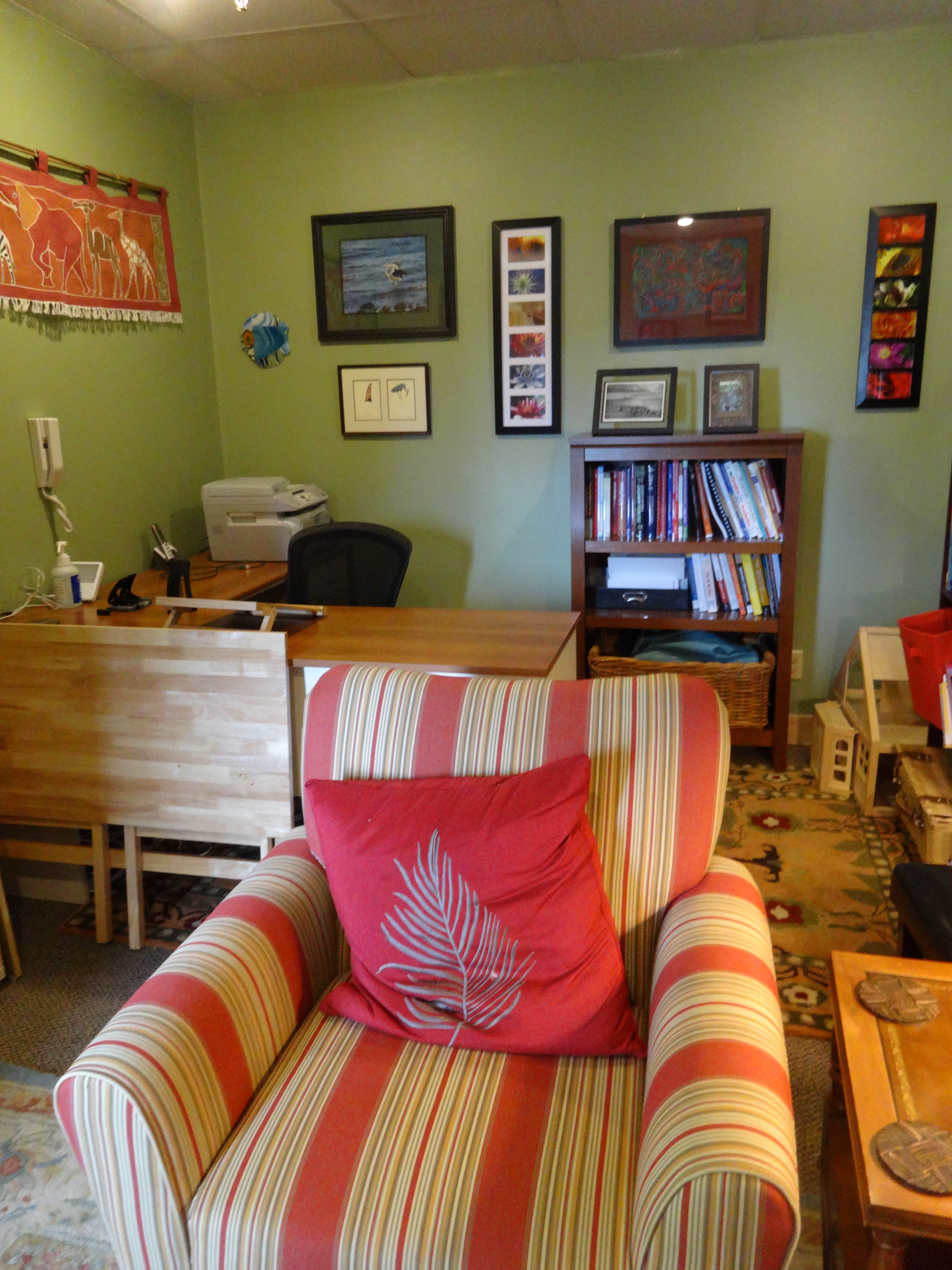
Make yourself comfortable. This is the sitting area for interviewing, psychotherapy, and explaining test results.

Testing area.

Testing area. The wooden piece is front of my desk is a folding desk. I unfold it to combine with my larger desk top to make large enough surface for my testing materials.

I made a removable cover for the air conditioner because it was ugly. I bought the owl clock because it was handy and adorable.
I made a removable cover for the air conditioner because it was ugly. I bought the owl clock because it was handy and adorable.

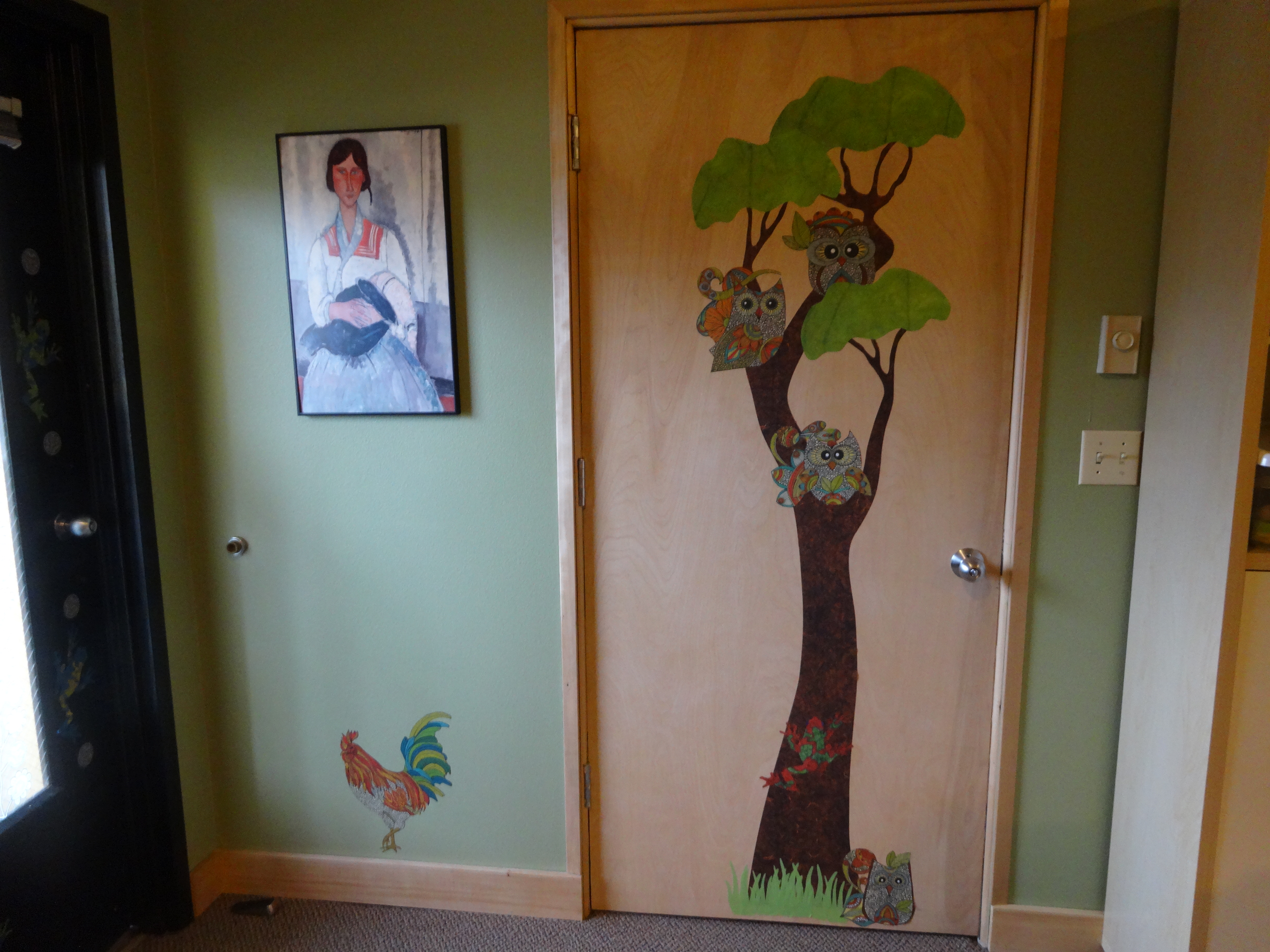
The chicken and tree decals were inspired by the feeling of boredom I felt when I sat in the chairs across from the door of my office.
The purchase of the chicken and tree decals was inspired by the feeling of boredom I felt when I sat in the chairs across from the door of my office.

I am grateful for my blessings, really, I am. And I have a multitude of blessings. I work hard to be a happy and balanced person. Most of the time my daily life makes sense to me. Most of the time my responsibilities feel bearable. Sometimes, like today, I feel worn out. I feel like I am living a life that requires 150% of me. People, each of us only has one whole self, which is 100%. 110% only exists on those stupid business motivational posters.

One of the things that I tried to change about my life after my cancer diagnosis is expecting myself to work near 100% capacity every day. I need to rest like every one else. I need balance and rejuvenating experiences.

I have been working myself hard since November. Really really hard. My family life has been hard and my work life has been hard. My health, thank goodness, has been good.

When I was younger, working more than is healthy, held certain seductive powers. I felt accomplished, strong, and self-sacrificing, the last of which giving a moral edge or some kind of “get out of jail free card”.

It’s so easy to work too hard. It’s hard to rest, to have ease. I hate that. I hate that having ease takes so much damn work. Easy shouldn’t be hard but it is.

Last year, I had two periods, each a few days long, when I felt transported into a fun, easy world outside of my work and family responsibilities. Both times, I spent time with friends and mostly without my family. It was fantastic. It was easy. Then I got back to my normal life, which although rich with blessings and meaning, landed on me like a ton of bricks.

The work on moving my psychology office occurred over two major holidays, some tough parenting issues, and financial stress. It took a lot of time and money in amounts far exceeding what I wanted.  Although I am very happy with the outcome, I am worn out. I need a break. Yesterday, I was working on some summer plans. They became complicated quickly. At this time and place in my life, it hit me hard and I was sad. I was disappointed. I was sad and disappointed not with myself or anyone else, but with the lack of ease in my life. I was teary when my husband came home. I explained in a few sentences. He totally understood; after all, we share a life together.

It’s not easy to be easy. I guess I will keeping working hard on that.

I woke up today pain free and feeling pretty well, for the most part. Then I looked in the toilet and noticed the blood. My last Lupron shot is still active for another week or so. I know I’m not menstruating. I also noticed that I still felt the urge to urinate even though I had just done that.

“I’m peeing blood!”

That’s what I could have thought. What I thought instead was, “Hmm, I bet I have a urinary tract infection. I’d better go to urgent care and get it checked out.”

I woke up my husband, told him that I needed to go to urgent care for a possible UTI, and asked if he would drive our daughter to a jazz singing workshop in my stead. He agreed and I drove 5 minutes to the nearest urgent care place. Since they’d just opened, I was the second patient of the day and was seen rather quickly. I was calm and the nurse congratulated me on my blood pressure, which was 110/68. Within 25 minutes, the UTI was confirmed and I left with a prescription for an antibiotic. I drove to the pharmacy thinking, “I wonder if I should buy some cranberry juice?” When I got to the pharmacy, I read my discharge instructions from the urgent care clinic and it advised that I drink cranberry juice.

I’ve never had a UTI. How did I know not to freak out about bloody urine, about cranberry juice, and about having the chronic urge to urinate?

I knew because I’d gotten a lot of education about UTI’s in my life. They are common for women and due to the miracle of antibiotics and cranberries, very treatable. They were discussed in sex education class when I was young. They are covered in Our Bodies, Ourselves. There are pamphlets and other forms of public health education about UTI’s. So I knew that I probably had a UTI and promptly got an appropriate assessment and treatment.

Education can lead to effective action. Awareness? Hmm.

What if I were only aware of UTI’s? That I knew nothing of the symptoms or treatment? What if I were only aware of the urinary tract or of infections? What if I did not have a basic knowledge of physiology or of common disease?

Awareness just doesn’t get you very far. Awareness is not knowing. Awareness is not education. Awareness is not doing.

Awareness is superficial. It works in the part of our mind that makes easy associations, the part that doesn’t think that hard. In other words, awareness is a perfect vehicle for marketing products. Breast cancer is bad. This product is associated with a pink ribbon, which is associated with “helping” breast cancer. Pink ribbon = less bad.

Most advertising relies on this kind of superficial quick thinking. That’s why so many things are paired with sex. Do we really think that drinking Bud Lite is going to make a swimsuit model magically appear next to us? Of course not. This kind of advertising relies on people making quick associations between a product and something (a woman is not a thing, I know that, but it is the way she is presented in an ad) desirable, thereby making the product more desirable.

Public health education is important. Let’s support that. Research is a kind of education. It is the way we learn about disease and treatments. Let’s support that.  Training healthcare providers about disease, treatments, and the whole person is also education. Let’s support that.

I don’t want to just be aware of breast cancer. I want to know it so we can get rid of it.

As a person with “no evidence of disease”, I am grateful. I am also grateful that I continue to heal physically, emotionally, spiritually, and yes, cognitively. I have written of the attention, concentration, working memory, and organizational difficulties I’ve had since being diagnosed with cancer. (Some people call this “chemo brain” though I didn’t have I.V. chemo.) These difficulties have slowly but surely improved over time. A huge boost came after I completed a cognitive behavioral sleep program and then later, when I took gaba pentin for a few months to reduce my nighttime hot flashes. I have also had improvements through working to reduce my anxiety and grief through my mindfulness practice and personal psychotherapy. Last but not least, writing this blog is one of the most therapeutic endeavors I have ever undertaken. It, of course, has side effects like any therapy in that my posts sometimes worry my mother.

Although a good deal of my energy has returned, I still don’t work full time. I find that it is too hard to maintain my emotional and physical health when I do this so although I sometimes schedule a full time or slightly overtime week, my average is about 80%. Prior to my diagnosis and shortly afterwards (I had to cram my schedule in order to take off time for surgeries), my schedule varied from week to week but I worked up to 150% of what is considered full time.

Despite my reduced hours, I am quite busy. Although most of my day is meaningful and productive, a good portion of my day is being busy for the sake of being busy, doing trivial things that do not fill me up. And some of the trivial things would not be trivial if I stuck with them for more than a couple of minutes. But I spent some part of my day alighting from one activity to another in rapid succession.

I do this less than earlier in my cancer treatment. The main reason back then was fatigue, boredom, and the need for fun. Since I was having trouble with sustained attention, I flitted around lot. Although I have never written as much or as frequently in my life, I stopped reading books. There had been no time in my life since about age 10 or 11 when I was not reading on a daily basis, with some breaks for a few weeks during adulthood, when my stress was at its peak.

I’ve been doing a lot of thinking about accepting the things in my life about which I feel feel, grief, and anger. I know that a common fear for people impacted by cancer is fear of abandonment. My husband worries about losing me. My daughter, although she denies it, worries about it too, I think. She acts very much like other teen girls with whom I’ve worked, who have a mother with a serious disease. I worry about losing my family, through decreased participation in family life if I were to get ill again and through my own transition to death, which may not come any time soon, but will come some day.

I had a epiphany last week. Although I was aware of my own abandonment fears, I realized that I was continuing to give myself busy work to avoid feeling lonely. I have been filling up spaces in my heart and mind with filler. I have too often disengaged from my husband because I associate him with our fear of my cancer as well as the stress we have in parenting.

Since that epiphany, I have made some changes. Trivia is okay but not as a main course. And trivia is much better when enjoyed with a loved one. I also realized that a lot of my life is serious and difficult. I have a serious job as a child/adolescent psychologist. I have personal psychotherapy, our family class on mindfulness and emotion regulation, and couples therapy with my husband. Between my job and my appointments, I spend the majority of my waking hours in a mental health facility. Last Friday in couples therapy, which we have been attending weekly I said, “I want less therapy and more fun. John, I want to spend more time with you having fun.” Our psychologist thought this was a great idea. John agreed, reluctantly, because this scared him. But we’ve been spending more time together. Yesterday, I received a note from a childhood friend. Her husband “out of the blue” told her that he is divorcing her, on the day before their 27th wedding anniversary. This has also reinforced my resolve to continue to work on my relationship with my husband. Too often people live separate, lonely lives, full of activities, suffering in silence.

I am not by nature, a lonely person. Cancer has a way of whittling away at security, even for those of us with “no evidence of disease”. Breast cancer also has a way of striking women at the prime of life in terms of professional and family responsibility. Many of us have full careers, children who are not yet independent, and elderly parents who may need support. It is easy when juggling these balls, to feel fragmented and flittery, to feel engaged with everything but intimately connected with no one, not even with ourselves.

Balance right now means more fun and more depth.

My Wednesday “learning to keep my shit together” class reconvened this week after a holiday break. The topic for the evening was acceptance, a mindfulness practice. The purpose of mindfulness is to reduce suffering. Acceptance is one process by which suffering is reduced.

I am working very hard to accept some hard truths about my life, some about my present and some potential truths in my future. These are truths about my life as an individual, as a wife, and as a parent.  As I was thinking about this, one of the instructors wrote two equations on the white board:

Pain + acceptance = pain

Pain + non-acceptance = suffering

I think of pain and suffering as synonymous.  But this is not a dictionary course or a vocabulary test. And I have to admit that “suffering” sounds worse than “pain”. Suffering sounds like pain with a large side dish of something nasty. Perhaps the space between pain and suffering, within this framework, is filled with a roil of self-inflicted things. Another way to say this is that suffering may result from coping with pain in a way that enhances it and perhaps makes it last for a longer time. Everyone does this from time to time.

There are “hot button” issues for me. There are experiences that I have for which I have an immediate, negative response. They push a fear button, an anger button, or a grief button. And as I am having the response, I often know that it is out of scale. I have gotten upset too quickly and too intensely. There are also times when I feel stress in the back of my mind and it wakes me at night or invades my dreams. I think these are examples of suffering.

Acceptance is a process, a continuum. I am trying to work my way. So far I am learning that there is a cognitive part. In order to accept something I need to acknowledge it. I need to name it. I need to reason with it. That is what I have mostly been working on for the past couple of years. The acceptance that takes place in my mind. On Wednesday, our homework was to think about what acceptance would look like for each of us as behaviors. If we accepted the aspect of life with which we were struggling and suffering, how would our behavior be different?

Changing my behavior, making it consistent with acceptance, is really hard. I have been making a concerted effort on this for the past month or so. I have seen changes. I have experienced shifts to a more positive place. My anger and fear are reduced. My pain and sadness are still there but the suffering is getting less.


We are always on the verge of something. Sometimes, we are on the verge of great things. Other times, the verge of collapse. Still other times, the verge of sameness. There is always a future, just up ahead, which cannot be known until it gets here. In the mean time, we make our best predictions.

I have been working hard to move my business to another location. Yesterday, a large package arrived containing two small chairs. My new office is smaller than my current one and I’m needing to downsize some of my furniture. The package arrived just as I was leaving the house for work. I decided to carry the package down my front steps, which are concrete.

The box was not heavy but it was large and it blocked my view of my feet, which were at the time, shod in high heels. I missed the step and felt myself falling forward toward our front walk, which is also concrete. In that split second, I knew that I was on the verge of being hurt but I did not yet know how badly.

Fortunately, I was able to stand up right away afterwards. I looked down at the 3 by 6 inch scrape starting on my right knee and could see that I was on the verge of bleeding. So I walked into the house, cleaned myself up, and three Band-aid’s later, stopped the leaking.

Today, I am sore. I twisted my left ankle, which was painful during the night, but I was able to go on my walk today. It hurt a little but I could also tell that walking was stretching my muscles a bit in a good way. Phew! My big scrape may elicit comments from my patients tomorrow (yes, I know it is winter but it is not yet cold enough to wear pantyhose or tights with my dresses) but I appear to have suffered no lasting damage.

Most of the time our lives on the verge are this way. Most of the time, we avert crises. Most of the time, really horrible things don’t happen to most people, at least in this part of the world. And yes, I know that lots of bad things, too many bad things, happen in the U.S., but remember, these bad things are considered news. There’s a reason for that. They don’t happen most of the time.

When really bad and scary things happen, it hurts our foundation of security. It puts us on watch. It puts us feeling on the verge of calamity a lot more often than is realistic. And the thing about anxiety is that it is reinforced when we fret and the bad thing doesn’t happen. Phew, that fretting was so effective at averting crisis! Anxiety is also increased when we fret and the bad thing DOES happen. See, I told you a bad thing was going to happen.

It is no wonder that anxiety problems are so common. And it is no wonder that they are so tenacious for those of us who have had trauma in our lives. Lately, I have been feeling not in the front of my mind but in the back of it, on the verge of something bad happening. I have worries for my family and for my friends.

There are some bad things I can head off at the pass. There are others I cannot. There are others, like cancer, that sneak in like a thief, stealing more and more every day without my knowing. I do my best to choose to live my life, all of my life. I choose to believe that I can be on the verge of many things, many of them joyful and loving.

And if I were on the verge of something awful, wouldn’t it be a waste not to enjoy this short time of calm security?


I am kind of a beast in the kitchen. I am absorbed with cooking and getting things done. Focused on these goals I can sometimes miss dangers. This is why I often burn myself and even more often, put bruises on my hips by not taking care around the sharp corners of counters. I typically notice these injuries for only a short time and keep going. Later I might feel pain and wonder, “What happened?”

Breast cancer treatment requires a lot of corner cutting when it comes to the rest of life. There are things that fall by the wayside. I think this is a significant part of the reason that recovery takes so long. Not only does it take time for strength to return (assuming that it does at all) but even after returned we find ourselves with a lot more work to do.

There’s no such thing as cutting corners without a consequence. Work accumulates. As for myself, I have a huge amount of filing that did not get done for the last almost three years. And then there’s the relationship attention that did not occur. Spouses and children who got short shrift.

You know those people in our lives that missed out or are still missing out on us? They are also feeling ripped off. They want their due. They want restitution for the extra work that they do. And like people, they look to other people for that restitution. They want more of us. We want more of them.

Cancer, you deserve the lion’s share of the blame. But you are scary and abstract. You are deadly. You will never change on your own volition. Blaming you is so very unsatisfying. You don’t love us. Our friends and family do. So, it makes so much more sense to expect more of them, right?

Or does it?

As I’ve written about previously, when I was a college student, I worked as a research assistant for an orthopedic surgeon who was completing a research fellowship at the University of Washington working in the Biomechanics Lab at Harborview Medical Center. He was doing a study on the use of an oscilloscope in assessing fracture healing in tibiae. He had a device that made a little thump on the skin over the tibia, thereby making it vibrate. A couple of readings were taken and recorded.

I have long maintained that it is not fair to expect smart people to automatically have professional skills with which they’ve had little or no training. So, I am not putting down the medical profession when I note that an M.D. is not a research degree and it was very clear that this very skilled and compassionate physician, did not always know what he was doing from a research methods standpoint.

One day, he and I were taking readings. There were some he didn’t like. He said, “Those a spurious.” And then he deleted them. I was shocked and said, “You can’t do that!” He repeated his rationale and looked mighty nonplussed for someone who had just DESTROYED DATA. It is true that most things in life are not normally distributed and even when they are, there will be outliers. But outliers count. They can’t just be dismissed. They are still part of the sample, the sample that is designed to represent a larger group.

We spend a lot of time defining what is normal, what is average. An average, or mean, is a measure of central tendency. It measures the middle. But sometimes the mean does not reflect the middle. Take home prices. Have you ever noticed that people talk about median, not mean, home prices? That’s because wealthy people tend to live in much more expensive homes, with prices outlying the general distribution. These outliers, or extreme scores, are described to exert too much leverage on the mean. Extreme scores can count for more than the rest of the group.

Let’s say that all of the houses in your neighborhood are worth $200,000-$300,000 except for one, which is worth $2 million. The mean is going to end up being higher than the price of all but one of the homes and is going to be substantially lower than the highest one. The mean is ghux not very meaningful so a median, the actual middle point of the distribution is used instead. Now the outlier house is not meaningless. There’s some meaning around someone having a lot more than everyone else. That says something. And the majority of the house prices mean something, too. One cannot get a complete picture without looking at both the norm and the exceptions.

If you are still with me on this statistics post, you know that I’m going to apply this to something else. You would be right. There is a lot of discussion in the breast cancer community about what words and experiences best represent us as a group. Sometimes we are talking about educating and changing our culture. We talk about the implications of words for funding, physician/patient relationships, and societal support for individuals with breast cancer. These conversations are very important.

Then there are the times we apply the mean to ourselves as individuals. Sometimes that fits and sometimes it doesn’t. Sometimes we apply our individual experiences to the group. Sometimes that fits and sometimes it doesn’t. Sometimes we want to be the average. Sometimes we want to be the outlier. I had a kind of breast cancer that has a good prognosis based on the type, stage, estimated aggressiveness, and the results of genetic testing. I am hoping very much to be an average breast cancer patient. I don’t want to be an outlier. My friends with metastatic cancer most commonly want to be outliers. They want to live longer and with a higher quality of life than the typical patient.

Some of the more controversial writings and interviews on breast cancer have occurred when an outlier case is treated as the typical case. Melissa Etheridge comes to mind. She is entitled to her own individual opinion about what caused her cancer and what will keep her healthy. She has freedom of speech, even as a famous person, and I have the freedom to think that she is living her life on a foundation of likely erroneous beliefs. But it is her life. Good journalism is supposed to present a story in context. When an individual expresses an outlier belief about the prevention and treatment of a deadly disease, there is a responsibility to present other view points, in particular, to interview an expert in the field. That provides context and a representative story.

Stories about individuals are often more interesting because they are less abstract. They seem so much more real than statistics. But as real as individual anecdotes are they often do not represent the group.

Breast cancer is not always interesting. Some of us are suffering in a way that is not good for print or t.v. Not all of us feel like “survivors” or “warriors” or “fierce”. Some of us do, some of us do not. Some of us believe in the power of prayer, the power of positive thinking, and some do not. For some, mastectomy feels like an amputation, for others not. We all deal with this disease in our own way. We feel losses in our own way.

It is unrealistic to expect all cancer patients to understand the complexities of these diseases, to cope with them, and also to EDUCATE the public. Some people are able to do this, but others are not. Some people argue that public figures have a responsibility to the public to educate because they are influential. I agree that they are influential but this argument is based on the assumption that they also have the skills necessary to educate. It is, however, realistic to expect people whose profession it is to provide health information to do so, and the blur between news and entertainment as well as news and disease commercialization, troubles me greatly.

We may be the mean. We may be outliers.

Every one of us is real.

We are all part of the group.

I like my hair. It is long, with soft curls, and dyed an appealing shade of reddish brown. I am in the last year of my 40’s and my hair is longer than it has ever been in my life. Even including the time in the 70’s, when I wore my long hair tied back with one of those over-sized yarn pony tail holders. Back then, I used to run around barefoot and spent a good deal of time climbing trees. For many years, my feet were very calloused and my hair consisted of a neighborhood of knots and tangles. I just used to brush the top layer of hair to provide a presentable appearance. Every once in a while, I would have to sit in a chair while my mom painstakingly separated the tangles and the knots. Ow! Ow! Ow!

By the time I was 12 or 13, I was convinced that I had “bad hair”. In the 8th grade, I got a stylish feather cut. I used a curling iron religiously. I kept that cut for a number of years. It looked pretty good. By college, I shortened my hair even more and by the time I was 20, I had a pixie cut, which I loved. I kept my hair short for many years, no longer than a bob. By the end of college, I stopped using a curling iron.

I was still convinced that if I were to wear my hair long, it would be ugly, the way I remembered it being as a young adolescent. Then I got pregnant. I was 31 years old and my hair was growing very fast. I decided that it was time to see what hair longer than a pixie cut would look like.

After a few years, I discovered that my long hair was pretty. Also, I discovered that it was much curlier than it had been when I was younger. I didn’t have bad hair, after all. When my hair went gray, I decided to color treat it. Curly hair tends to be dry. Color dries it out more, especially the do-it-yourself stuff. I realized that if I were to keep my hair long, it would need professional help. I get my hair colored, cut, and deep conditioned every seven weeks.

When I was diagnosed with breast cancer 2 1/2 years ago, I started growing my hair even longer because I could and I wasn’t sure how much longer I would have long hair. I figured that if I had chemo and lost it all, I would never grow it back to long again. It would take years and years and at that point, not be “age appropriate”.

When chemotherapy was not recommended for me, I kept it growing. I have not stopped letting my hair grow except for a light trim, since my diagnosis. When straight, my hair now falls to the middle of my back. For the record, I believe that it has officially entered the realm of “not age appropriate”. I find that for the record, I don’t give a rat’s ass. I like my hair. It may not be with me in the future but now it’s here. It’s mine and I like it.

There are a lot of breast cancer writings about hair, what it means to a woman, and what it means when it is lost. A bald head is a dramatic difference in a person’s appearance. But hair carries so much significance, even if still remaining on one’s head.

How important is it to have good hair?

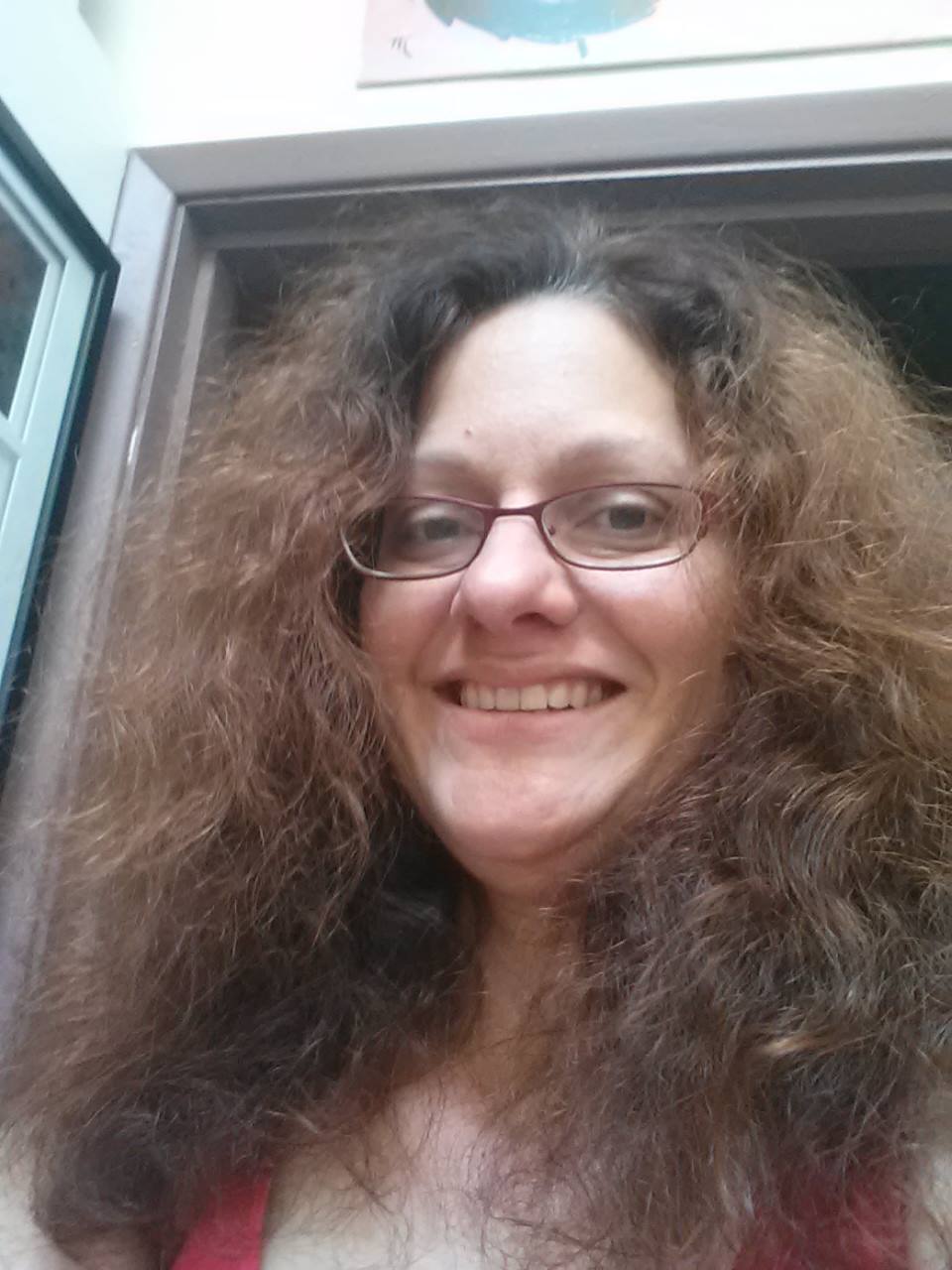
When my daughter asks my husband, “Dad, how does my hair look,” he sometimes replies, “It looks good but it would look better if you brushed it.” At this point, my daughter and I give each other knowing glances. She has curly hair, too. Brushing or combing curly hair while it’s dry breaks up the curl and to most eyes, does not look attractive. The only time I brush my hair when it is dry is to remove the tangles prior to straightening it with a flat iron. The last time I did this was a couple of months ago. My hair looked crazy and I thought it might make for a funny Facebook selfie, a kind of public service announcement explaining why curly hair is not dry brushed.

Curly tops: Don't try this at home.

Curly tops: Don’t try this at home.

How important is hair to people?

You would not believe the amount of advice this photo elicited about how to better care for my hair. It was pretty funny. But then I realized that the people commenting had seen MANY photos of me and my hair. It had never looked like this. Perhaps I am exaggerating, but it made me wonder if the sight of a woman with “bad hair” was so surprising that people forgot how I normally look and jumped straight into an urgent mode to save me from my split ends. Suggestions of coconut oil, olive oil, etc.

Hair is really important to a lot of women. I don’t want to lose mine, I know that for sure. Maybe it SHOULDN’T be that important. But it is. And one of the lessons I am learning in my life is that lots of things “should be” a certain way but they are not. We can only work with the way things are.

So please, please, please when one of your loved ones or even yourself loses hair as a result of chemo and is feeling sad about it, think twice before saying, “This shouldn’t bother you.”

If it bothers you, it bothers you. If it doesn’t, it doesn’t. What should be is not relevant to this particular situation.

My husband recently complimented me by noting that in a crisis, I am good at quickly figuring out what needs to be done, assembling resources, and doing it. This is true, in a number of respects, and I am grateful to have the skill and drive to carry it off.

There are some aspects of my life when this is hard and unfortunately, it is related to my physical health. I have a difficult time maintaining a healthy diet and exercise routine. I had coincidentally rejoined Weightwatchers a few weeks before my cancer diagnosis and had already started losing weight. I added walking at least 5 times a week a few months later, and I’ve been walking nearly every day for over two years. Since I started logging my miles on 12/2/12, I’ve walked close to 2000 miles.

I started tracking my miles as a way to help maintain my exercise program. That, combined with my renewed interest in nature photography, has helped me maintain the habit. Admittedly, I am having a little trouble transitioning to the damp part of the year but I’ve gotten out in some rather cold weather and enjoyed the sights and sounds of the outdoors. I know that I am getting my groove back.

My diet is another matter, altogether. I don’t eat a lot of sweets except around the holidays. And my gluten allergy means that I can’t eat most prepared foods anyway. However, I have been eating a lot of fruit, A LOT, and probably too much. I know that sounds silly but it has a lot of sugar in it. Finally, I know that my portion sizes are too big. I have gained nearly 20 pounds over my goal.

This all started when I decided to stop tracking what I ate every day. I stopped following Weight Watchers, basically. I was in a groove. I was ten pounds below my goal weight and walking a lot. I was really fit. I don’t know why I let myself do this. THIS IS HOW I’VE REGAINED WEIGHT EVERY TIME!

I keep restarting Weight Watchers for a couple of days but I have not yet gotten it to stick. Really, I am hoping that by writing this, I will get myself back into the long game, especially since we are in the holiday season.

I usually don’t end my blog posts with questions, but I have some. How do you help keep yourself motivated to maintain a healthy lifestyle?

Lindbergh High School Reunion '82, '83, '84, '85

Join us this summer for our reunion in Renton, WA!

George Lakoff

George Lakoff has retired as Distinguished Professor of Cognitive Science and Linguistics at the University of California at Berkeley. His newest book "The Neural Mind" is now available.

KomenWatch

Keeping our eyes and ears open.....

4 Times and Counting

Confessions Of A 4 Time Breast Cancer Survivor

Nancy's Point

A blog about breast cancer, loss, and survivorship

After 20 Years

Exploring progress in cancer research from the patient perspective

My Eyes Are Up Here

My life is not just about my chest, despite rumblings to the contrary.

Dglassme's Blog

Wouldn't Wish This On My Worst Enemy

SeasonedSistah

Today is Better Than Yesterday

The Pink Underbelly

A day in the life of a sassy Texas girl dealing with breast cancer and its messy aftermath

The Asymmetry of Matter

Qui vivra verra.

Fab 4th and 5th Grade

Teaching readers, writers, and thinkers

Journeying Beyond Breast Cancer

making sense of the breast cancer experience together

Entering a World of Pink

a male breast cancer blog

Luminous Blue

a mother's and daughter's journey with transformation, cancer, death and love

Fierce is the New Pink

Run to the Bear!

The Sarcastic Boob

Determined to Manage Breast Cancer with the Same Level of Sarcasm with which I Manage Everything Else

FEC-THis

Life after a tango with death & its best friend cancer