Archives for posts with tag: mindfulness

Never, never, never give up.
-Winston Churchill

Yesterday was Thursday, a clinic day for me. I had scheduled an interview with a 5 year old boy, a kindergartener at one of the local Catholic schools. I went out to the waiting room to greet his mother and him. “Hello, I’m Dr. Elizabeth.”

He looked up at me and I saw a black mark on his forehead. I immediately thought of Ash Wednesday, which had been the day prior. However, this was more of a defined mark than a smudge.

“Did you get a tattoo on your forehead for Ash Wednesday?”

And he had, a temporary one, in fact. It looked like the remnants of a larger tattoo, perhaps a red race car. The boy put it there because his ash smudge had worn off before he wanted it to.

I found this to be a rather delightful perspective and one that was very different from my time smudged memories of smudged foreheads past. I remember, as a teen, feeling very self-conscious about them. Teen like to call attention to themselves but typically not when it is an authority’s idea. I was taught that it was disrespectful to take the ashes off. They were to stay on until God, gravity, or the bed sheets, rubbed them off.

I was a pretty devout child and young woman.  But I do remember taking it off once. I don’t remember quite how I did it because I would have wanted to make it look accidental or gradual. “Mom, I slipped in the bathroom and a hand towel that brushed past my forehead, broke my fall!” You know, some lame excuse like that.

Ash Wednesday is the first day of the Lenten season, which last 40 days. A strong theme of Lent is sacrifice, namely Jesus sacrificing his life to cleanse humanity of sin. As such, there are traditions of Lenten sacrifice. People “give up” meat (terrestrial animals) on Ash Wednesday and Fridays of Lent. There are fast days when people eat less, and more simple food than usual.

Then there is the question, “What are you giving up for Lent?” When my mother was a child, it was common to give up candy for Lent. She used to tell us how some kids “cheated” by putting their candy in a drawer during Lent but then binging on it as soon as Easter came. I don’t remember what I used to give up but I know that I did it. I remember having mixed feelings about the sacrifices of Lent, about giving up.

“Given up” has so many meanings. However, it typically connotes a loss or weakness.

We have given up when we make sacrifices for the greater good.

We have given up when we view ourselves as helpless and neglect our responsibilities to ourselves and to others.

We have given up when we accept painful realities, lessening suffering.

Only one of these examples involves passivity and weakness. The other two sources of “given up” require fortitude.

I no longer follow most Lenten rituals but in my 30’s, I decided that I would use it as a time to “give up” on things that were adding suffering to my life. I have attempted to give up guilt and impatience, for example. I knew that I really couldn’t totally give these things up but what I realize now is that I was working on being my mindful, less judgmental of myself and others, and thereby more accepting of myself and others.

Cancer is by no means a gift, but it certainly is a time for reflection on suffering and acceptance. When I decided to study mindfulness nearly three years ago, I had a much narrower definition and experience of it than I do currently. And currently, I believe that I have just scratched the surface.

I give up for freedom.

I give up for peace.

I give up for acceptance.

I give up to be who I am and where I am in this given moment of time.

And then I do this over and over and over. For as many opportunities that I have to repeat myself, I am most grateful.
I remember reading Virginia Woolf’s, A Room of One’s Own, an assigned reading for a course I was taking at the University of Washington. I know it is a classic feminist text. I know that she was part of the Bloomsbury Group, a collection of intellectuals active in the early 20th century. I know that she wore pants at times. I know that she was played by Nicole Kidman in the excellent film adaptation of the book, The Hours, and that she died by suicide.

But frankly, when I read A Room of One’s Own, I missed a lot. I remember her paragraphs being reaaaaaaally long. I would find that I had decoded the words on two or three pages only to realize that I’d comprehended very little and was lost in this book long essay. I’d flip back through the book, begin reading again, and write notes in the margin, a critical thing for me to do when my mind wanders in reading.

But I did get her main message. She wrote about the importance of having time and space to write, something that most women not only did not have but were discouraged from having. A room of one’s own. A room to think and write and be. I also got that “a room of one’s own” has a figurative as well as literal meaning. We need a separate space and time for individuality. We need an identity apart from our relationships with others. As women, we need a relationship with ourselves that is apart from wife or mother. There may be ‘no “I” in team’ but there is an ‘I’ in “being” and all of us, male or female are beings.

As you know, I recently moved my private practice. One of the differences is that the current space has three offices instead of the previous two. That means all three of us, Jennie, Julie, and myself have an office to ourselves.

I have also mentioned that the rent for the new office space is nearly three times what the old office space was. Granted, the old office space was really inexpensive. But this is an increase that is easily noticed, especially since I hold the lease and it it the full rent that is automatically drawn from my bank account every month.

There is also the fact that although I work five days per week, I only see patients on three days per week. In the past, I have only had access to my office space for those three days. Now I have access every day of the week, whether I see patients or not.

There is an allure to subletting my office to another psychologist. This would reduce my monthly rent. At this point, however, I am strongly opposed to this. I have been reminded again and again during the last few years about how little control I have over my own life. I made what I thought was a beautiful workspace for my past office and I didn’t mind sharing it. But we lost it due to our lease not being renewed. I have now created another workspace and it, in my eyes, is lively but restful. And I want it to myself. I want to be able to go there any time I want to do report writing, pick up the mail, or just know I could go there anytime. I want to be able to get there in the morning and know that the room is exactly as I left it the night before. This is not because I am a control freak. It is just nice to know that this very thing is possible. It is also nice to know that if my life goes sideways again that I will have the flexibility to schedule patients on different days of the week. I will not be boxed into three days.

Yes, it is expensive but it is worth it at this point of time. I want my own time and my own space.

My money or my mind.

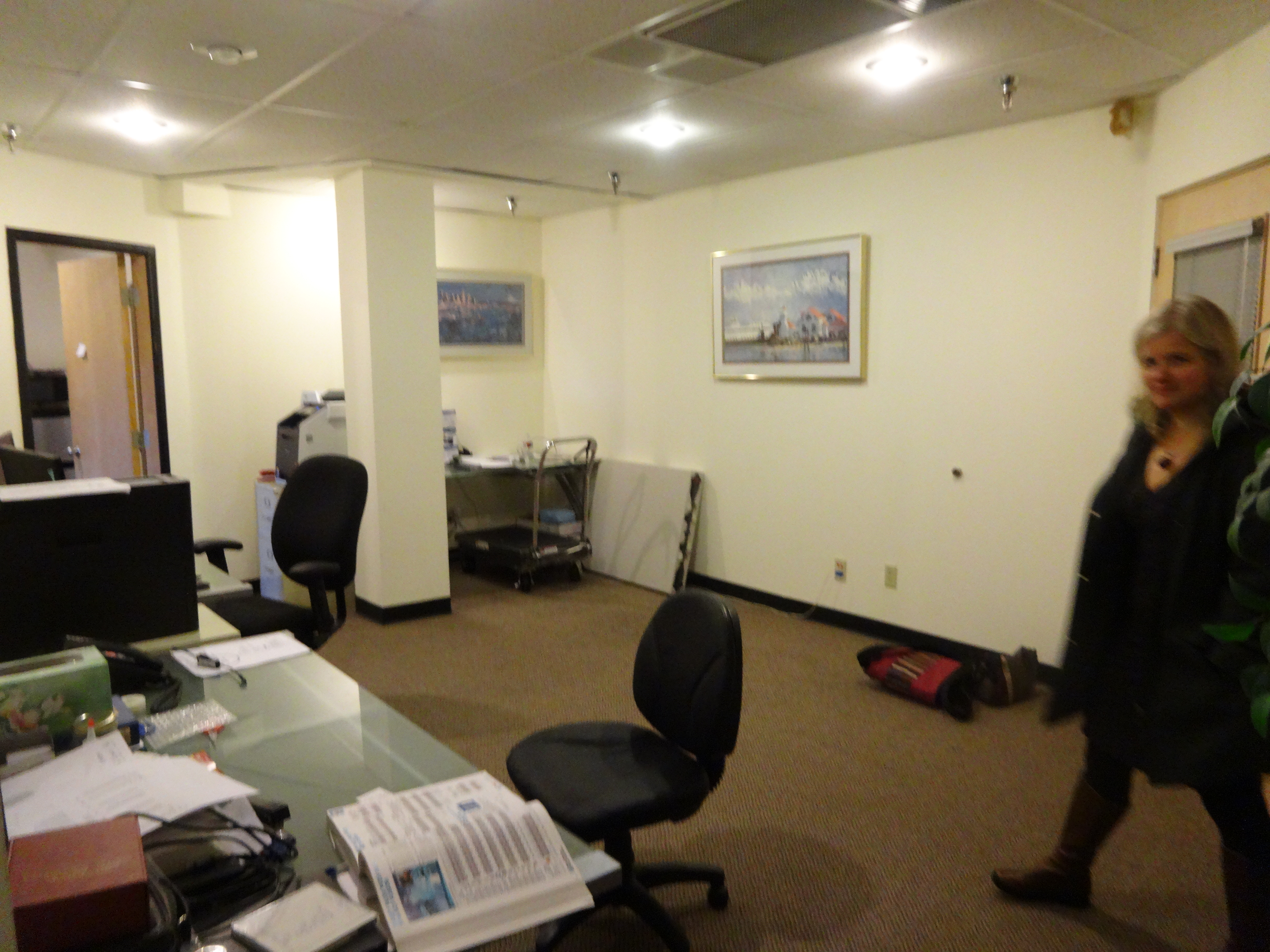
Before: The waiting room. This is how the waiting room looked the month before we started painting.

Before: The waiting room. This is how the waiting room looked the month before we started painting. The woman in the photo is my friend, Jennie.

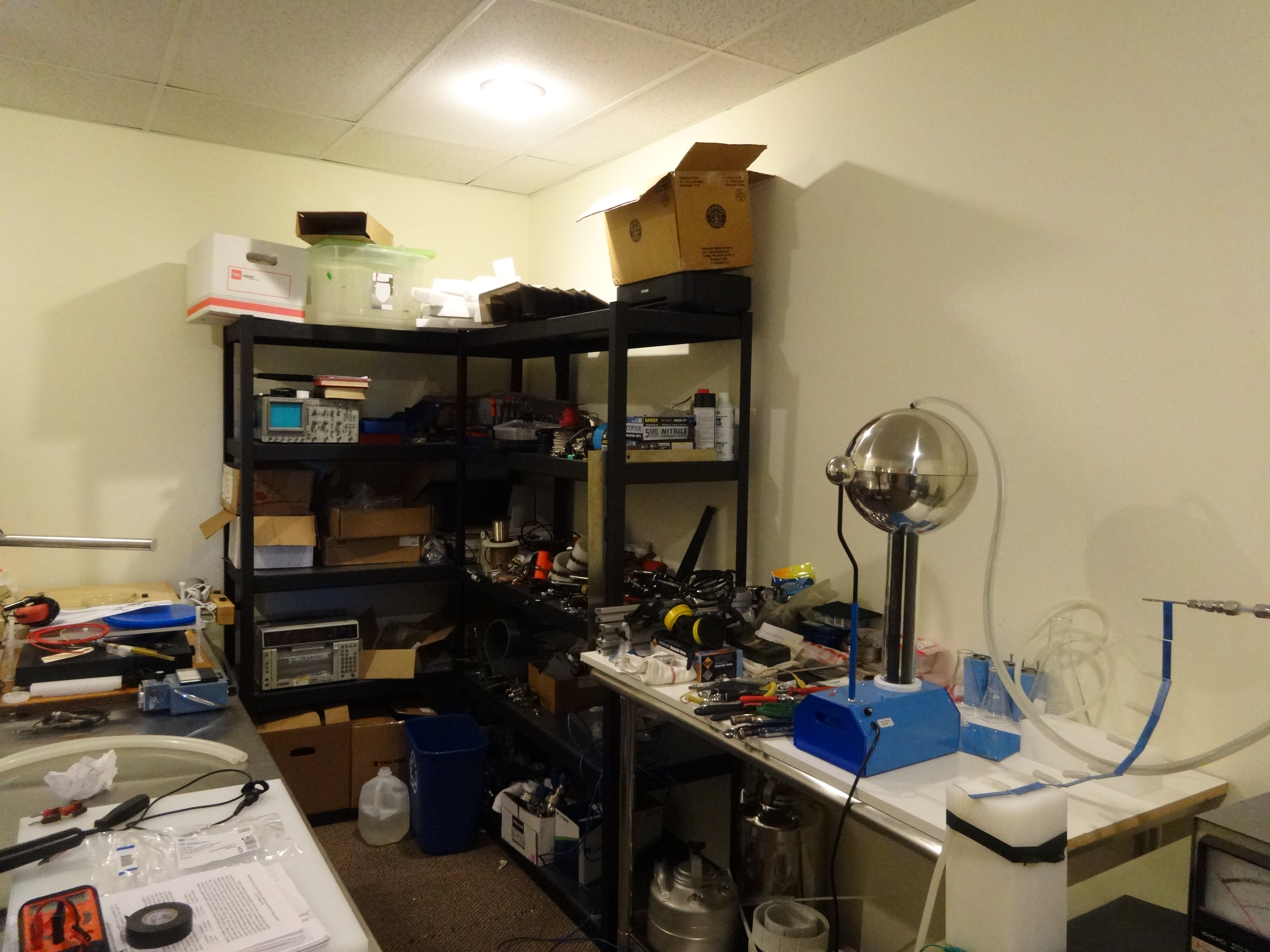
Before: My office when it was used as a lab. This is the first glimpse I got of the space before we signed the lease.

Before: My office when it was used as a lab. This is the first glimpse I got of the space before we signed the lease.

DSC03198

After: The waiting room.

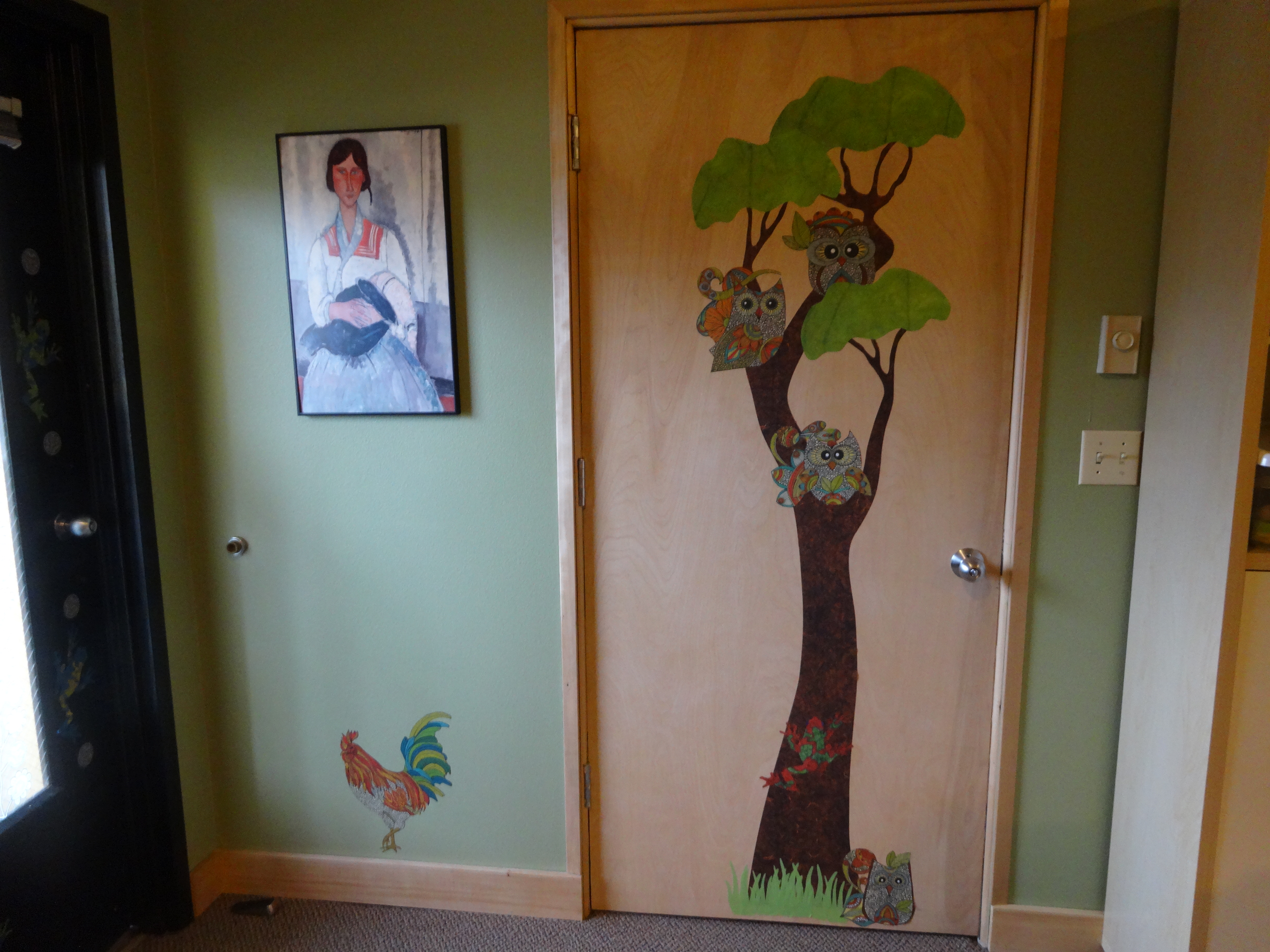
The hallway to my office. I loved the wall stickers!

The hallway to my office. I loved the wall stickers!

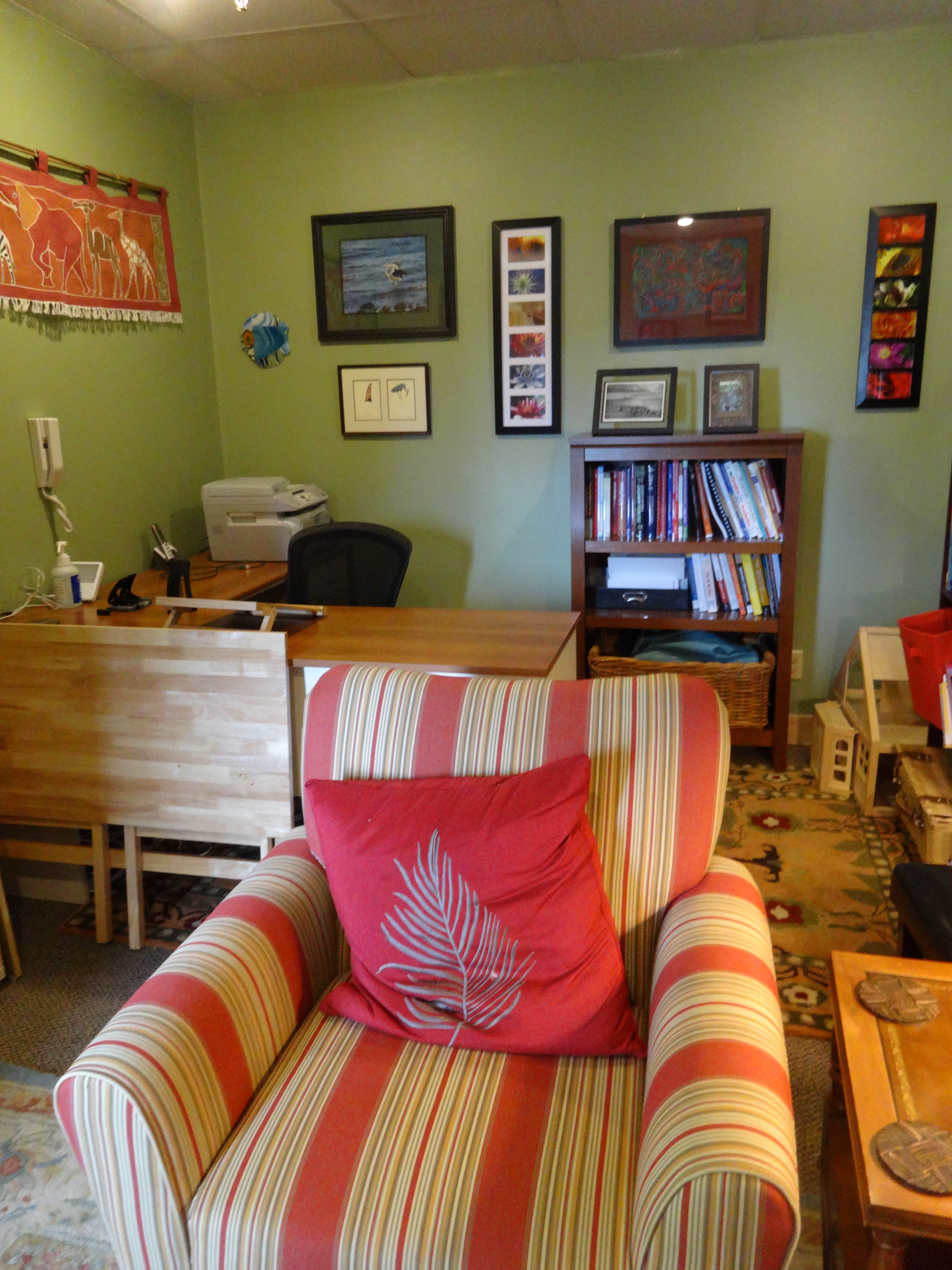
Make yourself comfortable. This is the sitting area for interviewing, psychotherapy, and explaining test results.

Make yourself comfortable. This is the sitting area for interviewing, psychotherapy, and explaining test results.

Testing area.

Testing area. The wooden piece is front of my desk is a folding desk. I unfold it to combine with my larger desk top to make large enough surface for my testing materials.

I made a removable cover for the air conditioner because it was ugly. I bought the owl clock because it was handy and adorable.

I made a removable cover for the air conditioner because it was ugly. I bought the owl clock because it was handy and adorable.

The chicken and tree decals were inspired by the feeling of boredom I felt when I sat in the chairs across from the door of my office.

The purchase of the chicken and tree decals was inspired by the feeling of boredom I felt when I sat in the chairs across from the door of my office.

It is easy to be harshly judgmental. It makes life simpler. It places a distance between ourselves and someone else’s suffering. If I can find a way to justify someone’s suffering, it buffers me from the reality that bad things can happen to anyone.

As a child clinical psychologist, I see aspects of people’s family lives that are largely invisible to outsiders. I consider their revealing these hurts, fears, and faults, as a sacred trust. This translates into a strong sense of responsibility to respect my patients and their families. I do, however, have to make judgments and interpretations in order to make diagnoses, treatment plans, and to carry them out. Sometimes I have to share difficult views, things I consider to be hard truths.

Honestly, sometimes I get frustrated with my patients, especially their parents. Those are the times that I try to reflect and observe. Why I am so frustrated? What can I do to get back to a more balanced place, the place that is necessary for my work as well as for my personal happiness?

I’ve had a couple of conversations with a friend of mine, also in mental health, about how we just don’t know what goes on in people’s lives, even those that are close to us. We just don’t know what challenges with which a person is dealing. Some of this is due to shame and stigma. Some is to protect loved ones from harsh judgment and bad treatment. Other times, we just can’t function on a daily basis if we advertise every hurt and pain. For mental health, a balance must be attained in order to live in reality. No one’s reality is all suffering, though some people have much more than their fair share.

I have been working on my judgment of myself and others in my personal life as part of my mindfulness practices. Stress and working too hard is a trigger for me to be very sensitive and hurt easily, to which I am apt to respond with harsh judgment. I can see the changes I have made in my life to decrease this but understandably, it still occurs. Harsh judgment is not something I will likely ever eliminate from my life. It will wax an wane in my own mind. My hope is that my periods of being “stuck” in it will be less frequent and of shorter duration.

I have worked on being more compassionate and accepting of myself. I have worked on being more compassionate and accepting of my husband. Now I find myself struggling with harsh judgment of my teen daughter. If I am quite honest with myself, I am finding parenting at this time of my life, to be ungratifying, not to mention the times when it’s just scary. As a parent, I am generally much above average in acceptance and patience. I know my daughter loves me, but she mostly pays very little attention to me except to ask for things and typically responds with irritation when I talk to her, regardless of the subject. I know to a large extent that this is developmental and a common feature of mother/adolescent relationships, but it is still very painful. I love my daughter and I like her a lot. I would like to be a part of her life that is not so stressful to either of us. Right now there is no ease in our relationship.

I have also worked hard on backing off, reminding her less, and better respecting her independence. I think I have done a really good job with that. I guess I had a fantasy that if I did that, she would re-engage with me and our relationship with be not only less conflict-laden, but emotionally closer. That may still happen but it hasn’t happened yet. I know that it could be much worse but for me, thinking about how much worse things could be, typically does not work as a form of self-encouragement.

I just don’t know what all my daughter is dealing with in her life. And I really want to know but I can’t. I can work to accept this but all of the positive thinking in the world is going to get me to be happy with this. But acceptance is a peaceful place and there is healing there for both my daughter and for myself.

I knew I was close. I’d been peeking online on Jogtracker.com for my total miles walked. It was taking forever, like trying to find the exact time when the odometer numbers on the old cars would all flip at once.

Then I busied myself with my office move. Today I took a peak. Sometime in the last two weeks, I made my milestone. I hit the 2,000 mile mark on my walking since December 2012.

You may recall that last year, when I was exactly at the 1000 mile mark, I found myself accidentally parading around the neighborhood in my underwear, after experiencing a hot flash, taking off my shirt, and walking a good block or two before discovering that I had not put on a sports bra that day. I was walking around in a regular black bra, purchased at Target. Oops.

This year, I passed 2,000 miles without really thinking of it. This is comforting in a way because things we do that we don’t think about are habits. I was trying to build regular exercise into my routine. And I have, I walk habitually. But this also leaves me every so slightly on guard. Without mindfully and actively engaging in exercise, I run the risk of getting out of the habit. Habits, unless they involve addiction, need a little nudge to keep them going.

So today I take a pause and reflect on 2,000 miles walked in a little over two years. It’s a lot of time that I took for myself to take care of myself over the past two years. I can honestly reflect on how I feel and how I live my life and conclude that this has been time very well spent. Not to mention the fun I’ve had taking photos, the cats I’ve met along the way, the increased time with my husband when e joins my walks, and the most excellent coffees I’ve sipped on my journeys.

As a person with “no evidence of disease”, I am grateful. I am also grateful that I continue to heal physically, emotionally, spiritually, and yes, cognitively. I have written of the attention, concentration, working memory, and organizational difficulties I’ve had since being diagnosed with cancer. (Some people call this “chemo brain” though I didn’t have I.V. chemo.) These difficulties have slowly but surely improved over time. A huge boost came after I completed a cognitive behavioral sleep program and then later, when I took gaba pentin for a few months to reduce my nighttime hot flashes. I have also had improvements through working to reduce my anxiety and grief through my mindfulness practice and personal psychotherapy. Last but not least, writing this blog is one of the most therapeutic endeavors I have ever undertaken. It, of course, has side effects like any therapy in that my posts sometimes worry my mother.

Although a good deal of my energy has returned, I still don’t work full time. I find that it is too hard to maintain my emotional and physical health when I do this so although I sometimes schedule a full time or slightly overtime week, my average is about 80%. Prior to my diagnosis and shortly afterwards (I had to cram my schedule in order to take off time for surgeries), my schedule varied from week to week but I worked up to 150% of what is considered full time.

Despite my reduced hours, I am quite busy. Although most of my day is meaningful and productive, a good portion of my day is being busy for the sake of being busy, doing trivial things that do not fill me up. And some of the trivial things would not be trivial if I stuck with them for more than a couple of minutes. But I spent some part of my day alighting from one activity to another in rapid succession.

I do this less than earlier in my cancer treatment. The main reason back then was fatigue, boredom, and the need for fun. Since I was having trouble with sustained attention, I flitted around lot. Although I have never written as much or as frequently in my life, I stopped reading books. There had been no time in my life since about age 10 or 11 when I was not reading on a daily basis, with some breaks for a few weeks during adulthood, when my stress was at its peak.

I’ve been doing a lot of thinking about accepting the things in my life about which I feel feel, grief, and anger. I know that a common fear for people impacted by cancer is fear of abandonment. My husband worries about losing me. My daughter, although she denies it, worries about it too, I think. She acts very much like other teen girls with whom I’ve worked, who have a mother with a serious disease. I worry about losing my family, through decreased participation in family life if I were to get ill again and through my own transition to death, which may not come any time soon, but will come some day.

I had a epiphany last week. Although I was aware of my own abandonment fears, I realized that I was continuing to give myself busy work to avoid feeling lonely. I have been filling up spaces in my heart and mind with filler. I have too often disengaged from my husband because I associate him with our fear of my cancer as well as the stress we have in parenting.

Since that epiphany, I have made some changes. Trivia is okay but not as a main course. And trivia is much better when enjoyed with a loved one. I also realized that a lot of my life is serious and difficult. I have a serious job as a child/adolescent psychologist. I have personal psychotherapy, our family class on mindfulness and emotion regulation, and couples therapy with my husband. Between my job and my appointments, I spend the majority of my waking hours in a mental health facility. Last Friday in couples therapy, which we have been attending weekly I said, “I want less therapy and more fun. John, I want to spend more time with you having fun.” Our psychologist thought this was a great idea. John agreed, reluctantly, because this scared him. But we’ve been spending more time together. Yesterday, I received a note from a childhood friend. Her husband “out of the blue” told her that he is divorcing her, on the day before their 27th wedding anniversary. This has also reinforced my resolve to continue to work on my relationship with my husband. Too often people live separate, lonely lives, full of activities, suffering in silence.

I am not by nature, a lonely person. Cancer has a way of whittling away at security, even for those of us with “no evidence of disease”. Breast cancer also has a way of striking women at the prime of life in terms of professional and family responsibility. Many of us have full careers, children who are not yet independent, and elderly parents who may need support. It is easy when juggling these balls, to feel fragmented and flittery, to feel engaged with everything but intimately connected with no one, not even with ourselves.

Balance right now means more fun and more depth.

My Wednesday “learning to keep my shit together” class reconvened this week after a holiday break. The topic for the evening was acceptance, a mindfulness practice. The purpose of mindfulness is to reduce suffering. Acceptance is one process by which suffering is reduced.

I am working very hard to accept some hard truths about my life, some about my present and some potential truths in my future. These are truths about my life as an individual, as a wife, and as a parent.  As I was thinking about this, one of the instructors wrote two equations on the white board:

Pain + acceptance = pain

Pain + non-acceptance = suffering

I think of pain and suffering as synonymous.  But this is not a dictionary course or a vocabulary test. And I have to admit that “suffering” sounds worse than “pain”. Suffering sounds like pain with a large side dish of something nasty. Perhaps the space between pain and suffering, within this framework, is filled with a roil of self-inflicted things. Another way to say this is that suffering may result from coping with pain in a way that enhances it and perhaps makes it last for a longer time. Everyone does this from time to time.

There are “hot button” issues for me. There are experiences that I have for which I have an immediate, negative response. They push a fear button, an anger button, or a grief button. And as I am having the response, I often know that it is out of scale. I have gotten upset too quickly and too intensely. There are also times when I feel stress in the back of my mind and it wakes me at night or invades my dreams. I think these are examples of suffering.

Acceptance is a process, a continuum. I am trying to work my way. So far I am learning that there is a cognitive part. In order to accept something I need to acknowledge it. I need to name it. I need to reason with it. That is what I have mostly been working on for the past couple of years. The acceptance that takes place in my mind. On Wednesday, our homework was to think about what acceptance would look like for each of us as behaviors. If we accepted the aspect of life with which we were struggling and suffering, how would our behavior be different?

Changing my behavior, making it consistent with acceptance, is really hard. I have been making a concerted effort on this for the past month or so. I have seen changes. I have experienced shifts to a more positive place. My anger and fear are reduced. My pain and sadness are still there but the suffering is getting less.


There have been a number of “three words” posts. I think this is an excellent exercise for each of us to really think about what is most important right now to have a better now and a better future. As you may have read previously, I have my own three words that came to me years ago at a time I was at an all time low and needing to get myself off of the ground to rally for my own health and happiness. The words that popped into my mind were, “patience, persistence, and peace.” The first two words are means and peace was the goal. Peace, I suspect, will always be a goal of mine, on all possible levels.

After reading a couple of the three word essays, I find that there is only one word that comes to mind for my life at this present moment. The word is “balance”. I know, this is not a new concept for women. We’ve read all kinds of writings about the difficulty in achieving balance between work and family, for example. I’m talking about emotional balance. I’m talking about intellectual balance. I am talking about using my emotional depth and my reasoning in concert.

It is so easy to use fear to avoid doing what I need to do. It is easy to let fear lead me to not set reasonable boundaries with people and to end up helping too much. Fear can also lead to my too often seeking reassurance by being clingy or naggy. Fear can lead me to set too hard boundaries, to avoid people and to lose my temper.

One might think that reason and intellect are the answer. But reason can be invalidating. “I shouldn’t feel this way.” Or it can be deluding when I rationalize decisions that are not in keeping with my own values of kindness and compassion. “I can act this way because so and so did such and such to me and deserves this!”

One of the mindfulness concepts I am learning in my six month class is “wise mind”. Wise mind accepts and validates emotion. Wise mind uses reason. Wise mind uses emotion and reason in tandem, in a way that promotes health and reduces suffering. When emotion mind meets reasonable mind, it is like the Wonder Twins! They are no longer the sum of their parts. They are wise mind. With wise mind, comes balance and calm. So I would like to increase the balance in my life through increasing my use of wise mind.

Balance. Wise. Mind.

I guess I had three words after all.

As I’ve mentioned in the past, I grew up in a semi-rural area, which was really the suburbs. But my parents had acreage and our neighbors had horses, goats, cows, and of course there was Louie who had 200 pigeons. Ourselves, we had a lot of animals, too. I remember when we got our first kittens, Tom, George, and Fred. Tom was an orange tabby who grew up to be a true alpha tom cat. He got into fights and was often bruised. Bumping into one of Tom’s sores was the shortest way to getting assaulted by his razor sharp claws. I’m not exaggerating, either. He once drew blood when he scratched my arm while I was wearing a winter coat. George was a cute gray cat and that’s all I remember.

Fred, as I recall was a black and white cat. One of the early discoveries about Fred was that she was female. Kitties, even litter mates, live a soap opera existence. And our cats were not spayed or neutered. To make a long story short, before long our tribe of three cats expanded to a family tree with may inbred branches. My mom may deny this in the comments’ section but at the highest number, we had 21 cats. You might ask how this could happen but these were outdoor cats and we lived in the woods. Cats go back to being feral really fast.

I remember one of our feral females who had litters and litters of kittens. We called her appropriately enough, “Mama Cat”. Mama Cat would have her kittens in the woods or behind the wood pile. If she had them behind the wood pile, we had a chance. A kitten behind the wood pile might be tamed. We used yarn hanging from the end of a stick. We would throw the yarn to the back of the pile and then pull it out gently as the kitten snagged it with his/her claws. Repeat 150 times and we had ourselves a pet! If not tamed while a kitten, the cat would just be a feral creature who could only be lured into close proximity with the sound of a bag of Little Friskies cat food being hauled from the front door to the feeding trough (a metal baking pan) next to our barn. But even so, those cats would eat but would not socialize with us. They were truly wild animals.

When our daughter was three, we found a sweet little stray adolescent tabby kitten. We tried but were unable to find the owner. Given that he was a stray in eastern Washington, he was probably abandoned there. Ollie became part of our family. And then when he was three years old, he went kind of nutty and paranoid. For whatever reason, his whole world view changed. He was  like a cat returning from a tour of duty in the middle east who had PTSD. Ollie was aggressive to visitors and responded to the many cats who roamed our neighborhood by marking our house. And he did this for years, despite the behavioral interventions and his medication. (He took fluoxetine, the generic form of Prozac, for the record. I joked at home that I was going to write an autobiography, And Even the Cat Took Prozac.)

Ollie got really nervous at times and he was unpredictable. The only thing we knew is that if anyone outside of the immediate family was visiting, he might have one of his paranoid anxiety attacks with hissing, biting, and scratching. He could be scary. Ollie was also an alpha tom, or would have been, had we let him be an outdoor cat. He was enormous. There were a couple of folks who fancied themselves “cat whisperers” and tried to get in his face, despite our warnings not to do so. They got hissed at and scratched. When Ollie was panicked like this, even we couldn’t touch him.

After he had settled down a little, I could help him calm down more by placing my nose on his. This is a calming behavior for cats as long as they are not freaking out. They can be soothed by this very close contact if they are just a bit on edge. It is important to know the signs of cat anxiety and arousal before going nose to nose with a cat, especially an unfortunately mentally ill one like our Ollie. (And by the way, the veterinarians still talk about him, even the ones who never saw him as a patient. His legend lives on at the Lien Animal Clinic.)

It occurred to me the other day that dealing with negative emotions the ones that roil and churn in our guts and our hearts is a tricky business. Sometimes we can’t go nose to nose with then until we calm the Hell down a little. Focusing on them can become a rumination, a hopeless, helpless funk, or a tirade. At those times, we need a little distance. But if we distance ourselves from our painful emotions for too long, they take on a life of their own. They become feral and seemingly impossible to tame. And they are truly painful, especially at first, to confront after a long absence of distraction and denial.

Cats give signals when they need space. Their tails twitch. They climb onto high surfaces to make themselves bigger. If you miss those cues, they will up the volume by sending a low hiss and standing their fur on end. And they will flatten their ears. Do not go nose to nose with a cat with these signals! Give them some time.

We all have our own signals and as for myself, I have used life experience and more recently, mindfulness to identify times when I am too raw to go nose to nose with my thoughts and feelings and need to do something to get myself back into control like deep breathing, walking, or getting myself into the woods. Then I can start going nose to nose with myself. And I can stand myself and my feelings at these times.

I may never be a cat whisperer but I have gone many years without getting scratched going nose to nose with a kitty. Maybe I can keep learning how to do the same getting up close and personal with myself.

Ollie, sunning himself on the deck. He was pretty sick and weak by this time, but still finding enjoyment.

Ollie, sunning himself on the deck. He was pretty sick and weak by this time, but still finding enjoyment. He died a few weeks after this photo was taken. He was a beautiful boy and we loved him.

You may have heard that it rains a lot in Seattle. It does rain more than average, there’s no getting around it. But there are a lot of much rainier cities. We don’t even make the top 10 rainiest U.S. cities, by a long shot. The entire eastern seaboard of the U.S. gets more annual rainfall than Seattle. Here’s the deal, though. We get primarily light rain. And it’s spread over many many days. While a significant portion of the nation has the rainiest time of the year in the summer, we have our rainiest time in the winter. Here, up north, it’s really dark, too. Seattle knows how to pile on the dreary during winter.

But even in winter, there are beautiful days. Yesterday, Christmas Day, was one of them. My husband and I walked down to the beach. The wind was gentle and the sky was blue. I spent a good bit of the walk stripped down to a short sleeved t-shirt. Granted, I had a Lupron shot last month and the furnace usually kicks in about this time but still, I was walking on a Seattle beach during winter in a t-shirt. What a glorious day.

I happen to think that the contrast between how our city looks on a sunny day versus a cloudy or rainy day is one of the reasons that we have a reputation for being a wetter city than we actually are. It’s disappointing to visit Seattle after seeing all of the glorious photos of the mountains and the sea only to be drizzled upon. But I don’t visit here. I live here. I know that the sun will come out again and that I will see it.

People in my city, especially natives, such as myself, often remark that our part of the world would not be so beautiful without the rain. This is true. We have some of the most beautiful summer weather I have ever experienced. And there is so much sunlight with very long days. Without the rainy, dreary days, though we would not have the abundant greens, the trees, bushes, mosses, and lichens. Winter is a time when plants focus their energy below the ground. The rain is essential for root growth, the foundation of plant life. Without precipitation, there is no snow on the mountains. We are so lucky to live in a city bound by two snow-capped mountain ranges. The winter snow on our mountains is also our water supply for the dry months of the year.

We need the wet and dreary days for life. It’s not just that the bad weather makes us appreciate the sunny days more because of the contrast. We actually require it. I’ve been thinking of this a lot in terms of how it relates to life, in general. Are sadness, disappointment, grief, and other painful emotions and experiences necessary for life? More so, do they enhance our lives?

I don’t know. I am pretty sure that seeking out suffering is a bad idea. Let’s not look for trouble. And denying suffering in oneself or others is invalidating. I am working a lot on acceptance of the things in my life that weigh on me heavily on a daily basis and are sometimes terrifying. Okay, it’s not “things”, it’s a thing. The thing is parenting my 16 year-old brilliant fireball. A few weeks ago, I had an epiphany followed by some meaningful adjustments in my behavior.

I realized on a deep and visceral level that I can’t protect her from the world or from the consequences of poor judgements that she makes. I didn’t abdicate responsibility but I relinquished the fantasy of control. I am still as busy parenting as I’ve ever been but my efforts are less frenzied and whirling. This acceptance was also accompanied by deep sadness. But the sadness was grounding instead of frenetic and anxious. I’m not going to kid myself and announce that acceptance is my new permanent state of being. My state of being, especially as a parent, will continue fluctuate. But this is an important shift.

I don’t know the future so I really don’t know how to end this post. What I do know is that every sunny time is to be celebrated and that the dreariest times cannot be wished away. I am learning more and more not to manufacture suffering; why would I want more of that? I am learning more and more to accept this as how life should be simply because that’s the way life is.

Christmas at the beach.

Christmas at the beach.

I am taking a six month class in skills designed, basically, to help me keep my emotional shit together. Unsurprisingly, the first unit is on mindfulness. I got into the class thinking, “Mindfulness, I’ve been doing this for over two years. This will be easy peasy lemon squeezy.”

I am here to tell you that week two has not lived up to it lemon squeezy potential. I have a lot of practice in observing without judgment. I also have a lot of experience describing my feeling states and being somewhat non judgmental about that.

Apparently, there’s other stuff. One of those things is doing things effectively. This has to do with thinking about my goals, at least that’s what I understand so far.

The instructor explained the whole thing. Meanwhile, I can tell you using my describing skills that I felt confused followed by elucidated followed by the realization that I was elucidated and not just confused, but in a different way. Then I think I got it but we will see on Wednesday when I check in about my homework.

And you know that I practiced on hubby. I can go through an interaction with my husband thinking, “Hm, that hurt my feelings and I don’t think John meant to do that. But wow, I am hurt and angry.”

That sounds good, doesn’t it?

Except that often what comes out of my mouth is, “Why did you say that?”

I am here to tell you that asking someone “Why did you say that” or “Why did you do that” when you are hurt, angry, or scared, will get you no where good, fast.

And yet I find myself saying this over and over. It is utterly not in keeping with my goals to be a peaceful loving wife who communicates well with John, whom I love dearly.

Another thing I might do is say nothing and think to myself, “This is not a big deal. Don’t start a fight.”

But in that case I did not accomplish my goal of communicating a hurt that was important to me and I risk getting resentful about it.

So I tried something new. John did something I didn’t like. And I said, “Honey, I am not trying to punish you or fight with you. But I am feeling anxious and angry about x and wondering if we might talk about it?”

It was not the easiest conversation but it was much easier and it was not a fight. But then I got very hurt and angry about something else. In time, he apologized for what he said and sincerely, but I found that I was still hurt and angry. I couldn’t let it drop. But it took me awhile to understand why I couldn’t let it drop. He had said something that might not upset someone else but because of who I am and what is important to me, it hurt. I was still upset because what he’d said had surprised me and I wanted to know that he understood why it was upsetting. I wanted reassurance that he still knew me and what is important to me. I said, “I’m sorry, I am still really hurt about this. I am sorry that I can’t let it drop. I need you to say, x, y, and z.” And then he said those things and he said them sincerely. We had been stuck in one of the arguments that go around and around. And then I felt so much better.  We had a very nice evening after what had been a tense couple of days.

The best thing about this class? I got confused because I encountered some new ideas and skills. That means there are more tools out there for me to learn. This is very reassuring to me.

Lindbergh High School Reunion '82, '83, '84, '85

Join us this summer for our reunion in Renton, WA!

George Lakoff

George Lakoff has retired as Distinguished Professor of Cognitive Science and Linguistics at the University of California at Berkeley. His newest book "The Neural Mind" is now available.

KomenWatch

Keeping our eyes and ears open.....

4 Times and Counting

Confessions Of A 4 Time Breast Cancer Survivor

Nancy's Point

A blog about breast cancer, loss, and survivorship

After 20 Years

Exploring progress in cancer research from the patient perspective

My Eyes Are Up Here

My life is not just about my chest, despite rumblings to the contrary.

Dglassme's Blog

Wouldn't Wish This On My Worst Enemy

SeasonedSistah

Today is Better Than Yesterday

The Pink Underbelly

A day in the life of a sassy Texas girl dealing with breast cancer and its messy aftermath

The Asymmetry of Matter

Qui vivra verra.

Fab 4th and 5th Grade

Teaching readers, writers, and thinkers

Journeying Beyond Breast Cancer

making sense of the breast cancer experience together

Entering a World of Pink

a male breast cancer blog

Luminous Blue

a mother's and daughter's journey with transformation, cancer, death and love

Fierce is the New Pink

Run to the Bear!

The Sarcastic Boob

Determined to Manage Breast Cancer with the Same Level of Sarcasm with which I Manage Everything Else

FEC-THis

Life after a tango with death & its best friend cancer